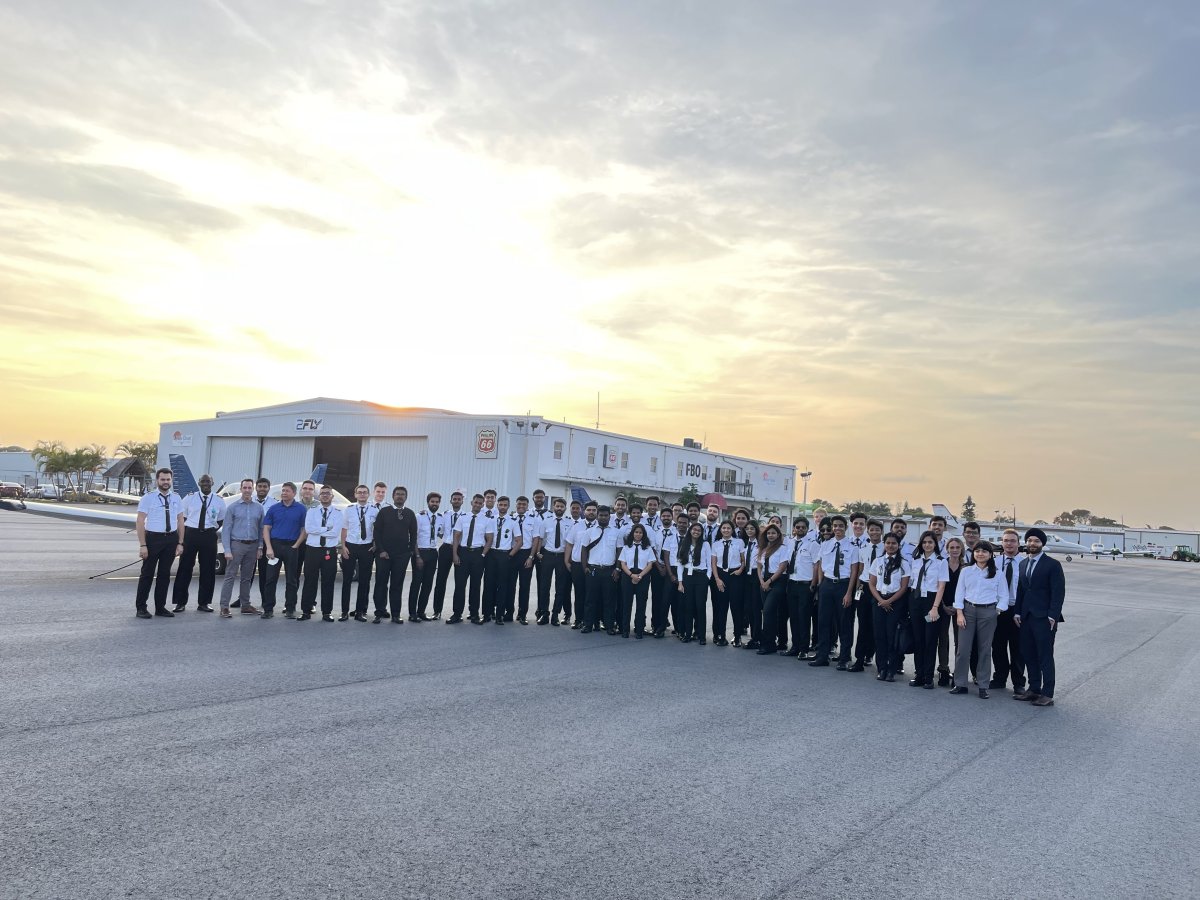
The 2025 Boeing Pilot and Technician Outlook projects a global demand for 660,000 new qualified pilots through 2044, yet the path to the cockpit remains obscured by financial complexity. You likely recognize that an aviation career offers unparalleled global mobility, but the lack of transparency regarding the total pilot training cost often creates hesitation. It’s frustrating to face hidden fees or struggle to differentiate between FAA and EASA pricing structures when you’re ready to launch your future.
This guide provides a professional breakdown of the investment required to transition from zero experience to a commercial flight deck in 2026. You’ll gain a clear understanding of the distinction between tuition and essential living expenses, alongside a framework for choosing between fixed-price and hourly training models. We’ll also address the specific financing concerns of international students to ensure your path to becoming an airline-ready professional is both realistic and achievable. Prepare to move beyond the estimates and gain the clarity needed to join the next generation of elite aviators.
Key Takeaways
- Understand why the 2025 Boeing Pilot and Technician Outlook’s projection of 660,000 new pilots makes now a strategic time to launch your global aviation career.
- Learn how to accurately project your total pilot training cost by comparing integrated professional programs with modular, pay-as-you-go financial models.
- Discover the critical differences between ‘wet’ and ‘dry’ aircraft rental rates and how instructor fees influence your overall certification budget.
- Explore strategic funding pathways, including aviation-specific lenders and scholarship opportunities, to effectively finance your journey to the commercial flight deck.
- See how training in Florida’s year-round flying weather within a professional airline-style environment can minimize costly delays and maximize your investment.
The 2026 Aviation Landscape: Why Pilot Training is a Strategic Investment
Understanding the total pilot training cost requires looking beyond the initial flight hours. It encompasses the total capital required for professional certification, building time, and achieving career readiness for a major airline. As we look at the 2026 market, the global aviation industry faces a critical shortage that transforms this expense into a high-yield investment. It’s a calculated move for those ready to command the flight deck.
The 2025 Boeing Pilot and Technician Outlook projects a global requirement for 660,000 new commercial pilots through 2044. This massive demand has standardized “zero to hero” programs as the industry benchmark for efficiency. These accelerated paths consolidate training into a continuous, structured syllabus. By eliminating the gaps found in modular training, these programs reduce the time spent in school and get you into a paid cockpit faster.
To better understand the financial commitment and preparation required for this career, watch this helpful video:
The ROI of a Commercial Aviation Career
Commercial aviation offers a unique financial trajectory compared to traditional career paths. Starting salaries for first officers at major carriers often outpace the average entry-level earnings of traditional four-year degree graduates. Training in high-demand environments like Florida provides a tactical advantage. The consistent weather allows for more flight days per year, which shortens the timeline to employment. The Global Pilot concept expands this potential, allowing aviators to leverage international mobility for higher lifetime earnings.
FAA vs. EASA: Financial Implications of Your License Choice
Choosing between Pilot certification in the United States (FAA) and European (EASA) standards significantly impacts your initial budget. FAA training is often more direct, while EASA involves extensive theory exams that can increase the pilot training cost. 2FLY Airborne bridges these two regulatory environments, providing a streamlined path for international cadets to gain dual-market eligibility. The Global Pilot path is a multi-license strategy designed to maximize your employability across different continents and jurisdictions.
The journey to the flight deck is demanding, but the rewards are substantial for those who plan effectively. You don’t have to figure out the financial logistics alone. Contact 2FLY Airborne today to speak with a training advisor and receive personalized guidance on starting your career.
Breaking Down the Components of Flight School Cost
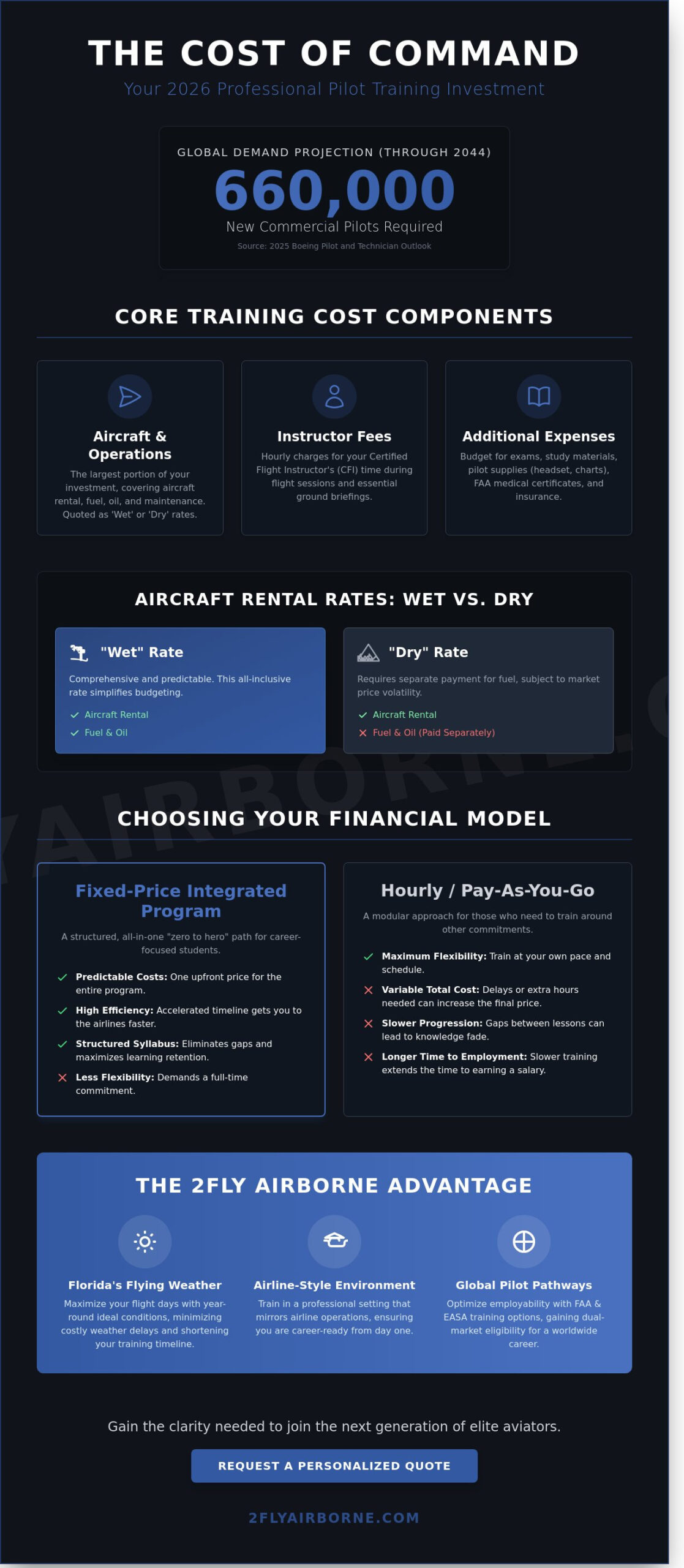
Understanding the total pilot training cost requires looking past the initial sticker price and analyzing the operational variables of a flight academy. Flight schools typically quote aircraft rental rates as either “Wet” or “Dry.” A wet rate is comprehensive, covering the aircraft, fuel, and oil. Conversely, a dry rate excludes fuel, which you pay for separately based on consumption. In the 2026 economy, many institutions utilize fuel surcharges to manage the volatility of energy markets. These surcharges are variable fees that adjust based on current market prices, ensuring the fleet remains maintained to the highest safety standards without compromising the quality of your training.
Instructional fees represent another critical budget line item. You’ll pay an hourly rate for a Certified Flight Instructor (CFI) during both flight time and ground briefings. While some students seek the lowest hourly rate, elite instruction is a strategic investment. High-quality mentors help you master complex maneuvers more efficiently, which can reduce the total number of hours required to reach proficiency. You must also budget for “hidden” administrative costs that aren’t always included in primary tuition. These include FAA medical examinations, which confirm your physical fitness for flight, and fees for FAA knowledge tests. Practical exams, known as checkrides, require a payment to a Designated Pilot Examiner (DPE). To get a realistic view of how much is flight school to become a commercial pilot, you should account for these recurring regulatory expenses from day one.
Direct Training Expenses: Aircraft and Instruction
Your primary expenditure involves the airframe itself. Single-engine aircraft serve as the foundation for initial ratings, while multi-engine trainers carry higher hourly costs due to increased fuel burn and complex systems. To optimize your budget, incorporate simulator time into your syllabus. Modern flight training devices allow you to build instrument proficiency and practice emergency procedures in a controlled environment at a fraction of the cost of an actual flight hour. This efficiency is vital as you prepare for the 660,000 new pilot roles identified in the 2025 Boeing Pilot and Technician Outlook. Choosing a school that prioritizes modern technology ensures you’re training for the flight decks of tomorrow.
Ancillary Costs: Gear, Books, and Software
Becoming an airline-ready professional requires a suite of specialized tools. You’ll need a high-quality aviation headset to ensure clear communication with Air Traffic Control and protect your hearing. Most modern cadets also invest in an Electronic Flight Bag (EFB), such as ForeFlight, which requires a tablet and an annual subscription. Ground school materials and digital learning platforms are equally essential. These FAA-approved resources provide the technical foundation necessary to pass your certification exams on the first attempt. For a comprehensive look at every expense you should plan for, our flight school cost 2026 financial guide covers tuition, living expenses, and financing options in detail. If you’re planning your financial path, speaking with a specialized training advisor
Fixed-Price vs. Hourly Training: Choosing the Right Financial Model
Deciding how to allocate your capital is as critical as choosing the right aircraft for your checkride. Most aspiring aviators face a choice between the modular pay-as-you-go model and integrated, professional programs. While the former seems flexible, it often leads to a higher total pilot training cost due to inherent inefficiencies and market volatility. Professional academies prioritize a structured environment where every flight hour serves a specific purpose toward your certification.
The Risks of Modular ‘Pay-as-You-Go’ Training
Modular training carries hidden financial burdens that many students don’t anticipate. When flight lessons are sporadic, you’ll spend significant time reviewing previous maneuvers instead of mastering new skills. This re-learning cycle is why modular students often take 25% longer to reach commercial minimums compared to those in full-time programs. Flight schools can also increase aircraft rental rates mid-training without a binding contract, leaving your budget vulnerable to fuel surcharges and inflation. Without a locked-in rate, your initial estimates can quickly become obsolete.
The Benefits of Fixed-Price Tuition
Fixed-price tuition offers a shield against these variables. It provides budget certainty for families and lenders, ensuring that the price you agree upon at enrollment remains stable throughout your journey. This model facilitates a streamlined progression from Private Pilot through Commercial Multi-Engine ratings. Programs like the FAA Airline Pilot Program exemplify this approach. They provide a clear financial roadmap that eliminates the guesswork of hourly billing, allowing you to focus entirely on your performance in the cockpit.
The 2025 Boeing Pilot and Technician Outlook projects a demand for 660,000 new qualified pilots through 2044. With such a robust career outlook for pilots, speed to the flight deck is your greatest asset. Accelerated programs might require a larger upfront commitment, but they reduce the total pilot training cost by minimizing the duration of your education. Every month spent in training is a month of lost senior-level airline wages. Choosing a structured path like the FAA First Officer Program positions you to enter the workforce sooner and maximize your lifetime earnings potential.
Aviation is a discipline that rewards precision and planning. Apply those same principles to your financial strategy by opting for a model that offers transparency and momentum. Contact a training advisor at 2FLY Airborne today to discuss which professional program aligns with your career goals and financial requirements.
Funding Your Future: Financing and Scholarship Strategies in 2026
Securing your seat on the flight deck requires a strategic financial plan. The 2025 Boeing Pilot and Technician Outlook forecasts a requirement for 660,000 new pilots by 2044. This massive demand makes your education a high-value investment. For U.S. citizens, specialized aviation lenders like Sallie Mae and Stratus Financial offer products tailored for the aviation industry. These institutions provide loans that often cover the total pilot training cost, including equipment, examiner fees, and ground school materials.
Many successful cadets combine these loans with family sponsorship or personal savings to manage interest. International students face different requirements. They must prove financial capacity to obtain an M-1 or F-1 student visa. This involves providing bank statements that show enough liquid funds for both tuition and living costs before they arrive in the United States. You should review the 2FLY Airborne Financing Page to see which lenders align with your residency and financial background.
Aviation Scholarships and Grants
Scholarships are an excellent way to offset your investment. Organizations like the Aircraft Owners and Pilots Association (AOPA), Experimental Aircraft Association (EAA), and Women in Aviation International (WAI) award millions in annual grants. To win these, you need a competitive scholarship resume. Start this early by documenting your flight hours, ground school grades, and volunteer work at aviation events. Professional academies prioritize merit-based aid for students who show the discipline needed for a commercial flight deck.
Student Housing and Living Expenses
Your budget needs to include housing and daily costs. Renting a local apartment often involves hidden fees and long commutes. Living in a dedicated aviator community provides a significant financial and educational advantage. You’ll be surrounded by peers who share your goals, allowing for shared study sessions and reduced transportation costs. 2FLY Airborne’s residential options simplify your transition. These facilities consolidate your living expenses into a predictable monthly figure, helping you keep your total pilot training cost manageable.
If you’re ready to map out your path to the cockpit, contact a 2FLY Airborne training advisor for personalized guidance on your funding strategy today.
The 2FLY Airborne Advantage: Optimizing Your Training Investment
Choosing where to train is as critical as how you fund it. At 2FLY Airborne, we operate as an elite academy that functions like a commercial airline. This professional environment ensures that you don’t just learn to fly; you learn to operate within the rigorous standards of the industry. By training in a culture that mirrors airline operations, you reduce the transition costs often associated with moving from a flight school to a regional carrier flight deck. Our instructors act as expert mentors, prioritizing the development of airline-ready graduates who possess the discipline and technical mastery required by global carriers.
Weather is a silent factor in the overall pilot training cost. Our Florida base provides year-round flying conditions that minimize expensive delays. In many regions, winter weather can stall progress for weeks; this forces students to spend more on refresher flights to regain proficiency. At 2FLY, the sun keeps you in the cockpit. This consistency ensures you complete your ratings on a predictable schedule, protecting your budget from the hidden expenses of downtime and retraining.
Accelerated Paths to 1,500 Hours
Earning your commercial certificate is the first milestone, but reaching the 1,500-hour ATP minimum requires a strategic plan. Most of our graduates choose the CFI path. This allows you to earn a salary while building the flight time necessary for airline hiring. We provide the mentorship needed to move through these stages efficiently. For those seeking a structured academic route, our Degree Program with Airline Pilot Training integrates flight hours with a college education, providing a comprehensive foundation for your career. This path supports graduates in reaching ATP minimums with maximum efficiency. To understand the full financial picture of reaching that 1,500-hour milestone, our detailed breakdown of ATP flight school cost for 2026 outlines the complete investment required and how to plan for every stage of your professional pilot journey.
Next Steps for Aspiring Pilots
The journey to the flight deck begins with a single step. We encourage you to attend our Aviation Events to experience our culture and speak directly with instructors about the financial commitment. You can also schedule a discovery flight or campus visit to see our fleet and facilities firsthand. While the initial pilot training cost is significant, the 2025 Boeing Pilot and Technician Outlook projects a demand for 660,000 new qualified pilots through 2044. This outlook confirms that the long-term career rewards justify the commitment. Contact a 2FLY training advisor today for a tailored cost breakdown and start your ascent toward a global aviation career.
Secure Your Future on the Flight Deck
The aviation industry is entering an era of unprecedented opportunity. The 2025 Boeing Pilot and Technician Outlook projects a global demand for 660,000 new qualified pilots through 2044. Navigating your pilot training cost requires a strategic approach that balances high-quality FAA and EASA training standards with smart financial planning. Whether you opt for fixed-price tuition or an hourly model, your education is a long-term investment in a high-growth career. Choosing the right path now ensures you’re ready to meet the rigorous demands of the modern cockpit.
Don’t let financial uncertainty delay your ambitions. Our advisors provide the clarity you need to move from the classroom to a professional airline career. We’re committed to helping you achieve airline-ready status through structured, elite training programs designed for high-achievers. Professional success requires a disciplined start; we provide the roadmap to get you there.
Speak with a 2FLY Training Advisor for a Personalized Cost Breakdown
Your journey toward becoming a global pilot starts with a single, informed decision. We look forward to seeing you in the sky.
Frequently Asked Questions
How much does it cost to get a Private Pilot License in 2026?
The national average for a Private Pilot License in 2026 typically ranges between $15,000 and $25,000 depending on your location and the aircraft type used. This pilot training cost covers your initial flight hours, ground school sessions, and instructor fees. Every student progresses at a unique pace, so your final investment depends on how quickly you master the required maneuvers. Speak with a 2FLY Airborne advisor to get a clearer picture of the requirements for your specific goals.
Can I get a student loan for flight school as an international student?
Yes, international students can access specialized flight school loans, often requiring a U.S. citizen or permanent resident as a co-signer. Lenders like MPOWER Financing or Prodigy Finance frequently work with global cadets pursuing professional aviation careers in the United States. These loans help bridge the gap for those training at FAA-approved academies. Contact a training advisor to explore the specific financing partnerships available for your residency status.
What is the total estimated cost for a ‘Zero to Hero’ commercial pilot program?
A comprehensive “Zero to Hero” program that takes you from no experience to a commercial pilot certificate generally costs between $80,000 and $110,000 in the current market. This path is the most efficient way to become airline-ready. With the 2025 Boeing Pilot and Technician Outlook projecting a demand for 660,000 new qualified pilots through 2044, this investment positions you for an elite global career. For a detailed breakdown of what these programs include, our complete guide on how much is flight school to become a commercial pilot covers costs, financing, and career ROI in full. Costs vary based on the specific training syllabus and aircraft used.
Are there hidden fees in pilot training that I should watch out for?
You should prepare for additional expenses like FAA medical certificates, renter’s insurance, and specialized equipment which can add $2,000 to $3,000 to your total budget. Other common costs include digital chart subscriptions and written exam fees. Clear communication with your flight school ensures you understand the full breakdown before you start. We recommend reviewing a detailed fee schedule with a professional advisor to avoid surprises during your training journey.
How much does a flight instructor charge per hour in 2026?
Certified Flight Instructors in 2026 typically charge between $50 and $90 per hour for dual instruction time. This rate applies to both flight time and ground briefings. Senior instructors or those teaching specialized ratings like Multi-Engine or Instrument might charge at the higher end of that scale. Professional academies often bundle these rates into their program packages to provide more predictable pricing for students. It’s a vital investment in your safety and technical mastery.
Is it cheaper to train for an FAA license or an EASA license?
Training for an FAA license in the United States is generally 20% to 30% more cost-effective than pursuing an EASA license in Europe due to lower fuel costs and higher aircraft availability. Many global students choose to complete their initial training in the U.S. before converting their licenses. This strategy allows you to maximize your flight hours while minimizing the overall pilot training cost. It’s a proven path to becoming a professional pilot on a global stage.
Does the pilot training cost include the FAA checkride fees?
Most flight training quotes don’t include FAA checkride fees, which are paid directly to a Designated Pilot Examiner. In 2026, these fees usually range from $800 to $1,500 per practical exam. You’ll also need to account for the aircraft rental cost during the checkride itself. Always ask your training provider for a list of out-of-pocket expenses to ensure your financing covers every step of the certification process. Our team can provide a detailed list of these external costs.
What happens if I need more flight hours than the program estimate?
If you require additional hours beyond the syllabus minimums, you’ll typically pay the standard hourly rate for the aircraft and instructor. The FAA sets minimum hour requirements, but 90% of students need more time to reach full proficiency. This is a normal part of the learning process in a professional environment. Contact a 2FLY Airborne advisor to discuss how we structure our programs to help you stay on track and budget effectively for your ATP flight school cost and airline career.
Article by
2FLY Airborne
2Fly Airborne is a professional flight training organization dedicated to developing the next generation of skilled, confident, and safety-focused pilots. With decades of combined aviation experience, our team of certified instructors provides structured, real-world training designed to prepare students for both checkrides and long-term success in the aviation industry.
Content Disclaimer
Some blog content is generated with the assistance of automated tools and may not always be fully accurate or up to date. Please verify all aviation-related information with official sources or a certified instructor. For additional guidance or clarification, we encourage you to contact one of our training advisors at 2Fly Airborne.