
Choosing a training location based solely on the weather is the most common mistake aspiring commercial pilots make. While the Sunshine State offers over 350 flyable days a year, your success depends more on the regulatory structure and professional pipeline of your chosen institution. You likely recognize that Florida is the global hub for aviation, yet you might feel overwhelmed by the complexity of FAA standards, visa applications, and the fear of unpredictable training costs.
This guide will help you identify which flight schools in Florida offer the most reliable path to a commercial cockpit. We will show you how to navigate the 2026 modernization of Part 141 regulations to your advantage. You’ll discover how a structured program provides a clear financial roadmap while securing your future in international aviation.
We are going to break down the specific benefits of professional pilot programs, including the seamless transition from student to industry-ready professional. You will learn how to manage housing and visa logistics with confidence. By the end of this article, you’ll have a definitive strategy for choosing a school that aligns with your highest career ambitions and provides a direct gateway to the airlines.
Key Takeaways
- Understand why Florida’s consistent climate provides the optimal environment for maintaining the training momentum required for professional certification.
- Learn to distinguish between FAA Part 141 and Part 61 structures to select the curriculum most valued by international commercial airlines.
- Identify how to evaluate the financial models of flight schools in Florida to avoid the common pitfalls of unpredictable hourly training costs.
- Discover the critical role of integrated housing and visa support in creating a focused, stable environment for your vocational development.
- Gain a clear perspective on the transition from a trainee to an industry-prepared professional ready for a global aviation career.
Why Florida Remains the Global Capital for Professional Flight Training
Florida is often called the "gold standard" for aviation training, and for good reason. It isn’t just about the scenery or the vacation atmosphere. It’s about a dedicated infrastructure that supports thousands of aspiring pilots every year. When you choose among the various flight schools in Florida, you’re entering a professional ecosystem designed to move you from the classroom to the cockpit with maximum efficiency.
The state hosts a massive concentration of airports, maintenance facilities, and aviation professionals. This density creates unique networking opportunities that you won’t find in more isolated regions. Being surrounded by industry leaders and fellow high-achievers fosters a disciplined environment where professional standards are the norm rather than the exception. It’s a place where your ambition is matched by the resources available to help you succeed.
The Weather Advantage: Maximising Flight Hours
Consistent weather is the engine that drives your training momentum. In many parts of the world, student pilots face weeks of "grounded" time due to snow, low clouds, or persistent rain. These gaps lead to "skill fade," where you spend your next flight relearning what you forgot during the layoff instead of progressing to new maneuvers.
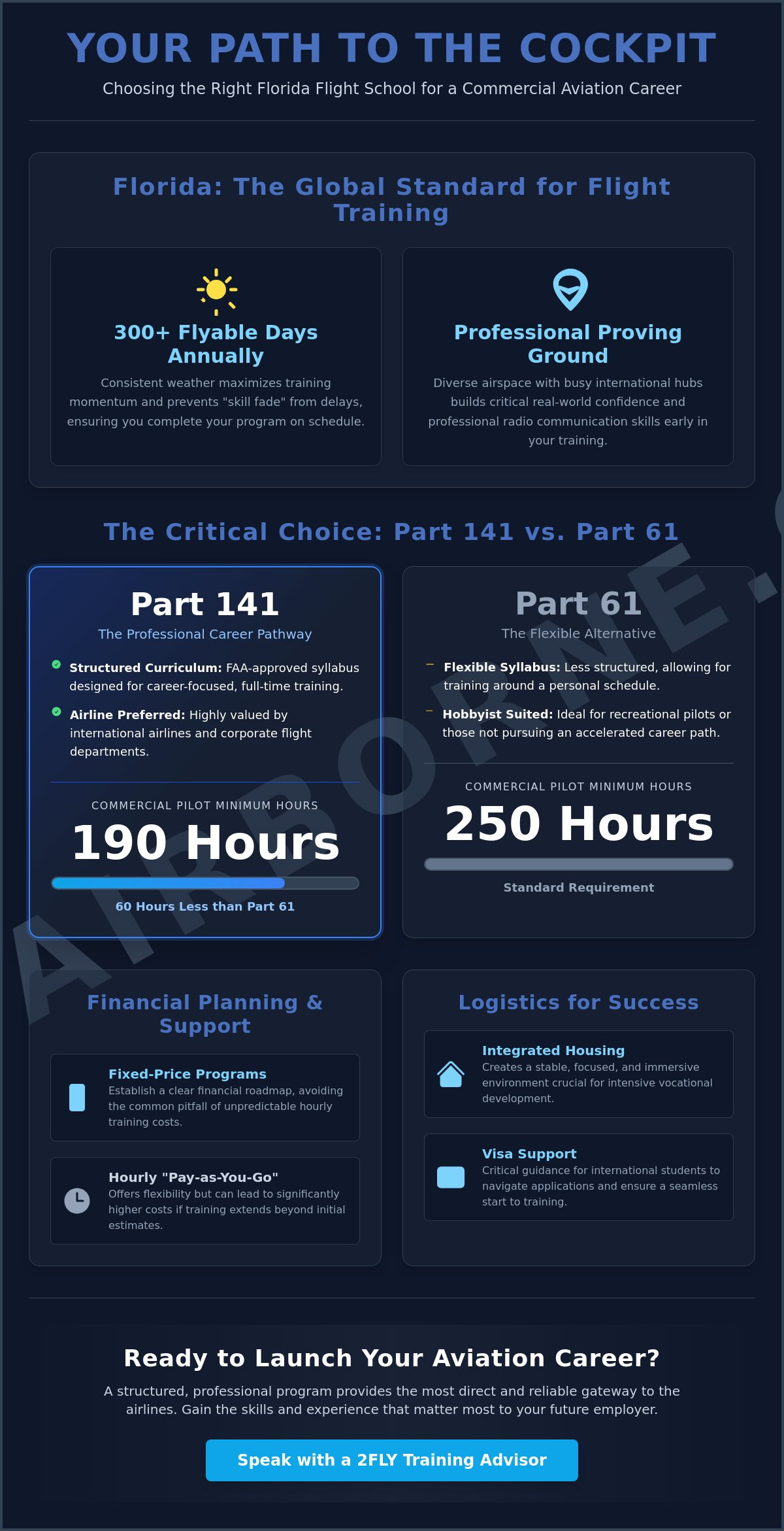
Florida offers over 300 flyable days per year, allowing you to fly almost every day. This consistency is vital for completing an accelerated FAA Airline Pilot Program on schedule. While the skies are generally clear, the subtropical climate also provides valuable exposure to real-world conditions like afternoon convective activity. Learning to navigate these patterns under the guidance of an expert mentor builds the practical judgment required for a commercial career.
Diverse Airspace: A Professional Proving Ground
Confidence in the cockpit comes from exposure to complexity. Florida’s airspace is among the most diverse in the world, featuring a mix of quiet, uncontrolled strips and some of the busiest international hubs. This variety ensures that students aren’t just learning to fly the aircraft; they’re learning to operate within a sophisticated global system.
Aspiring pilots must understand the regulatory differences between Part 141 and Part 61 environments to maximize their training. Training near major international airports forces you to master professional radio communication early. You’ll share frequencies with commercial airliners and corporate jets, which quickly normalizes the high-pressure environment of airline operations. This immersion turns the "anxiety" of busy radio calls into a routine professional skill.
By the time you reach your commercial checkride, the high-traffic environment of flight schools in Florida will have already prepared you for the pace of a professional flight deck. You aren’t just building hours; you’re building the vocational preparedness that airlines demand. This experience is the definitive gateway to an international career.
Navigating Regulatory Standards: Choosing Between Part 141 and Part 61
How quickly can you move from the ground to the right seat of a commercial jet? The answer often depends on which set of federal regulations your training follows. When researching flight schools in florida, you’ll encounter two primary pathways: Part 141 and Part 61. While both lead to the same pilot certificates, the road to getting there looks very different for a professional candidate.
Part 141 schools operate under a highly structured, FAA-approved curriculum. This path is designed for students who want a vocational, full-time environment that prioritizes career readiness. One of the most significant advantages is the hour requirement. Under Part 141, you can earn your Commercial Pilot Certificate with a minimum of 190 flight hours, whereas Part 61 requires 250 hours. This 60-hour difference represents a substantial saving in both time and training costs.
For those focused on an international career, Part 141 Flight Schools: Choosing the Right Career Path in 2026 provides a deeper look into how these regulations are evolving. In April 2026, the FAA proposed a modernization update to Part 141 to better incorporate new technologies and streamline the certification process. These changes aim to make professional training even more efficient for the next generation of aviators.
Part 141: The Structured Career Path
Airlines value Part 141 graduates because the training environment mirrors the rigorous, syllabus-driven approach used by major carriers. It’s about more than just flying; it’s about following professional standard operating procedures (SOPs) from day one. This structure ensures that every student meets specific milestones before moving to the next phase of their training. It builds the discipline required to handle the demands of a modern flight deck.
International students should also note that an M-1 visa is specifically required for vocational flight training in the United States. This visa is almost exclusively tied to Part 141 schools. Choosing a school that understands these regulatory nuances is the first step toward securing your commercial aviation future. You can explore how a professional syllabus accelerates your progress by reviewing our FAA Airline Pilot Program.
Part 61: Flexibility for Modular Training
Part 61 offers a modular, instructor-driven approach that is often chosen by those who need to balance flight training with a full-time job. It’s a "pay-as-you-go" model that allows for a more relaxed pace. While this flexibility is beneficial for hobbyists, it lacks the oversight and accelerated momentum of a professional academy. For a high-achiever aiming for a first officer role, the lack of a fixed timeline can sometimes lead to training delays and "skill fade."
Ultimately, the choice depends on your end goal. If you’re looking for a direct pipeline to airline employment, the structured nature of Part 141 is the definitive choice. It provides the predictable financial path and rigorous standards that top-tier aviation employers expect from their new hires. Transitioning from a trainee to an industry-prepared professional requires a stable and world-class setting for your development.
Evaluating Flight School Costs: Fixed-Price vs. Hourly Rates
Imagine reaching the end of your planned training budget only to realize you still need twenty more hours of flight time to qualify for your checkride. This scenario is a common reality for students who choose a pay-as-you-go model without understanding the variables involved. When comparing flight schools in Florida, the financial structure you select is just as critical as the aircraft you fly.
Most aspiring pilots focus solely on the hourly rental rate of an airplane. However, this single number rarely tells the whole story. You must account for instructor fees, fuel surcharges, insurance, and ground school materials. A professional program typically bundles these essentials into a single, transparent tuition, providing a predictable financial path to your commercial certification.
Understanding Pay-As-You-Go Risks
The "Hourly Rate Trap" occurs when external factors beyond your control inflate your training budget. Fuel prices can fluctuate significantly during your training, and many schools pass these costs directly to the student through surcharges. Learning plateaus are also a natural part of flight training; if you need extra practice on a specific maneuver, an hourly model can quickly become financially unsustainable.
Weather delays, while less frequent in Florida, can still impact your timeline. If a gap in training requires a refresher flight to regain proficiency, that’s an unbudgeted expense in a modular system. It’s vital to verify exactly what your hourly rate covers. Often, items like pre-flight briefings, simulator sessions, and landing fees are billed separately, leading to cost creep that can derail your progress.
The Benefits of Fixed-Price Professional Programs
A fixed-price model eliminates financial ambiguity by providing a total cost for your training syllabus. This transparency is essential for high-achievers who need to secure financing or manage personal savings effectively. Knowing your total investment upfront allows you to focus entirely on your technical mastery rather than worrying about the cost of every engine start.
Professional academies utilize this structured approach to ensure students reach their goals without hidden financial hurdles. For a deeper dive into budgeting for your career, review our Flight School Costs: A Full Financial Guide for Aspiring Pilots. This resource breaks down the long-term rewards of choosing a program that prioritizes vocational preparedness over short-term savings.
By selecting a fixed-price program, you’re investing in a direct pipeline to employment. This model reflects the stability of the airline industry itself. It ensures that your training remains a steady, goal-oriented progression toward your ultimate career as a commercial pilot. Choosing a school with a clear financial roadmap is the definitive way to secure your future in aviation.
Essential Logistics: Housing and Visa Support for Student Pilots
Success in professional aviation requires more than just technical proficiency in the cockpit; it demands a total training environment that supports your focus and well-being. Aspiring pilots often underestimate the logistical challenges of relocating for flight training. When evaluating flight schools in Florida, you must look beyond the aircraft fleet and examine the support systems in place for your daily life.
A stable residential environment is a critical component of vocational development. It removes the stress of navigating local real estate markets and long commutes, allowing you to dedicate your full energy to the rigorous demands of your syllabus. Schools that provide integrated logistics create a seamless transition from trainee to industry-prepared professional, ensuring that your path to the airlines remains unobstructed by administrative hurdles.
On-Campus Housing: More Than Just a Place to Sleep
Living within a community of fellow aviators is an often overlooked advantage of professional academies. This arrangement facilitates "hangar talk," where students discuss maneuvers, weather patterns, and regulatory updates outside of formal lessons. Peer learning of this nature reinforces the concepts taught in ground school and builds the collaborative mindset required for multi-crew operations.
Residential programs also offer the practical benefit of proximity to the flight line. Reducing commute times means you can be at the briefing room within minutes of a weather clearing, maximizing your flyable hours. For a detailed look at how these environments shape your career, see our article on Choosing the Right Aviator College: A 2026 Guide to Professional Pilot Training. Many programs even include shared room accommodations for seven to eight months to ensure a stable start to your journey.
Visa Sponsorship for International Aviators
For non-US citizens, navigating the legal requirements for training in the United States is a complex but necessary step. International students seeking vocational training must obtain an M-1 visa. This process begins with acceptance into a Student and Exchange Visitor Program (SEVP) approved school, which then issues the essential Form I-20. You must also pay a SEVIS I-901 fee of $350 and complete the DS-160 application with a fee of $185.
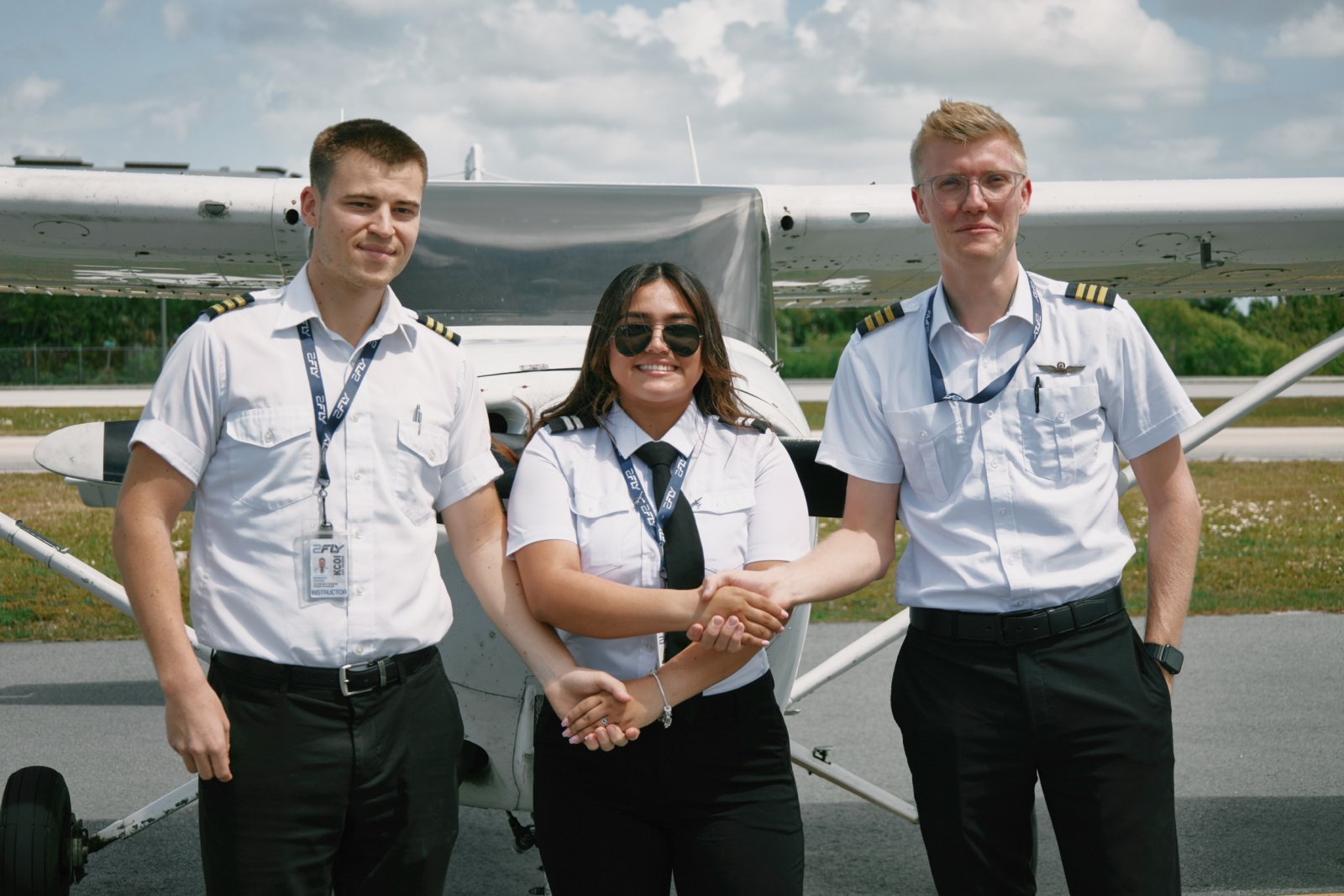
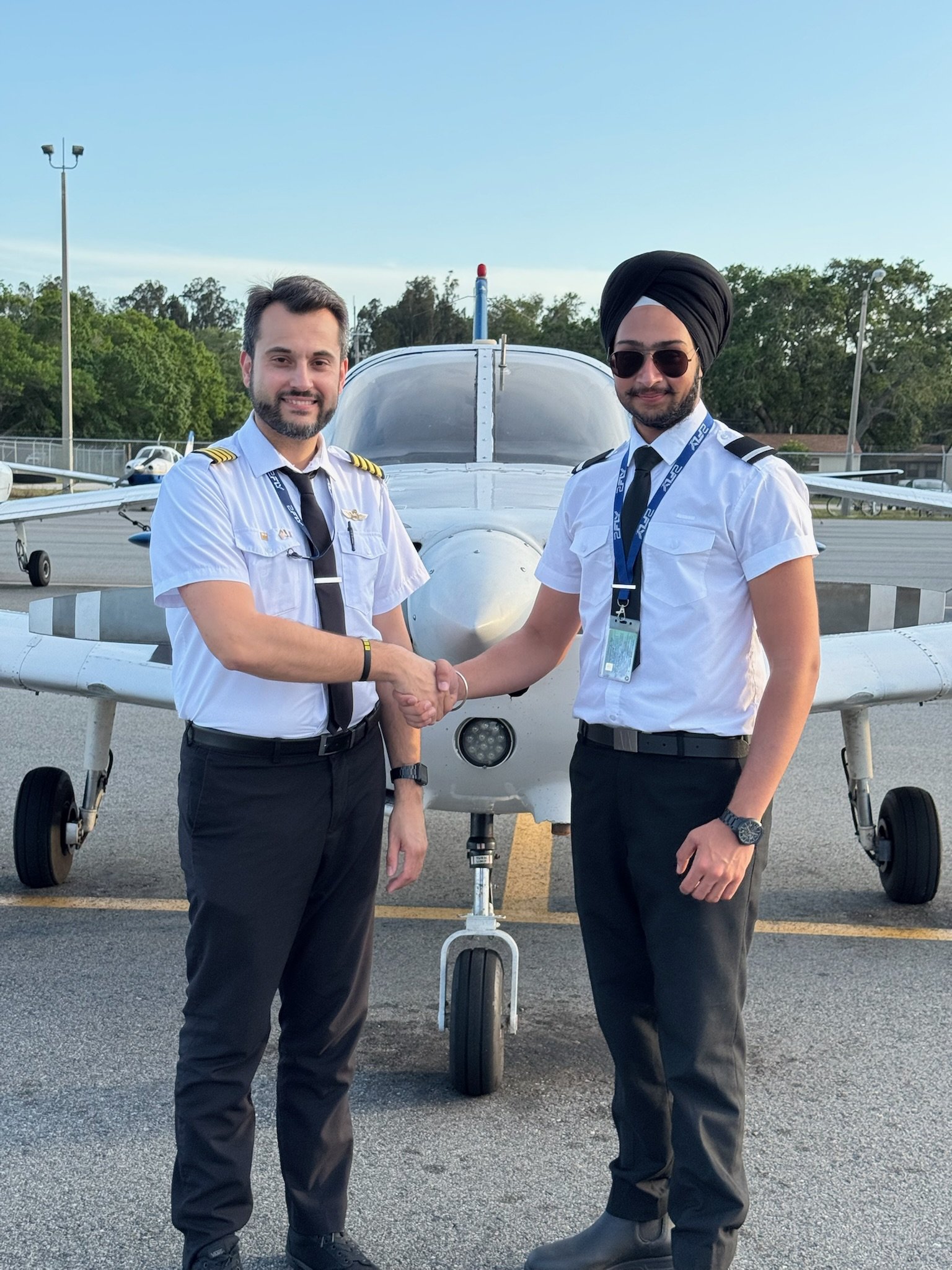
It is vital to choose a pilot school that provides dedicated administrative support for these requirements. Your training provider should act as an expert mentor throughout the visa process, ensuring all documentation is accurate and timely. Keep in mind that M-1 visa holders are not permitted to work during their studies, so providing proof of sufficient funds for training and living expenses is mandatory. If you are ready to begin your international career, you can start by reviewing the requirements for our FAA Airline Pilot Program.
Launching Your Commercial Career with 2FLY Airborne
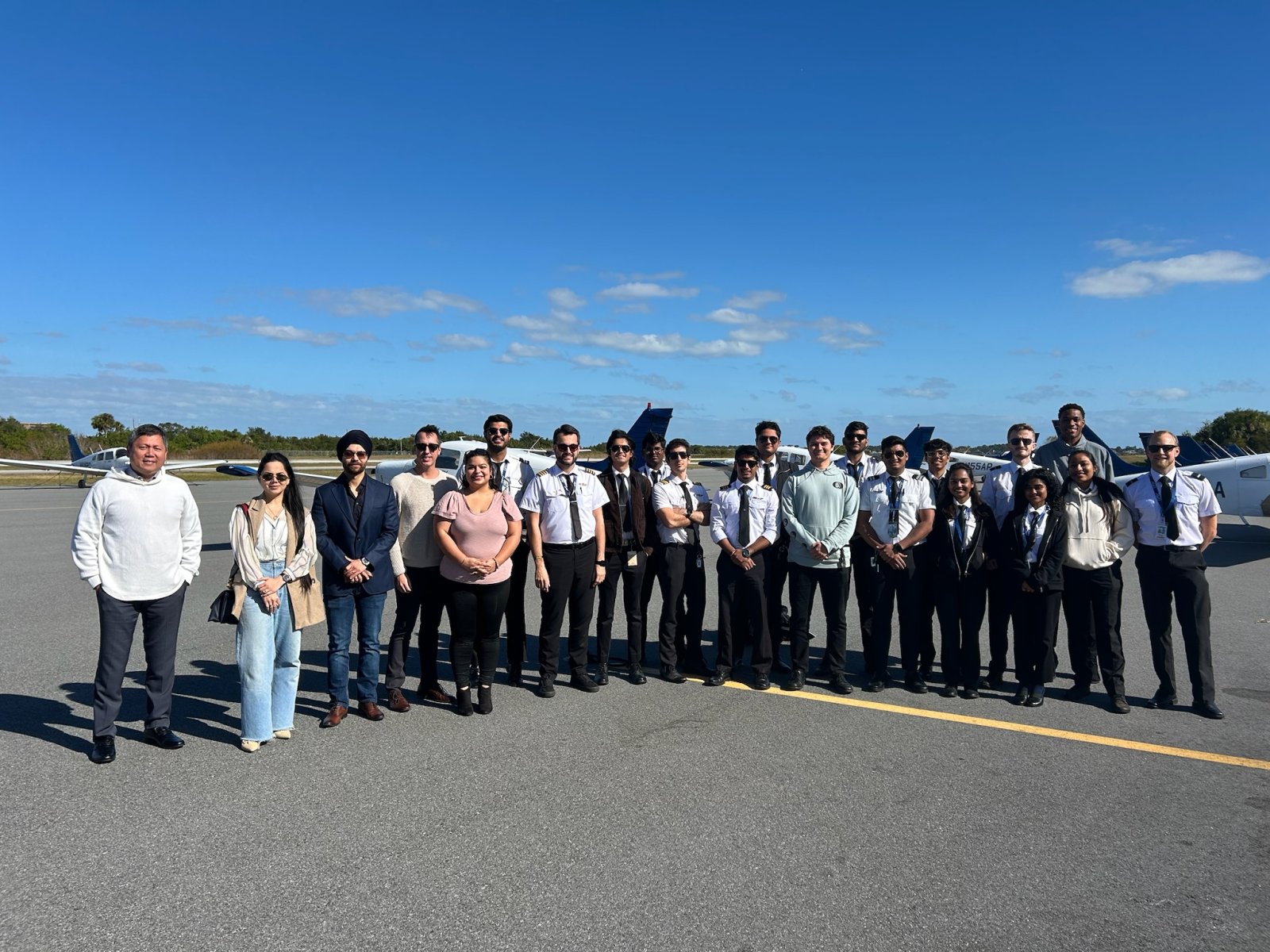
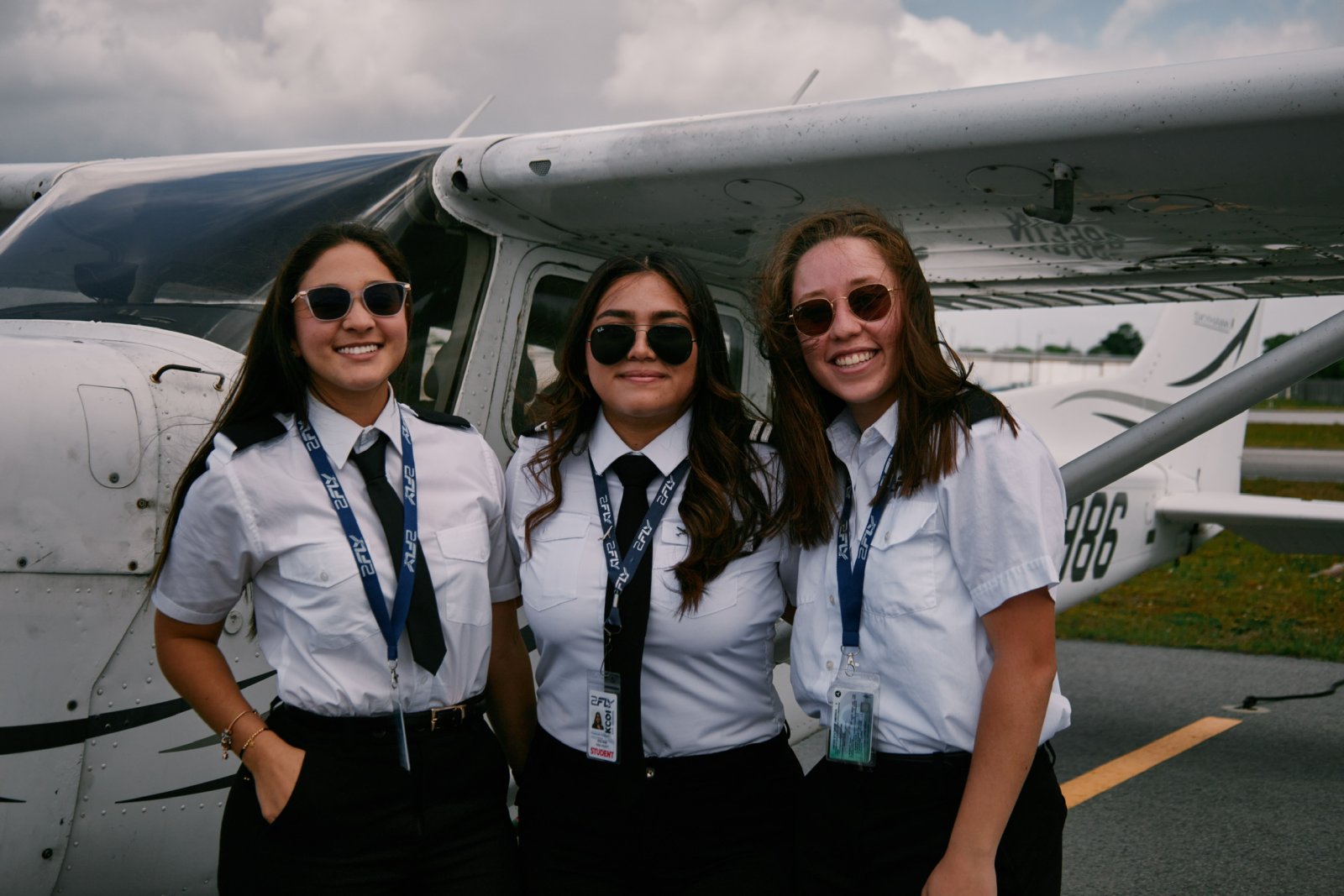
Earning your certificates is a significant milestone, but the ultimate goal is a seat in a commercial cockpit. While many flight schools in Florida focus purely on accumulating flight hours, the most successful pilots choose a program that emphasizes vocational preparedness from day one. At 2FLY Airborne, we view your training as the start of a lifelong professional journey within a global aviation network.
The industry’s need for qualified professionals has never been more urgent. The 2025 Boeing Pilot and Technician Outlook projects a demand for 660,000 new pilots globally through 2044. This scale of opportunity requires a training foundation that meets the highest international standards. By integrating both American FAA and European EASA training options, we ensure our graduates possess the professional mobility required to excel in any region.
Our FAA Professional Pilot Program is specifically designed to bridge the gap between initial training and airline employment. It provides a structured, predictable path that removes the guesswork from your career development. You aren’t just learning to fly; you’re adopting the mindset and discipline of a commercial first officer from your very first flight.
A Direct Pipeline to the Airline Cockpit
The transition from a trainee to an industry-prepared professional is a deliberate process. We utilize an extensive global network to help our graduates move toward their first professional roles. This pipeline is built on a reputation for excellence and a commitment to safe, structured training. By training in a professional environment, you develop the multi-crew cooperation and technical mastery that airlines prioritize during the hiring process.
International mobility is a unique marker of our training strategy. We focus on the end result, which is your professional career, serving as the primary anchor for everything we do. This ensures that you are not just a pilot with a license, but a professional ready to integrate into a commercial flight department.
The 2FLY Training Advisor Advantage
No two career paths are identical, which is why expert guidance is essential before you commit to a specific training path. A 2FLY Training Advisor works with you to customize a syllabus that aligns with your specific goals. Whether you aim to fly for a domestic carrier or an international airline, they provide the clarity needed to navigate certifications and regulatory requirements with confidence.
Choosing the right school is a strategic investment in your future. Remember that Florida’s favorable weather, the structural advantages of Part 141 training, and a transparent financial model are the three pillars of a successful education. These elements combined create a world-class setting for your professional development.
Safe, structured training remains the most important foundation for a long and rewarding career in the skies. If you have any remaining questions about how to secure your commercial aviation future, please reach out to a 2FLY Training Advisor today.
Securing Your Future in the Global Cockpit
Florida remains the definitive hub for aviation because it combines an ideal climate with a massive professional infrastructure. Success requires choosing from the many flight schools in Florida that prioritize a structured, Part 141 curriculum over a fragmented modular approach. By selecting a program that offers FAA and EASA certified programs, fixed-price tuition options, and on-campus residential housing, you eliminate the logistical and financial uncertainties that often stall a student’s progress.
Safe, structured training is the most reliable foundation for a long and rewarding career in commercial aviation. It’s the difference between simply learning to fly and becoming an industry-prepared professional ready for global mobility. Your journey toward an international career begins with a single, strategic decision about your training environment and the expert institution that will guide your development.
Ready to start your journey? Speak with a 2FLY Training Advisor today. We invite you to reach out to a 2FLY Training Advisor with any remaining questions you may have about our professional pilot programs.
Frequently Asked Questions
Why are so many flight schools located in Florida?
Florida’s climate and infrastructure make it the premier global hub for aviation training. With over 300 flyable days per year, students maintain the training momentum necessary for technical mastery. The state also offers a diverse mix of controlled and uncontrolled airspace. This environment prepares you for the complexities of a commercial flight deck while providing access to a vast network of maintenance facilities and aviation professionals.
How long does it take to complete commercial pilot training in Florida?
A full-time professional program typically takes between 10 and 14 months to complete. Your timeline depends on whether you train under Part 141 or Part 61 regulations. Part 141 programs allow you to earn a commercial certificate with 190 hours, compared to 250 hours under Part 61. Consistent weather at flight schools in Florida helps ensure you stay on schedule without the long gaps caused by seasonal changes.
Can international students attend flight school in the United States?
International students are welcome at US flight academies that are SEVP-approved. You must first be accepted into a program, which will then issue the Form I-20 required for your visa application. This process ensures you have the legal standing to reside in the United States during your vocational training. It’s essential to partner with a school that provides dedicated administrative support for these international requirements.
What is the difference between an M-1 and an F-1 visa for pilot training?
The M-1 visa is the standard for vocational flight training, while the F-1 visa is reserved for academic degree programs. Most students pursuing a professional pilot career choose the M-1 pathway for its direct focus on flight certification. F-1 visas are generally associated with university programs that include a four-year degree. Understanding these distinctions is critical for ensuring your legal status aligns with your specific training goals.
Is a fixed-price program better than paying hourly for flight school?
Fixed-price programs are generally superior for professional candidates because they provide total financial transparency. Unlike hourly rates, which are subject to fuel surcharges and instructor fee fluctuations, a fixed-price tuition allows for precise budgeting. This model eliminates the "Hourly Rate Trap" where learning plateaus or minor delays can inflate your costs. It provides the peace of mind needed to focus entirely on your vocational preparedness.
What are the medical requirements to start flight training in Florida?
You must secure an FAA First Class Medical Certificate to begin your path toward a commercial career. An Aviation Medical Examiner (AME) performs this evaluation to ensure you meet the physical standards for airline operations. The exam covers vision, hearing, and general cardiovascular health. It’s a foundational requirement that confirms you’re physically prepared for the rigorous demands of a professional aviation career before you start flying.
How do I choose between FAA and EASA training in the USA?
Your choice between FAA and EASA depends entirely on the region where you intend to seek employment. FAA certificates are the standard for US-registered aircraft, while EASA is required for European carriers. Some elite **flight schools in **Florida offer dual-certification programs that allow you to earn both. This integrated approach provides maximum professional mobility, giving you the flexibility to transition between international markets as your career progresses.
Does flight school in Florida include housing for students?
Many professional pilot academies include managed residential housing as part of their training packages. Living on or near campus reduces commute times and places you in a community of high-achievers with similar goals. This residential environment fosters peer learning and "hangar talk," which can significantly improve your success rates. Many programs provide shared room accommodations for the duration of the core training phases to support your focus.
Article by
2FLY Airborne
2Fly Airborne is a professional flight training organization dedicated to developing the next generation of skilled, confident, and safety-focused pilots. With decades of combined aviation experience, our team of certified instructors provides structured, real-world training designed to prepare students for both checkrides and long-term success in the aviation industry.
Content Disclaimer
Some blog content is generated with the assistance of automated tools and may not always be fully accurate or up to date. Please verify all aviation-related information with official sources or a certified instructor. For additional guidance or clarification, we encourage you to contact one of our training advisors at 2Fly Airborne.