

What if the package advertising the most hours doesn’t match your next training step? When comparing multi engine time building packages usa, it’s tempting to focus on the headline number. But hours alone don’t tell you what aircraft access, instructor support, scheduling, or package terms are included.
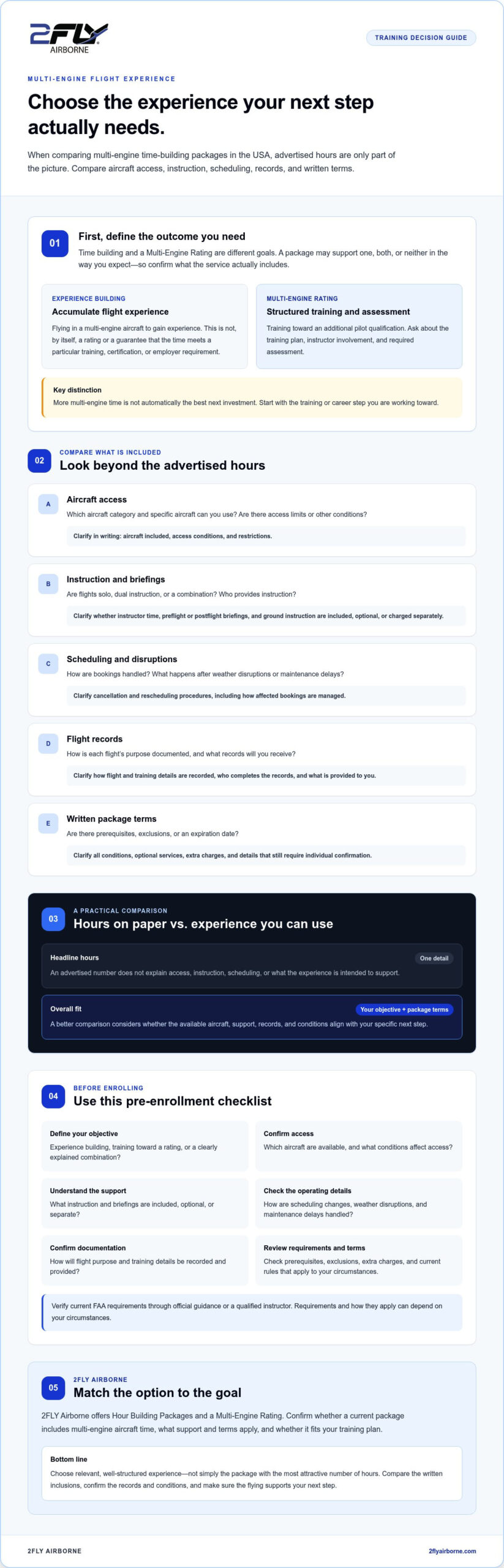
The right choice depends on what you need to accomplish. Building multi-engine flight time and completing a Multi-Engine Rating are different goals: one focuses on gaining experience in a multi-engine aircraft, while the other involves training toward an additional pilot qualification. A package may support one goal, both, or neither in the way you expect, so confirm the details before committing.
This guide provides a practical framework for comparing options based on logged experience, inclusions, safety, and fit with your career plans. You’ll learn what to ask about aircraft access, instruction, scheduling, and possible additional charges, and how to identify the next step in your training plan. The goal is to choose relevant, well-structured experience, not simply the package with the most attractive number of hours.
Key Takeaways
- Time building means accumulating flight experience; it’s distinct from completing a Multi-Engine Rating. Identify which outcome your next training or career step requires.
- Compare multi engine time building packages usa by checking aircraft access, instructor support, scheduling, records, and written terms, not just advertised hours.
- More multi-engine time isn’t automatically the best next investment. Weigh its potential benefits and trade-offs against your specific training objective.
- Before enrolling, ask what’s included, what may cost extra, how flight time is documented, and which prerequisites and current rules apply.
- 2FLY Airborne offers Hour Building Packages and a Multi-Engine Rating. Ask a Training Advisor whether a current package includes multi-engine aircraft time and fits your plan.
What Do USA Multi-Engine Time-Building Packages Include?
Are you looking for multi-engine experience to support a career plan, or training toward a Multi-Engine Rating? The distinction matters: multi engine time building packages usa can refer to different services, and a package name alone doesn’t confirm what flying or instruction it includes.
Multi-engine time building means accumulating flight experience in a multi-engine aircraft. It isn’t, by itself, a rating or a guarantee that the experience will meet a particular training, certification, or employer requirement. Before choosing a package, define your objective and confirm how each flight will be conducted and recorded.
Multi-Engine Time Building Versus a Multi-Engine Rating
Time building focuses on gaining experience. A Multi-Engine Rating involves structured training and an assessment toward an additional pilot qualification. In the U.S. certification framework, a multi-engine rating is a class rating; the Pilot certification in the United States overview explains how ratings fit within pilot certification.
Your objective determines what to ask. If you’re working toward a rating, ask about the training plan, instructor involvement, and required assessment. If you’re seeking additional experience after qualifying, ask whether the flights suit your goals and how the time will be documented. Verify current FAA requirements and how they apply to your circumstances with official guidance or a qualified instructor.
What a Package Description Should Make Clear
Ask providers to specify the aircraft access included, rather than relying on an advertised number of multi-engine hours. Confirm whether the package covers a particular aircraft, which aircraft category and class apply, and whether access depends on scheduling or other conditions.
Instruction can also vary. Find out whether instructor time, preflight or postflight briefings, and ground instruction are included, optional, or charged separately. Don’t assume a time-building package includes rating training or instructor support.
Finally, ask how flights and any training are documented in your pilot records, who is responsible for completing those records, and what information you’ll receive. Request written terms that distinguish included services from optional ones and details that still need individual confirmation.
How to Compare Multi-Engine Time-Building Packages Before You Commit
Compare the experience you can actually access, not just the hours listed in a package. A provider should explain what’s included, what’s optional, and what depends on individual confirmation. Use the questions below to assess whether the terms fit your training objective.
| Factor | Ask the provider | Clarify in writing |
|---|---|---|
| Aircraft access | Which aircraft category and specific aircraft can I use? Are there limitations on access? | Aircraft included, access conditions, and any restrictions. |
| Instruction | Are flights solo, with dual instruction, or a combination? Who provides instruction? | Whether instructor time, briefings, or ground instruction are included, optional, or separate. |
| Scheduling | How are bookings handled, and what happens after weather disruptions or maintenance delays? | Cancellation and rescheduling procedures, including how affected bookings are managed. |
| Records | How is each flight’s purpose documented, and what records will I receive? | How flight and training details are recorded and provided to you. |
| Written terms | Are there prerequisites, exclusions, or an expiration date? | All package conditions, optional services, and any items requiring individual confirmation. |
Aircraft Access, Instruction, and Logging
Advertised package hours matter only if you can access the aircraft on terms that suit your plan. Ask whether each flight is for experience building or instruction, and whether availability depends on scheduling, aircraft serviceability, or other conditions. Confirm how the provider documents the flight’s purpose and what you’re expected to enter in your pilot records.
If your goal includes a rating, check the current requirements directly. The eCFR sets out rules for adding a rating to an existing certificate; review the FAA Multi-Engine Rating Requirements and discuss how they apply to your circumstances with a qualified instructor.
Scheduling and Package Terms That Affect Usability
A package may be difficult to use if its scheduling terms don’t fit your availability. Ask what happens when weather cancels a flight or maintenance causes a delay, whether you can reschedule, and whether unused hours expire. Review prerequisites and exclusions before paying or signing.
For multi engine time building packages usa, request each provider’s current written terms and compare how clearly they answer these questions. Separate confirmed inclusions from optional services and details that still need confirmation. If you’re considering 2FLY Airborne, ask a Training Advisor whether a current Hour Building Package includes multi-engine aircraft time and fits your plan.
Is Multi-Engine Time Building Worth It Before Your Next Rating or Career Step?
Not automatically. More multi-engine time may support a specific plan, but it may be a poor fit if your immediate objective is earning a rating, completing another certificate, or meeting a requirement you haven’t confirmed. Start with your next milestone, then decide whether experience building addresses a real need.
When Multi-Engine Experience May Support Your Plan
Identify your next certificate, rating, or career step before comparing multi engine time building packages usa. Check the current requirements for that objective, then ask whether the proposed flights would provide relevant experience. Employer expectations may differ from regulatory requirements, and both can change, so verify them with the employer or an authoritative source.
Experience can be valuable when it’s relevant to your goals and supports sound proficiency. But the number of hours alone can’t establish that you meet a particular requirement or are prepared for a role. Ask how the flights will be conducted and documented, and whether the experience matches what your next step calls for.
The value of multi-engine experience depends not only on time flown, but also on the purpose of each flight and how that experience is documented.
For a sense of the skills emphasized in rating training, AOPA’s overview of Multi-Engine Flight Training Concepts discusses topics such as responding to an engine failure. Use this material to inform your questions, not as a substitute for instruction tailored to your training.
When to Prioritize Structured Rating Training Instead
If your immediate objective is a Multi-Engine Rating, ask about structured rating training rather than assuming a time-building package will prepare you for it. Experience accumulation and training toward a rating serve different purposes. Review applicable prerequisites and sequence with a qualified instructor or training advisor before choosing a path.
Keep the trade-offs in view. A package focused on experience may offer less structured instruction than your objective requires, while rating training may not be designed to accumulate additional experience beyond the training goal. Neither option guarantees qualification, employment, or readiness for an airline role.
If you’re comparing multi-engine options, explain your next milestone to a qualified training advisor and ask which pathway fits. For 2FLY Airborne, confirm whether a current Hour Building Package includes multi-engine aircraft time, and ask how it differs from Multi-Engine Rating training.
A Pre-Enrollment Checklist for Multi-Engine Flight Time in the USA
Before enrolling, prepare your training details and get clear answers from each provider. Use this checklist to compare multi engine time building packages usa on their actual terms, not assumptions based on a package name.
Questions to Ask a Training Provider
- Confirm the purpose: Does the package specifically include flight time in a multi-engine aircraft? Ask for the aircraft access and package details in writing.
- Clarify instruction: Are flights solo, instructor-led, or a combination? Confirm instructor availability and whether instruction or briefings are included or billed separately.
- Check scheduling: Ask how bookings, weather disruptions, maintenance delays, and rescheduling are handled. Confirm any availability conditions that could affect your ability to use the package.
- Understand exclusions: Request a written explanation of what’s included, what’s optional, and what may be charged separately. Check for prerequisites and conditions that apply to unused hours.
- Ask about records: Find out how flights are documented and what records you’ll receive. Explain your training objective so the provider can clarify how the documentation relates to it.
Prepare Your Training and Budget Plan
Before contacting providers, make a concise record of your current certificates, ratings, logged experience, and intended next step. For example, state whether you’re seeking experience building or planning training toward a rating. Confirm prerequisites and applicable rules with current authoritative guidance or a qualified instructor, since requirements may change and depend on your circumstances.
- Request current written terms: Keep copies of the agreement, package description, and written clarifications. Don’t rely on verbal assumptions about aircraft access or instruction.
- Plan for the full scope: Ask the provider to explain all included and separately billed services. Review the terms before committing, and keep copies of enrollment and flight records for your files.
- Budget against your training plan: Compare what each option provides and how its terms fit your schedule and objective. For broader planning, seek a full financial overview of flight training rather than assuming a package covers every expense.
A careful review helps you choose training that supports your goals and sound decision-making. If you’re considering 2FLY Airborne, ask a 2FLY Training Advisor whether a current Hour Building Package includes multi-engine aircraft time and how its Hour Building Packages and Multi-Engine Rating may fit your plan.
How to Explore 2FLY Airborne’s Hour-Building and Multi-Engine Options
2FLY Airborne offers Hour Building Packages and a Multi-Engine Rating. These are separate offerings, so don’t assume a package combines them. If you’re comparing multi engine time building packages usa, ask directly whether a current Hour Building Package includes multi-engine aircraft time.
What to Confirm with a 2FLY Training Advisor
Bring your current experience and intended next step to the conversation. Whether you’re building experience or planning for a rating, explain your goal so you can ask focused questions about fit. Confirm current details before deciding, since package availability and terms may change.
- Does a current Hour Building Package specifically include multi-engine aircraft time?
- What aircraft access and instructor support, if any, are included or available?
- What are the scheduling conditions, prerequisites, and package exclusions?
- Which inclusions and terms can be provided in writing?
- How should you confirm that the experience and records support your intended training objective?
Ask the advisor to distinguish confirmed details from anything that depends on your circumstances or needs further verification. Review written terms carefully, and check applicable requirements with current authoritative guidance or a qualified instructor.
Choose Your Next Step with a Clear Training Objective
Before committing, summarize your current certificates and ratings, logged experience, and intended outcome. Then compare aircraft access, instruction, scheduling, documentation, and written package terms. A deliberate plan helps you avoid choosing based on headline hours alone and supports safe, structured flight training.
If your broader goal is professional pilot training, review the FAA Professional Pilot Program information alongside your immediate multi-engine objective. Your training sequence should reflect your experience and goals, not assumptions about what a package includes.
Key takeaway: Confirm the package, aircraft access, support, and terms directly before enrolling. For questions about 2FLY Airborne’s Hour Building Packages or Multi-Engine Rating, speak with a 2FLY Training Advisor about your next step.
Build Multi-Engine Experience with a Clear Plan
Choosing among multi engine time building packages usa starts with your objective, not the advertised hours. Time building and completing a Multi-Engine Rating serve different purposes, so confirm which one supports your next training or career step.
Before enrolling, verify aircraft access, instructor support, scheduling, flight documentation, and written package terms. Check current requirements with authoritative guidance or a qualified instructor, and keep safety and structured training at the center of your decision.
2FLY Airborne offers Hour Building Packages and a Multi-Engine Rating, but ask directly whether a current package includes multi-engine aircraft time. The FAA Professional Pilot Program is 2FLY’s primary service; a Training Advisor can explain how its options relate to your goals. Don’t assume a package is bundled or guarantees a particular outcome.
Speak with a 2FLY Training Advisor to ask about your training options and discuss a considered next step. With a clear objective and confirmed details, you can move forward with a plan for building your aviation skills safely.
Frequently Asked Questions
What is multi-engine time building?
Multi-engine time building is accumulating flight experience in aircraft with more than one engine. Flights may be arranged for experience building, instruction, or another defined purpose, so clarify the activity before enrolling. Ask how each flight will be conducted and documented, and confirm that the experience supports your training or career objective. Logged time alone doesn’t establish proficiency or satisfy every employer’s requirements.
Is multi-engine time building the same as a multi-engine rating?
No. Time building means accumulating experience in a multi-engine aircraft, while a Multi-Engine Rating is a pilot qualification earned through structured training and the applicable assessment process. Don’t assume that a package focused on accruing experience includes rating instruction. If your goal is to add a rating, discuss the training sequence and prerequisites with a qualified instructor, and verify current requirements through official guidance.
How do I choose a multi-engine time-building package in the USA?
Choose based on your objective and the written package details, not advertised hours alone. For multi engine time building packages usa, ask which aircraft access is included, whether flights are solo or instructor-led, how scheduling works, and how flights are documented. Check cancellation and rescheduling terms, prerequisites, exclusions, and any expiration conditions. Request current written terms, then compare providers using the same questions.
How many multi-engine hours do pilots need?
There isn’t one universal hour target for every pilot. The experience needed depends on whether you’re pursuing a rating, meeting a certificate requirement, or applying for a particular job. Some ATP eligibility requirements include 25 hours of multi-engine time, but applicable requirements and employer expectations can differ. Verify current rules with official guidance and confirm hiring criteria directly with prospective employers.
Does a multi-engine time-building package include an instructor?
Not necessarily. Inclusions vary by provider, so don’t assume a package advertised as multi-engine time building includes instructor hours, briefings, or ground instruction. Ask whether flights are solo, dual instruction, or a combination, who provides any instruction, and whether those services are included or billed separately. Get the provider’s answer in writing, along with details about aircraft access and how each flight will be documented.
Can international pilots build multi-engine time in the USA?
International pilots should confirm their eligibility and any required permissions before arranging U.S. flight training. Requirements can depend on individual circumstances and the training involved. Check current immigration and training requirements with government authorities and the prospective school. Also ask what documentation the school needs and whether your existing certificates and experience affect the proposed training sequence. Don’t assume the process is the same for every student.
Does 2FLY Airborne offer a multi-engine time-building package?
2FLY Airborne offers Hour Building Packages and a Multi-Engine Rating. Whether a current Hour Building Package includes multi-engine aircraft time should be confirmed directly before making a decision. Ask about current availability, aircraft access, instructor support, and written inclusions. The FAA Professional Pilot Program is 2FLY’s primary service. Contact a 2FLY Training Advisor with questions about package details and your training goals.
Article by
2FLY Airborne
2Fly Airborne is a professional flight training organization dedicated to developing the next generation of skilled, confident, and safety-focused pilots. With decades of combined aviation experience, our team of certified instructors provides structured, real-world training designed to prepare students for both checkrides and long-term success in the aviation industry.
Content Disclaimer
Some blog content is generated with the assistance of automated tools and may not always be fully accurate or up to date. Please verify all aviation-related information with official sources or a certified instructor. For additional guidance or clarification, we encourage you to contact one of our training advisors at 2Fly Airborne.