

By 2043, the global aviation industry will require 674,000 new pilots to meet rising travel demands, yet many students will lose thousands of dollars on inefficient training routes. You’ve likely felt the weight of this decision while comparing different training programs. It’s frustrating to face a wall of FAA regulations when all you want is to be in the cockpit. Choosing between different part 141 flight schools represents more than just a logistical choice; it’s the foundation of your professional identity.
We understand that the fear of wasting time or struggling with visa logistics can feel overwhelming. You deserve a clear, disciplined path that transforms your ambition into a career. This article will help you master the differences between training regulations so you can select the academy that launches your commercial career with precision. We’ll break down the benefits of structured curricula and provide a decision-making framework to ensure you’re airline-ready on the most efficient timeline possible.
Key Takeaways
-
Understand the rigorous standards of FAA-approved training and how lower hour requirements can accelerate your professional timeline.
-
Compare the structured environment of part 141 flight schools with the flexibility of Part 61 to identify the best fit for your career goals.
-
Discover why major airlines value graduates from standardized programs that mirror the disciplined training environments of global carriers.
-
Learn how strategic training locations and streamlined visa processes can simplify the journey for international cadets.
-
Explore how a fixed-price professional pilot program can serve as your definitive gateway to a commercial airline cockpit.
Table of Contents
-
Understanding Part 141 Flight Schools: The Professional Standard
-
The Career Advantage: Why Airlines Prefer Part 141 Graduates
-
Launch Your Career with 2FLY Airborne’s FAA Part 141 Programs
Understanding Part 141 Flight Schools: The Professional Standard
Becoming a commercial pilot requires more than just time in the air. It demands a rigorous, disciplined approach that mirrors the environment of a major airline. Part 141 flight schools represent the gold standard for students aiming for the flight deck by 2026. These institutions operate under intense FAA oversight, utilizing a Training Course Outline (TCO) that ensures every hour of instruction serves a specific professional purpose. This isn’t training for a weekend hobby; it’s a dedicated pipeline for the next generation of aviators.
To better understand the daily rhythm of this professional environment, watch this helpful video:
The 2026 aviation market demands a "Global Pilot" who can navigate international standards with ease. While basic regulations provide the floor for safety, elite 141 schools set a much higher ceiling for performance. Choosing this path means you’re prioritizing quality and career readiness from day one. Understanding Part 141 and Part 61 training differences is the first step in recognizing why a structured curriculum is superior for those seeking a fast-track to a commercial career.
What Makes a School ‘Part 141’?
FAA Part 141 certification isn’t easily earned. It requires a school to maintain specific standards for facilities, personnel, and aircraft maintenance that are audited regularly by the FAA. A designated Chief Instructor must oversee all training quality, ensuring that every student receives the same high-level instruction. You’ll find that these schools use standardized lesson plans, removing the inconsistency often found in less formal training environments. It’s a system designed to produce reliable, high-performing professionals.
The Core Difference: Structure vs. Flexibility
Structure drives efficiency in pilot training. By following a rigid, pre-approved syllabus, part 141 flight schools eliminate the "lost hours" that occur when training lacks a clear direction. This methodical approach provides a significant psychological benefit, offering cadets a clear, milestone-driven path toward their goals. You aren’t just flying; you’re progressing through a proven system. This disciplined framework is exactly what transforms a student into an airline-ready professional who is prepared for the demands of the modern flight deck.
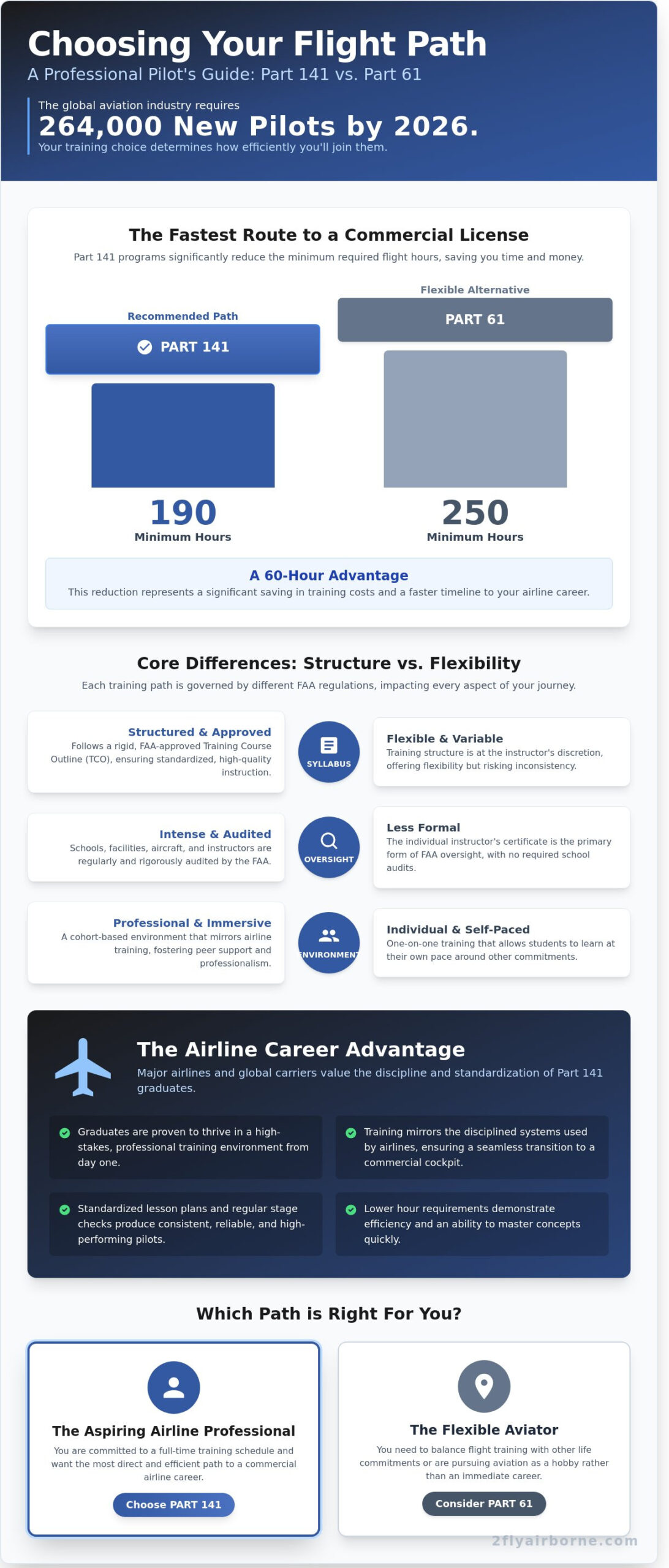
Part 141 vs. Part 61: Which Path Suits Your Goals?
Deciding between training paths is the first major milestone for any aspiring aviator. Part 61 offers a modular, self-paced approach that suits hobbyists or those with restrictive schedules. However, for those targeting a 2026 career start, part 141 flight schools provide a structured, FAA-approved syllabus designed to produce airline-ready professionals. This disciplined environment mirrors the training cadets will eventually face at a major carrier. It’s about moving beyond basic stick-and-rudder skills to master the complex systems and procedures required in commercial aviation.
Minimum Hour Requirements Comparison
The most striking difference lies in the regulatory minimums. Under 14 CFR Part 141 regulations, a student can earn a Commercial Pilot Certificate in as few as 190 flight hours. In contrast, Part 61 requires 250 hours. This 60-hour reduction represents a significant saving in both time and aircraft rental costs. While Part 61 works for part-time students juggling other commitments, the 141 path is built for full-time cadets who want to reach the flight deck as quickly as possible. Airline recruiters often prioritize the quality of these hours, valuing the rigorous oversight and standardized testing found in an academy setting. They want to see that you’ve thrived in a high-stakes, professional environment from day one.
Learning Environment and Peer Support
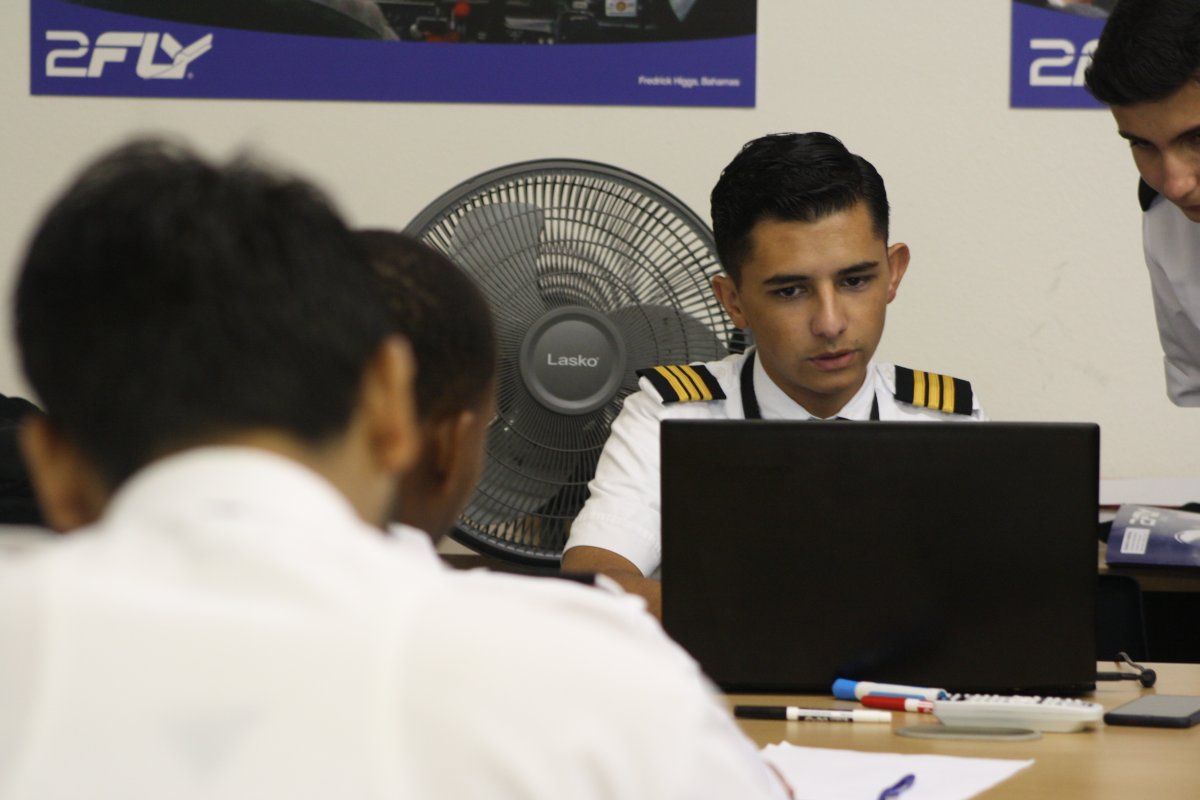
Immersion is the secret to rapid progress. Training at an elite academy fosters a student cohort atmosphere where peers push each other toward excellence. You aren’t just learning to fly; you’re living in a professional ecosystem. This constant exposure accelerates technical mastery and radio proficiency, which are critical for navigating complex airspace. Networking is another vital pillar. Large schools often maintain direct pipelines to regional and international airlines, giving cadets a distinct advantage during the hiring process. You’ll find that the connections made in the briefing room often lead to your first professional interview.
Don’t let the initial price tag mislead you. While the hourly rate at part 141 flight schools might appear higher than a local flying club, the total investment often balances out due to the reduced hour requirements. Faster completion means you reach the flight deck sooner. Starting your career six months early could mean an extra half-year of airline seniority and salary. If you’re ready to commit to an intensive schedule, you can explore the FAA Airline Pilot Program to see how a structured timeline fits your career objectives. It’s an investment in your future seniority and long-term earning potential.
The Career Advantage: Why Airlines Prefer Part 141 Graduates
Airlines don’t just hire pilots; they hire professionals who fit into a pre-existing, complex system. Part 141 flight schools provide a structured environment that mirrors the operational reality of major carriers like Delta or United. By training under a rigid, FAA-approved syllabus, you develop an airline-ready mindset from day one. You’ll spend significant time in advanced simulators and glass cockpit aircraft, ensuring your technical skills match the 2026 fleet standards. This preparation reduces the learning curve when you finally reach a professional flight deck. The 141 environment forces you to adhere to strict schedules and performance benchmarks, exactly like a corporate flight department.
Standardization and Safety Culture
Airlines prioritize candidates who have already succeeded within a highly regulated, audited system. Part 141 programs operate under strict oversight, requiring frequent FAA inspections and adherence to a formal Safety Management System (SMS). This culture of accountability prepares you for the rigorous training environments found at major airlines. Because you are accustomed to standardized procedures, your training progress is often more predictable and efficient.
-
Procedural Discipline: Adherence to checklists and SOPs becomes second nature during every phase of flight.
-
Quality Assurance: Continuous auditing ensures your training meets the specific proficiency standards required by the industry.
-
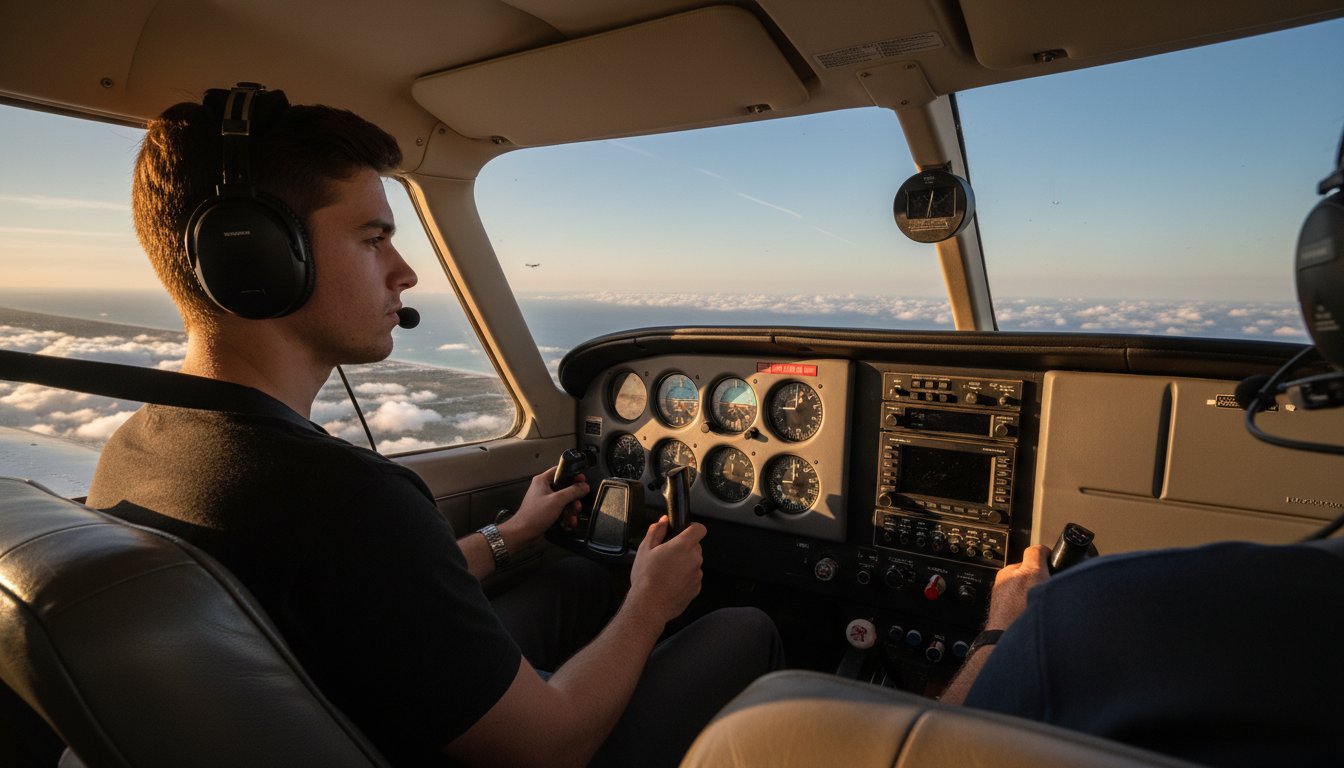
Advanced Technology: Mastery of Garmin G1000 suites and Level 5 flight training devices ensures you aren’t intimidated by modern avionics.
Training at a Part 141 school significantly shortens the time required to master the complex systems and procedures of modern regional jets.
Fixed-Price vs. Pay-As-You-Go
Financial planning is a critical component of your professional journey. Choosing a fixed-price professional pilot program offers transparency that modular, pay-as-you-go billing cannot match. Many Part 61 environments suffer from hidden costs, such as unexpected supplemental instruction or fluctuating hourly rates that can increase total costs by 15% or more. In contrast, a structured program allows you to budget with confidence. By enrolling in the FAA Airline Pilot Program, you secure a clear path toward your commercial goals without the financial ambiguity of traditional flight training. This stability allows you to focus entirely on your performance rather than your bank balance. It creates a predictable, professional timeline for your career launch.
Navigating the Selection Process: Housing, Visas, and Fleet
Florida remains the global epicenter for aviation training for a clear reason: weather. With more than 230 flyable days per year, cadets at part 141 flight schools in the Sunshine State avoid the seasonal delays that plague northern regions. This consistency is vital for maintaining momentum. If you want to reach the airlines by 2026, every canceled flight represents a delay in your career timeline. Choosing a location that maximizes your time in the cockpit is the first step toward becoming an elite professional.
The International Student Pipeline
The transition to a US-based academy involves complex regulatory hurdles. International cadets must utilize the Student and Exchange Visitor Information System (SEVIS) to secure their status. Elite part 141 flight schools employ dedicated administrative teams to manage this process. They provide the documentation required for M-1 and F-1 student visas, ensuring you meet all federal requirements before arrival. Financial planning is equally critical. You can explore structured 2FLY Financing options to manage tuition and residential costs effectively. This administrative support allows you to arrive ready to focus exclusively on your flight training syllabus.
Once you arrive in South Florida, managing ground transportation is the next step. For a seamless transition from the airport to your academy, a professional car service can be invaluable. Services like 305 VIP specialize in luxury transportation and concierge support, ensuring your arrival is as smooth and stress-free as your flight training is structured.
Evaluating Facilities and Fleet
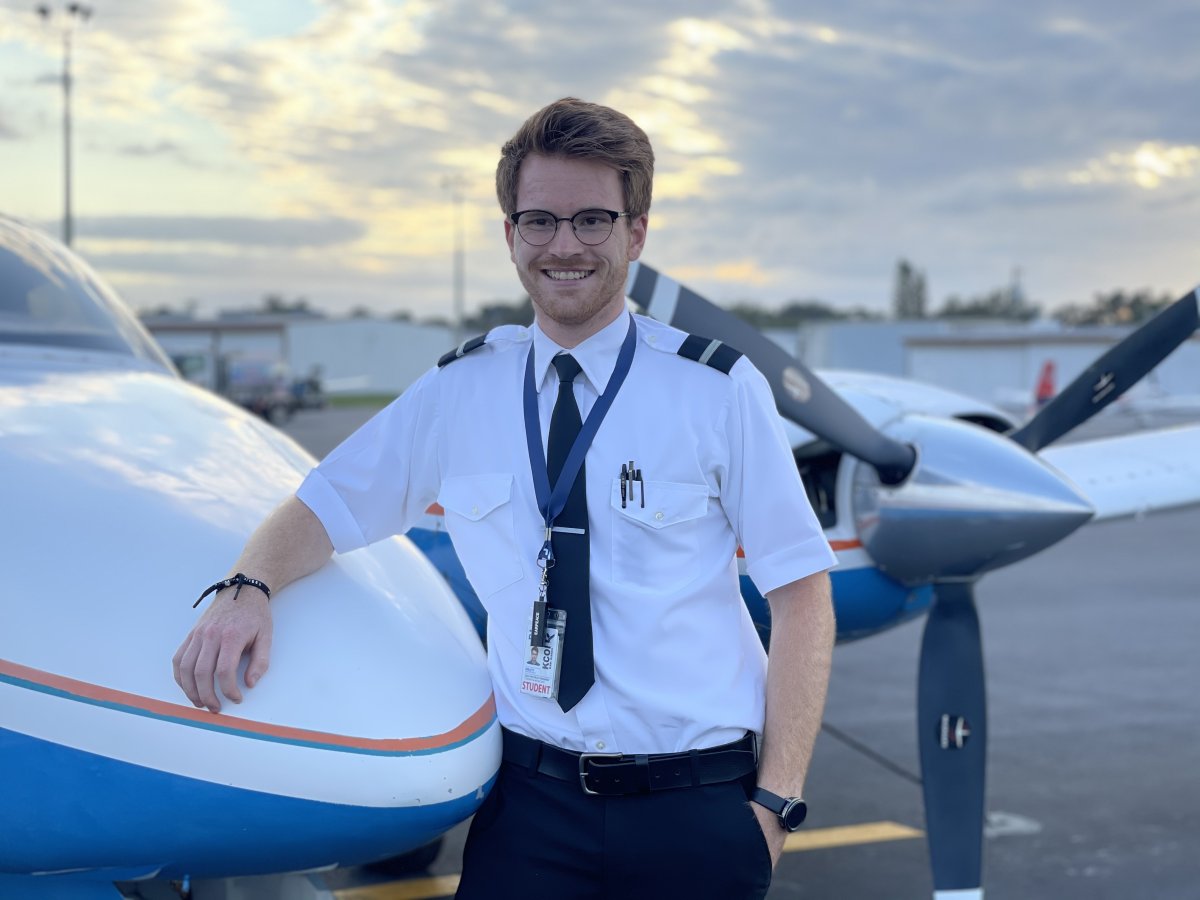
Success in commercial aviation requires training on equipment that mirrors what you’ll find in a modern airliner. High-achievers should look for facilities in Lakeland, Merritt Island, or Avon Park that prioritize fleet modernization. A Piper Seminole equipped with G1000 avionics is the industry standard for multi-engine training. It bridges the gap between light aircraft and the flight deck of a Boeing or Airbus. Beyond the aircraft, consider these infrastructure essentials:
-
On-site Maintenance: In-house technicians reduce aircraft downtime, often maintaining a 90% or higher fleet launch rate.
-
Simulator Availability: Advanced flight training devices are necessary for mastering instrument procedures without burning fuel.
-
On-campus Housing: Living on-site fosters a disciplined environment and eliminates the stress of a daily commute.
A school’s ability to offer these state-of-the-art amenities often depends on expert project management during development. Specialized firms like FALKE Atlantic Corporation provide owner representation services to oversee the construction of complex educational and residential facilities, ensuring they meet the high standards required for elite pilot training.
A school’s commitment to its fleet reflects its commitment to your career. Don’t settle for outdated technology. Your goal is a global pilot career. Reach it faster by training in a professional environment designed for your success. To learn more about how our infrastructure supports your journey, speak with a training advisor about our FAA Airline Pilot Program today.
Launch Your Career with 2FLY Airborne’s FAA Part 141 Programs
Becoming a commercial pilot requires more than just hours in a logbook; it demands a structured environment that mirrors the airline industry. 2FLY Airborne serves as the definitive bridge between your personal aspirations and a professional flight deck. As one of the premier part 141 flight schools, we’ve refined our 2026 curriculum to meet the rigorous standards of modern aviation. Our fixed-price FAA Professional Pilot Program eliminates the financial uncertainty often associated with flight training, allowing you to focus entirely on mastering the cockpit. You’ll join a global network that provides recruitment support to every successful graduate, ensuring you have the resources to transition from student to First Officer.
The 2FLY Professional Advantage
Our Florida academies deliver a comprehensive zero-to-hero career path designed for high achievers. You’ll train in a multicultural, elite aviation environment alongside peers from across the globe. This exposure builds the cultural competency and communication skills required in international crew rooms. Our instructors act as expert mentors, guiding you through the technical and mental demands of commercial flight. To see the specific syllabus and flight hour breakdowns, review the details of our FAA First Officer Program. We focus on the "Global Pilot" concept, ensuring your FAA certification is backed by an international career perspective that makes you stand out to recruiters.
Next Steps for Future Captains
Your transition to a professional pilot begins with a clear plan. We recommend scheduling a virtual campus tour or a discovery flight to experience our training fleet and facilities firsthand. For those targeting the 2026 intake classes, it’s vital to begin the application process at least six to nine months before your desired start date. This window allows for efficient M-1 visa processing and mandatory TSA background checks.
-
Speak with a training advisor to evaluate your career goals.
-
Review financing options and fixed-price contract details.
-
Secure your enrollment spot for the 2026 season.
Contact a career advisor today to create your personalized training plan. It’s the most effective way to join the ranks of elite
**part 141 flight schools
**and accelerate your journey to the airlines.
Take Command of Your Aviation Future
Choosing the right training path is the first critical decision of your commercial career. Airlines prioritize graduates from structured environments because they produce airline-ready professionals who understand rigorous safety standards from day one. By selecting one of the premier part 141 flight schools, you ensure your training follows a disciplined, FAA-approved curriculum designed for maximum efficiency.
Since 1994, 2FLY Airborne has delivered over 30 years of aviation excellence to aspiring pilots worldwide. We equip our cadets with a state-of-the-art fleet and G1000 simulators that mirror the technology found in modern airliner cockpits. Our global recruitment offices provide dedicated support for international cadets, managing everything from visas to housing logistics. You’ll gain the technical mastery and professional mindset required to transition seamlessly into a commercial flight deck.
Don’t leave your professional goals to chance. Start your journey with an institution that’s been shaping elite pilots for three decades. Apply Now for the FAA Professional Pilot Program and take the first step toward your global career. The sky is waiting for you.
Frequently Asked Questions
Is a Part 141 flight school better for international students?
Part 141 flight schools are the primary choice for international students because they have the specific authorization to issue I-20 forms for M-1 and F-1 visas. Under FAA regulations, Part 61 schools don’t have the same level of oversight required to sponsor these student visas. In 2024, roughly 85% of overseas cadets chose the Part 141 route to ensure they met Department of Homeland Security requirements while pursuing a global aviation career.
Can I finish flight school faster at a Part 141 academy?
You’ll often complete your training faster at a Part 141 academy because the FAA allows for significantly lower flight hour minimums. For instance, you can earn a Commercial Pilot License in just 190 hours compared to the 250 hours required under Part 61. This 60-hour reduction helps you reach the flight deck sooner. While individual progress varies based on your aptitude, the structured syllabus is designed to maximize every hour spent in the cockpit.
What are the specific requirements to enroll in a Part 141 program in 2026?
To enroll in a 2026 professional program, you must hold at least a second-class FAA medical certificate and possess a high school diploma or GED. You’ve got to be 17 years old to earn a Private Pilot License and 18 for a Commercial Pilot License. International applicants must also demonstrate English proficiency at an ICAO Level 4 or higher. These standards ensure every cadet is prepared for the rigorous academic demands of airline-ready training.
Do airlines only hire pilots from Part 141 schools?
Airlines hire qualified pilots from various backgrounds, but they frequently prefer the disciplined environment found at Part 141 schools. Graduates from specific Part 141 collegiate programs can qualify for a Restricted ATP at 1,000 or 1,250 flight hours instead of the standard 1,500. This 500-hour advantage is a major benefit for those wanting to enter the regional airline sector. It reflects the high level of trust carriers place in structured training environments.
How does the FAA audit a Part 141 school?
The FAA audits these institutions through annual inspections of training records, aircraft maintenance logs, and physical facilities. To keep their certification, schools must maintain a minimum 80% first-attempt pass rate for all students on their practical tests. Inspectors from the local Flight Standards District Office verify that every lesson aligns perfectly with the FAA-approved syllabus. This strict oversight guarantees that the academy consistently operates at the highest safety and educational standards.
Can I switch from a Part 61 school to a Part 141 program midway?
You can switch to a Part 141 program, but the FAA limits how much of your previous experience will count toward the new syllabus. Typically, a school can credit up to 25% of your previous flight hours if they came from a Part 61 school. If you’re moving between two Part 141 academies, you might receive credit for up to 50% of your progress. An instructor will perform a proficiency check to determine your exact placement in the course.
What is the average cost of a Part 141 professional pilot program?
The total investment for professional training at part 141 flight schools typically ranges from $85,000 to $115,000 based on 2024 market data. This cost covers everything from your initial private pilot certificate to your commercial multi-engine ratings. Prices change based on the specific aircraft used and current fuel surcharges at the training location. You should contact a training advisor to get a personalized quote that fits your specific career timeline and goals.
Does Part 141 training include multi-engine ratings?
Most Part 141 professional pilot tracks include a multi-engine rating as a standard part of the commercial curriculum. This phase usually involves 15 to 25 hours of specialized flight time in a twin-engine aircraft like a Piper Seminole. Mastering these complex systems is essential for anyone aiming for a career with a major carrier. It ensures you’re ready to handle the performance and safety requirements of modern transport-category aircraft.
Article by
2FLY Airborne
2Fly Airborne is a professional flight training organization dedicated to developing the next generation of skilled, confident, and safety-focused pilots. With decades of combined aviation experience, our team of certified instructors provides structured, real-world training designed to prepare students for both checkrides and long-term success in the aviation industry.
Content Disclaimer
Some blog content is generated with the assistance of automated tools and may not always be fully accurate or up to date. Please verify all aviation-related information with official sources or a certified instructor. For additional guidance or clarification, we encourage you to contact one of our training advisors at 2Fly Airborne.




Leave A Comment