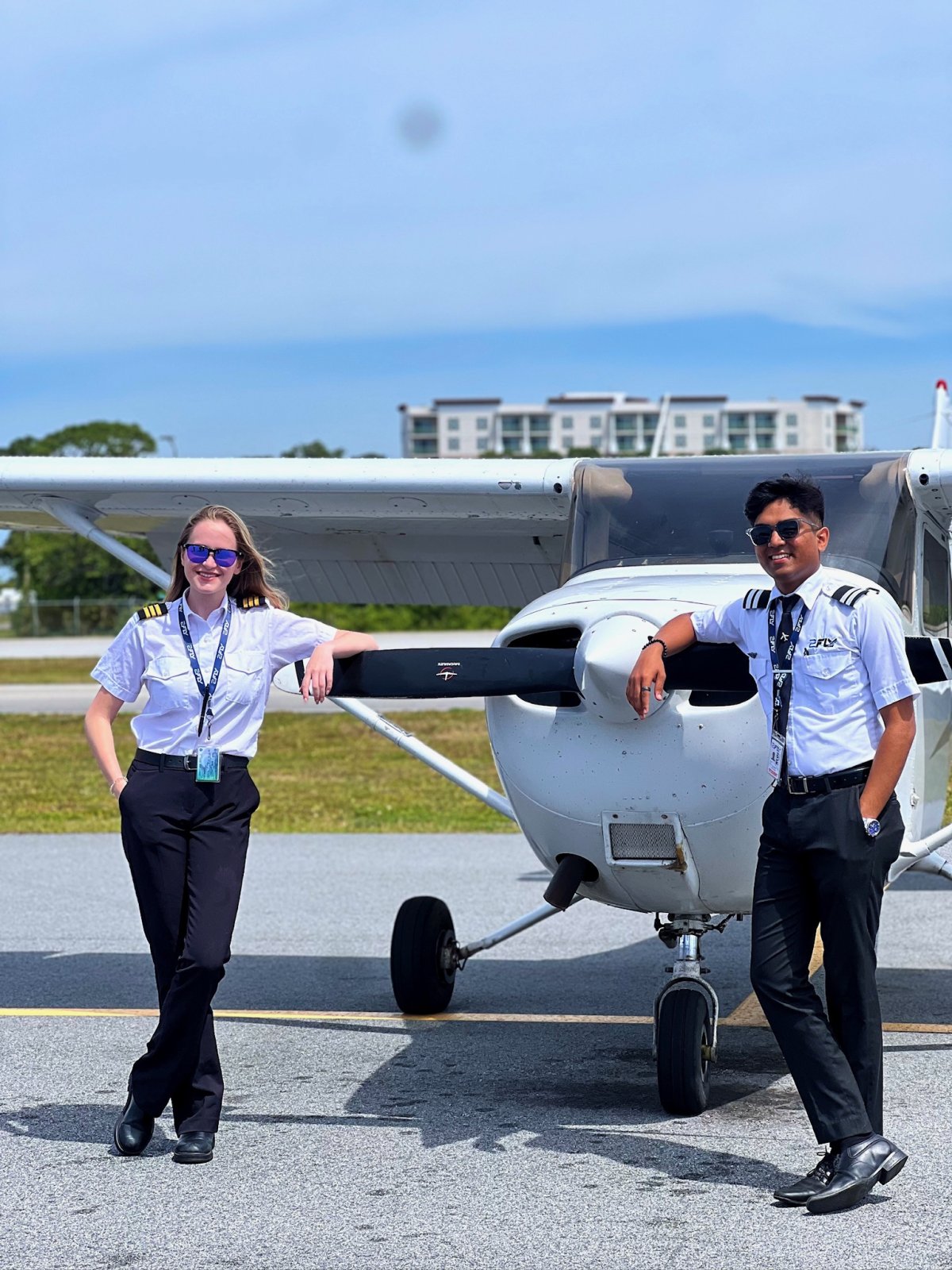
The dream of reaching the flight deck shouldn’t be stalled by a decade of uncertainty. Most aspiring aviators lose 12 to 18 months of their career potential simply because they don’t understand the structural differences between training tracks. When you ask how long is flight school, the answer depends on your commitment and the specific regulatory path you choose. You likely feel the pressure to start earning a professional salary as quickly as possible. We understand that time is your most valuable asset in an industry where seniority dictates your entire career trajectory.
This 2026 guide provides the realistic calendar milestones you need to plan your transition into the cockpit. You’ll discover the specific timeframes for FAA and EASA certifications, helping you avoid the common pitfalls that cause training to drag on for years. We’ll examine the differences between modular and integrated programs so you can choose a fast track that fits your professional goals. This article outlines the path from your first solo to becoming an airline-ready professional. If you want a tailored timeline for your situation, contact a 2FLY Airborne training advisor today to map out your global pilot career.
Key Takeaways
- Define your professional path by understanding the specific milestones that determine how long is flight school for both recreational and career tracks.
- Compare integrated and modular training structures to identify the most efficient route to becoming a global, airline-ready professional.
- Identify the external variables that impact training speed and learn how elite academies mitigate these factors to maintain your momentum.
- Map your journey beyond graduation, including the critical steps to reaching the 1,500-hour requirement for major airline cockpits.
- Align your training timeline with current industry demands to ensure you are positioned for a successful and disciplined aviation career.
The Short Answer: Average Timelines for Flight School in 2026
Determining how long is flight school requires looking at specific certification milestones rather than a single graduation date. Your timeline depends entirely on your end goal. A recreational flyer seeking a Private Pilot License (PPL) follows a different path than a candidate aiming for the flight deck of a major carrier. Understanding pilot licensing and certification standards is the first step in mapping out your professional journey. You’re not just learning to fly; you’re meeting elite international standards for safety and technical precision.
To better understand how these timelines translate into a professional career, watch this helpful video:
Calendar Time vs. Flight Hours
FAA requirements are strictly based on flight hours. You’ll need at least 40 hours for a PPL and 250 hours for a Commercial Pilot License (CPL). The actual calendar time you spend in training depends on your frequency of flight. Full-time cadets at professional academies often fly five days a week, allowing them to finish ratings in months. Conversely, part-time hobbyists might take years to reach the same milestones. In 2026, the industry standard for fast-track training focuses on high-frequency flight schedules to build muscle memory and retain technical knowledge more effectively. Weather patterns and aircraft maintenance also play a role in how many days you’ll spend on the ground versus in the air.
The ‘Zero to Hero’ Concept
The “Zero to Hero” pathway is the definitive route for commercial aviation aspirants. It’s a high-intensity, structured journey that takes a student from their first Discovery Flight to a fully certified commercial pilot. Most candidates complete this initial phase within a 10 to 15 month window. This includes earning your PPL, Instrument Rating, and Commercial Multi-Engine ratings. The FAA Professional Pilot Program serves as a primary example of this accelerated structure. It’s designed to create airline-ready professionals who are prepared for the rigors of heavy-jet operations from day one.
While “Zero to Hero” programs are efficient, they don’t represent the end of the journey. Achieving airline eligibility typically requires reaching 1,500 total flight hours. These timelines are realistic estimates based on current industry data, but they aren’t contractual guarantees. Factors like individual student proficiency and regulatory changes always dictate the final pace. If you’re ready to start your global career, contact a 2Fly Airborne training advisor to evaluate your specific goals and timeline.
Breaking it Down: Time Requirements for Each Pilot Rating
The journey to the flight deck isn’t a single sprint. It’s a series of focused milestones where each rating adds a layer of professional expertise. To understand how long is flight school, you have to look at the specific certifications required by the FAA. Every stage serves as a prerequisite for the next. You can’t master complex commercial maneuvers without first perfecting basic stick and rudder skills during your initial training phases.
| Pilot Rating / Certificate | Estimated Flight Hours | Average Calendar Time |
|---|---|---|
| Private Pilot (PPL) | 40 – 60 Hours | 3 Months |
| Instrument Rating (IR) | 40 – 50 Hours | 2 – 3 Months |
| Commercial Pilot (CPL) | 250 Total Hours | 3 – 4 Months |
| Multi-Engine Rating (ME) | 10 – 15 Hours | 1 – 2 Weeks |
| Certified Flight Instructor (CFI) | 15 – 25 Hours | 2 Months |
Private Pilot and Instrument Ratings
The Private Pilot Certificate (PPL) is your entry point. It typically requires 3 months of intensive training to master aircraft control and basic navigation. Before you can even begin this journey, you’ll need to obtain your student pilot certificate, which is the essential first step that authorizes you to begin flight training and work toward your first solo flight. Once you’ve earned your wings, you move immediately into the Instrument Rating (IR). This phase focuses on flying solely by reference to instruments. It’s the most critical stage for long term success because it teaches you to operate safely in marginal weather conditions. Many students find these early stages challenging. The AOPA pilot training FAQs clarify that most pilots take longer than the FAA minimum hours to ensure they’re truly proficient before their checkride.
Commercial Pilot and Multi-Engine Certifications
After the IR, you’ll work toward the 250 hour milestone required for a Commercial Pilot License (CPL). This 3 to 4 month phase refines your precision and introduces you to the standards expected of a professional. You’ll then transition to the Multi-Engine Rating (ME). This is a quick but vital 1 to 2 week intensive add-on. You’ll likely train in a Piper Seminole or a similar twin engine aircraft. Learning to manage the complexity of two engines is a non negotiable step for anyone aiming for an airline cockpit. If you want a comprehensive overview of the full certification journey, our detailed guide on how to become a commercial pilot walks you through every regulatory and educational step from beginner to airline-ready professional.
Certified Flight Instructor (CFI) Training
The final structured phase of how long is flight school involves becoming a Certified Flight Instructor (CFI). This 2 month program shifts your focus from flying to teaching. Mastering the art of instruction is the preferred way to build the 1,500 flight hours required for the airlines. By teaching others, you solidify your own knowledge and gain valuable experience in varied flight environments. You can see how this fits into a broader career path by exploring the FAA First Officer Program. If you’re ready to start your journey, contact a 2Fly Airborne training advisor for personalized guidance.
Factors That Influence How Long Your Training Takes
Prospective cadets often see a wide gap in completion dates. Some pilots reach the flight deck in 12 months, while others struggle for three years. This disparity usually stems from the training environment rather than the student’s ability. When you ask how long is flight school, you’re really asking how many obstacles your school can remove from your path to becoming an airline-ready professional.
Weather and Geographic Location
Geography is the most persistent external variable in aviation. Training in Florida provides over 300 days of flyable weather annually, allowing for a consistent schedule that prevents seasonal pauses. In contrast, schools in the Midwest or Northeast often face three-month winter blocks where flight lines remain grounded. Consistency is the key to progress. Flying 3 to 5 times per week ensures that muscle memory stays sharp. Students who fly sporadically often spend 25% of their lesson time reviewing maneuvers they’ve already learned, which adds months to the total timeline.
Aircraft Availability and Maintenance
A school’s fleet size directly determines your pace. Smaller flight schools often have high student-to-plane ratios, leading to scheduling bottlenecks. If a school only has four aircraft and one goes down for a 100-hour inspection, 25% of the fleet is suddenly offline. When researching how long is flight school, you must account for these potential maintenance delays. Leading academies utilize in-house maintenance teams to ensure aircraft return to service within 24 to 48 hours. This infrastructure is vital for maintaining the momentum of an FAA Airline Pilot Program.
DPE Availability and FAA Backlogs
The final hurdle for every rating is the checkride with a Designated Pilot Examiner (DPE). In some regions, DPE backlogs can delay a student by 6 to 8 weeks. This administrative stall can derail your momentum and increase costs. Established academies maintain professional relationships with a pool of examiners to ensure timely testing. While pilot training timelines at an aviation university might stretch across three to four years to accommodate a degree, an accelerated academy focuses on condensed, professional delivery. If you choose a degree program with airline pilot training, ensure the institution has a dedicated department to handle FAA scheduling and documentation.
Managing these variables requires discipline and a structured approach, much like overseeing a complex project. For those interested in formally developing these skills to ensure their career takes off on schedule, you can discover Woloyem for expert training.
Ultimately, your own commitment level dictates the final result. Successful cadets treat flight school like a full-time job. This means arriving 30 minutes early for every briefing and staying ahead of the ground school curriculum. Reach out to a 2Fly Airborne training advisor to discuss how our structured environment can accelerate your journey to the flight deck.
Integrated vs. Modular Training: Choosing Your Speed
The structure of your training program is the single biggest factor in determining how long is flight school for you. Aspiring aviators typically choose between two primary paths: Integrated and Modular training. While both lead to the same FAA certifications, their timelines and intensity levels differ significantly. Choosing the right one depends on your career goals, current financial situation, and how quickly you want to reach the flight deck of a commercial jet.
The Integrated Advantage
Integrated programs are designed for career-track students who want to become airline-ready in the shortest possible timeframe. This path treats flight training as a full-time job. You’ll engage in ground school and flight lessons simultaneously; this creates a high-intensity environment that mirrors airline training standards. Most cadets in an integrated program aim for a 12-month completion goal to earn all commercial ratings. This immersive structure prevents gaps in your knowledge and keeps your flying proficiency sharp. Because the syllabus is highly structured, you won’t waste time repeating lessons or waiting for an available instructor. It’s the most direct route for those ready to launch a global aviation career immediately.
The Modular Path
The modular approach offers a self-paced alternative for students who need more flexibility. This is often the preferred choice if you’re working a full-time job while learning to fly. You complete each license or rating in separate “modules” at your own speed. While this offers financial freedom, it can extend the timeline significantly. If you leave too much time between lessons, you may experience “skill fade.” This requires extra hours to relearn maneuvers you’ve already mastered. To ensure a modular path doesn’t stretch into a 3 or 4-year process, you must remain highly disciplined and fly at least twice a week. Without a rigid schedule, it’s easy for external life commitments to stall your progress.
For those seeking a middle ground that combines academic achievement with professional flight hours, a Degree Program with Airline Pilot Training is an excellent option. This path allows you to earn a college degree while simultaneously completing your flight training, providing a robust foundation for your future career. This combined timeline ensures you’re prepared for the technical and academic demands of the industry.
Deciding which path fits your life is a critical step in answering how long is flight school for your specific situation. Our team can help you evaluate your schedule and goals to find the most efficient route to the cockpit. Speak with a 2Fly Airborne training advisor today to start planning your professional timeline.
Your Career Roadmap: From Student to Airline Cockpit
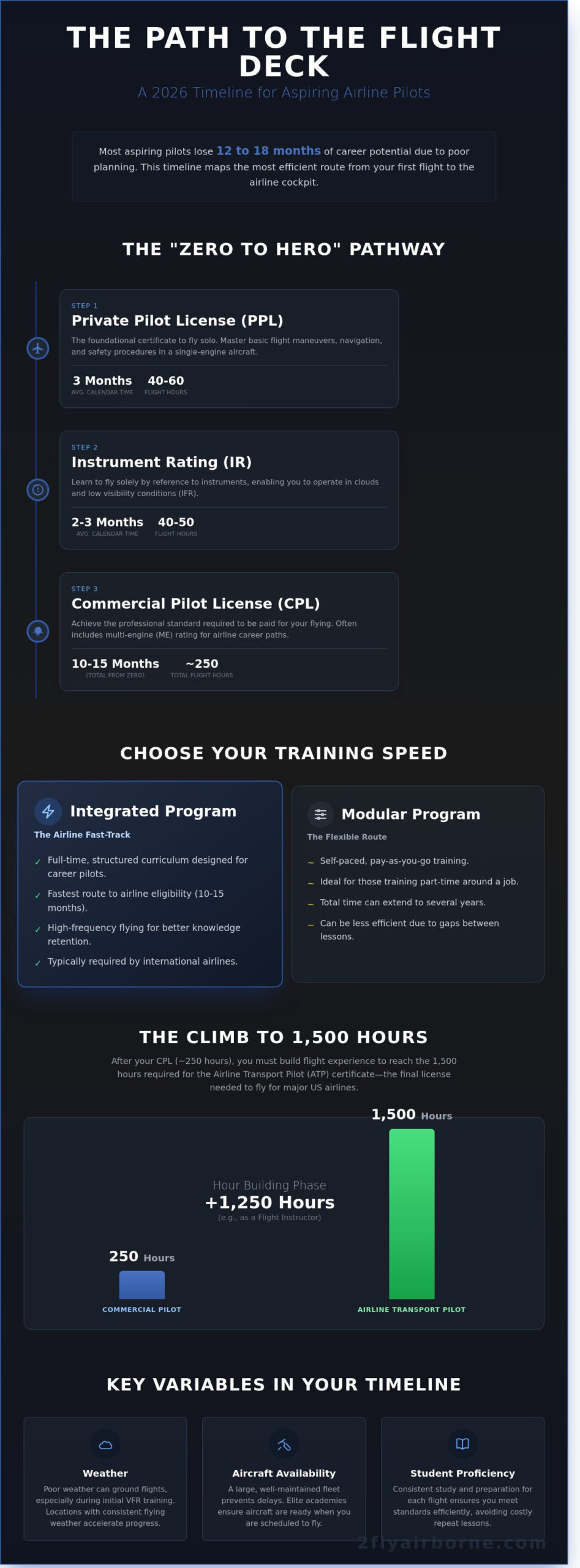
Earning your Commercial Pilot License marks a massive achievement, but it’s only the halfway point of your professional journey. Many aspiring pilots ask how long is flight school with the expectation that they’ll jump straight from graduation to a Boeing 737 flight deck. In the United States, FAA Part 121 regulations require most first officers to hold 1,500 total flight hours before they can fly for a scheduled airline. This means your total professional timeline includes two distinct phases: intensive training and professional hour building.
Building to 1,500 Hours
Most graduates finish their initial training with roughly 250 flight hours. You’ll need to bridge the 1,250-hour gap by working in the industry. This phase typically lasts 12 to 18 months depending on how often you fly. The most effective strategy involves becoming a Certified Flight Instructor (CFI). This role allows you to earn a paycheck while your students pay for the aircraft rental. According to the Boeing Pilot and Technician Outlook, the industry will require 674,000 new pilots over the next 20 years. This sustained global demand creates a steady stream of students, ensuring you can build your hours quickly and efficiently.
The Final Steps: ATP and Type Ratings
Reaching the 1,500-hour milestone qualifies you for the Airline Transport Pilot (ATP) certificate. This is the highest level of aircraft pilot certificate and represents the final professional milestone before the majors. Once hired by an airline, you’ll undergo another 2 to 3 months of specialized training. This includes “Type Ratings” for the specific jet you’ll operate, such as an Airbus A320 or Embraer 175. When you calculate how long is flight school alongside this professional development, the total timeline from zero experience to a First Officer seat is approximately 2 to 2.5 years. For pilots with their sights set on a specific carrier, our detailed guide on becoming a United Airlines pilot outlines the exact certifications, flight hour thresholds, and strategic advantages you’ll need to reach one of the world’s largest flight decks.
Every pilot’s journey follows a unique trajectory based on their dedication and the current hiring environment. If you want a detailed breakdown of these steps, attend our upcoming 2FLY Events to speak with our senior advisors. We’ll help you map out a personalized timeline that aligns with your specific career goals and gets you into the cockpit as safely and quickly as possible. Your future in the sky is waiting; it’s time to take the first step toward the flight deck.
Take Command of Your Aviation Career
Your journey to becoming an airline-ready professional depends on your choice of training path and your personal dedication. While you might wonder how long is flight school, most full-time cadets at 2FLY Airborne transition from zero experience to a commercial pilot license within 12 to 14 months. This timeline is optimized by our Florida-based training center, which provides the ideal environment for year-round flying. We’ve spent over 30 years refining our elite training programs to ensure every hour in the cockpit moves you closer to a global career.
Success in the skies requires a reliable platform. Our large fleet is supported by an in-house maintenance team to maximize aircraft uptime, allowing you to focus entirely on mastering your flight ratings. Don’t leave your professional future to chance. Speak with a 2FLY Training Advisor to build your personalized flight training timeline and start your ascent today. The flight deck is waiting for those with the drive to reach it.
Frequently Asked Questions
Can I finish flight school in 6 months?
You can complete a full-time professional program in 6 to 9 months if you maintain a rigorous schedule. When asking how long is flight school, the answer depends heavily on your enrollment status. Accelerated tracks at elite academies move you through Private, Instrument, and Commercial ratings without the delays found in casual training environments. This pace requires flying at least 5 days every week to stay sharp.
How long does it take to get a Private Pilot License (PPL)?
Obtaining a Private Pilot License typically takes between 3 and 6 months for most dedicated students. While the FAA requires a minimum of 40 flight hours, the national average for completion is approximately 75 hours. Your specific timeline depends on local weather conditions and how frequently you schedule your flight blocks. Consistent training is the most effective way to minimize the total duration of this initial phase.
Is flight school faster if I already have a college degree?
Having a degree doesn’t shorten the FAA flight hour requirements, but it can accelerate your transition into a professional career. Major airlines often prioritize candidates with a 4-year degree during the hiring process. If you’ve already finished your academics, you can focus 100% of your energy on flight training without balancing university coursework. This allows you to complete your ratings with total professional focus.
What is the fastest way to become a commercial pilot in 2026?
Enrolling in a fast-track, integrated program is the most efficient way to become a commercial pilot by 2026. This method streamlines the process so you can understand exactly how long is flight school for your specific career goals. With the industry projected to need 10,000 new aviators annually, a structured syllabus ensures you become airline-ready in the shortest possible timeframe. For those just starting their journey, our comprehensive guide on how to become a pilot in 2026 provides the essential foundation you need before beginning flight training. Understanding the commercial flying license requirements is also crucial for mapping out your professional timeline and ensuring you meet all FAA certification standards. Speak with an advisor to plan your start.
How many hours a day do you spend in flight school?
Expect to spend 6 to 8 hours daily at the academy during full-time training. This usually includes a 1.5 to 2-hour flight block, pre-flight briefings, and intensive ground school sessions. Professional training is a full-time job that requires disciplined study outside of scheduled flight times. This immersive environment is designed to prepare you for the demanding schedule of a global pilot working for a major airline.
How long does it take to reach 1,500 flight hours?
Most pilots reach the 1,500-hour milestone in 18 to 24 months after completing their initial commercial ratings. This is typically achieved by working as a Certified Flight Instructor to gain experience while earning a paycheck. Building these hours is a critical phase where you gain the real-world experience necessary for airline employment. It’s the final step before transitioning into the right seat of a commercial jet.
Managing this new professional life also includes logistics on the ground. A demanding travel schedule means relying on professional transportation, and services like 1executivecar.com are examples of the executive car services many pilots use for airport transfers.
Does the FAA have a maximum time limit to complete training?
The FAA doesn’t set a hard expiration date for your overall training, but your written exam results are only valid for 24 calendar months. If you don’t pass your practical checkride within that 2-year window, you’ll need to retake the knowledge test. Staying consistent is the best way to avoid repeating expensive requirements. Our structured programs are designed to keep you well within these regulatory timelines for maximum efficiency.
What happens if I fail a checkride; does it delay my timeline?
Failing a checkride usually adds 1 to 2 weeks to your timeline for remedial training and rescheduling with a Pilot Examiner. It’s a common hurdle that roughly 20% of applicants face at some point during their journey. Our instructors help you regroup quickly to ensure you remain a competitive, airline-ready candidate. For a personalized roadmap and professional guidance, contact a 2Fly Airborne training advisor today to discuss your future career.
Article by
2FLY Airborne
2Fly Airborne is a professional flight training organization dedicated to developing the next generation of skilled, confident, and safety-focused pilots. With decades of combined aviation experience, our team of certified instructors provides structured, real-world training designed to prepare students for both checkrides and long-term success in the aviation industry.
Content Disclaimer
Some blog content is generated with the assistance of automated tools and may not always be fully accurate or up to date. Please verify all aviation-related information with official sources or a certified instructor. For additional guidance or clarification, we encourage you to contact one of our training advisors at 2Fly Airborne.