The most expensive mistake a student pilot can make isn’t a hard landing; it’s a poorly planned budget. You’ve likely encountered flight school websites that offer vague figures, leaving you to wonder about the “hidden” fees that might surface mid-training. It’s difficult to commit to a professional path when the total private pilot license cost remains a mystery.
We believe that a clear financial strategy is just as important as your pre-flight checklist. This guide provides a transparent breakdown of the expenses you’ll face in 2026, ensuring you can invest in your future with absolute certainty. We’ll help you navigate the differences between various training structures so you can choose the most efficient route to the cockpit.
We’ll explore every essential expense, including aircraft rental, instructor time, and the third-party fees for FAA exams and medical clearances. You’ll move from uncertainty to a structured plan that supports your journey toward becoming an industry-prepared professional.
Key Takeaways
- Understand why the Private Pilot Certificate serves as the essential technical foundation for all advanced ratings and a future international career.
- Learn how to distinguish between fixed and variable expenses to accurately calculate your total private pilot license cost for the 2026 training landscape.
- Discover how training frequency and the choice between structured Part 141 academies and flexible Part 61 schools influence your final budget.
- Identify the critical gear and digital subscriptions, from noise-canceling headsets to navigation software, that are necessary for modern flight training.
- See how aligning your initial training with a professional pipeline can reduce the total time and investment required to reach your commercial pilot goals.
Is a Private Pilot License Worth the Investment in 2026?
Imagine the moment your instructor steps out of the Cessna and tells you it’s your turn to fly alone. You taxi to the runway, advance the throttle, and feel the wheels leave the pavement for the first time without a safety net. For many, this first solo flight is the moment a dream becomes a reality. It’s not just about the view. It’s about the profound sense of autonomy that comes with commanding an aircraft through the sky. This experience is the ultimate reward for your dedication, but it’s also the start of a serious professional journey.
Beyond the initial thrill, you must view this certificate as your entry into a highly regulated global industry. Understanding what is a Private Pilot License involves recognizing it as the essential bedrock for every advanced rating you’ll eventually earn. While the initial private pilot license cost is a significant investment, the quality of this foundation dictates your success in more complex environments. Choosing a school based solely on the lowest price often leads to gaps in technical knowledge that become expensive to fix later in your career.
To better understand this concept, watch this helpful video:
PPL as a Professional Foundation
Your performance during PPL training directly influences how quickly you master Instrument and Commercial maneuvers. Professional pilots don’t just learn to fly; they learn to operate within a rigorous system of checklists, regulations, and safety protocols. Immersing yourself in a structured, academy-style environment from day one ensures you develop habits that align with international airline standards. This approach transforms your initial flight training into a career-long asset rather than just a hobby. Mastery at this stage builds the confidence needed to handle the specialized demands of a commercial cockpit.
Calculating the Long-Term Return on Investment
Finishing your training efficiently is one of the most effective ways to manage the total private pilot license cost. Students who fly frequently and work with professional instructors often reach proficiency in fewer hours than those who train sporadically. While a part-time hobbyist instructor might charge less per hour, a career-focused mentor provides the technical precision required for a seamless transition to professional roles. Investing in high-quality instruction now reduces the need for remedial lessons during your Commercial or Multi-Engine phases. This strategic approach sets the stage for the detailed financial breakdown we’ll explore in the next section.
A Comprehensive Breakdown of Private Pilot License Costs
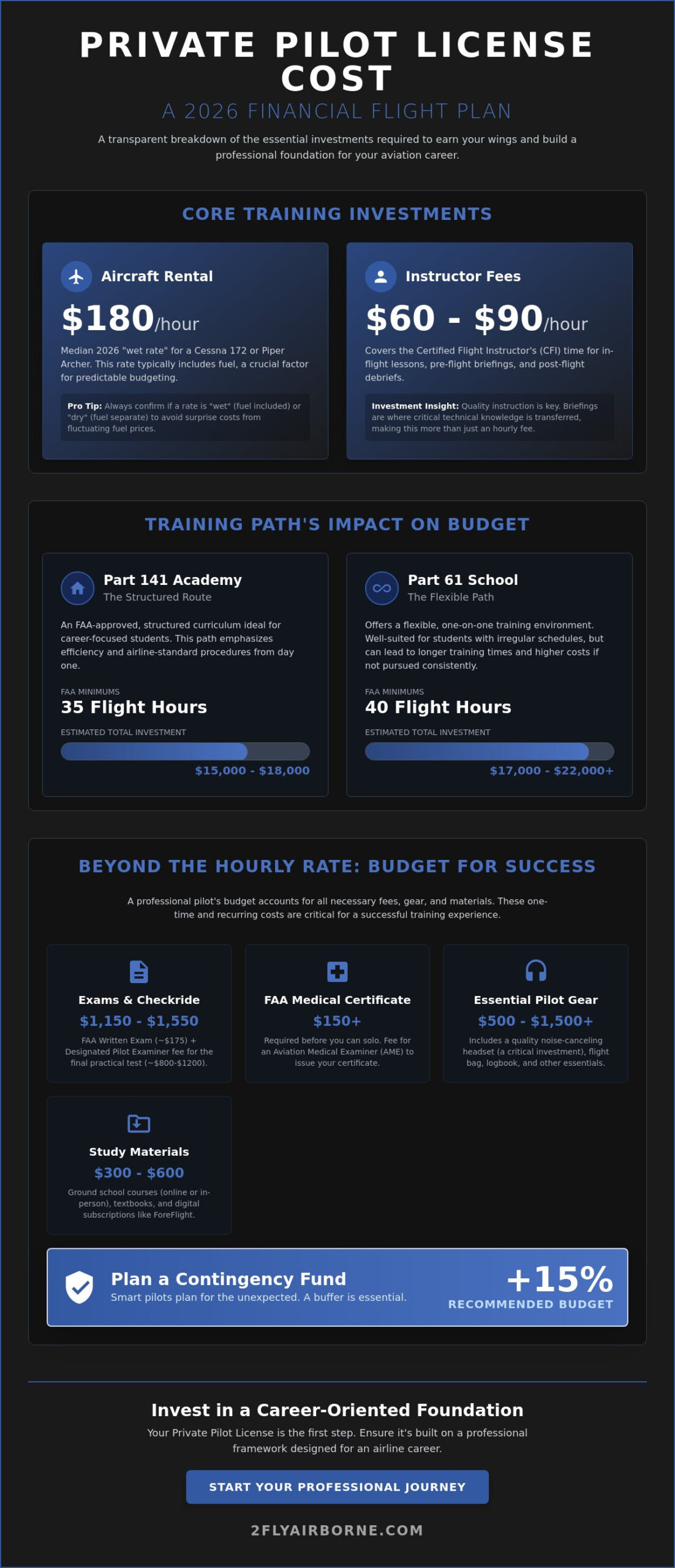
Most aspiring aviators focus on the hourly rate of the aircraft and assume they’ve seen the full picture. However, a realistic budget accounts for both the obvious flight hours and the administrative fees that often surprise newcomers. Planning for the total private pilot license cost requires a disciplined approach to both fixed and variable expenses. We recommend students maintain a 15% contingency fund to account for weather delays or personal learning plateaus that may require extra review sessions.
Aircraft Rental and Instructor Fees
Your primary investment will be the hourly rental of a training aircraft. Most modern schools use reliable platforms like the Cessna 172 or Piper Archer, which have a median rental rate of $180 per hour in 2026. You must verify if the school quotes a “wet” rate, which includes fuel, or a “dry” rate where you pay for fuel separately. Dry rates can be deceptive if you don’t account for fluctuating fuel prices at different airfields.
Instructional fees are the second major variable. Certified Flight Instructors (CFI) typically charge between $60 and $90 per hour. Remember that you’ll pay for the instructor’s time during flight lessons as well as during pre-flight and post-flight ground briefings. These briefings are where the most critical technical knowledge is transferred, so don’t view them as a secondary expense. Consistency in your training schedule can help minimize these costs by reducing the need for repeat lessons.
The ‘Paperwork’ Costs: Medicals, Exams, and Licenses
Before you can fly solo, you’ll need an FAA Third-Class Medical Certificate. This exam is performed by an Aviation Medical Examiner (AME) and usually costs between $100 and $200. It’s a vital first step to ensure you meet the physical requirements for a professional career. The 2025 Boeing Pilot and Technician Outlook projects a demand for 660,000 new pilots globally through 2044, making this initial medical clearance a gateway to a massive industry.
The FAA Knowledge Test is another fixed expense, with testing centers currently charging a $175 fee. Finally, you must budget for the practical exam, known as the checkride. Designated Pilot Examiners (DPE) set their own rates, which in 2026 typically range from $700 to $1,200. This is often the largest single-day expense of your training, so plan accordingly. If you have questions about managing these milestones, you can explore flexible financing options to keep your training on schedule.
Variables That Impact Your Total Training Investment
Relying on the FAA minimum of 40 flight hours is a common trap for new students. While it’s technically possible to earn a certificate in that time, the national average for proficiency is closer to 60 to 75 hours. This discrepancy is a primary reason why many people underestimate their private pilot license cost. Every hour beyond the minimum adds to your rental and instruction fees, so accuracy in your initial budget is vital.
Your choice of aircraft technology also plays a role in your budget. Training in an older aircraft with analog instruments might seem cheaper per hour, but modern glass cockpits prepare you for the advanced systems found in commercial jets. You must decide if you’re paying for basic stick and rudder skills or a comprehensive introduction to modern aviation technology. High achievers often find that the slightly higher hourly rate for advanced avionics pays off during later stages of flight training.
Part 61 vs. Part 141 Cost Dynamics
Flight schools operate under two distinct sets of regulations that impact your financial planning. Part 61 schools offer a flexible, individual approach that works well for hobbyists but can lead to an unstructured path. This lack of rigidity often results in the hidden cost of re-learning skills after long breaks between lessons. Conversely, Part 141 schools follow a strict, FAA approved syllabus designed for maximum efficiency and professional progression.
Choosing a professional pilot program streamlines your journey by ensuring every hour in the air serves a specific training objective. This structured environment is particularly beneficial for those aiming for a career in the flight deck. If you’re looking for ways to offset these initial investments, exploring options for financing your flight training through industry scholarships can provide much needed support.
Frequency and Consistency: The ‘Efficiency’ Factor
The pace of your training is perhaps the most significant variable under your control. Students who fly three or more times per week retain information much better than those who fly once every ten days. Frequent flying reduces the time spent reviewing previous lessons, which directly lowers the total number of hours required to reach checkride readiness. Consistency isn’t just about speed; it’s about financial discipline.
The 2025 Boeing Pilot and Technician Outlook projects a demand for 660,000 new pilots globally through 2044. This massive demand underscores the importance of choosing a training path that prioritizes professional readiness over the lowest sticker price. Immersive environments, such as a dedicated pilot school in Florida, offer the consistent weather needed to maintain a high frequency schedule. You can also leverage advanced flight simulators to practice procedures on the ground at a lower cost, ensuring you’re fully prepared before you even start the engine.
Beyond the Hourly Rate: Budgeting for Success
Have you considered the physical weight of your flight bag before even stepping onto the tarmac? Many students focus so intently on the hourly aircraft rate that they overlook the professional tools required for daily operations. These items are not just accessories; they are the hardware of your future office. A realistic private pilot license cost must include high-quality gear that will serve you well through your Commercial and CFI ratings.
Essential Pilot Gear and Equipment
A high-quality Active Noise Reduction (ANR) headset is perhaps the most critical personal investment you’ll make. While passive headsets are more affordable, ANR technology protects your long-term hearing and ensures crystal-clear communication with Air Traffic Control. You should also budget for a reliable iPad and an Electronic Flight Bag (EFB) subscription like ForeFlight or Garmin Pilot. These digital tools have replaced bulky paper charts, providing the real-time weather and navigation data that are standard in modern cockpits.
Avoid the temptation to buy every gadget marketed to new pilots. Focus on these essentials to maintain your budget:
- ANR Headset for hearing protection and clear audio
- iPad with cellular capability for integrated GPS
- Professional flight bag to organize your tools
- Kneeboard for quick in-flight calculations
- Premium ground school materials for first-pass exam success
Investing in quality ground school materials is a strategic move. Failing a knowledge test or a checkride because of poor preparation adds significant time and expense to your journey. Mastery of the theoretical components ensures that your time in the aircraft is spent practicing maneuvers rather than catching up on missed concepts.
Funding and Financing Your Training
Securing the necessary capital is a major milestone in your professional development. Many students utilize financing options specifically designed for aviation careers to maintain training momentum. Consistent funding prevents the “stop-start” cycle that often inflates the total investment by requiring expensive review hours. By treating your training as a capital investment, you can move through the syllabus with the focus required for an elite career.
The 2025 Boeing Pilot and Technician Outlook projects a demand for 660,000 new pilots globally through 2044. This long-term industry growth makes aviation a stable field for specialized lending and scholarships. Reach out to aviation-specific institutions to see how you can structure payments to align with your professional goals. If you’re ready to map out your financial path, speak with a training advisor about our funding programs.
The Professional Pipeline: Investing in a Career-Oriented PPL
Do you view the cockpit as a weekend escape or your future office? While the private pilot license cost represents your first major financial commitment, it’s actually the entry fee for a high-value vocational pipeline. For those with professional ambitions, the PPL is the first phase of a comprehensive commercial pilot license journey. Treating this initial stage as a professional certification rather than a hobby ensures you build the technical discipline required for the airline environment.
The 2025 Boeing Pilot and Technician Outlook projects a demand for 660,000 new pilots globally through 2044. This massive industry requirement means that every hour you log during your PPL training should serve the ultimate goal of professional employment. Students who train with a career focus often find that their initial investment pays dividends through faster progression and greater technical mastery during advanced ratings.
Why Professional Academies Offer Better Value
Training at a professional academy provides access to a standardized fleet of aircraft maintained by full-time, on-site technicians. This consistency is vital for building muscle memory and reducing the time spent adjusting to different cockpit layouts. In a professional environment, you are surrounded by instructors and peers who share your career goals, creating a natural networking hub from day one. These connections often become the foundation of your professional mobility as you move toward the airlines.
Next Steps: Transitioning to the Airlines
The Private Pilot Certificate is the baseline, but the journey continues through your Instrument Rating, Commercial Pilot Certificate, and Multi-Engine Rating. Each phase builds upon the foundation you establish during your PPL training. Choosing a school with a clear, integrated pathway to the flight deck allows you to transition between these certifications without the friction of changing locations or syllabi. It’s a serious vocational commitment that requires a steady focus on long-term career returns rather than short-term savings.
In summary, managing your training budget effectively comes down to three pillars: structure, frequency, and quality. A structured syllabus prevents wasted flight hours, frequent lessons maximize information retention, and high-quality instruction ensures your safety and technical proficiency. By prioritizing these elements, you ensure that your investment leads directly to a successful and sustainable career in the sky.
Safe, structured training is the only reliable path to the professional flight deck. If you are ready to begin your journey or have questions about the training process, the team at 2FLY Airborne is here to guide you. We suggest reaching out to a 2FLY Training Advisor to discuss how our programs can align with your professional aviation goals.
Secure Your Success in the Sky
Understanding the financial landscape is the first step toward a disciplined career. You now have a clear roadmap for the 2026 training environment, from variable aircraft rates to the essential gear required for modern cockpits. Remember that frequency and structure are your most effective tools for minimizing the private pilot license cost while maximizing your technical proficiency. By treating your Private Pilot Certificate as a professional foundation, you set the stage for a seamless transition into advanced ratings.
We provide a direct pipeline to the industry through state-of-the-art Florida training facilities and both FAA and EASA certified training paths. Our proven track record of airline placements ensures that your training is a strategic move toward a global profession. Don’t let financial uncertainty delay your ambitions. We focus on delivering elite instruction that prepares you for the rigorous demands of the flight deck from your very first lesson.
Ready to start your journey? Speak with a 2FLY Training Advisor today to discuss your path to the cockpit. If you have any remaining questions about budgeting or the training syllabus, reach out to us to help you take that first definitive step toward your future. The sky is waiting for those with the drive to reach it.
Frequently Asked Questions
How much does a Private Pilot License cost in 2026?
Total costs for a Private Pilot Certificate typically range between $15,000 and $20,000 depending on your location and training frequency. This investment covers aircraft rental, instructor fees, and mandatory testing. The 2025 Boeing Pilot and Technician Outlook projects a demand for 660,000 new pilots globally through 2044, making this an excellent time to begin your professional journey.
Is it cheaper to get a PPL at a Part 61 or Part 141 school?
Part 61 schools often appear more affordable due to lower hourly rates, but Part 141 academies are frequently more cost-effective for career-track students. Part 141 programs follow a structured, FAA approved syllabus that minimizes wasted time in the air. This efficiency often leads to reaching proficiency in fewer total hours, which can significantly lower your overall private pilot license cost.
Can I get my PPL in the minimum 40 hours to save money?
While the FAA sets a 40-hour minimum, reaching checkride readiness in that time is rare. The national average is closer to 60 or 70 hours for most student pilots. Budgeting for the national average rather than the regulatory minimum prevents financial stress and ensures you develop the technical mastery required for a safe, professional career path.
What are the hidden costs of flight school that I should budget for?
You must budget for essential “soft costs” such as medical certificates, headsets, and digital navigation subscriptions. Many students overlook the fees for the FAA knowledge test and the final practical exam with a Designated Pilot Examiner. Adding a 15% contingency fund to your private pilot license cost estimate helps cover these essentials without interrupting your training momentum.
Do I need to pay for my PPL training all at once?
Most professional flight schools don’t require full upfront payment and instead offer “pay-as-you-go” structures or specialized financing programs. Financing allows you to maintain a high training frequency, which is critical for long-term information retention. Consistent funding ensures you won’t have to pay for expensive review lessons caused by long breaks in your flight schedule.
How much do flight instructors charge per hour in 2026?
Certified Flight Instructors typically charge between $60 and $90 per hour for their specialized expertise. You’ll pay this rate for time spent in the cockpit and for ground briefings before and after each flight. These briefings are essential for mastering complex regulatory and procedural details before you ever start the engine of a training aircraft.
Is a Private Pilot License required before starting a commercial program?
Yes, the Private Pilot Certificate is the mandatory legal foundation for all advanced pilot certifications. You must master the basic principles of flight and navigation before moving on to Instrument or Commercial training. Starting your PPL at a professional academy ensures your initial habits align perfectly with the standards required by major international airlines.
Does the type of aircraft I train in affect the total cost?
Modern aircraft with “glass cockpit” avionics generally have higher hourly rental rates than older models with analog gauges. While the hourly price is higher, training in modern aircraft prepares you for the advanced technology used in professional aviation. Choosing a standardized fleet of modern aircraft can lead to a more efficient transition to advanced commercial training phases.
Article by
2FLY Airborne
2Fly Airborne is a professional flight training organization dedicated to developing the next generation of skilled, confident, and safety-focused pilots. With decades of combined aviation experience, our team of certified instructors provides structured, real-world training designed to prepare students for both checkrides and long-term success in the aviation industry.
Content Disclaimer
Some blog content is generated with the assistance of automated tools and may not always be fully accurate or up to date. Please verify all aviation-related information with official sources or a certified instructor. For additional guidance or clarification, we encourage you to contact one of our training advisors at 2Fly Airborne.