

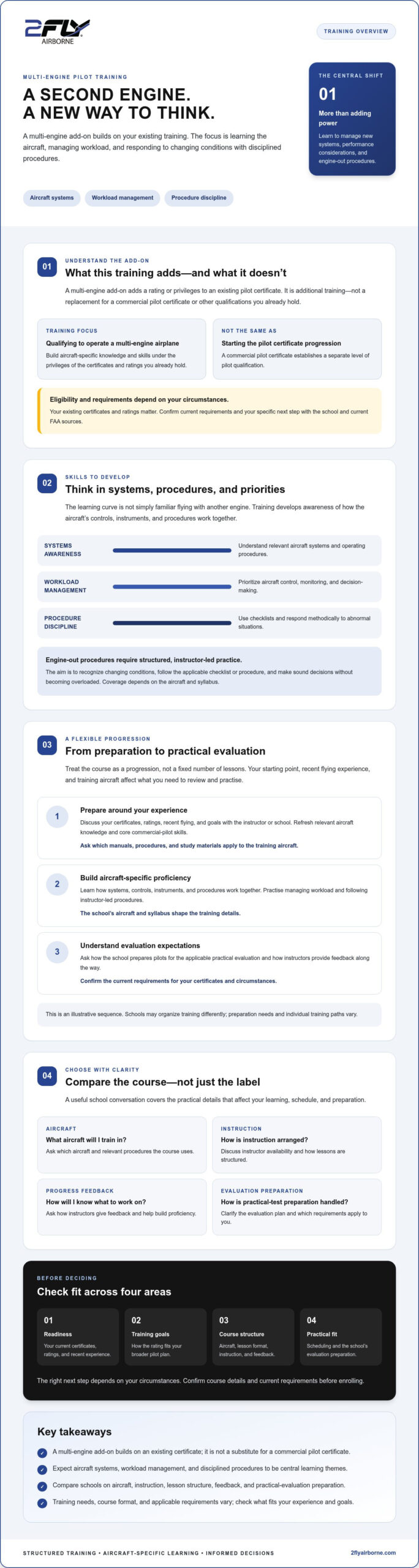
What if adding a second engine to your pilot qualifications is less about accumulating hours and more about learning to manage new risks and procedures? A multi engine commercial pilot add on course builds on your existing training, introducing the aircraft systems, performance considerations, and engine-out procedures involved in flying a multi-engine airplane.
It’s natural to have questions before you commit. Are you eligible to begin? How different will the aircraft feel? And how can you tell whether a school’s course structure suits your experience and career plans? The answers depend on your current certificates, preparation, and the training provider’s approach. Requirements and individual training needs can vary, so confirm the details before enrolling.
This guide explains what the course typically involves, how to prepare, and what to ask flight schools about aircraft, instruction, scheduling, and practical-test preparation. You’ll also learn how a multi-engine rating may fit into a broader professional pilot plan. Understanding the training demands and what to compare can help you choose your next step with clearer expectations.
Key Takeaways
- Understand what a multi-engine add-on rating teaches and how it differs from a standalone commercial pilot certificate.
- See the typical stages of a multi engine commercial pilot add on course, from preparation to practical evaluation.
- Compare schools by asking about aircraft, instructor availability, lesson structure, and how you’ll receive feedback.
- Assess whether the rating fits your readiness, training goals, schedule, and broader pilot career plan.
- Prepare focused questions for a training advisor about eligibility, course format, and aircraft.
What a Multi-Engine Commercial Pilot Add-On Course Is Designed to Teach
Adding a second engine to your qualifications means learning to manage a different aircraft, not simply repeating familiar tasks with more power. A multi engine commercial pilot add on course develops the knowledge and skills needed to operate a multi-engine airplane under the privileges of the certificate and ratings you already hold. It is additional training, not a replacement for a commercial pilot certificate or other qualifications.
Exact eligibility and practical-test requirements depend on current FAA rules and your existing certificates and ratings. “Add-on” describes the general training path, but your specific next step should be checked against your circumstances and current requirements.
For another pilot’s perspective on the learning curve, watch 5 Things Surprised Me in the Multi-Engine Rating from Airplane Academy:
How a multi-engine add-on differs from initial pilot certification
A multi-engine add-on adds a rating or privileges to an existing pilot certificate. It differs from starting the certificate progression itself: the add-on focuses on qualifying to fly a particular category or class of aircraft, while a commercial pilot certificate establishes a separate level of pilot qualification. Your existing certificate affects which training path and requirements apply. For background, see this overview of pilot certification in the United States.
What pilots learn beyond flying a second engine
Training develops aircraft systems awareness and disciplined decision-making. You learn how the aircraft’s controls, instruments, and procedures work together, while managing workload in an airplane that may respond differently from the single-engine aircraft you’ve flown before.
Abnormal and emergency procedures call for structured, instructor-led practice. The aim is to recognize changing conditions, follow the applicable checklist or procedure, and make sound decisions without becoming overloaded. Procedures depend on the aircraft and syllabus, so ask the school which situations its course covers and how instructors help you build proficiency.
- Systems awareness: Learn the aircraft’s relevant systems and operating procedures.
- Workload management: Prioritize aircraft control, monitoring, and decision-making.
- Procedure discipline: Practise using checklists and responding methodically to abnormal situations.
These skills come from safe, structured flight training, not assumptions based on prior experience alone. 2FLY Airborne offers a Multi-Engine Rating among its professional pilot training options. Ask a training advisor how the current course relates to your certificates and goals.
How Multi-Engine Add-On Training Progresses from Preparation to Evaluation
Approach a multi-engine course as a progression, not a fixed number of lessons. Your starting point, recent flying experience, and training aircraft all affect what you need to review and practise.
The sequence below is illustrative. Schools may organize training differently, so confirm the current course format and evaluation plan with the provider. For regulatory context, review 14 CFR § 61.63 and check current FAA sources for requirements that apply to your certificate and circumstances.
What to review before the first multi-engine lesson
Before training begins, discuss your experience and goals with the instructor or school. Refresh relevant aircraft knowledge and core commercial-pilot skills, then ask which manuals, procedures, and study materials apply to the training aircraft. Preparation needs vary, so don’t assume another pilot’s study checklist will match your course.
A useful readiness conversation can cover:
- Certificate status: Which certificates and ratings do you hold, and what are you seeking to add?
- Recent experience: Which flying skills feel current, and which may benefit from review?
- Aircraft preparation: Which aircraft-specific materials and procedures should you study before the first lesson?
- Course structure: How are ground preparation, flight lessons, feedback, and evaluation organized?
How instruction and practical evaluation fit together
Flight instruction commonly combines a preflight briefing, focused practice, and a debrief. The briefing sets the lesson objectives. The debrief helps you identify what is developing well and what needs more attention. Ask how instructors use that feedback to plan targeted review before you move on to new skills.
In short, multi-engine training typically moves from a readiness discussion and ground preparation to instructor-led flight practice, feedback, targeted review, and practical evaluation. This is a general approach, not a guaranteed schedule or prescribed lesson count.
As you prepare for the evaluation, ask how the school tracks progress and identifies areas for additional practice. Practical-test standards and requirements can change, so confirm current expectations through authoritative FAA materials and your instructor. The goal is readiness demonstrated through safe, consistent performance, not simply reaching a date on the calendar.
If you’re considering a multi engine commercial pilot add on course, a conversation with a 2FLY Training Advisor can help you clarify how your existing certificates relate to the training and what details to verify before enrolling.
How to Compare Multi-Engine Commercial Pilot Add-On Courses
A useful comparison goes beyond advertised course length or broad claims about career outcomes. For a multi engine commercial pilot add on course, focus on details you can verify: the aircraft, instructor support, lesson structure, and how the school assesses progress. Confirm current course and aircraft information directly with each school, since availability and arrangements can change.
| Compare | Questions to ask |
|---|---|
| Aircraft fit | Which aircraft is used, and how are its systems and procedures introduced? |
| Instructor availability | Who provides instruction, and how is instructor continuity handled? |
| Lesson structure | How do ground preparation, flight lessons, and practical-test preparation fit together? |
| Progress feedback | How will instructors explain strengths, skill gaps, and recommended review? |
Questions to ask a flight school before enrolling
Ask how the school determines readiness and adapts instruction to your experience. Confirm what training and instructor support are included, how evaluation preparation is handled, and what happens if you need additional training or your schedule changes. Request a clear explanation of included services and any assumptions behind estimates. This makes it easier to compare schools than relying on a headline timeline or general promise.
Aircraft and instructor fit: what deserves a closer look
Aircraft choice affects which systems and procedures you’ll study, but no model is automatically right for every pilot. Ask how instructors introduce the selected aircraft and connect its procedures to your learning goals. Discuss instructor experience and how feedback is delivered, then consider whether that approach supports safe, consistent learning.
Separate concrete course details from claims such as “fastest route” or guaranteed career success. A multi-engine rating may support broader professional goals, but it doesn’t by itself establish airline eligibility or guarantee employment. For a general overview of the privileges of a multi-engine rating, consult California Aeronautical University, then consider how those privileges relate to your plans.
If you’re mapping the rating into longer-term training, review 2FLY Airborne’s FAA Professional Pilot Program and ask how a Multi-Engine Rating may relate to your existing certificates. A training advisor can help you explore program fit. Confirm current course details with the school before deciding.
Is a Multi-Engine Add-On the Right Next Step for Your Pilot Plan?
A multi-engine rating can be a meaningful step in professional pilot training, but it doesn’t guarantee airline eligibility or employment. Commercial aviation spans diverse sectors beyond airlines, from private charter to specialized air-medical flight operations like tropicairrescue.com, and employers set their own unique qualifications. Check the criteria for the roles you’re considering, then decide whether the training supports a clear next step in your plan.
Consider your readiness, goals, schedule, and finances together. A multi engine commercial pilot add on course may suit you if you’re prepared to study aircraft-specific procedures, make time for consistent lessons, and understand how the training relates to your other certificates and ratings. For broader pathway context, explore 2FLY Airborne’s FAA Professional Pilot Program, then confirm how a Multi-Engine Rating may fit your individual progression.
Signs the timing may fit your training goals
The timing may make sense if you can identify the goal this rating supports, such as progressing through a planned sequence of pilot certifications. Be realistic about the time you can set aside for lessons and preparation between flights. Discuss your recent experience and readiness with a qualified instructor rather than assuming a standard timeline will apply.
- Goal: Identify what you want the rating to help you pursue.
- Preparation: Consider whether you can set aside time to study and practise consistently.
- Readiness: Ask an instructor to assess your current skills and recommend any review.
When to pause and clarify your next step
Pausing can be a sound training decision. If an instructor identifies gaps in foundational skills that could affect safe progress, address them before moving forward. Also clarify how the rating fits alongside your current certificate, instrument qualifications, and future training priorities.
Make a practical plan for training finances before enrolling. Ask the school what the course includes, which charges or additional training needs may apply, and how you’ll be informed if your plan changes. Clear answers help you compare options without relying on unsupported cost or completion promises.
Choose the add-on because it fits your goals and readiness, not because you expect one rating to deliver a specific job outcome. For guidance on how a Multi-Engine Rating relates to your existing certificates and training objectives, reach out to a 2FLY Training Advisor.
How to Take the Next Step Toward Multi-Engine Training
A focused conversation with a flight school can help turn interest into a practical training plan. Before discussing enrollment, gather information about your current qualifications and goals. Use the conversation to confirm eligibility, course structure, and aircraft details. Regulations and course arrangements can change, so verify current requirements and school-specific information before committing.
What information to bring to a training conversation
Have your pilot certificates and ratings available, along with relevant logbook information and a clear description of what you hope to accomplish. You don’t need every answer prepared. A useful first discussion should clarify what the school needs to assess your readiness and what you should confirm independently.
- Qualifications: List your current certificates and ratings, and ask how they relate to the add-on you’re considering.
- Experience: Share relevant recent training and flying experience so the school can discuss preparation needs.
- Course details: Ask about the current format, aircraft, instructor support, scheduling, and evaluation preparation.
- Requirements: Confirm which eligibility and practical-test details apply to your circumstances, and which current regulatory sources to review.
- Goals: Explain how the rating fits your broader professional training plan.
Ask how the school handles additional practice or changes to your availability. Clear answers help you understand the training process without relying on promises about speed or a fixed completion date.
How 2FLY Airborne can help you explore training fit
2FLY Airborne offers a Multi-Engine Rating and Multi-Engine Instructor training as part of its professional pilot education offerings. If you’re considering a multi engine commercial pilot add on course, discuss how your existing certificates relate to the course and which current aircraft and training details to confirm. An advisor can help you explore fit, while your readiness and progress depend on your individual experience and training.
Use your questions to assess whether the proposed course supports safe, structured learning. Confirm the details that matter to you, review current requirements, and decide based on your goals rather than an advertised timeline.
Key takeaway: Bring your certificate and experience details, confirm eligibility and course specifics, and prioritize sound preparation. For questions about how multi-engine training may fit your pilot plan, reach out to a 2FLY Training Advisor.
Build Your Next Step on a Strong Training Plan
A multi-engine rating can strengthen your qualifications, but its value depends on how it fits your existing certificates, readiness, and professional goals. A multi engine commercial pilot add on course develops aircraft-specific skills through structured preparation, instructor-led practice, and evaluation. Compare schools by looking closely at aircraft, instruction, course structure, and feedback, not promises about speed or employment.
Keep the wider picture in view. The rating is one possible step in a pilot’s development, not a guarantee of airline eligibility or a job. Confirm current requirements and course details, and prioritize safe, consistent training that responds to your experience.
2FLY Airborne lists Multi-Engine Rating training and Multi-Engine Instructor training among its offerings. If you’re weighing your options, speak with a 2FLY Training Advisor about how multi-engine training may fit your certificates and goals. Take the next step with clear expectations and a training plan built around your needs.
Frequently Asked Questions
What is a multi-engine commercial pilot add-on course?
A multi-engine add-on course trains a pilot to qualify for a multi-engine rating on an existing pilot certificate. It focuses on operating a multi-engine aircraft, including its systems, procedures, and workload demands. It doesn’t replace a commercial pilot certificate or other qualifications. The phrase “commercial pilot add-on” often describes a commercial pilot adding the rating, but your current certificate and the privileges you seek affect the applicable requirements.
Do I need a commercial pilot certificate before taking a multi-engine add-on course?
No, a commercial pilot certificate isn’t necessarily required to pursue a multi-engine rating. Eligibility depends on the certificate you hold and the rating you’re seeking. A pilot adding the rating to a commercial certificate has a different starting point from a pilot adding it to a private certificate. Confirm your situation against current FAA requirements and with a qualified instructor before making a training plan.
How long does a multi-engine add-on course take?
There’s no guaranteed completion timeline. The training time needed depends on your experience, preparation, aircraft, scheduling, and how consistently you demonstrate the required proficiency. The current 14 CFR § 61.63 provisions do not prescribe a minimum flight-hour requirement for this add-on rating. That doesn’t mean every pilot will be ready in the same time. Ask schools how they assess progress and plan for additional instruction if needed.
What do you learn during multi-engine flight training?
Multi-engine training develops your ability to operate the selected aircraft safely and methodically. You study its systems and procedures, build workload-management skills, and practise responding to abnormal situations under instructor supervision. Lessons depend on the aircraft and training syllabus. Ask which aircraft-specific materials to review before your first lesson and how instructors give feedback on skills that need more practice.
Is a multi-engine rating required to become an airline pilot?
Whether you need a multi-engine rating depends on applicable regulations and the requirements of the employer and role you’re pursuing. A rating alone doesn’t guarantee airline eligibility or employment. Review current requirements for your intended career path, including the certificates, experience, and other qualifications specified by employers. A training advisor can help you understand how the rating may fit into a broader plan, but verify requirements independently.
How should I compare multi-engine add-on courses?
Compare the details that affect your training, not headline claims about speed or career outcomes. Ask which aircraft the school currently uses, how instructors introduce its systems, how lessons are structured, and how progress feedback is delivered. Confirm instructor availability, evaluation preparation, scheduling arrangements, and what happens if you need additional training. Request a clear explanation of what the course includes, then compare answers across schools.
Can I add a multi-engine rating while completing other pilot training?
It may be possible to plan a multi-engine rating alongside other pilot training, but the right sequence depends on your current certificates, eligibility, goals, and schedule. Discuss the plan with your instructor or training advisor before combining courses. They can help identify prerequisites and whether the proposed sequence supports steady, safe progress. Confirm current regulatory requirements and the school’s course format before enrolling, since arrangements vary between providers.
Key takeaway: Confirm your eligibility, compare course details, and follow a safe, structured training plan tailored to your experience. For questions about how multi-engine training may fit your pilot goals, reach out to a 2FLY Training Advisor.
Article by
2FLY Airborne
2Fly Airborne is a professional flight training organization dedicated to developing the next generation of skilled, confident, and safety-focused pilots. With decades of combined aviation experience, our team of certified instructors provides structured, real-world training designed to prepare students for both checkrides and long-term success in the aviation industry.
Content Disclaimer
Some blog content is generated with the assistance of automated tools and may not always be fully accurate or up to date. Please verify all aviation-related information with official sources or a certified instructor. For additional guidance or clarification, we encourage you to contact one of our training advisors at 2Fly Airborne.