

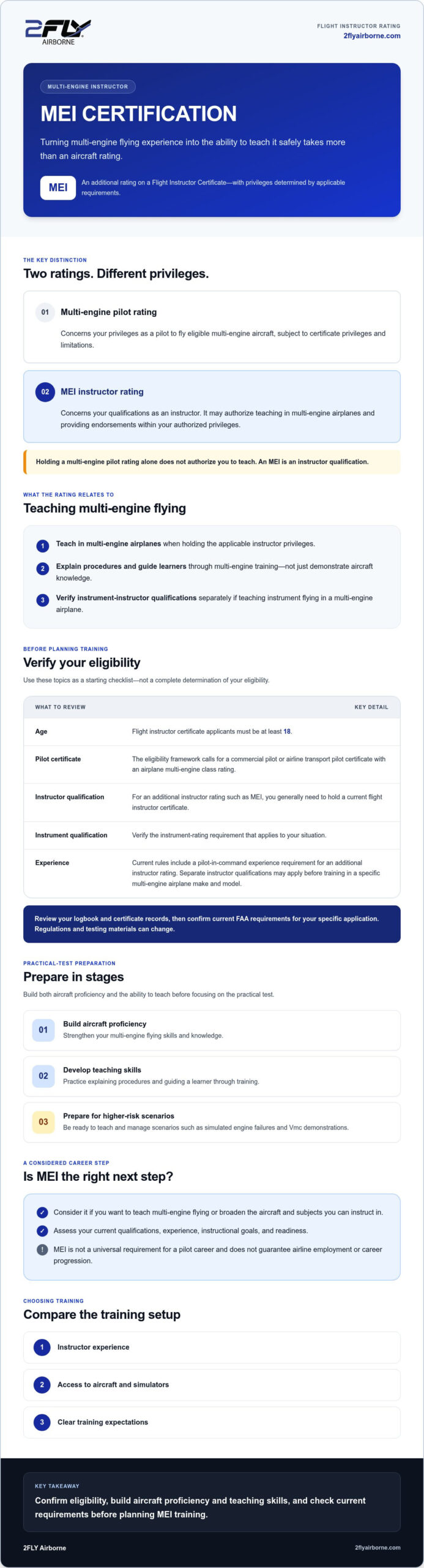
What does it take to turn multi-engine flying experience into the ability to teach it safely? For pilots considering multi engine flight instructor mei certification, the answer involves more than adding an aircraft rating. MEI is an additional rating on a Flight Instructor Certificate, while a multi-engine rating on a pilot certificate qualifies you to fly multi-engine aircraft.
Before committing to training, confirm that you hold the certificates and ratings required for your application and understand which experience requirements apply. FAA regulations and testing materials can change, so check the current requirements before you plan your next step.
This guide explains what an MEI can teach, what to verify before training, and how the rating may fit into a professional flight-training pathway. It also covers practical-test preparation, including your ability to teach and manage higher-risk scenarios such as simulated engine failures and Vmc demonstrations. Knowing what the standards involve can help you make a more informed decision about your next step as a flight instructor.
Key Takeaways
- Understand how an MEI rating differs from a multi-engine pilot rating and what instructor privileges it may provide.
- Use the multi engine flight instructor mei certification requirements as a starting point, then verify current eligibility details before enrolling.
- Prepare in stages by building aircraft proficiency and teaching skills before focusing on the practical test.
- Assess whether MEI training fits your goals, experience, and readiness. The rating does not guarantee career progression.
- Compare training providers by instructor experience, access to aircraft and simulators, and the clarity of their training expectations.
What Is MEI Certification, and What Can a Multi-Engine Instructor Teach?
Can you turn multi-engine flying experience into the ability to teach another pilot to manage a complex aircraft safely? An MEI, or Multi-Engine Instructor, is an additional rating on a flight instructor certificate. It qualifies an eligible instructor to teach in multi-engine airplanes and provide endorsements within their authorized privileges.
The distinction matters: a multi-engine rating concerns your privileges as a pilot, while an MEI rating concerns your qualifications as an instructor. Multi engine flight instructor mei certification involves demonstrating both aircraft knowledge and the ability to explain procedures and guide a learner through multi-engine training.
For a pilot’s-eye view of the training and checkride experience, watch this video:
How Is an MEI Different from a Multi-Engine Rating?
A multi-engine rating allows a pilot to act as pilot in command of eligible multi-engine aircraft, subject to the privileges and limitations of their certificate. An MEI is an instructor qualification. It does not automatically come with a multi-engine pilot rating, and holding that pilot rating alone does not authorize someone to teach.
For example, a pilot with a commercial certificate and multi-engine rating may be qualified to fly the aircraft but still needs appropriate instructor qualifications to teach a student in it. A flight instructor who wants to teach multi-engine flying must hold the applicable instructor privileges. The broader Pilot certification in the United States framework helps place instructor and aircraft ratings in context. Teaching instrument flying in a multi-engine airplane also requires the appropriate instrument-instructor qualification.
Who Typically Considers Multi-Engine Instructor Certification?
Pilots who want to teach multi-engine flying or expand the aircraft and subjects they can instruct in may consider adding an MEI. It can be a purposeful next step for a flight instructor with relevant multi-engine experience and a clear instructional goal.
MEI is not a universal requirement for a pilot career, and it does not guarantee airline employment or career progression. Consider your existing qualifications, experience, and professional objectives first. Then check current FAA requirements to confirm your eligibility and privileges before planning training.
MEI Certification Requirements: What Should You Verify Before Training?
Before scheduling multi-engine instructor training, review your existing qualifications and the rules that apply to your specific application. The multi engine flight instructor mei certification process depends on your current certificates, ratings, experience, and applicable FAA requirements. Confirm your eligibility before committing to a training plan.
Which Existing Certificates and Experience May Matter?
Use this checklist as a starting point, not as a substitute for checking current regulations:
- Age: Flight instructor certificate applicants must be at least 18.
- Existing pilot certificate and rating: The eligibility framework calls for a commercial pilot or airline transport pilot certificate with an airplane multi-engine class rating.
- Instructor qualification: For an additional instructor rating such as MEI, you generally need to hold a current flight instructor certificate.
- Instrument qualification: Verify the applicable instrument-rating requirement for your situation.
- Experience: Current rules include a pilot-in-command experience requirement for an additional instructor rating. Separately, 14 CFR § 61.195 addresses instructor qualifications, including the experience required before providing certain training in a specific multi-engine airplane make and model.
These are regulatory eligibility topics, not a complete determination of your status. Review your logbook and certificate records, then confirm how each requirement applies to your circumstances. A multi-engine pilot rating by itself does not qualify you to instruct.
How Can Candidates Confirm Current FAA Requirements?
Check the current text of 14 CFR Part 61, Subpart H, and the FAA’s applicable Flight Instructor Airman Certification Standards before planning for a knowledge or practical test. Requirements and testing materials can change, so verify the current versions and any applicable test requirements rather than relying on an older checklist or informal summary.
Keep three questions separate: Do you meet FAA eligibility requirements? Does the school have additional admissions or readiness criteria? What preparation will help you meet the practical-test standard? A school’s course prerequisites are not automatically FAA rules, and FAA eligibility alone does not establish that you are ready to begin training.
This article is educational, not official FAA guidance. For an individual review, discuss your certificates, logbook, and training goals with a qualified training advisor or examiner. 2FLY Airborne offers MEI training as part of its flight-training programs. Ask a 2FLY Training Advisor what current eligibility checks and course planning involve before you proceed.
MEI Training and Practical-Test Preparation: What Does the Process Involve?
MEI preparation involves more than performing multi-engine maneuvers. You also need to explain what you are doing, identify risks, and help a student understand how to respond. The outline below is a planning framework, not an FAA-mandated sequence. Course structure and pace vary, so confirm the plan and current test requirements for your circumstances.
A staged approach can help you identify gaps before practical-test preparation:
- Review the ground material. Refresh your understanding of aircraft systems, performance considerations, procedures, and the applicable training standards for the airplane you will use.
- Build aircraft proficiency. Practice relevant maneuvers and procedures, focusing on sound judgment, checklist use, and safe aircraft control.
- Practice teaching. Explain each lesson aloud, organize it into clear steps, and rehearse how you would recognize and correct a student’s error.
- Assess practical-test readiness. Use current testing references to identify required tasks and standards, then address weak areas with an instructor.
These stages combine flying proficiency with instructional skill. 2FLY Airborne offers aircraft and flight-simulator training. Confirm which resources and course elements apply to the current MEI program.
What Skills Should an MEI Candidate Develop?
Strong instruction starts with clear communication. Explain procedures in plain language, use checklists consistently, and give students enough context to understand why an action matters. For example, explain what the student should monitor, what change may indicate a problem, and which published procedure to follow, rather than relying on unfamiliar technical terms.
Sound judgment is just as important as a clear explanation. An instructor must manage the lesson while maintaining awareness of the aircraft and student. Be prepared to pause or adapt the lesson when safety requires it.
How Should You Prepare for the MEI Practical Test?
Start with the current FAA Airman Certification Standards and verify which version applies to your test. The eCFR’s FAA eligibility requirements for flight instructors provide the regulatory context. Use current FAA testing materials to prepare for the practical test. A separate knowledge test generally is not required for an instructor adding an MEI rating, but confirm the requirements that apply before scheduling.
Practice presenting and demonstrating relevant maneuvers. Brief the objective, explain risks, monitor performance, and offer corrections. The checkride evaluates your ability to instruct, not simply your ability to fly a maneuver. For multi engine flight instructor mei certification, base your preparation on current standards and demonstrated readiness, not a promised timeline or outcome.
Is MEI Certification the Right Next Step for Your Pilot Career?
An instructor rating can expand the kind of flying you teach, but it does not guarantee an airline job or a particular career outcome. The value of MEI training depends on how well it fits your professional goals, current qualifications, experience, and readiness to instruct in multi-engine aircraft.
What Are the Potential Benefits and Trade-Offs of Teaching Multi-Engine Flying?
Teaching multi-engine flying can help you develop as an instructor. You will need to explain complex procedures clearly, assess a learner’s performance, and maintain a strong focus on safety. Those skills may support your broader aviation development, but they do not guarantee employment or progression.
Consider the commitment as well. MEI training requires focused preparation and continued attention to your instructional skills. If your immediate priority is completing another certificate or rating, gaining experience, or strengthening your existing foundation, that may be a more suitable next step for now.
How Does MEI Fit into a Broader Professional Pilot Plan?
Start with your intended role, then map your current qualifications to the next step. Use these questions to guide your planning:
- Intended teaching role: Do you want to teach multi-engine flying, or are you aiming for a different instructional or flying role?
- Current qualifications: Which pilot and instructor certificates and ratings do you hold, and which eligibility details still need confirmation?
- Preparation needs: Are your aircraft proficiency, instructional skills, and practical-test preparation aligned with the next step?
- Next action: Verify requirements, discuss your readiness, and compare the MEI path with your other training priorities.
If you are considering a broader professional training sequence, explore 2FLY Airborne’s FAA Professional Pilot Program to understand how structured training may fit your goals. The right sequence depends on your starting point, qualifications, and intended pathway. No single rating is right for every pilot.
If you are weighing multi engine flight instructor mei certification against another training step, focus on readiness and purpose. Compare the training commitment with your current priorities, and plan for safe, structured progress rather than expecting a guaranteed career result.
Contact a 2FLY Training Advisor with questions about MEI training and how it may fit your professional pilot plan.
How to Choose MEI Training and Take Your Next Step with Confidence
The right MEI training plan should match your qualifications, experience, and learning needs. Compare providers by how clearly they explain eligibility checks, training resources, progress assessment, and practical-test preparation. 2FLY Airborne offers Multi-Engine Instructor training as part of its aviation training programs, with aircraft and flight-simulator resources available through the academy.
What Questions Should You Ask an MEI Training Provider?
Ask specific questions before choosing a course. Clear answers help you understand what the course includes and where you may need additional preparation.
- Eligibility: How will the school review your certificates, ratings, logbook, and prior experience against current requirements?
- Instructor qualifications: What relevant MEI instructional experience do the instructors have, and how will they guide your development as a teacher?
- Training resources: Which aircraft and simulator resources are available, and how are they incorporated into training?
- Course expectations: What ground preparation, flight training, and teaching practice does the course involve? How will the school assess your progress?
- Test preparation: How does the program use current FAA testing materials, and how will you know when you are ready for the practical test?
- Regulatory updates: How does the school check for changes to applicable FAA rules or testing standards?
Do not assume that a course description answers every question about your situation. For multi engine flight instructor mei certification, clarify how your prior experience will shape the training plan and which requirements you need to verify independently.
What Are the Practical Next Steps for an MEI Candidate?
Start by reviewing current FAA requirements and gathering your pilot and instructor certificates, ratings, and relevant logbook records. Then outline your goals, experience, areas where you want more practice, and questions about the course. This preparation can make your first discussion with a training provider more focused.
Ask the school how it assesses eligibility, builds a training plan around your needs, and prepares candidates for the practical test. Confirm the current course structure and availability directly, since training plans and requirements may change and each candidate’s preparation needs differ.
Choosing MEI training is a professional decision grounded in verified eligibility, realistic expectations, and a commitment to safe instruction. Review the details, compare your options, and contact a 2FLY Training Advisor with questions about MEI training or your next step.
Build Your Next Step on a Strong Foundation
MEI training can be a purposeful next step for pilots who want to teach multi-engine flying. The multi engine flight instructor mei certification is distinct from a multi-engine pilot rating. Verify current FAA eligibility and practical-test requirements before beginning training.
Choose a path that matches your experience and goals. Focus on clear instruction, sound judgment, and safe aircraft handling. Confirm how a provider assesses readiness and structures preparation. Training timelines and individual needs vary, and an instructor rating does not guarantee a particular career outcome.
2FLY Airborne lists MEI certification among its offerings and provides access to aircraft and flight simulators. Its pilot training is aligned with FAA and EASA standards, without implying endorsement by either authority.
Take a considered next step. Speak with a 2FLY Training Advisor about eligibility, training plans, or how MEI may fit your professional goals. With current information and structured, safety-focused preparation, you can make an informed decision about moving forward.
Frequently Asked Questions
What is MEI certification?
MEI certification is an additional rating on a flight instructor certificate that allows an appropriately qualified instructor to teach in multi-engine airplanes within their authorized privileges. It differs from a multi-engine rating on a pilot certificate, which concerns flying privileges rather than teaching authority. An MEI does not automatically authorize instrument instruction in a multi-engine airplane. That requires the applicable instrument-instructor qualification. Verify current privileges and limitations before instructing.
How do you become a multi-engine flight instructor?
Typically, you need a current flight instructor certificate, the applicable commercial or airline transport pilot certificate with an airplane multi-engine class rating, an instrument rating, and the required experience. You then complete appropriate training and pass the MEI practical test. Eligibility details can depend on your existing certificates and ratings, so review current FAA regulations and testing standards. Confirm how they apply to your situation with a qualified training advisor or examiner.
Do you need a multi-engine rating before getting an MEI?
Yes. The relevant pilot certificate must include an airplane multi-engine class rating for MEI eligibility. That rating establishes the applicable piloting privileges, while the MEI rating adds instructor privileges. Neither qualification automatically grants the other. Before enrolling, check that your pilot and instructor certificates, ratings, and experience meet current requirements for the specific MEI application you intend to make.
How long does MEI certification take?
Training time varies with your experience, proficiency, and training format. Under Part 61, there is no specified minimum flight-hour requirement to add an MEI rating. Training commonly takes several hours, but individual needs vary. An FAA-approved Part 141 MEI add-on course has minimums of 15 flight-training hours and 15 ground-training hours. These figures do not promise a completion time. Confirm the current course structure and your likely training plan with the provider.
What does the MEI practical test involve?
The practical test assesses whether you can teach and demonstrate the required multi-engine knowledge and skills to the applicable standard. Preparation may include teaching relevant maneuvers and procedures, explaining simulated engine failures, discussing Vmc demonstrations, and communicating the effects of asymmetric thrust, the unequal thrust produced by the engines. Check the current FAA Airman Certification Standards and test requirements before preparing, as standards can change.
Can MEI certification help you become an airline pilot?
An MEI rating may support a broader professional plan by qualifying you to teach multi-engine flying, but it does not guarantee airline employment, hiring preference, or career progression. Airline pilot pathways involve other qualifications and requirements that vary by role and employer. Consider MEI training in light of your instructional goals, existing experience, and overall plan. Treat it as one possible qualification, not a shortcut or job-placement promise.
How should I choose an MEI training program?
Compare providers by asking how they verify eligibility, which aircraft and simulator resources are available, and how instructors assess progress and practical-test readiness. Request clear information about course content, preparation expectations, and how the school checks for current FAA requirements. 2FLY Airborne offers MEI training, aircraft and flight-simulator access, and pilot education aligned with FAA and EASA standards. Contact a 2FLY Training Advisor with questions about your goals or training options.
Article by
2FLY Airborne
2Fly Airborne is a professional flight training organization dedicated to developing the next generation of skilled, confident, and safety-focused pilots. With decades of combined aviation experience, our team of certified instructors provides structured, real-world training designed to prepare students for both checkrides and long-term success in the aviation industry.
Content Disclaimer
Some blog content is generated with the assistance of automated tools and may not always be fully accurate or up to date. Please verify all aviation-related information with official sources or a certified instructor. For additional guidance or clarification, we encourage you to contact one of our training advisors at 2Fly Airborne.