

What if the fastest CFI course isn’t the one that gets you ready fastest? Accelerated CFI academy programs can appeal to pilots eager to move forward, but a packed schedule raises an important question: will you have enough time to absorb the material and develop the skills to teach well?
The right pace depends on more than the advertised timeline. An accelerated schedule doesn’t change certification requirements, and finishing lessons quickly isn’t the same as being ready to explain concepts, assess a student’s progress, and use sound instructional judgment. Strong preparation, clear structure, and specific instructor feedback all matter.
This guide explains what intensive CFI training may involve and how to compare programs by schedule, lesson structure, feedback, and readiness. You’ll also find practical ways to prepare and see how CFI training fits into a broader flight training pathway from private pilot to commercial pilot and instructor certifications. At 2FLY Airborne, CFI training is part of a structured FAA training pathway for pilots pursuing a professional aviation career.
Key Takeaways
- Think of accelerated CFI training as a concentrated schedule, not a separate certification or a shortcut around applicable requirements.
- Assess whether the program connects study, lesson preparation, practice teaching, and instructor feedback into a clear learning process.
- When comparing accelerated cfi academy programs, weigh support, practice opportunities, and schedule demands alongside pace.
- Before committing to an intensive schedule, set aside time for study, flight training, lesson preparation, and personal responsibilities.
- See CFI training as one stage in a broader progression through private and commercial pilot training, while treating career outcomes as individual.
What accelerated CFI academy programs involve, and who they suit
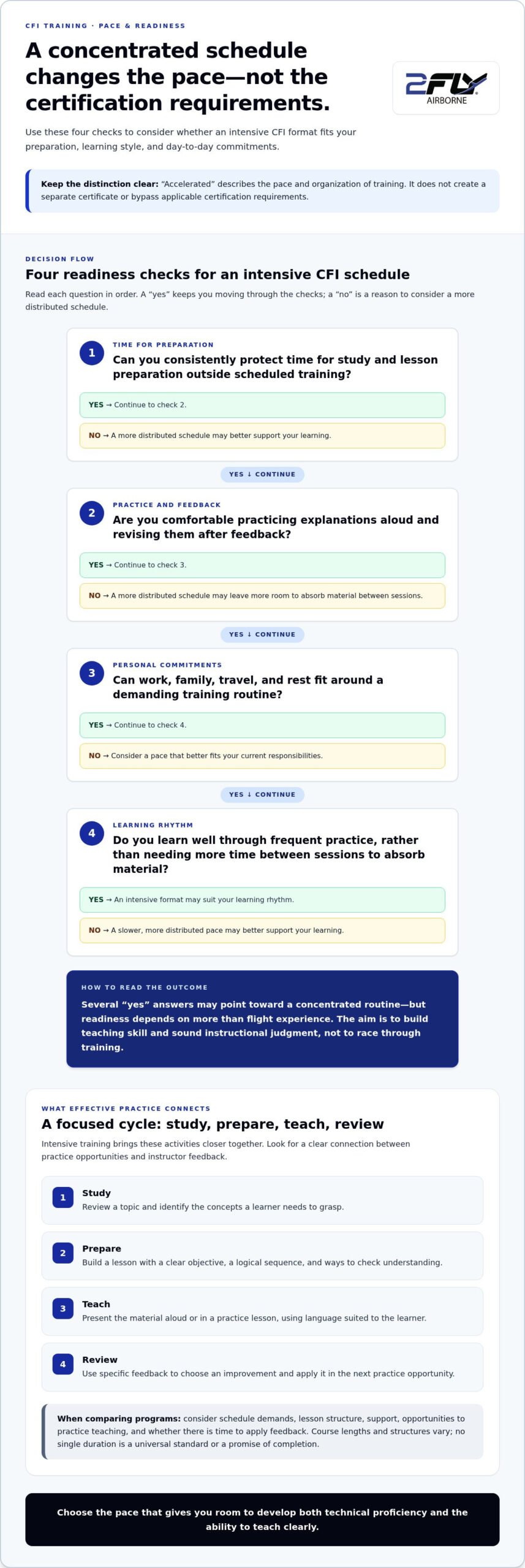
An accelerated CFI program concentrates instructor training into a more intensive schedule than a course spread over a longer period. The term describes the pace and organization of training, not a separate certificate or a different set of standards for becoming a Certified Flight Instructor.
That distinction matters. A school can schedule study sessions and practice closely together, but the pace itself doesn’t replace applicable FAA certification requirements. The Flight instructor role combines flying ability with the responsibility to explain procedures and help another person learn. Candidates need to develop both capabilities, whatever schedule they follow.
What makes CFI training accelerated?
A concentrated schedule brings independent study, lesson preparation, practice teaching, and flight training into a tighter sequence. This can help learners maintain continuity between sessions, but it also leaves less room to postpone preparation or let material sit between lessons. Course lengths and structures vary, so no single duration should be treated as a universal standard or a promise of completion.
The academy sets its training schedule, while applicable certification requirements remain separate. An intensive timetable organizes preparation; it doesn’t bypass the qualifications and assessments required for the certificate.
Who may benefit from an intensive training format?
Accelerated CFI academy programs may suit commercial pilots who are ready to focus on instructor training and can consistently make time for study, preparation, and frequent practice. Learners who thrive on a steady routine and respond constructively to feedback may find a concentrated format engaging. Readiness, however, depends on more than flight experience.
Flying an aircraft confidently doesn’t automatically mean a pilot can explain a maneuver clearly, anticipate a learner’s questions, or recognize when an explanation needs to change. Teaching requires candidates to organize what they know and communicate it from the learner’s perspective. Those skills need deliberate practice.
Before choosing an intensive schedule, consider your preparation and day-to-day commitments. Ask yourself:
- Can you protect regular time for study and lesson preparation outside scheduled training?
- Are you comfortable practicing explanations aloud and revising them after feedback?
- Can work, family, travel, and rest fit around a demanding training routine?
- Do you learn well through frequent practice, or do you need more time between sessions to absorb material?
Your answers can help you decide whether a concentrated pace is realistic now or whether a more distributed schedule better supports your learning. A slower pace isn’t a lesser ambition. The goal is to develop sound instructional judgment alongside technical proficiency.
Approach the choice as a matter of fit, not a race. The strongest path is one that gives you enough structure and practice to progress responsibly while respecting your readiness and circumstances.
How intensive CFI training develops instructor knowledge and teaching skills
CFI training asks pilots to do more than perform a maneuver correctly. They must also explain what is happening, why it matters, and how a learner can recognize and correct errors. Intensive training can bring these tasks together through a cycle of study, lesson preparation, teaching practice, and feedback.
From aviation knowledge to clear instruction
Instructor candidates practise turning technical knowledge into explanations a student can understand and use. For example, instead of relying on unexplained terms to describe a turn, an instructor might explain how the airplane’s bank changes its direction and why the pilot must coordinate control inputs. The explanation should be accurate, organized, and suited to the learner’s experience.
Preparation helps make that clarity repeatable. Organize a lesson around its objective, the key ideas to teach, common misunderstandings, and questions that check understanding. Practice then reveals whether the explanation flows logically or assumes the learner already knows too much.
Why practice and feedback matter in an intensive course
Repeated practice gives candidates opportunities to identify gaps and work on them while the material is still fresh. Useful feedback points to something observable, such as an unclear explanation, a missed learner question, or a need to check understanding before moving on. Specific feedback gives the candidate a practical next step instead of a vague instruction to “be more confident.”
Training methods vary, so compare how each program organizes practice. Look for a clear connection between preparation, opportunities to teach, and instructor feedback. Then consider whether there is time to apply that feedback in another lesson or practice session.
A concentrated learning cycle may look like this:
- Study: Review a topic and identify the concepts a learner needs to grasp.
- Prepare: Build a lesson with a clear objective, a logical sequence, and ways to check understanding.
- Teach: Present the material aloud or in a practice lesson, using language appropriate to the learner.
- Review: Use feedback to select a specific improvement and apply it in the next practice opportunity.
Regulatory details also deserve careful attention. CFI eligibility, knowledge-test, endorsement, and practical-test requirements are specific matters that can change. Verify current information in official FAA materials rather than relying on an old study guide or informal summary. The FAA’s FAA Training and Testing resources provide a starting point for consulting agency information; they don’t replace instruction tailored to your training and circumstances.
CFI preparation also sits within a wider progression of pilot certifications. Pilots exploring how instructor training relates to broader aviation goals can review 2FLY’s FAA Professional Pilot Program pathway. For details about structured FAA training, explore 2FLY Airborne’s pilot training and consider how instructor development fits your goals.
Does accelerated CFI training compromise quality? Compare more than the schedule
A compressed schedule doesn’t automatically mean poor-quality training. Quality depends on what learners do during that schedule, how instruction is supported, and whether they have opportunities to apply feedback. A fast advertised timeline, by itself, is neither evidence of strong preparation nor a reliable prediction of an individual student’s progress.
Which program features are worth comparing?
Look beyond the calendar. Compare how the course is organized, how learners access instructional support, how often they practise teaching, and how feedback helps them improve. Treat promotional success claims carefully: what outcome was measured, which students were counted, and over what period? Without clear definitions, a percentage alone can’t tell you whether a program fits your goals.
Compare
What it can tell you
Course structure
Whether training activities are sequenced clearly, rather than simply packed close together.
Practice opportunities
Whether candidates have meaningful chances to practise instruction and respond to learner questions.
Instructor feedback
Whether guidance identifies specific performance to improve, not just general impressions.
Student outcomes
Results that may vary with preparation, prior knowledge, attendance, and individual progress.
Keep program features separate from personal outcomes. A structured course can provide a framework, but it can’t establish in advance how quickly each candidate will master the material or meet applicable certification standards. Avoid ranking academies on pass-rate or employment claims alone unless the measures and context are transparent and comparable.
How to weigh an intensive schedule against a longer pace
A concentrated format can help some learners stay focused and connect study with practice. A more distributed schedule may give others additional time to review material or balance training with outside responsibilities. Neither pace guarantees faster certification or better learning for every candidate.
Think through the demands of your actual week. Work commitments, family responsibilities, study time, and adequate rest can all affect how consistently you prepare and participate. A schedule that looks manageable on paper may be difficult to sustain if it leaves no room for independent work or unexpected obligations.
Online discussion titles comparing five-, eight-, and twelve-day schedules show that prospective candidates ask about course length. A title alone, however, isn’t evidence that one format works better. Use schedule comparisons as a starting question, then assess the training activities, support, and expectations behind each format.
For a practical decision, compare the advertised schedule with the time you can reliably commit. Then weigh that against the quality of instruction and opportunities to practise. Choose a path that supports steady, safe learning rather than one that simply promises speed. For guidance on how CFI training fits into a broader aviation pathway, explore 2FLY Airborne’s training programs.
How to prepare for an accelerated CFI program and stay on track
Preparation starts before the intensive schedule does. Take an honest inventory of your aviation knowledge, teaching skills, available time, and outside responsibilities. That assessment can help you decide whether accelerated cfi academy programs fit your current circumstances or whether you need more preparation first.
Assess your knowledge, schedule, and learning needs
Refresh the topics you may need to explain as an instructor, including aircraft systems, procedures, aerodynamics, weather, and in-flight decision-making. Consider how confidently you can break a concept into clear steps, respond to questions, and adjust an explanation when someone is confused. Identify weak areas early so you can plan targeted review instead of discovering gaps under schedule pressure.
Next, map a realistic week. Include scheduled flight and ground training, independent study, lesson preparation, work or family commitments, and time to rest. A plan that assumes every available hour can go to training may be difficult to sustain. Write down the study periods you can protect consistently, then compare that availability with the course demands.
Also consider how you learn best. Some candidates benefit from frequent, closely spaced practice; others need more time between sessions to review and consolidate material. Neither preference signals a lack of ability. It’s useful information for choosing a pace that supports focused learning.
Build a practical plan for an intensive course
Once you understand the demands, organize your preparation so each session builds on the last. Use a calendar for training and study blocks, keep lesson notes in one system, and record questions or topics that need another review. After practice teaching or instructor feedback, turn each comment into a specific action for your next preparation session.
- Set a baseline: List the aviation subjects and instructional tasks that feel strong, along with areas that need review.
- Map your time: Reserve realistic periods for study, lesson preparation, flight training, and personal responsibilities.
- Track progress: Keep organized notes on feedback, questions, and skills to practise again.
- Reassess regularly: Notice whether your plan remains sustainable and whether you’re retaining and applying what you learn.
Use current FAA publications and other authoritative agency materials to verify requirements that apply to your situation. Regulations and testing information can change, and this article is not official FAA guidance. Avoid relying solely on old notes, informal discussions, or promotional summaries when checking certification details.
Budgeting is another part of preparation. Account for training and study demands alongside personal expenses, and consider how your financial plan would handle a schedule that takes longer than expected. A broader flight-school cost guide can help frame the questions to include in your planning, without assuming one figure applies to every student.
Good preparation gives you a stronger basis for a safe, structured training experience, but individual progress can still vary. To discuss how your goals and readiness connect with FAA pilot training, speak with a 2FLY Training Advisor.
How 2FLY FAA training fits into your instructor-to-airline pathway
Becoming a flight instructor can be an important step in a pilot’s professional development, but it isn’t a guarantee of an airline position. 2FLY’s FAA training covers private pilot, commercial pilot, and flight instructor certifications, creating a structured progression from foundational flight skills toward more advanced professional goals.
Connect instructor training to a broader FAA career pathway
The pathway starts with private pilot training, continues through commercial pilot certification, and can progress to Certified Flight Instructor training. Each stage builds on earlier knowledge and experience. A CFI certificate prepares a pilot to teach within the privileges of that certificate; it doesn’t determine future employment or career timing.
Some pilots choose flight instruction as one way to build experience while pursuing longer-term aviation goals. That route depends on individual circumstances, qualifications, and opportunities. For a broader view of 2FLY’s FAA Professional Pilot Program, consider how each certification could fit into your own progression.
2FLY’s management team brings over 50,000 combined flight hours and 35 years of aviation experience. That experience informs a professional training environment focused on preparing pilots through successive stages of FAA training. It supports the pathway, but it isn’t a promise of a particular completion date or employment outcome.
Take a practical next step toward CFI training
Before planning your next stage, write down your current certificates and ratings, recent flight experience, career goals, and preferred learning pace. Note the subjects you feel confident teaching and where you want more practice. These details can make a conversation about your training direction more focused and help you consider how CFI training relates to your broader plans.
Then consider the practical side. Set out the time you can devote to study and training, account for work and personal commitments, and think about how you’ll manage costs throughout your progression. 2FLY career programs offer monthly payment options, and full tuition isn’t required upfront. Individual training needs and timelines vary, so build a plan that leaves room for steady progress.
Questions about accelerated cfi academy programs can be part of that discussion, especially if you’re weighing pace against preparation and support. 2FLY’s CFI training is part of a broader FAA training pathway. Focus on your starting point and goals rather than assuming one format fits every pilot.
For a practical next step, outline your experience and career objectives, then reach out to a 2FLY Training Advisor with questions about CFI training and the wider pathway. A considered plan keeps skill development, safe operations, and career ambitions moving in the same direction.
Take the Next Step Toward Instructor Training
Your move from pilot to instructor is more than another credential. It’s a chance to shape how future pilots think, communicate, and make sound decisions. Let that responsibility guide your choice of training path, not the appeal of a short timeline alone.
As you consider accelerated cfi academy programs, focus on the kind of instructor you want to become. Set a clear development goal, such as explaining procedures more clearly or helping a learner build confidence through thoughtful instruction. Then choose a path that supports disciplined preparation and safe, lasting learning.
You don’t need to have every detail settled before taking the next step. A focused conversation can help you connect your current experience with a practical plan for CFI training and your wider aviation goals.
Speak with a 2FLY Training Advisor about your pilot training goals, and take your next step with purpose.
Frequently Asked Questions
How long do accelerated CFI academy programs take?
There’s no single standard duration for accelerated CFI academy programs. Schools set their own schedules, while each candidate’s progress depends on preparation, training availability, and development of instructional skills. Treat a published course length as a schedule, not a guaranteed certification date. Before enrolling, understand what the schedule includes and how progress is evaluated, then compare its demands with your availability.
Is accelerated CFI training harder than a traditional training schedule?
It can feel more demanding because study and training activities may be closely spaced. A longer schedule spreads those demands over more time but still requires consistent effort. For example, a pilot balancing work with training may find frequent sessions difficult to sustain, even if concentrated study suits their learning style. Consider your weekly commitments and how much focused preparation you can maintain before choosing a format.
Can you complete CFI training without prior commercial pilot experience?
For an initial FAA flight instructor certificate, current eligibility rules require a Commercial Pilot Certificate or Airline Transport Pilot Certificate, along with an instrument rating. A pilot generally can’t proceed directly to initial CFI certification without those credentials. Check current FAA regulations, including 14 CFR 61.183, and get guidance that accounts for your certificate and rating history. Requirements can change, so use current authoritative sources.
What should I study before starting an accelerated CFI course?
Review the flight concepts you’ll need to teach, such as aircraft systems, weather interpretation, aerodynamics, procedures, and pilot decision-making. Practise explaining a topic aloud as if teaching someone new to it. Notice where you use unexplained jargon or lose the logical sequence. Organize your study materials and identify subjects that need extra attention, so you can focus your preparation instead of trying to review everything equally.
How much does an accelerated CFI academy program cost?
There isn’t one price that applies to every accelerated CFI course. The total depends on the program structure, what training it includes, and any additional preparation or attempts a student may need. Compare the included training and stated terms rather than relying on a headline figure alone. For broader budgeting, account for personal expenses and the possibility that your individual training timeline may vary.
Can international students pursue FAA flight instructor training in the United States?
Yes, international students may pursue FAA flight training in the United States, but training eligibility and immigration authorization are separate matters. 2FLY Airborne is authorized under federal law to enroll non-immigrant alien students. Before making travel or enrollment plans, review current U.S. visa and student guidance through relevant official sources. Requirements may depend on individual circumstances and can change.
Does completing CFI training guarantee an airline pilot job?
No. A CFI certificate can support a pilot’s professional development, but it doesn’t guarantee airline employment. Hiring depends on factors beyond completing instructor training, and career paths differ. If your goal is an airline career, build a plan that considers further qualifications, experience, and changing opportunities. Treat flight instruction as one possible step in a broader career path, not as a promise of a particular job or timeline.
Choose a training pace that supports thoughtful preparation and sound judgment. Clear expectations, consistent practice, and a commitment to safe, structured training can help you build a strong foundation for the next stage of your aviation career.
Reach out to a 2FLY Training Advisor with your questions and discuss your pilot training goals.

Article by
2FLY Airborne
2Fly Airborne is a professional flight training organization dedicated to developing the next generation of skilled, confident, and safety-focused pilots. With decades of combined aviation experience, our team of certified instructors provides structured, real-world training designed to prepare students for both checkrides and long-term success in the aviation industry.
Content Disclaimer
Some blog content is generated with the assistance of automated tools and may not always be fully accurate or up to date. Please verify all aviation-related information with official sources or a certified instructor. For additional guidance or clarification, we encourage you to contact one of our training advisors at 2Fly Airborne.