
Planning to earn a commercial pilot certificate and weighing your tuition options? Fixed price commercial pilot course tuition structuring can shape how you budget for training and compare programs.
It’s natural to want a clear budget before committing to flight training. Fixed-price tuition can make planning more predictable, while pay-as-you-go training ties charges to the lessons and resources you use.
This guide explains how fixed-price commercial pilot course tuition is structured, what a training package may cover, and how to compare different certificates and ratings. You’ll also learn which details to review as you plan your next step toward a professional aviation career.
Key Takeaways
- Compare the ratings, aircraft use, instructor time, ground school, and exam attempts included in a fixed-price package.
- Weigh predictable package tuition against pay-as-you-go billing, where costs track the training and resources you use.
- Build a realistic budget by separating tuition from possible exam, equipment, housing, and transportation expenses.
- Expect costs to vary by certificate and rating, aircraft type, training pace, and the experience you already have.
- Review how each training stage fits your professional goals before choosing a structured path toward commercial aviation.
What is Included in Fixed-Cost Flight Training Tuition?
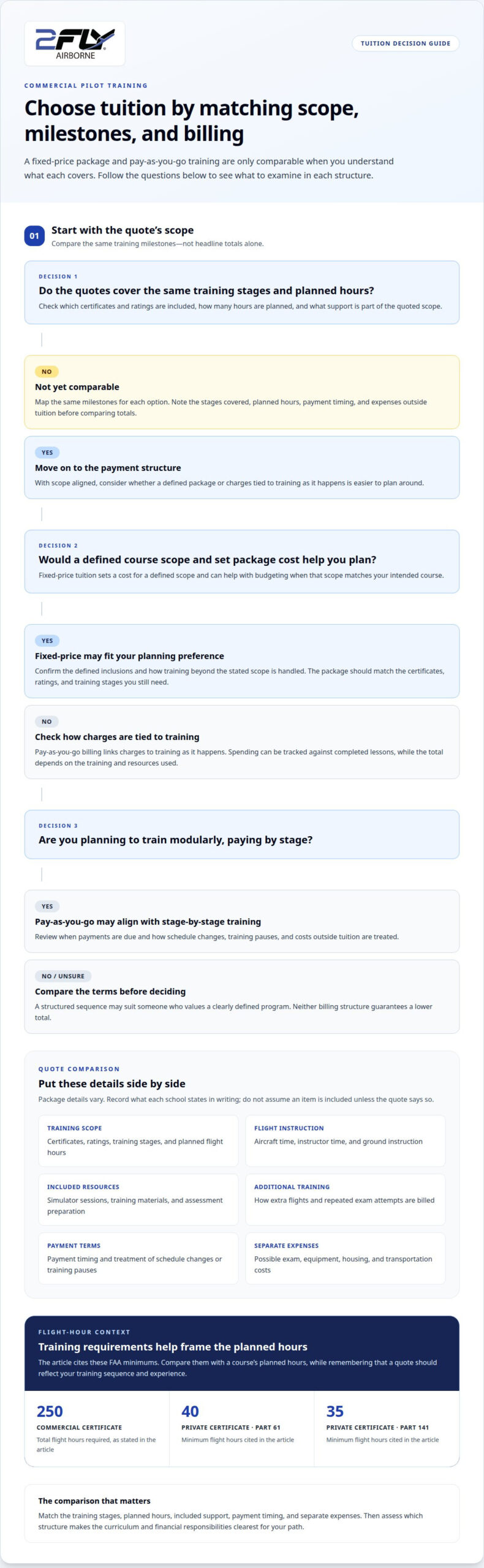
Fixed-price tuition typically covers a defined training sequence, but package details vary. Before comparing totals, check what’s included, such as aircraft time, instructor support, ground school, and assessment preparation.
Certificate Costs and Flight-Hour Requirements
A certificate’s training cost reflects its required flight experience and the resources used to reach proficiency. According to the Federal Aviation Administration, a Commercial Pilot Certificate requires 250 total flight hours. Private Pilot Certificate minimums differ by training framework: 40 hours under Part 61 and 35 hours under Part 141. These requirements help you assess whether a quote’s planned hours support your intended career path.
Compare the training sequence, not tuition alone. A commercial course may include time-building flights after private training, while a private course focuses on foundational flight skills. Check how aircraft use, instructor time, ground instruction, and testing are treated in the quoted tuition.
Flight-Time Assumptions in Tuition Pricing
Flight-time assumptions are the hours used to plan a training package. They matter because additional flights can affect the amount you pay, even when the course follows a fixed sequence. Compare the planned hours and review how the program accounts for training beyond its stated scope.
Check whether the quoted tuition covers aircraft time, instructor time, or both. A package may include a defined amount of instructor-led flight training and ground school, while additional training may be billed separately. Ask how the program handles schedule changes, including weather-related cancellations.
Pricing by Prior Flight Experience
Prior experience affects which training stages remain in your plan. A student starting with no logged flight time needs foundational training, while a private certificate holder may enter at a later stage. This distinction matters because a fixed-cost quote should match your training record and the certificates you still need.
Use your logbook and certificates to map your training history. Identify which completed stages count toward the proposed sequence and which remain. For example, a Private Pilot Certificate holder can compare tuition for the remaining ratings with the cost of a full career-training path.
Fixed-price tuition may group aircraft use, instructor time, ground school, and other defined training elements. Compare the written inclusions carefully, including simulator sessions, training materials, assessments, and any additional flights. Don’t assume these items are covered unless the program states that they are.
Use these questions to compare flight school quotes:
- How many flight hours are included for each certificate?
- Does tuition cover aircraft rental and flight instructor time?
- Are ground school and an exam attempt included?
- How are extra flights and repeated exams billed?
- Which costs remain separate from the quoted tuition?
Note each inclusion beside the tuition details. This side-by-side comparison helps show whether two programs cover the same training stages, hours, and support.
Fixed-price versus pay-as-you-go training
Tuition structure affects how you plan payments throughout commercial pilot training. Compare the payment schedule and terms, not just the stated total.
Total Cost from Zero Experience
A full-path budget tracks training from initial instruction through commercial qualification, alongside related expenses. A package total and a series of separate charges may cover different stages, so their headline amounts may not be directly comparable.
For a useful comparison, map the same milestones for each option. Note when payments are due, which training stages they cover, and which personal expenses sit outside tuition. This makes the payment schedule easier to assess alongside the overall training commitment.
Costs by Starting Experience
Your starting experience determines which training stages you still need. A tailored plan should account for completed milestones rather than assuming every student follows the same path.
Use your current logbook and certificates to describe your training history when reviewing a proposed plan. Then compare how the remaining curriculum is arranged and billed. The aim is to align the payment structure with the training ahead, not to assume past experience automatically reduces every part of tuition.
Pay-as-you-go billing links charges to training as it happens. This can make spending easier to track against completed lessons, but the total depends on the training used. Fixed-price tuition sets a cost for a defined scope, which can help with budgeting when that scope matches your intended course.
Either structure requires a clear understanding of its terms. Review how it handles schedule changes, training pauses, and charges outside tuition. These details affect both payment timing and the overall amount to budget.
Compare payment plans using the same questions:
- Which training stages does the quoted amount cover?
- When are payments due under the selected arrangement?
- How are changes to the planned schedule handled?
- Which expenses remain separate from tuition?
A student following a structured training sequence may value a clearly defined program, while someone training modularly may prefer paying by stage. Neither structure guarantees a lower total. Choose the one that makes the curriculum, payment timing, and financial responsibilities easiest to understand before training begins.
Professional airline pilot program tuition and total expenses
Programs define their training scope and how they handle additional flight time. Check the terms for training beyond the planned sequence, as well as expenses such as housing and daily living if you’ll be away from home.
Exams, Checkrides, and Equipment
Assessment and equipment expenses sit alongside tuition, so they affect the full budget for aviation training in the U.S.
List each exam, practical test, and equipment purchase separately, then compare that list with the tuition inclusions. This helps distinguish training charges from the expenses involved in preparing for assessments.
Simulator and Assessment Expenses
Simulator and assessment charges cover training-device sessions and pilot evaluations. They matter because a tuition figure may not include every session or testing fee across U.S. flight schools.
For a clear comparison, record simulator sessions, knowledge tests, and practical tests as separate budget lines. A program that includes simulator training differs from one that bills each session separately, even if both follow a similar training sequence.
Extra Hours, Retakes, and Delays
Review how the program handles additional training and assessment costs when the planned sequence needs to change.
Read the tuition terms for included hours, additional-hour billing, and checkride retake charges. Schools may bundle instructor time into a fixed program cost or bill it separately. Ask how weather interruptions affect scheduling and whether unused training time carries forward; those terms shape the practical total.
When planning for housing during flight school in the U.S., keep in mind that these are national training estimates rather than specific local quotes. Local housing choices and transport needs affect a student’s personal budget.
Duration also changes living expenses. An accelerated full-time Part 141 program can take 12 to 18 months from zero experience to a commercial multi-engine certificate. Align the living-cost period with the program timeline rather than assuming tuition covers accommodation.
Build a total-expense worksheet with separate lines for:
- Tuition and any additional flight hours.
- Simulator sessions, knowledge tests, and checkrides.
- Headset purchases and other training equipment.
- Housing, food, and transportation for the planned duration.
This breakdown shows why understanding fixed price commercial pilot course tuition structuring is only one part of an airline pilot training budget. Assessment, equipment, housing, and other personal expenses can also contribute to the cost of earning each certificate when training with providers like 2FLY Airborne.
What is the cost for private pilot and other ratings?
Private, instrument, commercial, and advanced ratings each use different aircraft, instruction, and assessment resources. Commercial pilot course prices also vary by state, aircraft, and flight school, because local operating costs and training plans shape what each quote covers.
Aircraft and Instructor Hourly Costs
Hourly training costs reflect aircraft use and flight instructor time, two major inputs in flight training. They matter because students often need different amounts of aircraft practice to meet proficiency goals.
Compare how each program accounts for aircraft time, instructor briefings, and ground instruction. A lesson can include both flight and ground preparation, so an aircraft-only rate won’t show the full training expense. Check whether those charges are itemized or included in the course tuition.
Price Differences by Location and Training Choice
Location and training choices affect tuition through local operating expenses, aircraft selection, and the structure of each school’s program. They matter because a quote from one state may cover a different training plan than a quote from another.
For a useful comparison, match the certificate stages, aircraft category, instructor support, and included training resources. Single-engine training and a multi-engine rating use different aircraft, while program structure determines how flight lessons and ground instruction are organized. Compare the scope before judging the total.
Private Pilot Certificate and Instrument Rating budgets depend on the training plan, aircraft use, and instruction required. Instrument training focuses on operating with reference to flight instruments, while private training develops foundational piloting skills. Ask for each stage to be clearly identified so you can see how it fits into your wider career plan.
Commercial and advanced ratings add further training stages. The Commercial Pilot Certificate, Multi-Engine Rating, and instructor certifications each involve distinct preparation and aircraft needs. Map the stages in sequence, then compare whether tuition covers the full path or only one certificate. This shows what training remains after each milestone.
International students should separate flight tuition from personal expenses. Visa and travel costs may affect an individual budget, while housing and daily expenses depend on personal arrangements.
Use this comparison when reviewing a school quote:
- Match the same certificates and ratings, including any multi-engine or instructor training.
- Compare aircraft type, instructor support, and the training resources included.
- Separate tuition from living expenses and international student costs.
- Identify which stages your existing certificates or experience may change.
For example, compare an Instrument Rating with another quote for the same rating, rather than with a full career program. If you plan to earn commercial and instructor qualifications, compare the complete training sequence. Like-for-like comparisons make cost differences easier to interpret.
Commercial pilot certificate cost ranges
A broad U.S. market benchmark for a career-track flight training program is around $90,000. That figure describes a career-track package, not a standalone commercial certificate quote.
Part 61 and Part 141 Cost Comparisons
Part 61 and Part 141 are two FAA training frameworks, and their course structures can affect the training cost. The stated minimum flight time differs: 250 hours under Part 61 or 190 hours under Part 141.
Minimum requirements alone don’t determine the final estimate. Compare the full curriculum, aircraft time, instructor support, and included ratings. A lower minimum may come with different package inclusions or training needs, so assess the full scope rather than assuming one framework always costs less.
Single-Engine Commercial Course Costs
A single-engine commercial course prepares a student for the commercial certificate in a single-engine aircraft. Its tuition depends on the training plan, included training, and how aircraft and instructor charges are structured.
For a useful estimate, separate commercial training from earlier private and instrument stages. Then check whether the course includes flight practice, ground instruction, and assessment preparation. Don’t compare a quote covering several certificates directly with one for single-engine commercial training alone.
Hourly and Fixed-Cost Pricing
Hourly pricing charges for training as flying and instruction occur, while fixed-price tuition sets a cost for a defined program. The distinction matters because the same certificate path can be paid for in different ways.
With hourly billing, the final amount depends on the hours used and applicable charges. A fixed-price program makes its planned scope easier to assess, but the value of the comparison depends on the included training and terms for anything beyond that scope. Compare those details before weighing either option.
Typical U.S. Fixed-Price Training Costs
The around-$90,000 market benchmark applies to career-track flight training programs, which may bundle several stages. It isn’t a universal price for earning a commercial pilot certificate, and it shouldn’t be treated as a school-specific quote.
Check whether a program starts with no flight experience, includes private and instrument training, or covers commercial training alone. Also review whether instructor certifications are part of the plan. These differences affect what the tuition covers and explain why fixed-price programs may have different totals.
For a single-engine commercial course, compare the training scope and payment terms first. A multi-engine rating is a separate qualification with its own aircraft and instruction needs, so assess it separately rather than assuming it’s included in every commercial program.
Review the FAA airline pilot program to understand how commercial training can fit into a broader career-track sequence.
2FLY Airborne: FAA Professional Pilot Program
2FLY Airborne’s FAA Professional Pilot Program gives aspiring commercial pilots a structured path through key training stages. It connects the Private Pilot Certificate (PPL), Instrument Rating (IR), and Commercial Pilot Certificate (CPL) within a professional aviation training journey.
When comparing fixed-price and pay-as-you-go options, consider how each training stage supports your goals and fits your experience. A clear view of the certificates you need makes it easier to discuss tuition structure and program details.
Explore the FAA Professional Pilot Program, or contact 2FLY Airborne to discuss your pilot training goals.
Build Your Next Step Around Your Aviation Goals
Your aviation goals can guide decisions before training begins. Thoughtful fixed price commercial pilot course tuition structuring keeps financial planning aligned with the professional path you want to pursue.
As you consider the next stage, look for training that develops sound judgment alongside technical skill. Structured instruction helps build habits that matter throughout a pilot’s career, from early training to advanced responsibilities.
Bring your questions about training pathways and program fit to a conversation with a 2FLY Training Advisor. Contact 2FLY Airborne to discuss your goals and take a confident next step toward aviation.
Frequently Asked Questions
How Much Does Flight School Cost in 2026?
Flight school costs in 2026 depend on the certificates you pursue, your starting experience, and the training resources included. Build your estimate around the complete sequence, from initial flight instruction through commercial training, rather than a single course label. Include planned flight time, ground school, simulator sessions, exams, equipment, and living expenses. The Federal Aviation Administration requires 250 total flight hours for a Commercial Pilot Certificate.
How Much Does It Cost to Become an Airline Pilot?
Becoming an airline pilot involves more than paying for a commercial certificate. The total depends on the training stages you complete, any instructor ratings you pursue, and how you build experience after initial certifications. For example, compare a program ending at commercial pilot training with one that also includes flight instructor preparation. Add personal living and travel expenses separately, since they depend on your schedule and arrangements.
Why does the pilot training cost vary?
Pilot training costs vary because students need different aircraft time, instruction, and certificate sequences. Someone with prior flight experience may follow a different plan from someone starting at the beginning. Aircraft type, instructor billing, simulator use, ground school, assessments, and training pace can also affect the budget. Compare quotes only after matching the ratings and services they cover.
How much are flight lessons?
Flight lesson charges depend on the aircraft used, instructor time, and whether the lesson includes ground preparation. Single-engine and multi-engine training use different aircraft. Check how a program accounts for briefings, debriefings, aircraft use, and instructor support. For a meaningful budget, consider the full lesson plan rather than multiplying one hourly rate by an assumed number of flights.
Part 61 vs Part 141: Does the School Type Change the Price?
Yes, the training framework can change the course structure and the hours planned, which can affect total tuition. Part 61 training generally allows a more flexible lesson sequence, while Part 141 training follows an approved, structured curriculum. The best comparison is not just the school type: match the certificate sought, syllabus, included hours, and training resources. Your experience and progress also shape the amount of training needed.
Quick Answer: How Much Is Pilot School?
There’s no single total for pilot school because “pilot training” can mean one certificate or a complete career path. Start by identifying whether you need private, instrument, commercial, or instructor training. Then separate tuition from exams, equipment, housing, and transportation. For example, don’t compare tuition for an Instrument Rating alone with a program covering several certificates and ratings.
What flight training, ground school, and fees are included in a fixed-price commercial pilot course?
In a fixed-price course, inclusions depend on the program’s defined scope. 2FLY Airborne’s fixed-price professional pilot tuition covers the required flight hours, ground school, and simulator sessions for certification. Ground school develops the knowledge behind flight procedures, while simulator sessions let students practise in a training device. Review how the program connects those elements to its certification path and planned training sequence.
How do fixed-price commercial pilot programs compare with pay-as-you-go tuition?
Fixed-price programs set tuition for a defined training path, while pay-as-you-go billing charges for aircraft use and instructor time as training occurs. A student following a structured sequence may value the clarity of a defined program; someone training modularly may prefer paying stage by stage. Compare how each option handles schedule changes, additional instruction, and the ratings in your career plan.
Article by
2FLY Airborne
2Fly Airborne is a professional flight training organization dedicated to developing the next generation of skilled, confident, and safety-focused pilots. With decades of combined aviation experience, our team of certified instructors provides structured, real-world training designed to prepare students for both checkrides and long-term success in the aviation industry.
Content Disclaimer
Some blog content is generated with the assistance of automated tools and may not always be fully accurate or up to date. Please verify all aviation-related information with official sources or a certified instructor. For additional guidance or clarification, we encourage you to contact one of our training advisors at 2Fly Airborne.