A pilot-school budget depends on the goal: recreational training focuses on a private pilot certificate, while a professional pathway adds ratings and certifications for career progression. A professional pilot program’s financial breakdown and expenses therefore vary with the training sequence, flight time, and qualifications pursued. The key is to understand what each stage covers before planning the full journey.
It’s natural to focus on the total, but the details matter just as much. This guide breaks down the main expenses in flight training, explains how recreational and professional routes differ, and shows how private, instrument, commercial, and instructor certifications shape a budget. It also covers funding options and costs to consider beyond flight hours. Understanding the stages and their cost drivers can help you plan your next steps with greater confidence.
Key Takeaways
- Separate recreational training goals from a professional pathway before estimating your overall budget.
- Account for more than flight hours: certification stages, exams, checkrides, and training materials can all affect expenses.
- Understand how instrument, commercial, and instructor qualifications build on earlier training and shape the professional route.
- Explore scholarship options and assess how each may fit your training plans and eligibility.
- Use the article’s cost breakdown to identify the main budget drivers and plan your next training step with greater clarity.
1. What Does Pilot School Cost in 2025?
A professional pilot budget can include private and instrument training, commercial flight training, additional ratings, examinations, and hour building. Your expenses depend on the qualifications you pursue, the training sequence, and the time needed to complete each stage. Before estimating the full pathway, map each qualification to its training requirements and cost drivers.
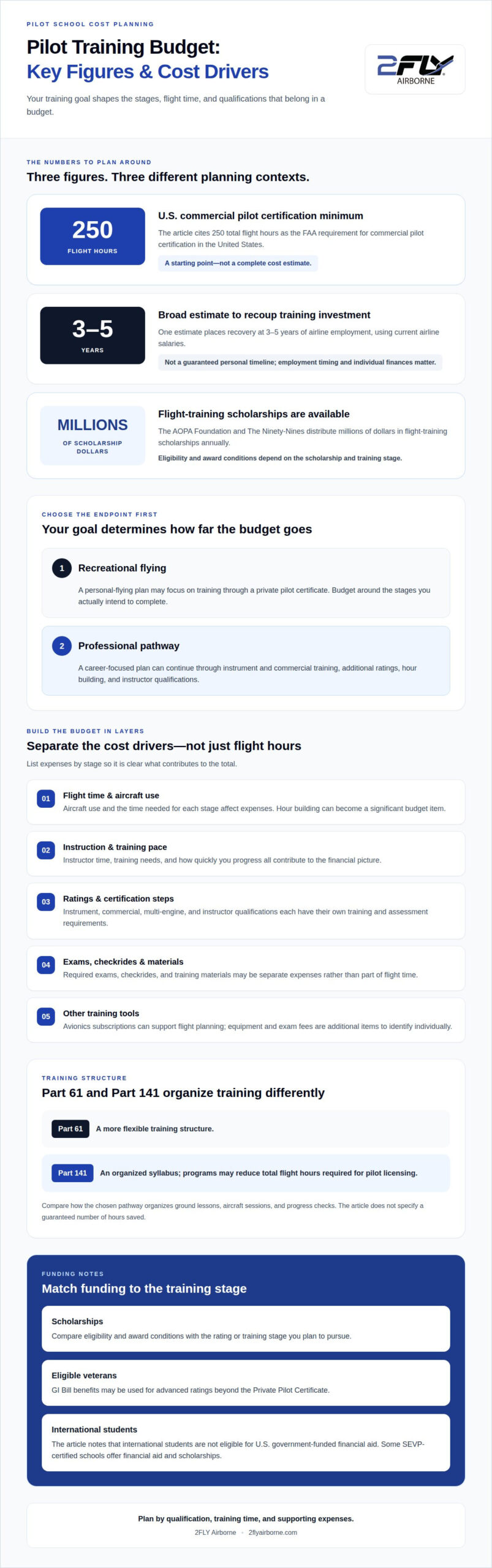
According to the Federal Aviation Administration, commercial pilot certification in the United States requires 250 total flight hours. That minimum is a starting point for planning, not a complete estimate of training expenses. Aircraft use, instruction, and preparation also contribute. For a professional pilot program, a financial breakdown of expenses should list those components separately, so it’s clear how the total develops.
Commercial training follows earlier pilot certifications and develops the skills needed for commercial privileges. A modular route divides training into separate stages, while an integrated route organizes instruction as a structured course from the outset. Compare how each format sequences training and flight time, and which certifications its syllabus covers.
Multi-engine training develops experience flying aircraft with more than one engine. Costs depend on aircraft and instructor time, your training needs, and the rating’s scope. A flight instructor certificate is another career-focused step, preparing pilots to teach. Instrument and multi-engine instructor qualifications extend the areas they can teach. Each qualification has its own instruction and assessment requirements.
Hour building means accumulating flight experience after initial certificates. It can become a significant budget item because aircraft time and training pace affect spending. For example, if you plan to pursue commercial certification and then instructor qualifications, map the sequence, identify the experience required at each stage, and budget separately for aircraft and instruction.
Recreational training may end with a private certificate, while professional training can continue through commercial and instructor qualifications. That choice affects the number of stages and the expenses involved. Build your budget around the intended endpoint, separating flight time, instructor time, certification steps, and hour building rather than treating pilot school as one fee.
For a structured view of how professional training stages fit together, explore this FAA airline pilot training pathway. Comparing the program sequence with your career goal helps clarify which ratings matter and when each training expense enters the plan.
2. Professional versus recreational training economics
Recreational flight training focuses on personal flying, while professional aviation training builds qualifications for employment. A recreational student may stop after a private certificate; a career-focused student may continue toward instructor qualifications and further experience. Map your intended endpoint first to identify the training stages and expenses that support your goal.
Part 61 and Part 141 describe two FAA training pathways. Part 61 offers a more flexible structure; Part 141 follows an organized syllabus. Part 141 programs may reduce the total flight hours required for pilot licensing compared with the Part 61 model. That potential difference makes syllabus structure and training pace important budget factors. Ask how the chosen pathway organizes ground lessons, aircraft sessions, and progress checks.
A Certified Flight Instructor (CFI) certificate can connect professional training with hour building. Instructors teach students and may accumulate flight experience through their work. It is not a shortcut to a career: aspiring instructors must meet the certificate requirements and develop the skills to teach safely. Consider the CFI stage both as a qualification and as one possible part of a longer experience-building plan.
Budget for more than aircraft and instructor time. Training materials, required exams, checkrides, and avionics subscriptions may be separate expenses. List each item individually rather than grouping everything under flight time. For example, an avionics subscription supports flight planning, while equipment and exam fees cover other training needs.
Investment recovery depends on reaching airline employment and the income earned afterward. One estimate places the time for pilots to recoup their training investment at 3-5 years of airline employment, using current airline salaries. Treat that as a broad career-planning estimate, not a guaranteed personal timeline. Training duration, employment timing, and individual finances all affect how the investment fits into a budget.
A practical comparison starts with the career goal, then the pathway, syllabus, ratings, and supporting expenses. A recreational plan may prioritize personal flying, while a professional plan accounts for instructor training and continued flight experience. Reviewing flight training financial planning can help connect these cost categories with your next training decision.
3. Are scholarships available for flight training?
Yes. The AOPA Foundation and The Ninety-Nines distribute millions of dollars in flight-training scholarships annually. Eligible veterans may also use GI Bill benefits for advanced ratings beyond the Private Pilot Certificate. Identify the rating you plan to pursue, then compare scholarship eligibility and award conditions with that training stage.
International students face different financial-aid rules. According to the U.S. Department of Homeland Security, they are not eligible for U.S. government-funded financial aid, though some SEVP-certified schools offer financial aid and scholarships. Separate scholarship opportunities from federal aid, and find out which training expenses an award may cover.
Funding routes can include scholarships, eligible veterans’ benefits, private student loans, and school payment plans. Scholarships and benefits have eligibility conditions, loans require repayment, and payment plans divide charges into scheduled installments. Before combining funding sources, compare repayment terms, interest, due dates, and covered training expenses. This helps you understand how your choices affect your budget during training and afterward.
University aviation programs and independent flight schools may differ in the scope of their costs. A university program can combine flight instruction with academic coursework, while an independent school may focus on aviation training and pilot certifications. Compare the full program structure, including ground school, aircraft use, and academic requirements, rather than judging by one advertised component.
For private and instrument training, separate flight instruction from ground study, assessments, and other program components. Total hours and the training sequence depend on the route and your progress. List what each program includes, then distinguish costs for flight time, instruction, academic study, and testing.
Currency, travel, housing, and equipment also affect your financial plan. If you relocate for training, include living arrangements alongside aviation expenses. Keep recurring costs such as housing separate from one-time purchases such as supplies. This makes it easier to see how the length and location of training affect the funds available for lessons.
EASA and DGAC private pilot routes use licensing systems that differ from FAA training, so compare their training structures and included services directly. Consider the license you want, the training sequence, aircraft and instructor arrangements, and any later qualifications your career plan requires. Scholarship eligibility and funding can also vary by program, making a stage-by-stage comparison useful before you commit.
4. Instrument rating and additional certifications
An instrument rating develops a pilot’s ability to fly using cockpit instruments when outside visual references are limited. According to the Federal Aviation Administration, instrument rating training requires 40 hours of actual or simulated instrument time under FAA requirements. Actual time takes place in instrument conditions; simulated time uses training conditions that limit outside visual references. The rating adds a distinct training stage after private pilot preparation.
Those 40 hours are a required instrument-time component, not a complete budget estimate. Total expenses also reflect aircraft use, instructor time, ground lessons, and preparation for the practical test. For example, a student who needs extra practice interpreting instruments may require more instruction than the minimum instrument-time component alone suggests. Planning these categories separately helps reveal costs that might otherwise remain hidden.
Ground instruction builds the knowledge behind each flight lesson. Students study topics such as instrument interpretation, flight planning, and procedures, then apply them with an instructor in an aircraft or simulator. An independent instructor may bill separately from aircraft use, while a school may organize instruction within a training plan. When comparing budgets, check what ground instruction, flight sessions, and practice resources are included.
Professional training can continue beyond an instrument qualification. A Multi-Engine Rating prepares pilots for aircraft with more than one engine. Certified Flight Instructor Instrument and Multi-Engine Instructor qualifications focus on teaching instrument and multi-engine flying. Each qualification has its own instruction and assessment requirements, so map the sequence to the career role you intend to pursue.
Build the rating budget by listing ground preparation, instrument flight practice, instructor time, aircraft or simulator use, and practical-test preparation. Then identify which expenses recur in later certifications and which apply only to the instrument stage. For example, if you plan to pursue commercial training afterward, budget for further training without assuming every cost category will repeat in the same way.
Training format also affects how instruction is organized. A structured syllabus links ground lessons and flight exercises in a planned sequence, while independent instruction may follow a different arrangement. Compare the complete learning plan, not just the visible flight component. Consider how each stage develops skills for the next rating, and include study materials or subscriptions used during preparation.
A clear budget connects each certification to its purpose and required training. The 40-hour instrument-time requirement gives one planning reference, while aircraft use, instruction, and preparation determine the broader expense picture. Listing each stage before training begins helps aspiring pilots understand how the Instrument Rating, Multi-Engine Rating, and instructor qualifications fit into a professional aviation pathway.
5. Private pilot license expenses
The Private Pilot Certificate is the foundation for many professional training routes. To plan its expenses, identify the separate components rather than treating the certificate as one charge. These may include aircraft use, flight instruction, ground study, knowledge testing, practical-test preparation, and equipment. Find out how each item fits into the training plan so you can distinguish flight activities from classroom and assessment requirements.
Flight time is a central planning factor. Under FAA Part 61 regulations, a student needs a minimum of 40 flight hours for a Private Pilot License, according to the Federal Aviation Administration. That minimum does not represent every student’s complete path to proficiency. Training pace, lesson readiness, and the skills developed during each flight affect how a student progresses through the syllabus.
Ground school prepares students for the knowledge test and helps them understand decisions they’ll make in the aircraft. Study topics support flight planning, navigation, weather interpretation, and safe operating practices. Schedule ground study alongside flight lessons: preparing beforehand can help connect classroom concepts with practical exercises. Track learning materials and required testing separately.
The checkride is the practical evaluation at the end of the certificate process. Preparation involves demonstrating flight skills and explaining the knowledge behind those decisions. Track checkride preparation as a separate stage, including any additional instruction needed to practise areas that require more work. This keeps the final assessment visible in your plan rather than leaving it until the last minute.
Other planning categories include the medical examination, required supplies, travel, and housing if you train away from home. Separate recurring living expenses from one-time equipment purchases. If you relocate for training, create distinct budget lines for accommodation, travel, study materials, and flight activities. This makes it easier to see which expenses continue throughout training.
Build a private-pilot plan by listing flight instruction, aircraft use, ground study, testing, checkride preparation, medical requirements, and supplies. Then consider how your training schedule affects each category. Do not compare programs using only a headline figure: compare the included training components and how progress is structured. This gives you a clearer basis for planning your first certificate and later qualifications.
A Private Pilot Certificate can serve as a personal flying goal or the first stage of professional aviation training. For a view of how private training can connect with later career qualifications, explore this FAA airline pilot training pathway. Use the sequence to understand which training decisions belong to the private certificate and which relate to later stages.
2FLY Airborne: FAA Professional Pilot Program
2FLY Airborne’s FAA Professional Pilot Program offers a structured route for aspiring pilots planning career-focused training. It connects key stages, from the Private Pilot Certificate (PPL) through the Instrument Rating (IR) and Commercial Pilot Certificate (CPL), helping students understand how each qualification supports progression toward professional flying.
Turn to the program when you’re ready to organize your training around a clear aviation career goal, or when you want to understand how the certificates fit together. Reviewing the sequence can help you discuss your priorities, training stage, and budget considerations with an advisor.
For a focused starting point, consider whether you need to begin with private pilot training or continue toward instrument and commercial qualifications. Contact 2FLY Airborne to discuss your pilot training goals.
Turn Your Career Goal Into a Training Plan
Your next decision is not simply whether to fly, but how to shape your training around the career you want. A practical professional pilot program financial breakdown and expenses plan should connect your goals, training stages, and available resources, giving you a clearer basis for choosing where to start. Use that plan to identify what you’re ready to pursue now and what can follow as your experience develops.
2FLY Airborne can help you explore a structured route toward professional aviation and understand how training fits your goals. If you’re ready to discuss your next step, contact 2FLY Airborne today. Your pilot career begins with a focused decision, and you can take that step with purpose.
Frequently Asked Questions
What Does Pilot School Cost in 2025?
There’s no single pilot-school price that applies to every student or training route. The total depends on your starting experience, the qualifications you pursue, and what the quoted program includes. For a useful comparison, separate instruction, aircraft use, ground study, exams, and practical tests. For a specific program, pricing depends on the training case and is provided after a quote request.
Are scholarships available for flight training?
Yes. Flight-training scholarships are available through organizations such as the AOPA Foundation and The Ninety-Nines. Match your training stage and eligibility with each award’s criteria, then prepare an application that describes your aviation goals and progress. Eligible veterans may also use GI Bill benefits for advanced ratings beyond the Private Pilot Certificate. International students have different financial-aid eligibility: according to the U.S. Department of Homeland Security, they are not eligible for U.S. government-funded aid.
Is It Worth the Investment?
Professional flight training may be worthwhile if it aligns with your career priorities and you understand the commitment involved. Consider more than potential earnings: account for training time, financing obligations, living costs, and the qualifications required for your intended role. Compare a recreational goal with a professional pathway, then assess whether each training stage supports the outcome you want. Career value depends on your goals and circumstances.
Is it better to pay for flight training out of pocket or secure a student loan?
Neither option is automatically better. Paying out of pocket avoids loan interest and repayment obligations, while borrowing may make a structured training schedule more manageable. Compare the repayment terms, interest, required payments, and how your income plans fit those commitments. Monthly payment options are available for 2FLY Airborne career programs, and full tuition isn’t required upfront. Consider your overall budget before choosing a funding approach.
What is the total cost of a professional pilot program in the United States?
A professional program’s total depends on the student’s starting point and the qualifications included. A zero-experience student follows a different sequence from someone who already holds a certificate or rating. For an accurate budget, define the intended endpoint first, then account for each training stage, required flight experience, assessments, and living arrangements. 2FLY Airborne provides program pricing after a quote request, based on the training case.
What are the costs of ground school, exams, checkrides, and FAA fees?
These expenses depend on the training stage and what the program includes. Ground school supports the knowledge needed for flight lessons; written exams and practical checkrides assess different skills. Create a separate budget line for each, and distinguish school charges from examiner or testing fees. This breakdown helps you spot expenses billed separately or incurred during later certifications.
What are the costs of CFI, CFII, and multi-engine instructor ratings?
CFI, CFII, and multi-engine instructor training costs vary with the skills taught, aircraft or simulator use, ground instruction, and practical-test preparation. These are separate qualifications, not one combined rating. Map each instructor certificate to your intended teaching role, then identify its training and assessment components. This shows which qualifications support your career plan before you budget for them.
What additional expenses should student pilots budget for, such as medical exams, supplies, and housing?
Plan for expenses beyond flight lessons, including medical examinations, study materials, equipment, travel, and housing. Their impact depends on where you live, what supplies you already own, and how long training takes. International students should also include travel and living arrangements alongside training funds. Keep recurring living expenses separate from one-time purchases to see how each affects your available training budget.
Article by
2FLY Airborne
2Fly Airborne is a professional flight training organization dedicated to developing the next generation of skilled, confident, and safety-focused pilots. With decades of combined aviation experience, our team of certified instructors provides structured, real-world training designed to prepare students for both checkrides and long-term success in the aviation industry.
Content Disclaimer
Some blog content is generated with the assistance of automated tools and may not always be fully accurate or up to date. Please verify all aviation-related information with official sources or a certified instructor. For additional guidance or clarification, we encourage you to contact one of our training advisors at 2Fly Airborne.