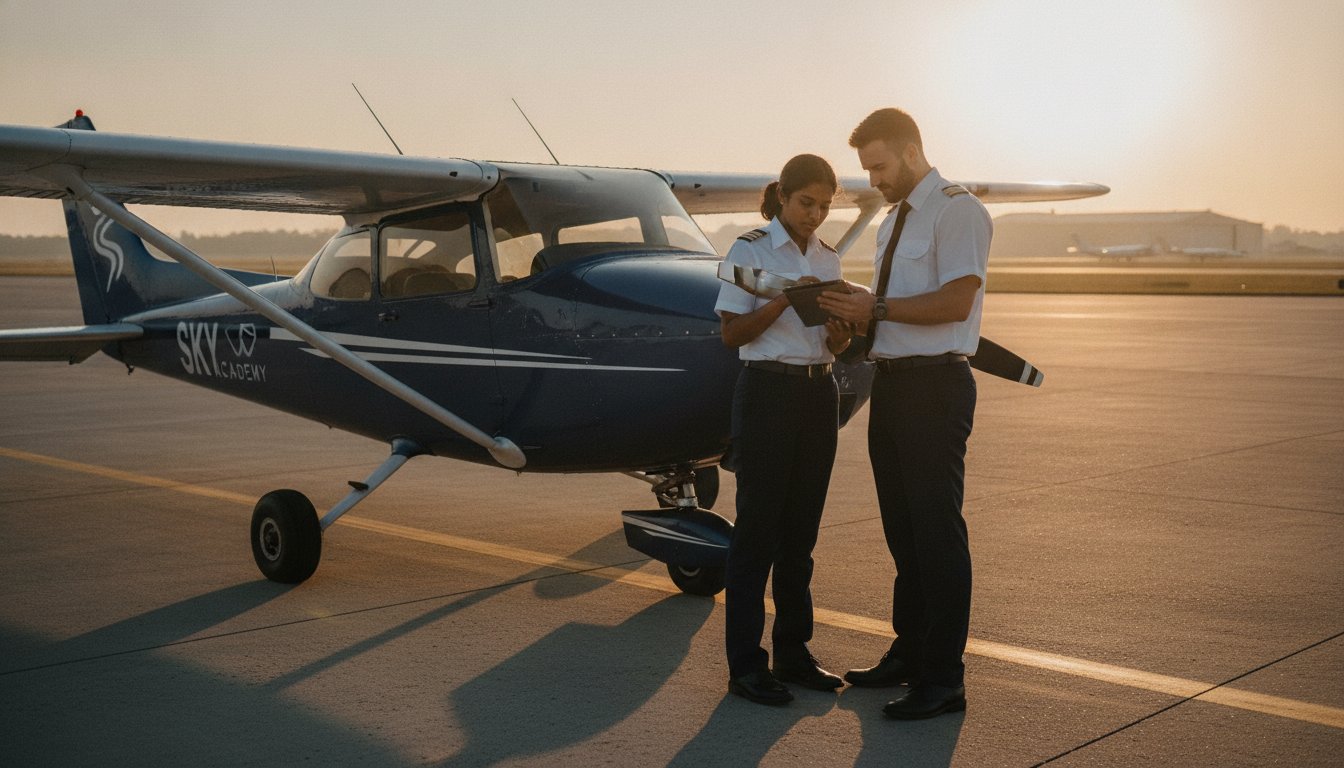
Many aspiring pilots believe that securing flight school scholarships is a matter of pure luck, akin to winning a lottery. In reality, funding your training is a strategic professional campaign that rewards those who treat the application process with the same discipline required in the cockpit. By shifting your mindset from a hopeful applicant to a strategic candidate, you can unlock significant capital to support your journey toward the flight deck.
We recognize that the investment required for a professional pilot program often feels like the most challenging hurdle in your career. It’s common to feel a sense of hesitation when faced with the costs of high-quality training or the prospect of student debt. You aren’t alone in searching for a clear, reputable path to make your ambitions financially sustainable and professional goals attainable.
This guide provides the tactical roadmap you need to identify and secure the funding necessary to bridge your financial gap. You’ll discover a curated list of scholarship categories for 2026 and a precise plan to elevate your applications above the competition. We’ll also explore how these awards fit into a broader professional financing strategy, ensuring you remain focused on achieving your certifications and launching an international aviation career.
Key Takeaways
- Learn why viewing the search for flight school scholarships as a professional campaign rather than a lottery is essential for long-term success.
- Discover how to navigate diverse funding categories, from national aviation organizations to airline-sponsored programs that invest in the future workforce.
- Master the tactical application process by treating it as a part-time job and crafting a compelling personal statement that stands out to committees.
- Identify specialized opportunities designed for women and minority aviators to ensure a more accessible path to the flight deck.
- Understand how to maximize your scholarship value by choosing fixed-price training programs that provide budget certainty and career readiness.
The Reality of Flight School Funding: Why Scholarships Matter
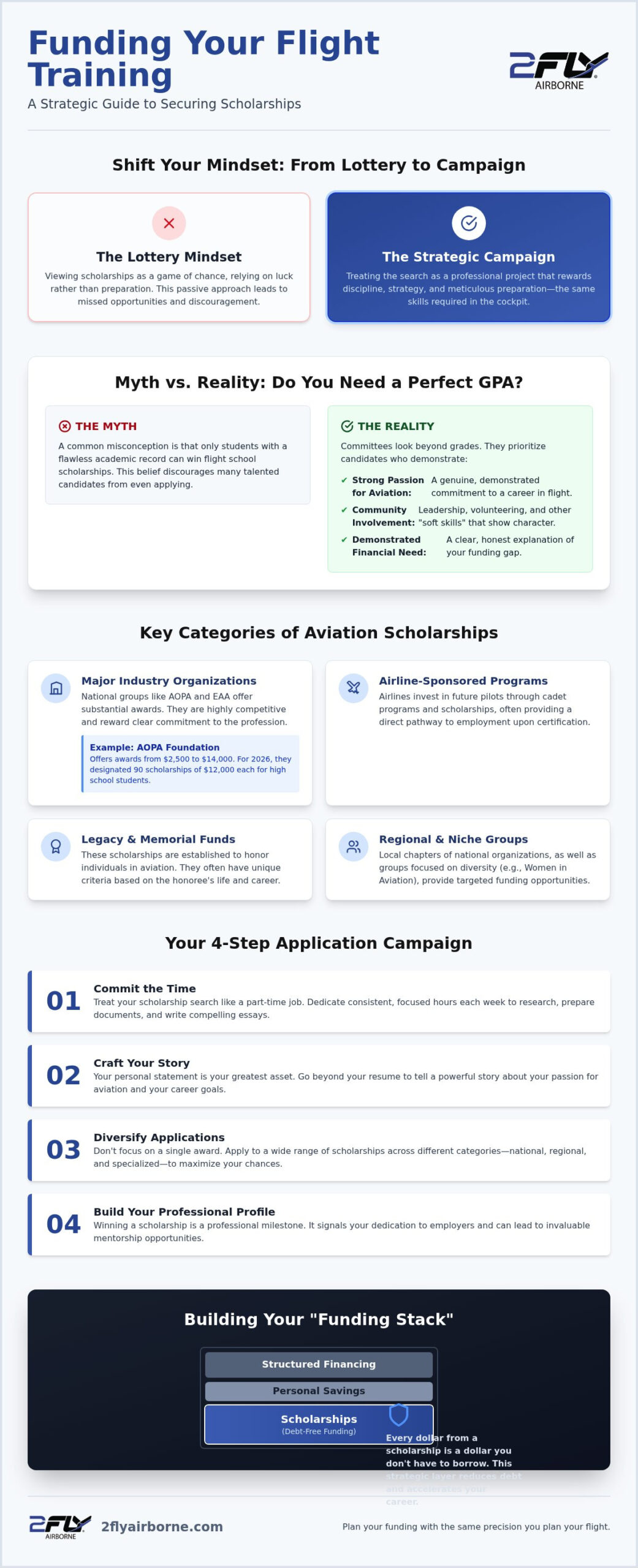
Think of your financial strategy as your first professional pre-flight checklist. This is the hallmark of a disciplined mindset. You wouldn’t enter a cockpit without a navigation log; you shouldn’t begin your training without a clear funding map. This process involves building a “funding stack” where flight school scholarships work alongside personal savings and structured financing.
Many candidates view these awards as a secondary option or a simple bonus. We see them as vital components of a strategic career path. High-achievers understand that every dollar secured through an award is a dollar that doesn’t accrue interest later. Securing these funds requires the same precision and attention to detail you’ll eventually use during your cross-country flight planning.
To better understand how these financial tools work together, watch this helpful video:
The Myth of the Straight-A Requirement
A common misconception often stops talented individuals from applying for flight school scholarships before they even begin. You don’t need a perfect academic record to be a compelling candidate. Committees frequently prioritize your passion for aviation, your community involvement, and your demonstrated financial need over a high GPA. They want to see that you have the drive to succeed in a demanding environment.
Developing this drive often starts with physical and mental conditioning; for instance, those looking to sharpen their focus can visit Flinn Taekwondo Academy to experience how martial arts training builds the resilience needed for complex professional challenges.
These organizations look for “soft skills” like communication, leadership, and resilience. These traits are essential for earning a Private Pilot Licence (PPL), which is the foundational certification that allows you to fly an aircraft solo and carry passengers. Once you achieve this initial milestone, you can begin the more advanced phases of your professional training. We encourage students from all backgrounds to apply; your unique story is often your greatest asset.
Scholarships as Professional Milestones
Winning a prestigious award from a national aviation organization does more than just lower your tuition. It serves as a professional milestone that signals your dedication to future employers. This achievement adds significant weight to your resume and distinguishes you in a competitive field. It proves you have the initiative to seek out resources and the discipline to meet rigorous application standards.
Being a scholarship recipient often leads to exclusive mentorship opportunities with veteran pilots. These industry leaders can provide guidance as you progress through your training and begin your job search. These connections are invaluable as you transition from a trainee to a leader in an international aviation career. Treat every application as a networking opportunity that builds your reputation before you even log your first hour.
Categories of Aviation Scholarships You Should Know
Understanding the landscape of flight school scholarships is the next step in your strategic campaign. Funding sources generally fall into four distinct categories: national organizations, airline-sponsored programs, legacy funds, and regional chapters. Each has its own criteria and competitive environment, so diversifying your applications is a sound tactical move.
Major Industry Organizations
National organizations are the heavy hitters of the industry. The AOPA Foundation, for instance, offers a robust program with awards ranging from $2,500 to $14,000. In 2026, they designated at least 90 scholarships specifically for high school students, providing $12,000 each to jumpstart their training. These programs are highly structured and reward candidates who demonstrate a clear commitment to the profession.
Similarly, EAA Aviation Scholarships focus on opening doors for youth and those transitioning from recreational flying to professional careers. Other specialized groups like Women in Aviation International (WAI) and the 99s provide millions in annual funding to bridge the gender gap in the cockpit. These organizations often require membership, but the access to exclusive funding makes the investment worthwhile.
Airline and Corporate Partnerships
Major carriers and regional airlines are increasingly proactive in securing their future workforce. Many offer bridge scholarships or tuition reimbursement plans for students enrolled in high-quality training. These funds are often directed toward candidates in an FAA Professional Pilot Program who demonstrate airline readiness. This investment is driven by a massive need for new talent.
The 2025 Boeing Pilot and Technician Outlook projects a demand for 660,000 new pilots globally through 2044. Corporate partners like Sheltair and Avfuel also contribute to this pipeline. Programs like the Future Takes Flight scholarship offer $5,000 awards to eligible students, while the Avfuel Pilot-in-Training scholarship provides smaller, targeted grants for those currently in the cockpit. These partnerships reinforce the idea that the industry is invested in your success.
Memorial Funds and Local Chapters
Legacy funds honor the memory of past aviators by investing in the next generation. Programs like the Bill Cowden Memorial Aviation Scholarship provide targeted support for advanced ratings, often focusing on specific regions like the Midwest. These awards value personal character and a deep respect for aviation history. They are excellent options for pilots who have already completed their initial training.
Don’t overlook local chapters of EAA or the Civil Air Patrol. These smaller flight school scholarships often have significantly lower competition than national programs. Winning multiple local awards can quickly add up to a substantial portion of your training budget. Navigating these categories requires a methodical approach, and speaking with a training advisor can help you align your search with your specific career goals.
A Step-by-Step Campaign to Win Flight Training Awards
Securing flight school scholarships requires a shift in perspective. You must transition from a passive applicant to a proactive campaigner. Treat this process as a part-time professional commitment with a structured weekly schedule. Success belongs to those who manage their deadlines with the same precision they apply to a flight plan.
Organization is your most powerful tool in this endeavor. Create a master spreadsheet to track application windows, specific requirements, and submission statuses. Missing a deadline by a single hour or overlooking a required document can disqualify an otherwise perfect candidate. Discipline in the office reflects the discipline you will eventually bring to the cockpit.
Crafting Your Narrative
The personal statement is the core of your application. You must define your motivation for flying in a single, powerful sentence that avoids tired clichés. Statements like “I’ve always loved looking at the clouds” don’t resonate with selection committees. Instead, focus on a specific moment or realization that solidified your commitment to a professional aviation career.
Highlight specific obstacles you have successfully navigated to demonstrate resilience. Aviation rewards those who can problem-solve under pressure; your essay should prove you possess this trait. Tailor every narrative to the specific mission of the awarding organization. If a group focuses on community service, emphasize your volunteer history rather than just your technical skills.
Securing the Right Recommendations
High-impact letters of recommendation provide third-party validation of your character and potential. Choose individuals who have witnessed your work ethic first-hand, such as flight instructors, teachers, or community leaders. These recommenders should be able to speak specifically about your aptitude for the rigorous demands of professional training.
Provide each recommender with a “brag sheet” that summarizes your achievements, goals, and the specific scholarship criteria. This document helps them write a more detailed and personalized letter that stands out. Always make your requests at least four weeks before the deadline to respect their time. A rushed letter is rarely a winning letter.
Finally, never underestimate the importance of technical precision. Follow every instruction to the letter, from word counts to file formats. Proofread your entire package multiple times to eliminate grammatical errors or typos. In the world of professional aviation, small mistakes can have significant consequences; showing you can follow complex procedures is part of the test.
Specialized Scholarships: Diversity and Niche Opportunities
The aviation industry is actively evolving to reflect the global population it serves. Specialized flight school scholarships now target underrepresented groups to ensure the flight deck becomes more inclusive and diverse. These awards often go beyond financial support; they offer a direct pipeline into professional networks that can define a pilot’s career trajectory.
Expanding the Flight Deck
Organizations like the Organization of Black Aerospace Professionals (OBAP) and the Latino Pilots Association (LPA) open their scholarship seasons annually to support minority aviators. These awards are highly competitive and prioritize candidates who demonstrate leadership and a commitment to community service. Similarly, the National Gay Pilots Association (NGPA) provides significant funding to foster inclusive environments within the airline industry. They seek to remove financial barriers for those who will champion diversity in the cockpit.
These organizations offer more than just monetary grants; they provide a lifelong community of mentors and peers. Membership grants you access to annual conferences where you can network directly with airline recruiters and chief pilots. This level of industry exposure is often as valuable as the scholarship funds themselves. Engaging with these groups early in your training establishes a professional reputation and prepares you for the mobility of an international aviation career.
Transitioning from Military to Commercial
Veterans possess a unique set of skills and a level of discipline that translate seamlessly into a professional pilot career. You can leverage specialized grants to supplement your flight school cost and maximize your total training budget. Organizations like the Rotary to Airline Group (RTAG) specifically help helicopter pilots navigate the transition to fixed-wing airline roles. They provide a roadmap for pilots who already have flight hours but need specific civilian certifications.
It’s vital to verify if your chosen training center is VA-approved to ensure you can utilize your GI Bill benefits effectively. Combining these benefits with specialized veteran scholarships can significantly reduce your out-of-pocket expenses. This strategic approach allows you to focus entirely on your training rather than financial stress. The industry has a vested interest in your transition; your experience is highly valued by major carriers.
The demand for qualified pilots across all backgrounds remains at a historic high. Niche awards also exist for specific ratings, such as your instrument or multi-engine endorsements. You should pursue these smaller flight school scholarships to fill the remaining gaps in your funding stack; for example, you can learn more about AINautics University and their specialized UAS student scholar programs. These targeted funds are often easier to secure and provide the necessary momentum to complete advanced certifications.
If you’re a veteran or a minority student looking to navigate these specialized options, our FAA Professional Pilot Program is designed to integrate with various funding sources. We assist you in aligning your training schedule with your financial milestones to ensure a smooth transition to your future career. Please note that while we provide structured timelines, individual training durations and specific aviation regulations can vary based on personal progress and regional requirements.
Bridging the Gap: Combining Scholarships with 2FLY Programs
How do you ensure your hard-earned awards actually cover the full scope of your professional training? Securing flight school scholarships is a significant achievement, but the way you apply those funds determines your ultimate success. You must pair your financial awards with a training program that provides cost certainty and professional structure.
The 2025 Boeing Pilot and Technician Outlook projects a demand for 660,000 new pilots globally through 2044. This massive industry need ensures that your investment in professional training is well-placed. Choosing the right partner for that investment is the final step in your strategic campaign to reach the flight deck.
Fixed-Price Training and Financial Planning
A primary risk for students using fixed scholarship amounts is “budget creep,” where fluctuating rental rates or unexpected fuel surcharges exhaust your funds prematurely. Our fixed-price tuition fees provide the budget certainty you need to complete your training without financial interruptions. This structure allows you to focus entirely on your performance in the cockpit rather than worrying about a depleting bank account.
By following a structured path, you ensure that your flight school scholarships are used efficiently to reach specific milestones. We invite you to review the full FAA First Officer Program details to see how our syllabus aligns with your career goals. This clarity is essential for anyone managing a combination of awards, loans, and personal savings.
Next Steps with a 2FLY Training Advisor
Your journey toward the flight deck is a collaborative effort. We encourage you to reach out for a personalized consultation to discuss your training timeline and how your awards will integrate with our programs. Our Training Advisors act as mentors, helping you understand your financing options and manage external funds effectively.
While 2FLY doesn’t award these external scholarships directly, we’re experts in helping students manage them within a professional training syllabus. We remain committed to providing the safe, structured training environment that serves as the foundation for your career. Start your search early, stay persistent in your applications, and prepare yourself for the rewards of an international aviation profession.
Taking Command of Your Training Investment
Securing the necessary funding is the first major milestone of your professional pilot career. By treating the search for flight school scholarships as a disciplined campaign, you demonstrate the initiative and attention to detail required of a future airline captain. You now have the tactical roadmap to identify diverse funding sources and craft a narrative that resonates with selection committees.
Success in the cockpit begins with a stable financial foundation. Our fixed-price professional pilot training ensures your scholarship funds are maximized without the risk of unexpected cost increases or budget creep. This structured approach, adhering to elite FAA and EASA standards, prepares you for the rigorous demands of the industry and a seamless transition to the flight deck through our global recruitment network.
Your ambition deserves a training environment that matches your drive. Speak with a 2FLY Training Advisor about your career goals. Please reach out to a 2FLY Training Advisor with any remaining questions as you take this first step toward an international aviation career.
Frequently Asked Questions
Please note that aviation regulations, medical requirements, and individual training timelines vary significantly based on personal progress and regional standards. The following information serves as a general guide for your financial planning and should not be considered official FAA guidance. We encourage you to verify all specific requirements with your chosen training provider.
Can I apply for flight school scholarships before I start training?
You can absolutely apply for flight school scholarships before you ever log a single hour of flight time. Many organizations specifically target high school students or those entering their first phase of training to encourage early entry into the industry. This proactive approach helps you secure funding before the financial demands of a professional program begin.
Do I need to be a U.S. citizen to win aviation scholarships?
Citizenship requirements depend entirely on the individual organization granting the award. While some government-linked or national organizations are restricted to residents, many international groups support professional mobility for pilots worldwide. You should carefully review the eligibility criteria for each specific grant before investing time in the application.
Are there scholarships specifically for the Commercial Pilot License (CPL)?
There are numerous awards dedicated specifically to pilots pursuing a Commercial Pilot Certificate (CPL) or other advanced ratings. These scholarships recognize that the transition from a private pilot to a professional is often the most capital-intensive phase of training. They are designed to help high-achievers bridge the final gap toward employment as a first officer.
How much money can I realistically expect to get from scholarships?
Realistically, you can expect awards to range from a few hundred dollars to several thousand per scholarship. Successful candidates often secure multiple smaller grants to cover specific costs like checkride fees or ground school materials. When combined, these individual wins can offset a significant portion of your total training investment.
What is the best time of year to apply for flight school scholarships?
Most aviation scholarship cycles open in the spring and early summer, though deadlines are distributed throughout the calendar year. Establishing a quarterly review of available flight school scholarships ensures you are always prepared for upcoming windows. This consistent rhythm prevents you from rushing applications during the busiest parts of your training syllabus.
Can I use scholarship money for housing and living expenses during flight school?
Most aviation awards are restricted to direct training costs like aircraft rental, fuel, and instructor fees. It is rare for these funds to cover living expenses or housing during your time at a pilot school. You should plan your broader financing strategy with the assumption that scholarship funds will be applied directly to your training account.
Do I have to pay back a flight training scholarship if I drop out?
Repayment is typically not required for a scholarship, provided you fulfill the conditions outlined in the award agreement. However, some providers may request the return of funds if you fail to complete your rating or withdraw from training prematurely. Always read the fine print to understand your professional obligations to the donor organization.
Is it better to apply for many small scholarships or one large one?
Pursuing a high volume of smaller awards is often a more effective strategy than relying on a single large grant. Local and regional scholarships often have fewer applicants, increasing your statistical probability of success. A diversified funding stack provides greater financial stability as you progress through the various stages of your pilot certification.

Article by
2FLY Airborne
2Fly Airborne is a professional flight training organization dedicated to developing the next generation of skilled, confident, and safety-focused pilots. With decades of combined aviation experience, our team of certified instructors provides structured, real-world training designed to prepare students for both checkrides and long-term success in the aviation industry.
Content Disclaimer
Some blog content is generated with the assistance of automated tools and may not always be fully accurate or up to date. Please verify all aviation-related information with official sources or a certified instructor. For additional guidance or clarification, we encourage you to contact one of our training advisors at 2Fly Airborne.