
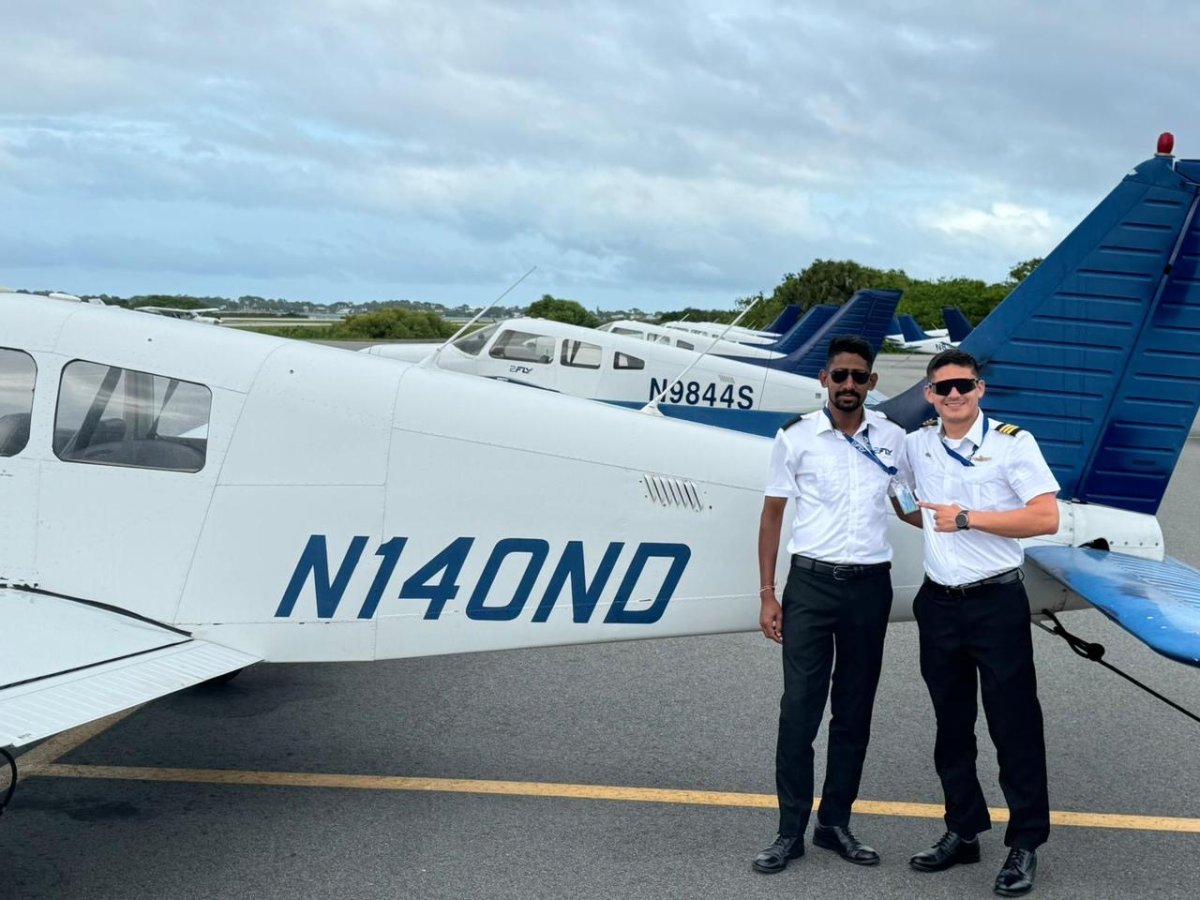
What if the biggest barrier to your career in the flight deck isn’t your aptitude for flying, but the complex regulatory maze surrounding a private pilot license? Industry reports suggest that 70% of prospective students hesitate because of conflicting information regarding FAA versus EASA standards. You might worry that your current schedule won’t accommodate the 40 to 75 flight hours typically required for certification. It’s natural to feel uncertain about medical standards before you’ve even stepped onto the tarmac for the first time.
Securing this certification is the essential foundation for any elite aviation career. This guide simplifies that journey. You’ll discover the precise requirements, the reality of training costs, and the specific privileges you gain as a certified pilot. We provide a clear roadmap from your initial 60 minute discovery flight to your first major milestone as a professional aviator. This article gives you the confidence to transition from a student to an airline-ready professional in a global market.
Key Takeaways
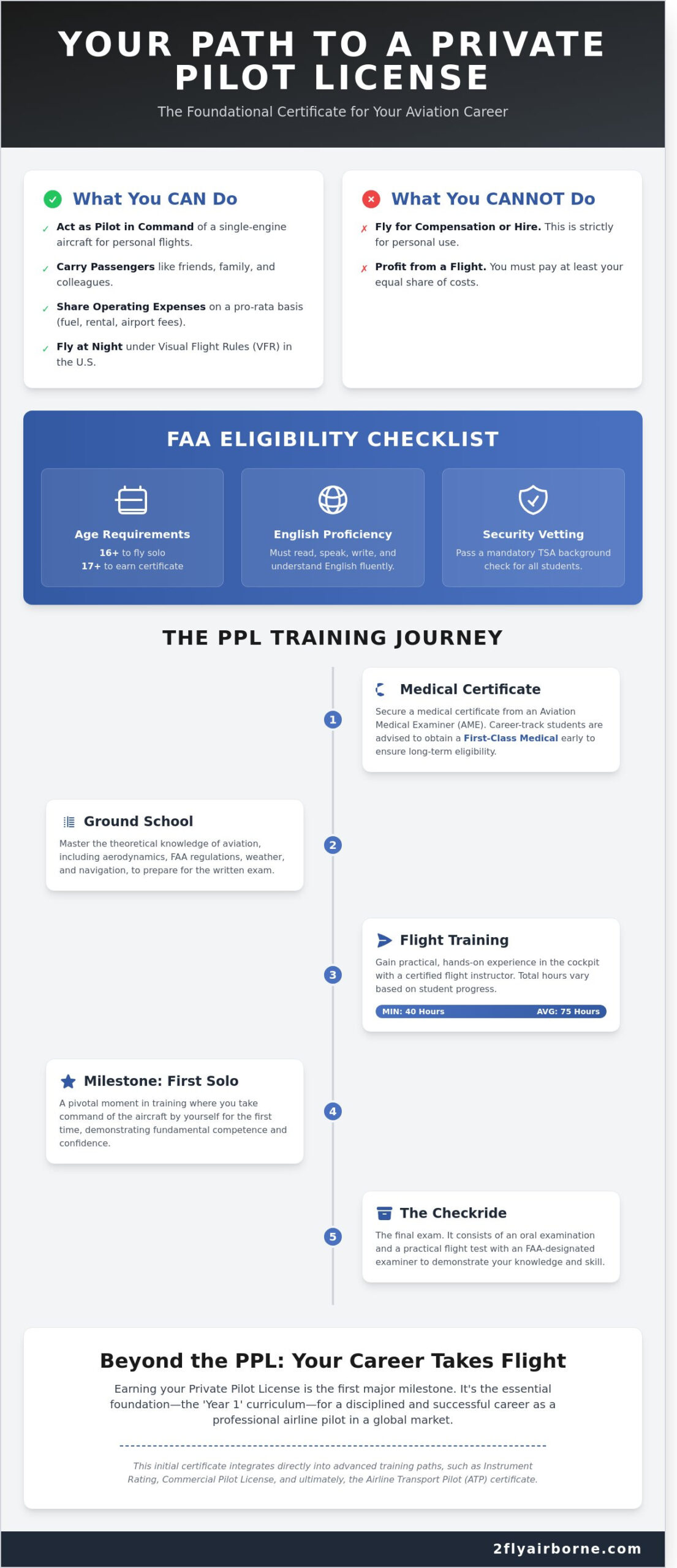
- Define the foundational privileges of a private pilot license, including your ability to command single-engine aircraft and carry passengers for personal travel.
- Identify the essential FAA eligibility and medical standards required to ensure you are flight-ready and prepared for the rigors of professional training.
- Gain insight into the comprehensive syllabus that balances technical ground school knowledge with the practical flight hours needed to reach the checkride.
- Learn about the pivotal milestones of the journey, such as the first solo flight, that mark your transition into a disciplined aviator.
- Understand how this initial milestone integrates into a broader professional path toward becoming a global, career-ready airline pilot.
What is a Private Pilot License (PPL) in 2026?
The private pilot license is the foundational certificate issued by the FAA for aircraft operation. It’s the first major milestone for any aviator. While many start flying for recreation, this stage serves as the essential Year 1 curriculum for those aiming at the flight deck of a major carrier. You’ll master the fundamentals of aircraft control, navigation, and safety protocols that remain with you throughout your entire career. It’s the bedrock of professional aviation, providing the core skills needed before advancing to complex systems and high-altitude operations.
To better understand the journey from your first flight to the final checkride, watch this comprehensive breakdown of the process:
PPL Privileges: What You Can and Can’t Do
A private pilot can act as pilot in command of a single-engine aircraft and carry passengers such as friends, family, or colleagues. However, the 14 CFR Part 61 regulations are strict: you can’t fly for compensation or hire. You’re allowed to share operating expenses with your passengers, but only on a pro-rata basis. This means you must pay at least your equal share of the fuel, oil, airport expenditures, and rental fees. You cannot profit from the flight. In the United States, your certificate allows for night flying under Visual Flight Rules (VFR), provided you meet specific currency requirements. This differs from many international jurisdictions where a separate night rating is often required to fly after sunset.
The Difference Between a License and a Certificate
While the world often uses the term “license,” the FAA technically issues a certificate. This distinction is rooted in the legal framework of Pilot Certification in the United States, which treats flying as a privilege granted based on specific competency standards. For students looking toward a global career, understanding these regulatory nuances is vital for maintaining accurate training records and ensuring global mobility.
If your goal is to transition from a student to an airline-ready professional, the FAA Airline Pilot Program provides the structured path you need. Starting with your private pilot license ensures you build the disciplined habits required by elite flight departments. It’s the first step in a high-stakes journey where precision and professional development are the only ways to reach the flight deck. Contact a training advisor today to begin your progression toward a commercial career.
FAA Eligibility and Medical Requirements for 2026
Securing a private pilot license requires meeting strict federal standards designed to ensure safety and competency in the National Airspace System. The FAA mandates that applicants must be at least 16 years old to solo an aircraft and 17 years old to earn the final certificate. There is no upper age limit for flight training, provided you can maintain the necessary health standards. English proficiency is a mandatory requirement; you must be able to read, speak, write, and understand the language to communicate with Air Traffic Control and interpret technical flight data. Security vetting is another critical step. All students, whether domestic or international, must pass TSA background checks to verify their identity and eligibility for flight training in the United States.
While aviation has its unique set of rigorous standards, the concept of fulfilling mandated training isn’t exclusive to flying. Many individuals turn to specialized online providers like Courses Court Ordered to complete various types of required education to meet legal or professional obligations.
Before you log your first hour, you must secure a medical certificate. This is a vital go/no-go safety decision that confirms you are physically and mentally fit to operate an aircraft. For a comprehensive overview of these initial steps, you can consult the FAA Guide to Becoming a Pilot to understand the regulatory framework governing your training.
Navigating the FAA Medical Examination
You’ll visit an Aviation Medical Examiner (AME) for a physical that tests vision, hearing, and general health. While the Third-Class Medical is the minimum for a private pilot license, 2FLY Airborne advises career-track students to obtain a First-Class Medical immediately. This higher standard ensures you meet the long-term health requirements for an airline career before you invest in professional training. If you have a disqualifying condition, the FAA often provides a path forward through a Special Issuance waiver, which allows you to fly after a thorough medical review and additional documentation.
Requirements for International Students in the USA
2FLY Airborne is a premier destination for global cadets seeking US-based training. International students typically require M-1 or F-1 visa sponsorship to train at our Florida bases. This process involves registration in the Student and Exchange Visitor Information System (SEVIS), a 10-digit tracking system managed by the Department of Homeland Security. Our administrative team provides dedicated support to handle these logistical requirements, ensuring you remain compliant with all federal regulations. If you’re aiming for a global career, you might consider our FAA Airline Pilot Program to streamline your path to the flight deck.
The PPL Syllabus: Ground School vs. Flight Training
Earning a private pilot license requires a dual-track approach that balances academic theory with practical application. You’ll split your time between the classroom and the flight deck. While the FAA sets a legal minimum of 40 flight hours, the 2024 national average for completion is between 60 and 75 hours. This difference exists because mastery matters more than a minimum number. For those aiming for a professional cockpit, training under a structured Part 141 syllabus provides the disciplined environment necessary for a global career.
Mastering the Knowledge Test (Ground School)
Ground school builds the intellectual foundation for every flight. You’ll study aerodynamics, weather systems, and the Airplane Flying Handbook. While self-study tools are available, the formal classroom at a flight academy offers immediate feedback from experienced instructors. This environment is essential for grasping complex subjects that require more than just rote memorization. Key focus areas include:
- Cross-Country Planning: Calculating fuel burn, wind correction, and time en route using a flight computer.
- Federal Aviation Regulations (FARs): Understanding the legal framework and safety protocols of the National Airspace System.
- Aircraft Performance: Predicting how weight, balance, and density altitude affect takeoff and climb performance.
Aiming for a high score on the FAA Knowledge Test isn’t just about passing. It reflects a commitment to excellence that elite airlines value throughout your career. Most successful students utilize a blend of structured lectures and practice exams to ensure they’re ready for the 60-question test.
Aeronautical Experience: What Happens in the Cockpit
The cockpit is where theory becomes reality. You’ll start with basic aircraft control before progressing to steep turns, stalls, and emergency landing simulations. The FAA requires specific experience blocks for a private pilot license, including:
- Dual Instruction: At least 20 hours of training with a certified instructor to learn maneuvers and landings.
- Solo Flight: A minimum of 10 hours where you’re the sole occupant of the aircraft, building confidence and command.
- Cross-Country: Navigating to destinations over 50 nautical miles away to master real-world pilotage and dead reckoning.
- Night Operations: Completing 10 takeoffs and landings in darkness to build spatial awareness and night navigation skills.
Aspiring cadets should view these hours as the first step on the AOPA Career Pathways toward a commercial deck. If your goal is the airlines, our FAA Airline Pilot Program ensures every hour in the air contributes to your professional development. You’ll also receive an introduction to basic instrument flying, which prepares you for the next stage of your aviation journey.
Timeline and Milestones: From First Flight to Checkride
Your journey toward a private pilot license follows a rigorous, structured path designed to transform a student into a confident commander. It begins with a Discovery Flight. This 30 to 60 minute session puts you in the left seat, allowing you to feel the aircraft’s response to your inputs under the guidance of a certified instructor. It’s the moment the dream becomes a tangible reality. Following this, you’ll enter the pre-solo phase, where you master basic maneuvers, stalls, and the art of the perfect landing.
The Emotional Journey of the First Solo
The first solo is the most significant milestone in any pilot’s career. Before your instructor signs your logbook, they look for three critical traits: technical consistency, sound judgment, and the ability to manage emergencies without hesitation. You must prove you can fly the airplane safely without a mentor by your side.
After you land, you’ll likely participate in the shirt-tail cutting ceremony. This tradition dates back to the early days of aviation when instructors sat behind students in tandem cockpits. They would tug on the student’s shirt tail to give directions. Cutting the tail off symbolizes that you no longer need that physical guidance. This event builds the psychological resilience needed for solo cross-country flights, where you’ll navigate to distant airports alone for the first time.
Passing the FAA Checkride
The final hurdle is the FAA Checkride, a two-part examination conducted by a Designated Pilot Examiner (DPE). The oral portion tests your knowledge of weather, regulations, and aircraft systems. You’ll need to explain complex scenarios, such as how density altitude affects your takeoff distance or how to navigate around restricted airspace. Success here requires deep preparation and the ability to remain calm under scrutiny.
Common mistakes during the flight portion include losing situational awareness or failing to maintain altitude within the strict tolerances of the Airman Certification Standards (ACS). Examiners want to see that you’re a safe pilot who prioritizes “aviate, navigate, communicate” in that specific order. Once you earn your private pilot license, the natural progression for those aiming for the airlines is the FAA First Officer Program. This structured path ensures you continue building the elite skills required for a professional career.
Ready to start your journey to the flight deck? Contact a 2Fly Airborne advisor today to schedule your discovery flight.
Beyond the PPL: Launching Your Global Airline Career
Earning your private pilot license is a monumental achievement, yet in the context of a professional career, it’s the opening chapter of a comprehensive syllabus. This certificate provides the legal authority to fly, but the journey to the flight deck of a major airline requires additional layers of expertise. After the PPL, you’ll immediately target the Instrument Rating (IR). This qualification allows you to operate in diverse weather conditions, removing the limitations of flying only in clear skies. Following the IR, you’ll focus on accumulating the 250 flight hours required for a commercial pilot license.
Choosing a training location is a strategic decision. Florida provides a massive competitive advantage with over 230 days of flyable weather annually. This consistency prevents the long delays found in other regions, ensuring you maintain momentum. While students in colder climates wait for the snow to clear, you’ll be logging hours and moving closer to your goal.
The Career Pipeline: PPL to Flight Deck
Transitioning from a student to a professional pilot involves a structured timeline known as “Zero to Hero” training. This path is designed to take you from your first flight to airline eligibility with maximum efficiency. At 2FLY Airborne, we don’t just teach you how to fly; we prepare you for the airline selection process. Our program integrates interview preparation into the curriculum from day one, ensuring you develop the soft skills and professional presence that recruiters demand. Many career-track pilots also strategically pursue a flying instructor course after their commercial license, using CFI certification as a paid pathway to build the flight hours required for airline eligibility. To manage the costs associated with this intensive training, various financing options are available to help you fund your future. Similarly, for those mapping out demanding career paths in other sectors like finance, you can explore Investment Banking Financial Modeling Course to see what that professional development entails.
Choosing the Right Flight Academy
Your foundational training environment determines your long-term success. A large fleet and advanced simulator technology are non-negotiable for a professional academy. These resources ensure that your schedule remains consistent and that you’re trained on equipment that mirrors modern airline cockpits. Beyond the equipment, on-campus housing creates a dedicated environment where you can focus entirely on your studies alongside other future captains. This immersive experience builds the discipline required for the global aviation industry. When evaluating your options, consider comprehensive pilot training programs that provide structured pathways from zero experience to airline eligibility. For career-focused pilots, the transition to multi-engine aircraft becomes critical, and platforms like the Piper Seneca multi-engine training platform offer the high-performance experience that prepares you for jet operations.
Speak with a 2FLY training advisor to start your journey today and take the next step toward your private pilot license and beyond.
Take Command of Your Future on the Flight Deck
Securing your private pilot license represents more than just a personal achievement; it’s the professional foundation for your entire aviation career. By mastering the 2026 FAA eligibility requirements and balancing rigorous ground school with precision flight training, you set the stage for global opportunities. This first milestone transforms your passion into a disciplined skill set that airlines around the world demand. It’s the moment you transition from a dreamer to a pilot.
2FLY Airborne brings 30+ years of aviation training excellence to your journey. We offer unique dual FAA and EASA training pathways that prepare you for the complexities of international airspace. Our elite Florida-based training fleet and high-fidelity simulators provide the professional environment you need to excel. We don’t just teach you to fly; we mentor you to become an airline-ready professional from your very first hour in the cockpit. You’ll gain technical mastery while building the confidence required for a commercial flight deck. You have the drive to succeed, and we have the proven pipeline to get you there.
Your path to a global pilot career starts with a single decision. Download our Professional Pilot Career Guide to learn how our structured curriculum can accelerate your progress. The flight deck is within your reach, so let’s get started today.
Frequently Asked Questions
How much does a Private Pilot License cost in 2026?
A private pilot license typically costs between $15,000 and $22,000 in 2026. This total includes aircraft rental, instructor fees, fuel surcharges, and ground school materials. While the FAA minimum is 40 hours, most students require 55 to 65 flight hours to reach proficiency. Budgeting for these additional hours ensures you’re fully prepared for your checkride without financial stress.
How long does it take to get a PPL if I train full-time?
You can complete your full-time training in approximately 8 to 12 weeks. This intensive schedule requires flying four to five times per week and dedicated daily ground study. Many cadets at professional academies find this immersive approach builds stronger muscle memory. It also leads to faster cognitive retention than part-time training spread over several months or years.
Can I get a private pilot license without wanting to be a commercial pilot?
You can absolutely earn a private pilot license solely for personal travel or recreation. The PPL allows you to command a single-engine aircraft and carry passengers in visual weather conditions. It serves as the definitive foundation for all aviators. Whether your goal is weekend flying or eventually reaching the flight deck of a global airline, this is your first milestone.
What is the difference between FAA and EASA private pilot licenses?
The primary difference lies in the regulatory bodies and the specific airspace where you’ll exercise your privileges. FAA licenses are issued by the United States Federal Aviation Administration, while EASA certifications are governed by the European Union Aviation Safety Agency. While both require 45 minimum flight hours, the theoretical knowledge exams and medical requirements differ between the two jurisdictions.
Is the PPL checkride difficult to pass for beginners?
The PPL checkride is a rigorous evaluation of your skills, but it’s manageable for students who master the Airman Certification Standards. Statistics show that approximately 78% of applicants pass their initial practical test. Your instructor won’t sign you off until you’ve demonstrated consistent proficiency. You’ll need to prove your competence in both the oral discussion and the flight maneuvers.
Do I need to own my own headset or gear before starting flight school?
You don’t need to buy your own headset or flight gear before your first lesson. Most flight schools provide loaner equipment for your introductory flights. However, 90% of serious students invest in a quality noise-canceling headset and a flight bag by their tenth hour. Owning your gear ensures comfort and consistent communication during critical phases of your training.
What happens if I fail my FAA medical exam?
If you fail your FAA medical exam, you can often apply for a Special Issuance or a Statement of Demonstrable Ability. The FAA reports that over 95% of medical applications are eventually approved after additional testing or documentation. You should consult an Aviation Medical Examiner early in your training. This helps you identify any potential hurdles before you invest in significant flight hours.
Can I start my PPL training while I am still in high school?
You can start flight lessons at any age, even while you’re still in high school. You must be at least 16 years old to fly solo and 17 years old to receive your private pilot license. Starting early allows you to build a competitive resume. It also prepares you for an accelerated transition into a commercial pilot license program after you graduate.
Article by
2FLY Airborne
2Fly Airborne is a professional flight training organization dedicated to developing the next generation of skilled, confident, and safety-focused pilots. With decades of combined aviation experience, our team of certified instructors provides structured, real-world training designed to prepare students for both checkrides and long-term success in the aviation industry.
Content Disclaimer
Some blog content is generated with the assistance of automated tools and may not always be fully accurate or up to date. Please verify all aviation-related information with official sources or a certified instructor. For additional guidance or clarification, we encourage you to contact one of our training advisors at 2Fly Airborne.

Leave A Comment