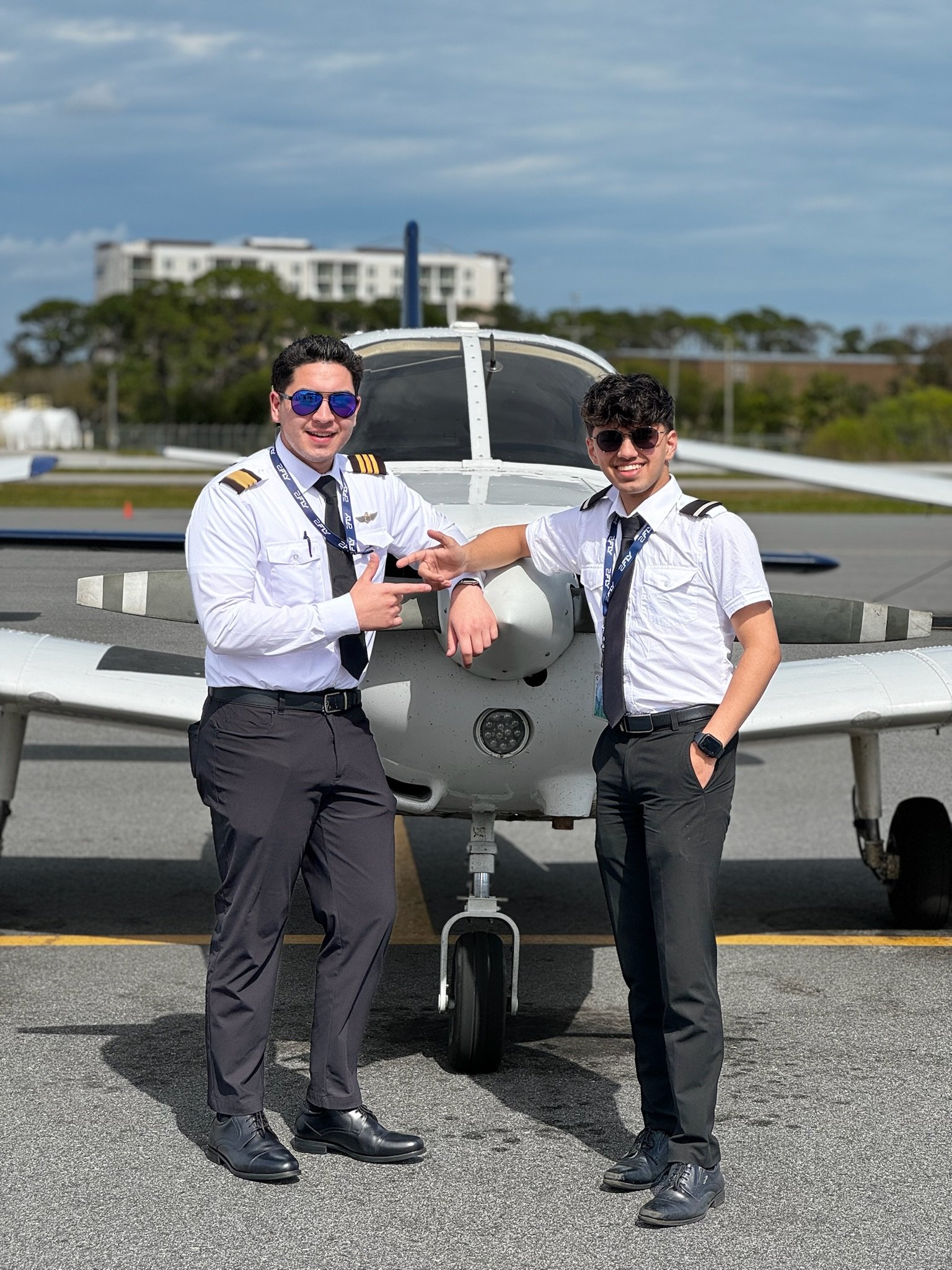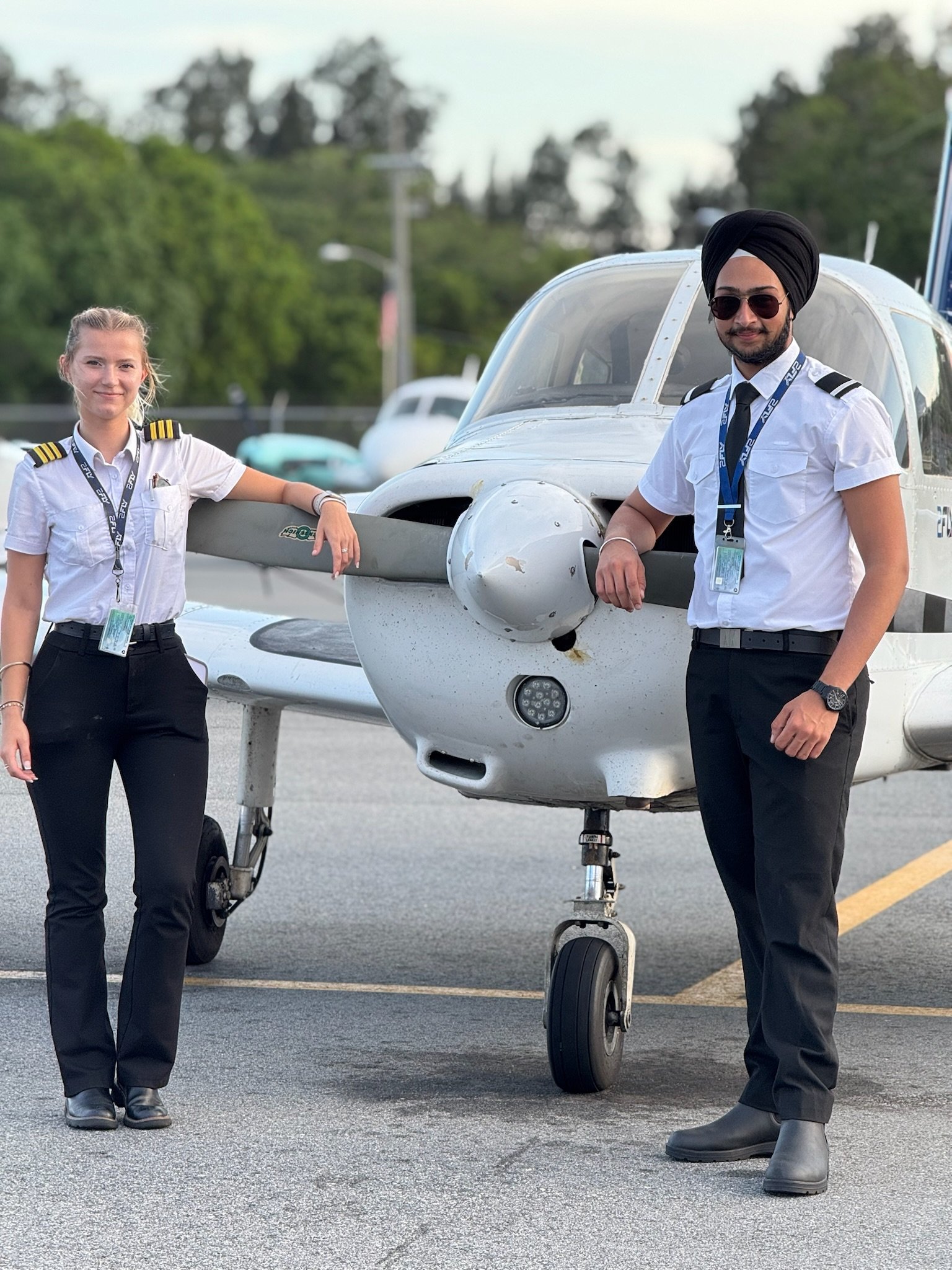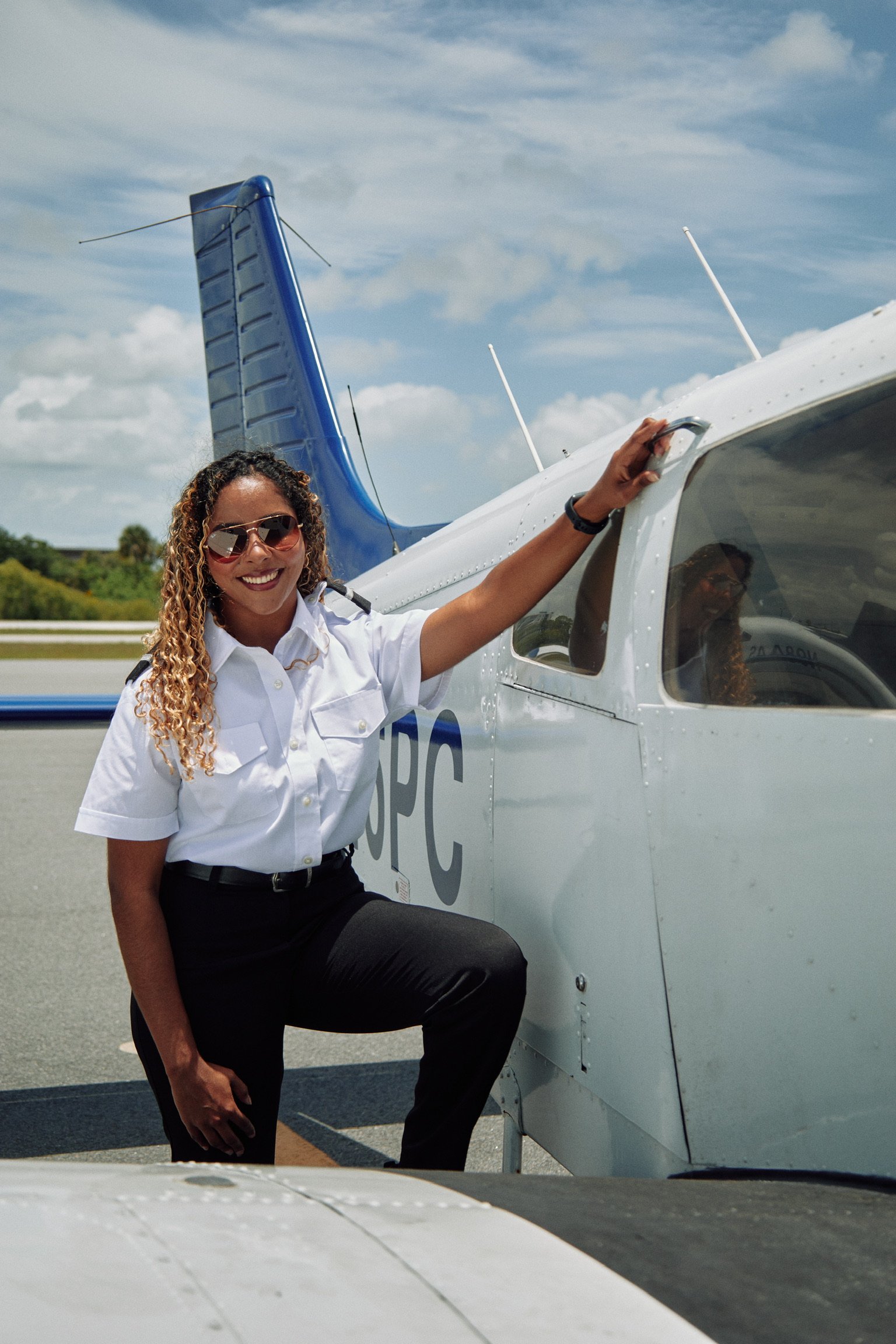
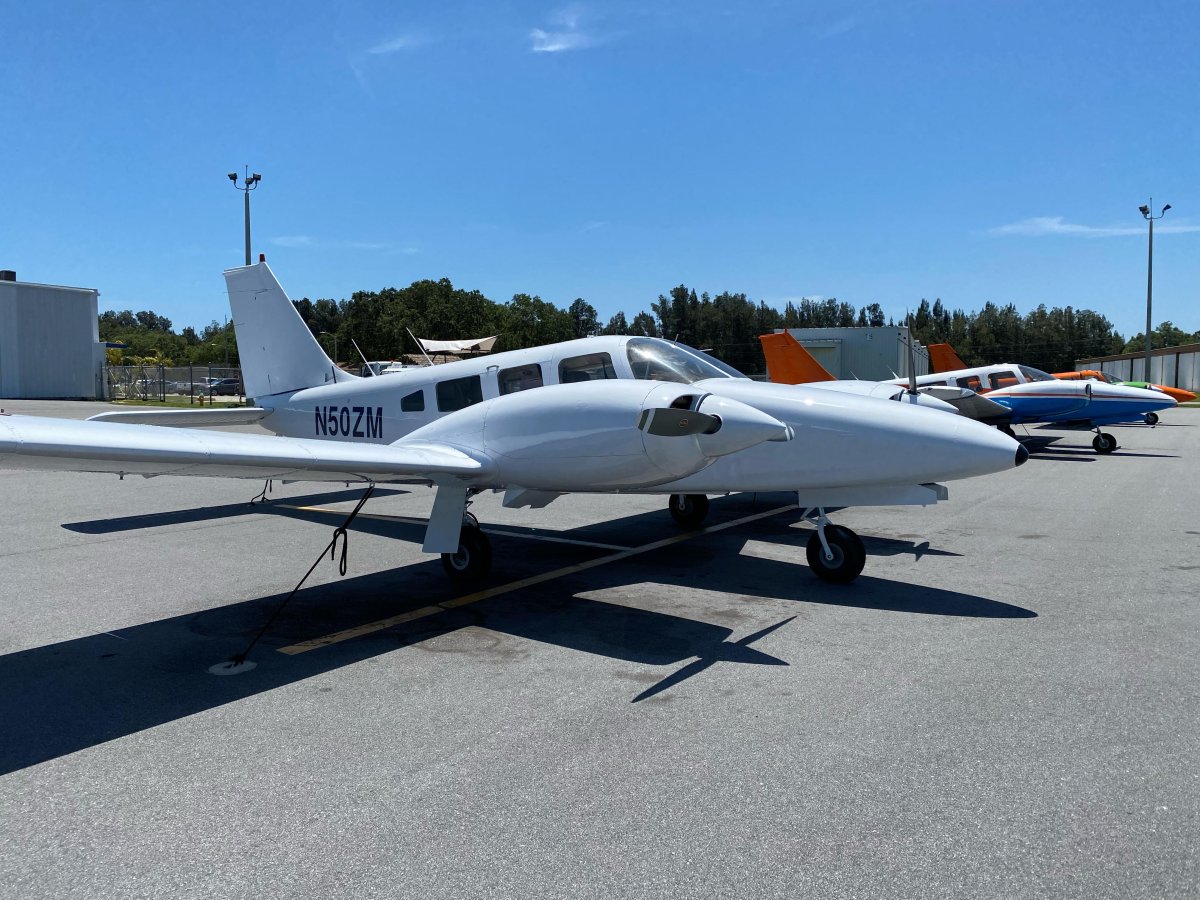
The bridge between a flight school classroom and a Boeing 737 flight deck isn’t just a license; it’s the specific airframe you choose to master. While many cadets start on light twins, the piper seneca represents a critical step up into high-performance operations. You likely recognize that multi-engine training is demanding, and the pressure to be career-ready is higher than ever. With the 2025 Boeing Pilot and Technician Outlook projecting a global demand for 660,000 new pilots through 2044, you can’t afford to train on equipment that doesn’t push your technical limits. High-achievers know that the right platform makes the difference between struggling in a jet transition and leading the crew.
We’ll show you exactly why the PA-34 Seneca remains the definitive choice for aspiring commercial pilots who want to stand out to recruiters. This guide provides a detailed breakdown of the Seneca’s technical specifications, compares its performance to lighter trainers, and explains how this specific flight time accelerates your path to a global aviation career. You’ll gain a clear understanding of how mastering these complex systems prepares you for the rigorous standards of the world’s leading airlines.
Key Takeaways
- Understand why the PA-34 series serves as the definitive bridge between initial flight training and high-performance commercial operations.
- Explore the technical safety features of the piper seneca, including how counter-rotating propellers eliminate the risks associated with a critical engine.
- Compare the mission profiles of the Seneca and the Seminole to determine which aircraft best supports your specific multi-engine training objectives.
- Align your training with industry needs as the 2025 Boeing Outlook forecasts a global requirement for 660,000 new pilots through 2044.
- Discover how 2FLY Airborne’s professional curriculum prepares cadets to transition seamlessly from the cockpit of a light twin to a career-ready airline professional.
What is the Piper Seneca? An Overview of the PA-34 Series
The Piper PA-34 Seneca stands as a cornerstone of multi-engine flight training. It’s a six-seat, twin-engine light aircraft that provides a vital bridge between single-engine trainers and heavy commercial jets. Within the Piper family, it sits above the Arrow and Seminole, offering more power, advanced systems, and greater complexity. Pilots often call it the “Little Big Twin” because it delivers the feel and performance of a much larger aircraft while maintaining the manageable operating costs of a light twin.
To see this aircraft in action during a training session, watch this helpful video:
The piper seneca is famous for its stability and predictable handling. It manages high-altitude performance with ease thanks to its turbocharged engines, allowing cadets to train in diverse environments. This makes it an ideal platform for teaching advanced maneuvers, emergency procedures, and instrument flight in various weather conditions. It’s a machine built for those who are serious about mastering the flight deck.
The Evolution from Seneca I to Seneca V
The PA-34 series began with the Seneca I in 1971. Over five decades, it evolved through the 200 and 220T variants, culminating in the Seneca V. The transition from the original 1971 model to the modern Seneca V represents a massive leap in capability. Early models focused on basic utility, but the modern Seneca V emphasizes pilot workload reduction and passenger comfort. It features Garmin G1000 NXi avionics and turbocharged Continental engines. This balance of power and sophistication is why top-tier academies rely on the piper seneca to produce airline-ready graduates.
The “Global Pilot” Perspective
Modern airlines demand high levels of multi-engine proficiency. The Seneca is a preferred tool for both FAA and EASA training environments, making it a truly international platform. It plays a central role in international pilot training programs. According to the 2025 Boeing Pilot and Technician Outlook, the industry requires 660,000 new qualified pilots through 2044. Building multi-engine time in a complex aircraft makes candidates stand out during recruitment. Airlines value the discipline required to master its systems, as it mirrors the complexity found in regional and narrow-body jets.
Start your professional journey today. Contact a 2FLY Airborne training advisor to learn how multi-engine training fits into your career path.
Technical Specifications and Performance Capabilities
The piper seneca serves as a robust bridge between initial flight training and the flight deck of a commercial airliner. It provides a sophisticated platform where cadets master complex systems and high-performance operations. This aircraft isn’t just a trainer; it’s a high-altitude cross-country machine designed to handle the rigors of professional pilot development.
The Powerplant: Continental TSIO-360 Evolution
The heart of the Seneca’s capability lies in its twin Continental TSIO-360 engines. Early variants produced 200 horsepower, but later models, beginning with the Seneca III, upgraded this to 220 horsepower. These engines utilize turbocharging to maintain power as the aircraft climbs into thinner air. Advanced components like intercoolers reduce intake air temperatures to improve efficiency, while automatic sloped controllers prevent engine overboost during high-power settings. Time Between Overhaul (TBO) is the manufacturer’s recommended lifespan for an engine before it requires a complete teardown and rebuild, typically set at an 1,800-hour industry standard for these units.
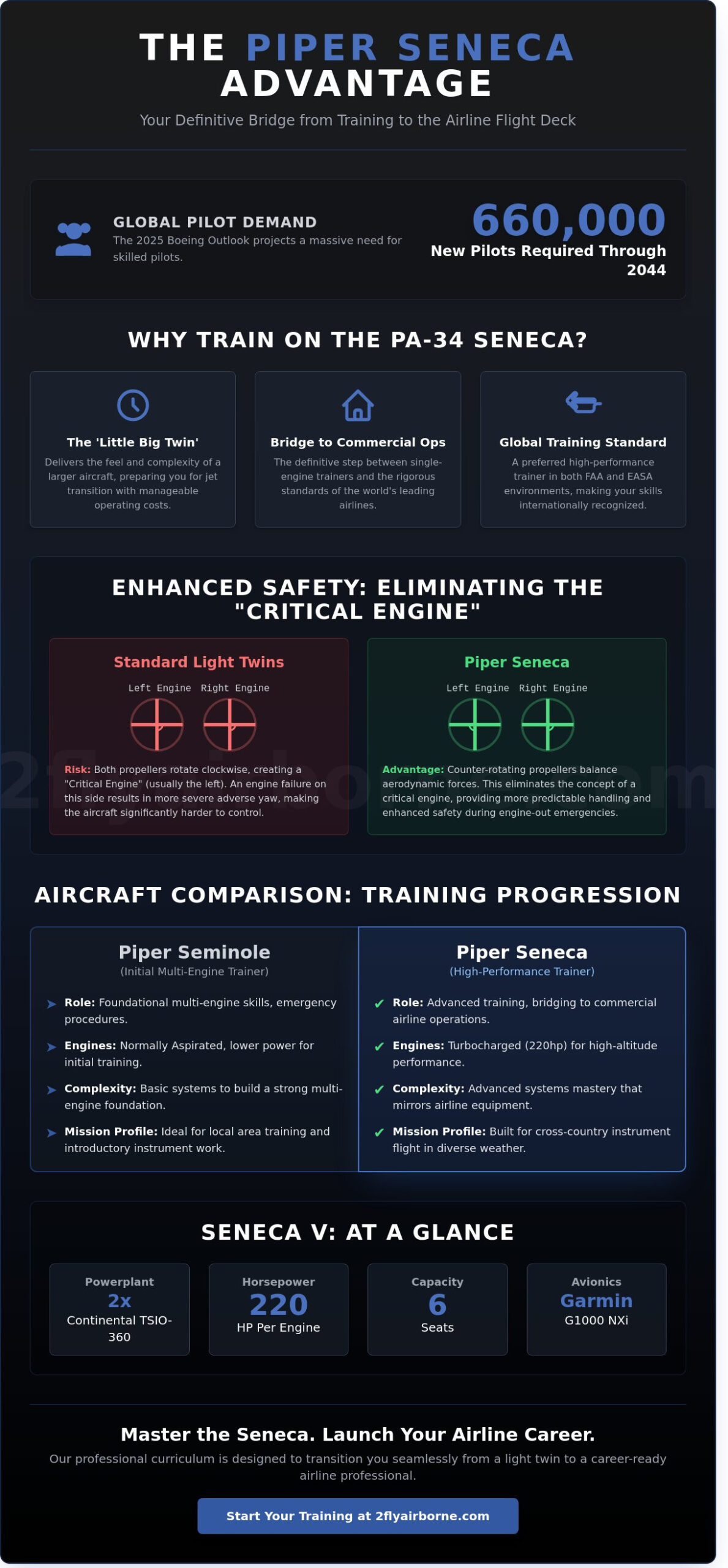
One of the most significant safety features of the piper seneca is its counter-rotating propeller system. In many light twins, both propellers rotate clockwise, which creates a “critical engine” where a failure of the left engine is more difficult to manage. The Seneca eliminates this risk by having the right engine rotate counter-clockwise. This symmetry ensures that the aircraft handles identically regardless of which engine fails, providing a safer environment for students practicing engine-out procedures. For a detailed breakdown of various model iterations, the AOPA Piper Seneca Fact Sheet offers comprehensive historical data.
- Cruise Speed: Approximately 180 to 190 knots depending on altitude and power settings.
- Service Ceiling: A maximum altitude of 25,000 feet, allowing pilots to fly above most weather systems.
- Useful Load: Typically ranges between 1,400 and 1,600 pounds, accommodating full fuel and multiple passengers.
Handling Characteristics for Student Pilots
Transitioning into the Seneca requires a shift in mindset. Students accustomed to light single-engine aircraft will immediately notice a “heavy” feel in the flight controls. This increased control resistance is intentional; it mimics the stability and inertia of larger commercial jets. Pilots must learn to trim the aircraft effectively to manage these forces, especially during the high-workload phases of takeoff and landing.
During single-engine drills and Vmc (minimum control speed) demonstrations, the Seneca remains predictable. It provides clear aerodynamic feedback, allowing students to recognize the symptoms of an impending loss of directional control before it becomes critical. This psychological transition from a light trainer to a heavy twin is a vital step in becoming an airline-ready professional. The 2025 Boeing Pilot and Technician Outlook identifies a global need for 660,000 new qualified pilots through 2044, and mastering these handling characteristics is a prerequisite for filling those roles. To begin your journey toward a professional flight deck, you can speak with a training advisor to discuss your multi-engine rating goals.
Piper Seneca vs. Piper Seminole: Which is Better for Training?
Choosing between the Piper Seminole and the piper seneca depends entirely on your stage of training and your ultimate career goals. The Seminole is widely regarded as the premier entry-level multi-engine trainer. It’s forgiving, efficient, and perfect for a student’s first exposure to asymmetrical thrust. Most cadets at 2Fly Airborne begin with the Piper Seminole to master the fundamentals of multi-engine aerodynamics without the added workload of turbochargers or complex fuel management.
The Seneca represents the next level of professional development. It’s a heavy, high-performance aircraft that demands more from the pilot. While the Seminole is for the rating, the Seneca is for the mission. Training in a more complex airframe provides a significant advantage when transitioning to turbine equipment. With the 2025 Boeing Pilot and Technician Outlook projecting a global demand for 660,000 new pilots through 2044, gaining experience in an aircraft that mimics regional airline operations is a strategic career move. It builds the “complex” aircraft time required for advanced certifications while instilling the discipline needed for high-altitude, high-speed flight.
System Complexity: Gear, Flaps, and Cowl Flaps
The piper seneca introduces systems that are absent or simplified in basic trainers. You’ll manage a robust hydraulic landing gear system and constant-speed propellers that require precise synchronization. Pilots must also balance manifold pressure with engine temperatures using adjustable cowl flaps. These tasks create a high-workload environment that forces you to develop professional cockpit flows.
These systems require strict adherence to technical standards. When discussing maintenance or equipment updates, technicians often look to FAA guidance on aircraft modifications to maintain the aircraft’s high-performance certification. Learning to manage these complexities early ensures you’re airline-ready long before your first professional simulator session. It’s about moving beyond simple stick-and-rudder skills to become a true systems manager.
Payload and Range for Cross-Country Mastery
The Seneca is the superior tool for mastering long-distance IFR operations. Its six-seat configuration and increased useful load mean you’ll deal with real-world weight and balance scenarios. You can’t just “fill the tanks and go.” You’ll learn to calculate fuel burns and center of gravity limits with a full cabin, just as you would in a commercial operation.
This aircraft is especially valuable for students who have completed their Private Pilot License and are focused on advanced hour building. It allows for:
- Authentic cross-country planning over varied terrain.
- Advanced weather flying in a stable, turbocharged platform.
- Experience with high-performance climbs and descents in busy airspace.
If your goal is to reach the flight deck of a major carrier, the Seneca provides the environment to prove you can handle a heavy, fast, and sophisticated machine. Contact a 2Fly Airborne training advisor to discuss how this platform fits into your professional pilot journey.
Preparing for the 2026 Aviation Market
The aviation industry is entering a period of unprecedented expansion. According to the 2025 Boeing Pilot and Technician Outlook, global airlines will require 660,000 new qualified pilots through 2044. Meeting this massive demand requires more than just logging basic flight hours. It demands a transition to an “Airline Ready” professional mindset. The piper seneca serves as the definitive platform for this evolution. It introduces cadets to the discipline required for multi-crew environments and sophisticated systems management. This aircraft is a central pillar of our FAA Airline Pilot Program, ensuring students develop the technical proficiency that modern carriers expect from day one.
Training in a multi-engine environment isn’t just about handling an extra throttle. It’s about managing increased complexity and higher speeds. Airlines look for candidates who’ve already moved past the simplicity of single-engine trainers. By the time you reach a regional jet interview, your experience in the Seneca will have already established a foundation in professional checklists and emergency procedures. You aren’t just learning to fly; you’re learning to operate a complex machine within a commercial framework.
High-Performance Endorsements
FAA regulations under 14 CFR 61.31(f) require a high-performance endorsement for any pilot operating an aircraft with an engine capable of developing more than 200 horsepower. Each engine on the piper seneca exceeds this threshold. This allows students to satisfy these requirements naturally during their standard multi-engine training. Logging these hours early simplifies the administrative path toward a commercial pilot license. It’s a significant advantage that eliminates the need for separate, costly training sessions later. You’ll build the power management skills necessary for heavy jets while earning your primary certifications.
Complex Aircraft Endorsements
The FAA defines a complex aircraft as one featuring retractable landing gear, flaps, and a controllable pitch propeller. Mastery of these three systems is a non-negotiable prerequisite for professional success. Airlines prioritize applicants with significant time in complex multi-engine aircraft. This experience proves a pilot’s ability to manage high workloads during critical phases of flight, such as approach and departure. Training in the Seneca provides the essential foundation needed for the FAA First Officer Program. It forces you to think ahead of the airplane and prepares you for the rapid pace of a professional flight deck.
Ready to begin your journey to the flight deck? Speak with a 2FLY Airborne training advisor today to learn how our multi-engine curriculum sets you apart in the global pilot market.
Mastering the Seneca with 2FLY Airborne
2FLY Airborne transforms students into elite aviators. Mastering the piper seneca is a critical milestone on this path. We don’t just focus on passing a checkride; we focus on the professional standards required by major carriers. Our instruction blends technical expertise with a mentorship-driven approach. You’ll learn to handle the aircraft’s power and complexity while maintaining the highest safety margins. This transition to multi-engine operations is where your identity as a commercial pilot truly takes shape.
We use a structured methodology that integrates advanced simulators with live flight hours. This ensures you’re prepared for every contingency. Simulators allow for repeated practice of critical maneuvers without the risks of actual flight. When you step into the cockpit, you’re already confident. Our training includes:
- Engine-out procedures and asymmetric thrust management.
- Complex instrument approaches in varied weather conditions.
- Emergency system failures and cockpit resource management.
The global aviation industry is expanding rapidly. The 2025 Boeing Pilot and Technician Outlook projects a sustained demand for qualified aviators through 2044. Many of our graduates choose to build their required flight hours by enrolling in a flying instructor course after completing their multi-engine training, allowing them to earn a paid position while accumulating the hours needed for an airline career.
Take Command of Your Future in the Flight Deck
Mastering the piper seneca represents more than just earning a multi-engine rating; it’s a strategic investment in your professional identity. This aircraft provides the technical complexity and performance required to bridge the gap between initial training and the commercial cockpit. The 2025 Boeing Pilot and Technician Outlook projects a global demand for 660,000 new qualified pilots through 2044. Meeting this massive demand requires a level of proficiency that only high-performance training can provide.
At 2FLY Airborne, we prioritize your transition into an airline-ready professional. Our instructors provide expert mentorship from veteran flight backgrounds, ensuring your skills meet elite industry standards. We’ve built a proven track record of placing pilots into global careers by focusing on disciplined, real-world scenarios. Don’t settle for basic certification when you can train on a platform that prepares you for the heavy metal of the airlines. Your path to the captain’s seat is waiting.
Speak with a 2FLY Training Advisor about your Multi-Engine career path and secure your place in the next generation of aviators.
Frequently Asked Questions
Is the Piper Seneca considered a high-performance aircraft?
The Piper Seneca is classified as a high-performance aircraft because its engines produce more than 200 horsepower. You’ll need a specific logbook endorsement to act as pilot in command of this twin. This power prepares you for the 660,000 new pilot roles projected by the 2025 Boeing Pilot and Technician Outlook through 2044. It’s a vital step for any aspirational aviator.
How many seats does a Piper Seneca have?
The Piper Seneca features a six-seat configuration, including two crew seats and four passenger seats. Its cabin is designed with a club seating arrangement where the rear passengers face each other. This layout provides more room than standard light trainers. It’s an excellent platform for learning to manage the weight and balance challenges of a professional commercial environment.
What is the difference between a Piper Seneca and a Piper Seminole?
The primary difference lies in power and capacity. While the Seminole is a four-seat trainer with 180 horsepower engines, the piper seneca offers six seats and turbocharged engines producing up to 220 horsepower. The Seneca provides a more complex systems environment for students. It’s an ideal step for cadets aiming to become airline-ready professionals in a high-performance multi-engine aircraft.
Can I use a Piper Seneca for my initial Multi-Engine Rating?
You can use a Piper Seneca for your initial Multi-Engine Rating, though its complex systems present a steeper learning curve than the Seminole. It qualifies as both a complex and high-performance aircraft, allowing you to master advanced systems early. Speak with a 2FLY Airborne training advisor to see if this platform fits your career goals. We’ll help you navigate the requirements for your professional license.
What engines are in the Piper Seneca V?
The Piper Seneca V is equipped with two Continental TSIO-360-RB turbocharged, fuel-injected engines. Each engine produces 220 horsepower at sea level and maintains performance at higher altitudes. These counter-rotating engines simplify handling during the engine-out drills you’ll master during your flight training. This engine reliability is a cornerstone of the Seneca’s reputation as a world-class training platform for future airline pilots.
How fast does a Piper Seneca fly?
A modern Piper Seneca V reaches a maximum cruise speed of 197 knots true airspeed. At a standard 75 percent power setting, you can expect speeds around 180 knots. This performance allows you to gain experience in the faster-paced terminal environments you’ll encounter as a commercial pilot license holder. The speed of the piper seneca makes it a favorite for building cross-country experience efficiently.
Is the Piper Seneca still in production?
The Piper Seneca V remains in active production at Piper Aircraft’s facility in Vero Beach, Florida. Since the original model debuted in 1971, the aircraft has seen continuous improvements in avionics and performance. This longevity ensures a steady supply of parts and a global network of support. It remains a staple for elite flight academies that prioritize training on modern, reliable equipment.
Does the Piper Seneca have a critical engine?
The Piper Seneca doesn’t have a critical engine because it uses counter-rotating propellers. The left engine rotates clockwise while the right engine rotates counter-clockwise. This design balances the aerodynamic forces and eliminates the asymmetric thrust issues found in many other light twins. It provides a stable and predictable platform for students learning to manage engine failures during their commercial pilot certification process.
Article by
2FLY Airborne
2Fly Airborne is a professional flight training organization dedicated to developing the next generation of skilled, confident, and safety-focused pilots. With decades of combined aviation experience, our team of certified instructors provides structured, real-world training designed to prepare students for both checkrides and long-term success in the aviation industry.
Content Disclaimer
Some blog content is generated with the assistance of automated tools and may not always be fully accurate or up to date. Please verify all aviation-related information with official sources or a certified instructor. For additional guidance or clarification, we encourage you to contact one of our training advisors at 2Fly Airborne.