Have you ever wondered why the world’s most successful airline captains often trace their professional origins back to a flight deck in the United States? For many aspiring aviators, the dream of flying for a global carrier feels locked behind a complex wall of visa regulations and significant financial commitments. It’s common to feel a sense of hesitation when faced with the technicalities of international training, especially when your future career depends on making the right choice today.
This guide provides a definitive masterclass on how to become a pilot in usa for international students, transforming a maze of requirements into a clear, strategic roadmap. We’ll demystify the FAA certification process and show you how to navigate the transition from a student trainee to a highly skilled, industry-prepared professional. We will break down everything from visa selection and training costs to the specific strategies for building the flight hours needed to secure your place in a commercial cockpit.
Key Takeaways
- Master the strategic advantages of training in the United States and why the FAA certificate remains the premier credential for global aviation mobility.
- Navigate the critical entry requirements, including the necessary visa categories, English language standards, and the importance of obtaining an FAA Medical Certificate early.
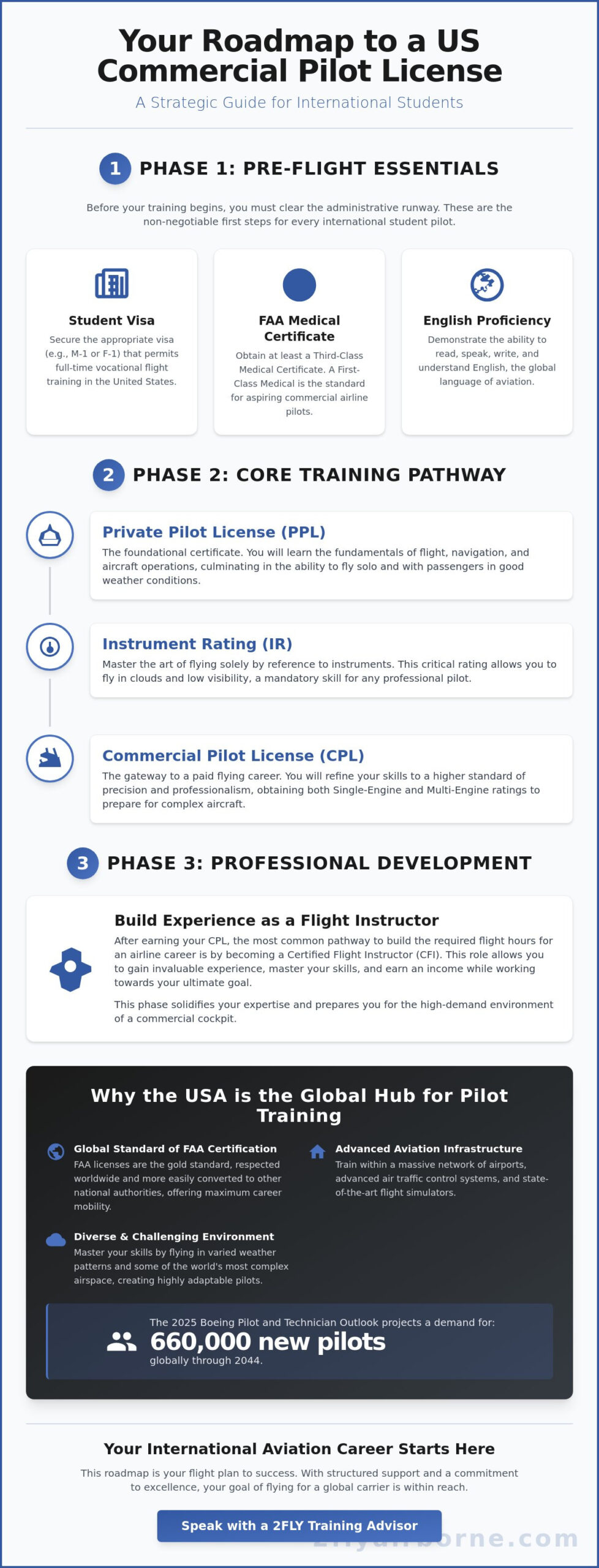
- Follow a structured, professional pathway on how to become a pilot in usa for international students that takes you from zero experience to a multi-engine commercial pilot.
- Gain insights into the transition from a trainee to an industry-prepared professional by understanding how to build flight hours and gain valuable experience as a flight instructor.
- Learn how comprehensive student support and residential facilities create a stable environment for high-achievers to focus on their rigorous training syllabus.
Why the USA is the Global Hub for International Pilot Training
Choosing where to train is the most critical decision an aspiring aviator makes. The United States offers an environment that challenges and refines a pilot’s skills through exposure to diverse weather patterns and complex airspace. This immersion ensures that students aren’t just learning to fly, but are becoming masters of the flight deck.
Understanding how to become a pilot in usa for international students begins with recognizing the strategic value of the Federal Aviation Administration (FAA) system. The United States boasts one of the most advanced aviation infrastructures in the world, featuring a massive network of airports and state-of-the-art flight simulators. To better understand this concept, watch this helpful video:
The global aviation industry continues to expand at a rapid pace, creating immense opportunities for those with the right credentials. The 2025 Boeing Pilot and Technician Outlook projects a demand for 660,000 new pilots globally through 2044. Training in the U.S. positions you at the forefront of this growth, providing a competitive edge in the international job market.
The Global Standard of FAA Certification
FAA standards are globally respected for their emphasis on practical, hands-on safety rather than just theoretical knowledge. This focus on real-world application is a core component of Pilot certification in the United States, making FAA-trained pilots highly desirable to international carriers. It’s a standard that demands technical mastery and vocational preparedness.
Converting an FAA license to other national authorities is generally more straightforward than transitioning from other regulatory bodies. Because the U.S. is a key member of the International Civil Aviation Organization (ICAO), its certifications are recognized across member states. This professional mobility is essential for those aiming for a global commercial aviation career.
Additionally, training in an English-speaking environment is a significant advantage for non-native speakers. It allows students to naturally achieve the high levels of English proficiency required for international radio communications and safety protocols. You’ll gain the confidence to communicate effectively in busy, high-pressure airspace anywhere in the world.
A Mentorship-Driven Approach to Aviation
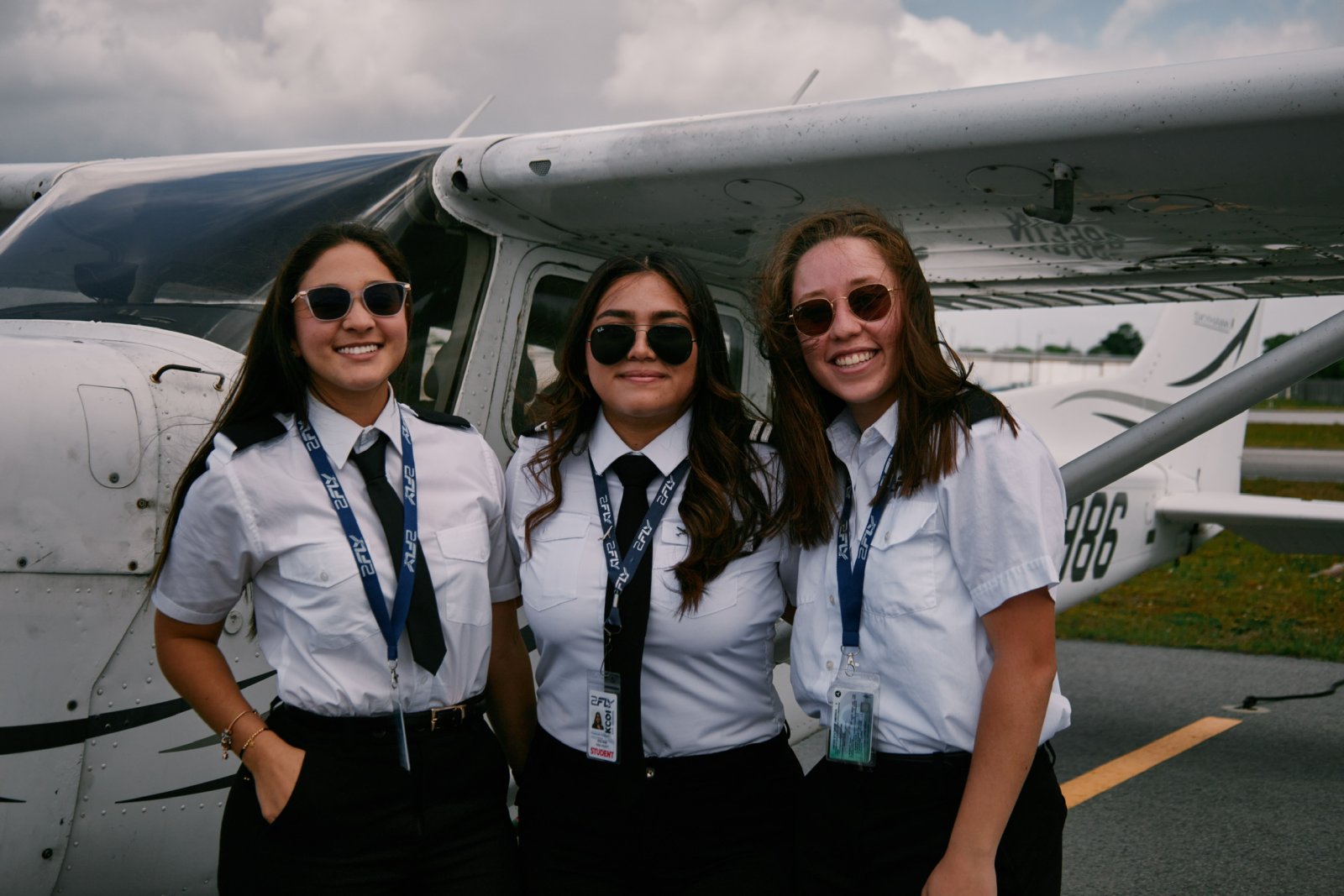
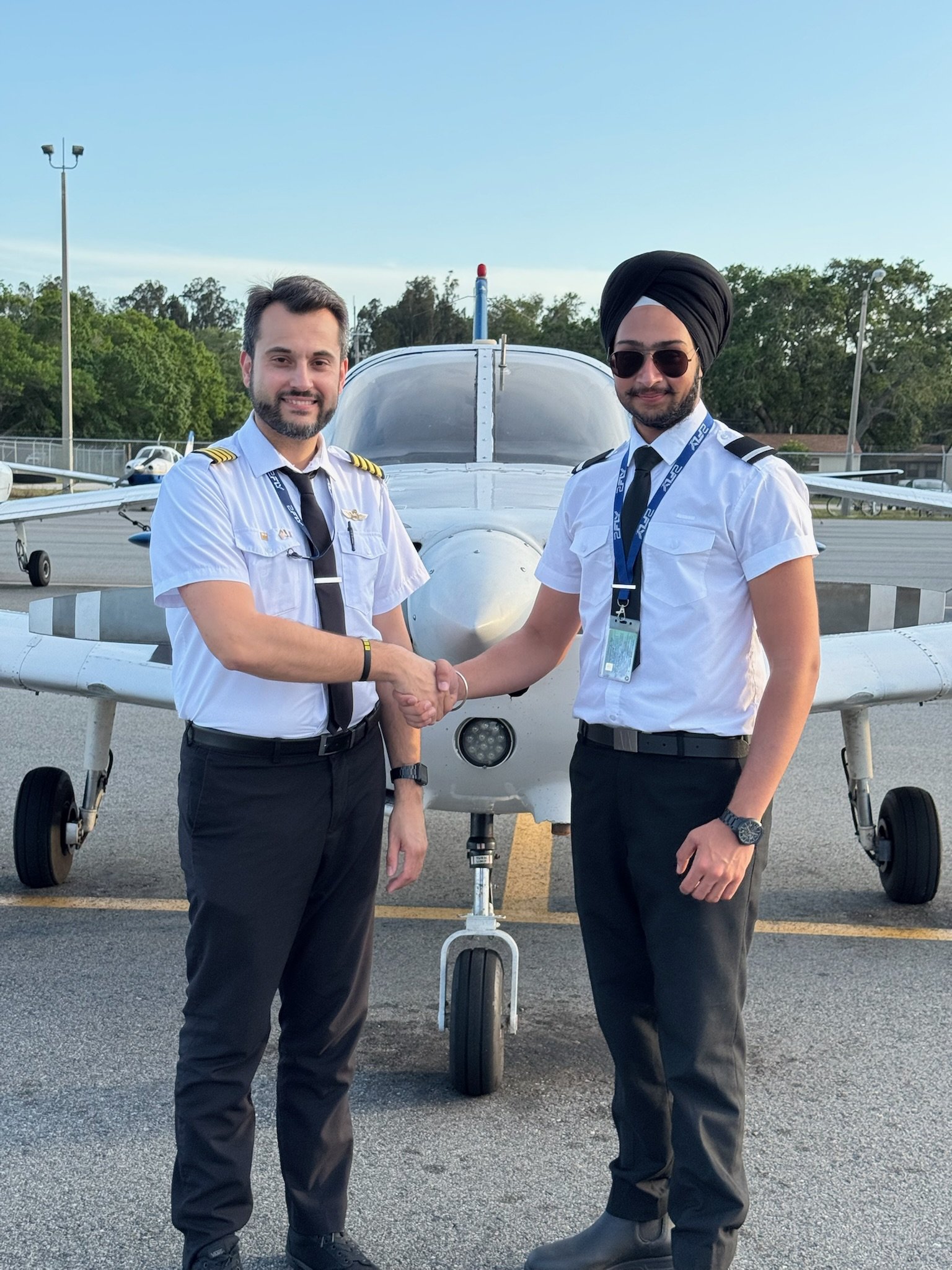
A successful career in the cockpit requires more than just technical skill; it demands the guidance of an expert mentor. At 2FLY Airborne, we view ourselves as more than just a training provider. We are the definitive gateway to an international career, providing the discipline and technical mastery needed for the highest levels of the profession.
Moving to a new country to pursue flight training is a bold step that requires a stable and supportive environment. High-achievers need a setting where they can focus entirely on their training syllabus without the distractions of logistical hurdles. We provide the structured support and on-campus community that international students need to thrive during their intensive professional development.
Essential Requirements: Visas, Medicals, and English Proficiency
Before you touch the flight controls, you must clear the administrative runway. Understanding how to become a pilot in usa for international students requires a disciplined approach to documentation and health standards. It is important to note that aviation regulations and individual processing timelines vary, and this information should not be treated as official FAA guidance. This preparation ensures your training remains uninterrupted once you arrive on campus.
Your journey begins with an FAA Medical Certificate. This examination by an Aviation Medical Examiner (AME) confirms you meet the physical standards required for flight. It’s the first step because it validates your long-term career viability before you invest in flight hours. For commercial aspirations, a First-Class Medical is typically the gold standard to aim for.
Aviation is an English-first industry. You must be able to read, speak, and understand English to meet ICAO standards. This isn’t just a regulatory hurdle; it’s a fundamental safety requirement for communicating with Air Traffic Control in busy airspace. Clear communication is the hallmark of a professional pilot.
Administrative readiness also includes basic educational prerequisites. You’ll need a high school diploma or its international equivalent to enroll in a professional program. Additionally, ensure your passport is valid for at least six months beyond your planned stay. These checks establish your eligibility for elite vocational training.
Navigating the M-1 and F-1 Student Visas
Most vocational flight students utilize the M-1 visa, which is specifically designed for technical and non-academic programs. In contrast, the F-1 visa is typically reserved for those pursuing an academic degree alongside their flight training. You can find detailed official information on U.S. student visas to understand the specific criteria for each category.
At 2FLY Airborne, we provide the administrative sponsorship needed to issue your Form I-20. This document is essential for your SEVIS registration and subsequent visa interview at a U.S. Embassy. Our team acts as an expert mentor through this complex paperwork, ensuring every detail is correct for your transition. Proper sponsorship is the bridge between your home country and a U.S. flight deck.
The TSA Security Threat Assessment
All non-U.S. citizens must undergo a security screening through the TSA Alien Flight Student Program (AFSP). This process involves a background check and fingerprinting to ensure the safety of the national airspace. It’s a mandatory step for each major milestone, including your Private Pilot Certificate, Instrument Rating, and Multi-Engine Rating.
Start your TSA application at least 30 days before your intended start date. Delays in clearance can ground your progress before it even starts. If you have questions about the timeline for your FAA Professional Pilot Program, our advisors can provide the necessary guidance to stay on track.
The Training Sequence: From Zero to Commercial Pilot
Imagine stepping into a cockpit with zero experience and emerging months later as a certified professional. This transformation is the core of how to become a pilot in usa for international students. It requires a disciplined progression through specific certifications, each building on the last to create a foundation of technical mastery. The path is demanding, but it’s designed to mold you into an industry-prepared professional.
Your journey begins with the Private Pilot Certificate (PPL). This stage is all about the fundamentals. You’ll master basic maneuvers, takeoffs, and landings while experiencing the thrill of your first solo flight. It’s the essential first step in understanding the physics of flight and the responsibilities of being a pilot in command.
Once you’ve mastered the basics, you’ll move to the Instrument Rating (IR). This phase removes your reliance on the horizon, teaching you to navigate and land using only the flight instruments. It’s a critical skill for maintaining safety in poor visibility and is a requirement for any serious commercial career. You’ll gain the confidence to fly in a wider range of weather conditions.
The next milestone is the Commercial Pilot Certificate (CPL). This is the professional turning point where you gain the legal right to fly for compensation. You must meet specific FAA commercial pilot requirements to reach this level. It refines your precision and decision-making to meet the rigorous standards of the aviation industry.
Finally, the Multi-Engine Rating (ME) prepares you for the complexities of larger aircraft. Since modern airliners utilize at least two engines, this rating is an absolute necessity for your career. You’ll learn to manage the increased performance and handle engine-out procedures with calm authority. For a broader look at this journey, explore our guide on how to become a pilot.
The FAA Professional Pilot Program Structure
Choosing a structured path like the FAA Professional Pilot Program offers a clear advantage over modular training. Modular training can often feel disjointed and take longer to complete. A full career syllabus ensures that every hour in the air builds directly toward your final professional goal. We supplement actual flight hours with state-of-the-art simulators, allowing you to practice complex scenarios in a controlled, high-fidelity environment.
EASA vs. FAA: Choosing the Right Path
Some international students seek a dual-certification approach to maximize their global employment options. Training in the U.S. while adhering to European standards provides a unique technical edge. It combines the efficiency of American flight environments with the specific regulatory demands of European carriers. Training for EASA standards within the USA is a competitive advantage for global mobility, allowing you to transition seamlessly between international regions.
Building Flight Hours and Work Authorization
What happens after you earn your commercial license? For many, the transition from trainee to professional pilot is defined by the quest for flight hours. This period is not just about logging time. It’s about refining your technical mastery and vocational preparedness in a real-world setting. It’s the bridge between being a student and becoming a captain.
Airlines in the United States typically require 1,500 flight hours for an Airline Transport Pilot (ATP) certificate. While requirements for international carriers may be lower, having a high volume of U.S. flight experience is a massive competitive advantage. It shows global recruiters that you’ve handled diverse airspace and rigorous FAA standards. Building these hours requires a strategic plan and a disciplined approach to your early career.
Networking and recruitment support are also vital during this phase. Engaging with a global community of aviators helps you stay informed about international hiring trends and requirements. We focus on preparing you for the transition from a trainee to an industry-prepared professional. This ensures you’re ready when the world’s leading carriers begin their search for new talent.
Becoming a Certified Flight Instructor (CFI)
The Certified Flight Instructor (CFI) rating is your first true job in aviation. Teaching others is the most effective way to master complex aviation concepts and maneuvers. It forces you to understand the “why” behind every procedure, which builds immense confidence in the cockpit. You’ll find that explaining aerodynamics to a new student reinforces your own technical expertise.
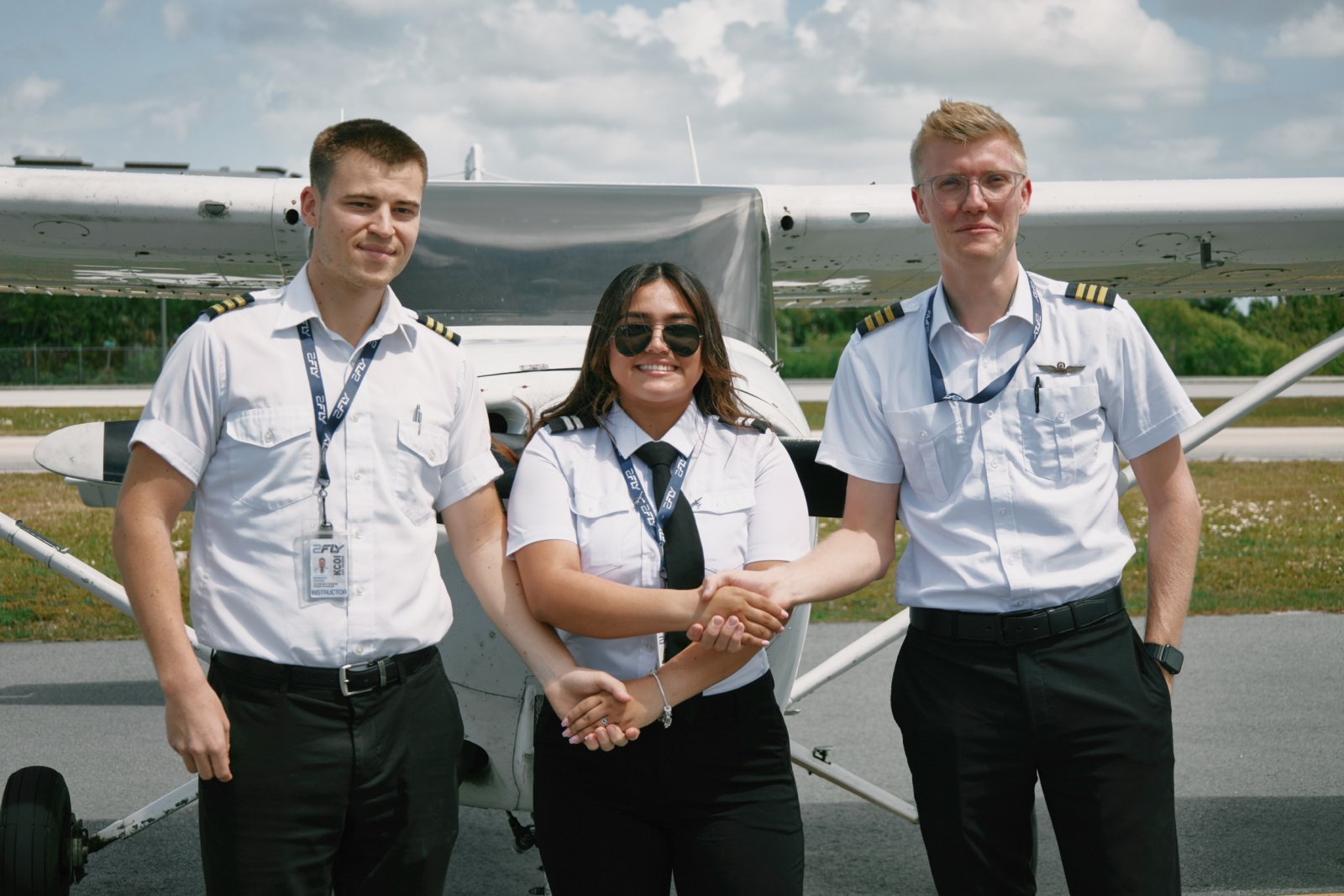
We provide the training for CFI, CFII, and MEI ratings to help you launch this first professional role. These certifications allow you to earn money while building the flight hours necessary for your long-term goals. Transitioning from a trainee to an instructor is a significant milestone in your professional development. It marks your entry into the workforce as a knowledgeable and disciplined leader.
OPT and Career Placement Strategies
International students on an F-1 visa have a distinct advantage through Optional Practical Training (OPT). This authorization allows you to work in the U.S. for a specific period, typically as a flight instructor, to gain practical experience in your field. It’s a key part of the strategy for how to become a pilot in usa for international students who want to maximize their time in the country. This period turns your training into a direct pipeline for employment.
Finding the right airline placement requires a robust recruitment network and an understanding of international regulatory standards. A global perspective is essential for identifying opportunities across different regions and carriers. If you’re ready to take the next step toward a commercial cockpit, explore our FAA First Officer Program to see how we bridge the gap to airline employment.
The 2FLY Airborne Gateway: Support Beyond the Cockpit
Selecting the right pilot school involves looking beyond the aircraft and simulators to the quality of the support system provided. A truly professional environment prioritizes the student’s well-being as much as their technical progress. This holistic approach ensures that you’re prepared for the rigors of a specialized career path from the moment you arrive on campus.
When researching how to become a pilot in usa for international students, it’s easy to overlook the administrative support required for a smooth transition. Among the premier flight schools in Florida, 2FLY Airborne provides a comprehensive framework that handles the complexities of international relocation. Our team acts as an expert mentor, guiding you through the logistics of moving to a new country so you can focus on your flight training.
A critical part of this journey is effective financial planning. Understanding your financing options early allows you to commit to your training syllabus with peace of mind. By securing your budget before you arrive, you ensure that your focus remains where it belongs: on the flight deck.
To summarize the pathway we’ve explored, your success rests on three essential pillars. First, you must ensure administrative visa readiness and medical clearance. Second, you must follow a structured, professional syllabus that builds technical mastery. Finally, you must execute a proactive hour-building strategy to bridge the gap to the commercial cockpit.
Residential Life and Student Support
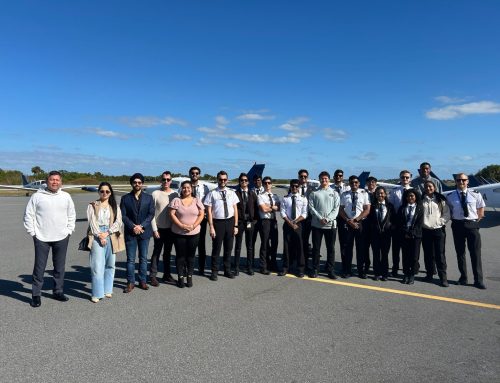
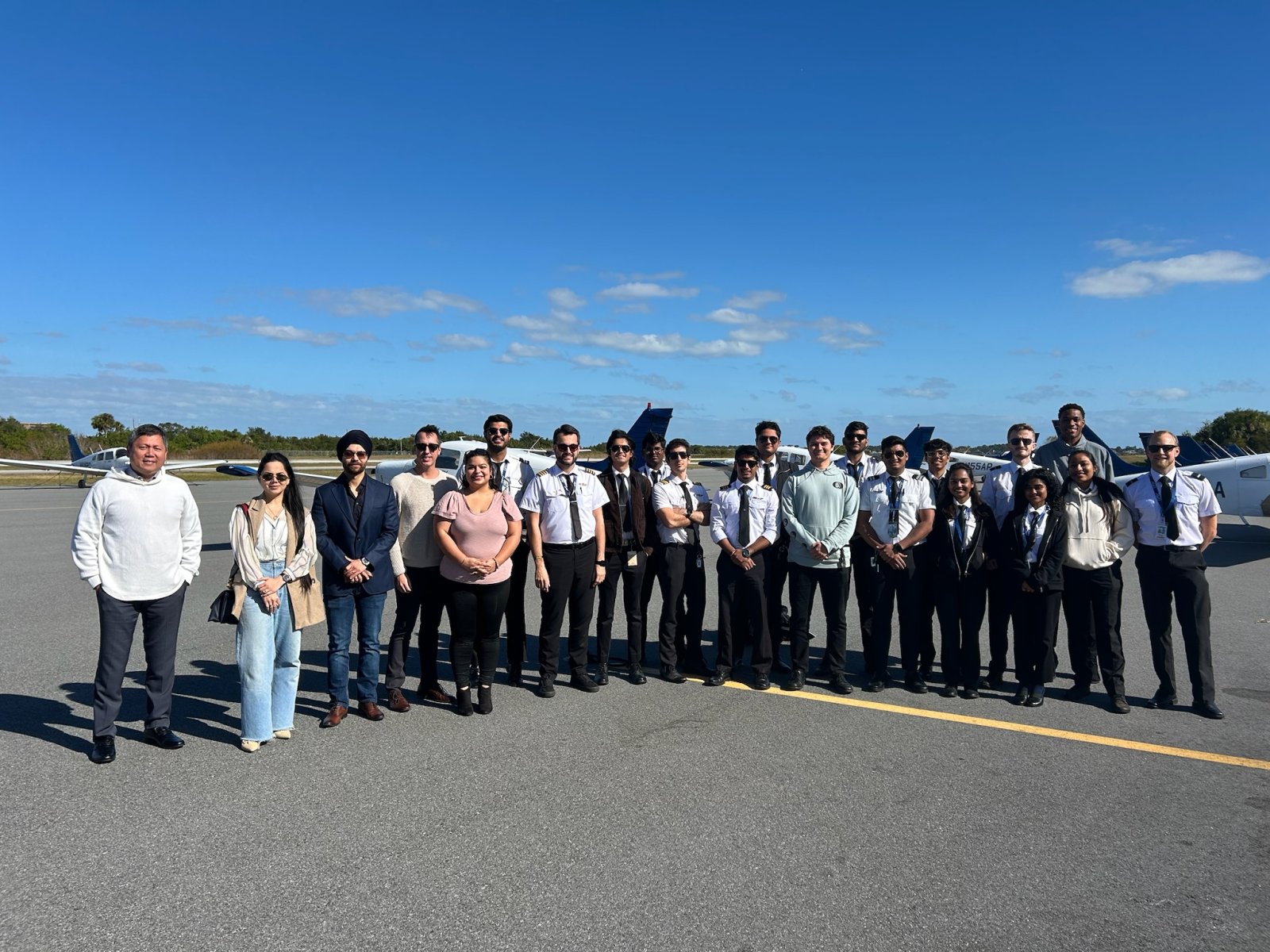
At 2FLY Airborne, managed housing is a cornerstone of our international student experience. Living with a cohort of aspiring pilots from around the world fosters a unique community of high-achievers. This shared environment encourages professional discipline and provides a network of peers who understand the rigorous demands of flight training.
Our team provides administrative assistance that goes far beyond the classroom. We help you navigate SEVIS requirements, set up local banking, and manage the logistics of living in the United States. This level of mentorship ensures that you feel supported at every stage of your vocational development.
Your Next Steps as an International Student
Your professional journey starts with a single, decisive step. We recommend speaking with a professional training advisor to map out your specific timeline and requirements. You can also attend our upcoming aviation events or webinars to gain deeper insights into our training environment and global recruitment network.
Safe, structured training is the only reliable foundation for a successful global aviation career. It’s the most direct pipeline to employment with the world’s leading carriers. If you’re ready to begin your journey, please reach out to a 2FLY Airborne Training Advisor with any remaining questions.
Launch Your Global Aviation Career Today
Mastering the sky requires more than just passion; it demands a tactical approach to your education and professional development. You now have a clear roadmap for how to become a pilot in usa for international students, from securing your medical clearance to logging those final commercial flight hours. By prioritizing FAA standards and a structured syllabus, you’re positioning yourself for a future at the highest levels of the global aviation industry.
Our fixed-price Professional Pilot Programs are designed to remove financial uncertainty while providing the technical mastery you need to succeed. With M-1 and F-1 visa sponsorship and dedicated on-campus student housing, we ensure your transition to the United States is as seamless as your first solo flight. This elite environment is built for high-achievers who value technical precision and vocational preparedness above all else.
Your future in the commercial cockpit is closer than it seems. Speak with a 2FLY Training Advisor today to start your international aviation journey. We invite you to reach out to a 2FLY Training Advisor with any remaining questions to ensure your path is safe, structured, and successful. The sky is waiting for those with the drive to reach it.
Frequently Asked Questions
Can I work in the USA as a pilot after finishing flight school?
You can work in the United States if you hold an F-1 visa through a program that offers Optional Practical Training (OPT). This allows you to earn an income as a flight instructor while you build the flight hours required for airline employment. Students on an M-1 visa typically do not have the same work authorization and generally return to their home countries to begin their professional careers after graduation.
What is the difference between an M-1 and an F-1 visa for flight training?
The M-1 visa is specifically for vocational or technical training, making it the most common choice for those in a professional pilot program. The F-1 visa is reserved for students enrolled in an academic degree program at a university or college. While both allow you to complete your flight ratings, the F-1 visa provides more extensive opportunities for post-graduation work in the U.S. aviation industry.
Do I need to have a college degree to become a pilot in the USA?
You do not need a university degree to obtain FAA pilot certificates or to work for many regional airlines. The FAA focuses on your technical proficiency, flight experience, and physical health. However, many major international carriers still prefer candidates with a degree, so pursuing one can enhance your long-term career mobility and promotion potential.
How much does it cost to become a pilot in the USA for international students?
The total investment varies depending on your previous experience and the specific ratings you choose to pursue. Budgeting for how to become a pilot in usa for international students must include tuition, residential housing, and administrative fees like TSA background checks. We recommend choosing a structured program with a clear cost outline to help you manage your finances effectively from day one.
Is my FAA pilot license valid in my home country?
Your FAA license is recognized globally because the United States is a leading member of the International Civil Aviation Organization (ICAO). It is considered the “gold standard” of aviation training, which simplifies the process of converting it to a local license in your home country. You will typically just need to complete a local medical exam and a simple air law test to finalize the conversion.
How long does it take for an international student to complete flight training?
Most dedicated students complete a full professional pilot syllabus in approximately 10 to 14 months. This timeline assumes you are training on a full-time basis and maintaining a disciplined study schedule. Factors like weather conditions and your personal progression through the flight maneuvers will ultimately determine your specific graduation date.
What level of English proficiency is required for FAA flight training?
You must be able to read, write, speak, and understand English to meet the safety standards set by the FAA and ICAO. Clear communication is vital for interacting with Air Traffic Control and managing flight deck procedures. Mastering these skills is a fundamental part of learning how to become a pilot in usa for international students and ensures you are prepared for a global career.
Can I get financial aid or loans as an international student in the US?
Federal financial aid in the U.S. is generally not available to non-citizens, but many international students secure private funding. You might find specialized aviation lenders or personal loans in your home country that are designed for professional development. You must provide proof of sufficient funds to cover your training and living expenses as part of your student visa application process.
Article by
2FLY Airborne
2Fly Airborne is a professional flight training organization dedicated to developing the next generation of skilled, confident, and safety-focused pilots. With decades of combined aviation experience, our team of certified instructors provides structured, real-world training designed to prepare students for both checkrides and long-term success in the aviation industry.
Content Disclaimer
Some blog content is generated with the assistance of automated tools and may not always be fully accurate or up to date. Please verify all aviation-related information with official sources or a certified instructor. For additional guidance or clarification, we encourage you to contact one of our training advisors at 2Fly Airborne.