Did you know that nearly 5,000 airline pilots will reach the mandatory retirement age this year alone, just as median salaries for the profession have climbed to $239,200? It’s a historic moment for the aviation industry, yet many aspiring aviators feel paralyzed by the sheer volume of conflicting information regarding flight schools and hidden training costs. You want a career that offers international mobility and elite status, but the gap between where you are now and a 1,500-hour ATP certificate can seem impossible to bridge. Enrolling in a high-quality zero to airline pilot program is the most efficient way to turn that ambition into a professional reality.
We understand that you’re looking for more than just flight hours; you’re looking for a direct pipeline to a major carrier. This guide provides a clear, structured roadmap for your journey, ensuring you understand exactly how to progress from a novice to a professional first officer. We’ll examine the critical differences between training pathways, detail the progression of certificates like the Commercial Pilot Certificate and Multi-Engine Rating, and show you how to confidently choose a training environment that mirrors the standards of a world-class airline.
Key Takeaways
- Master the psychological transition from recreational flight to professional cockpit management through a total immersion vocational syllabus.
- Identify the essential progression of certifications, beginning with the Private Pilot Certificate and advancing through the Instrument Rating and Commercial Pilot Certificate.
- Compare the benefits of structured FAA Part 141 training against modular paths to determine which environment best supports your career timeline.
- Learn how a comprehensive zero to airline pilot program utilizes the Certified Flight Instructor (CFI) role to bridge the gap toward the 1,500-hour requirement.
- Gain clarity on how fixed-price tuition and professional mentorship provide the financial and operational stability required for long-term success.
Understanding the Zero to Airline Pilot Pathway
A zero to airline pilot program isn’t just a collection of flight lessons. It’s a high-intensity vocational track designed to transform a civilian with no experience into an industry-ready professional. Unlike recreational flying, where the focus is on local maneuvers and weekend leisure, professional training demands a total immersion in cockpit management and complex systems. You aren’t just learning to fly an airplane. You’re learning to operate a multi-million dollar asset within a rigid regulatory framework. Mastering the nuances of Pilot certification in the United States is the first step toward this psychological transition.
To better understand this concept, watch this helpful video regarding the career progression:
Speed is often marketed as the primary benefit of accelerated programs, but structure is what actually secures the job. Fragmented, modular training often results in knowledge fade. This happens when students lose proficiency or forget critical regulations between ratings. A professional zero to airline pilot program eliminates these gaps by following a continuous, standardized syllabus. This approach mirrors the exact training environment you’ll encounter at a major airline. It builds a foundation of discipline that modular paths simply can’t replicate.
The Integrated Training Philosophy
Consistency is the bedrock of safety in aviation. Professional programs prioritize standardized operating procedures (SOPs) from day one. This ensures that every movement in the cockpit is deliberate and repeatable. By introducing multi-engine operations early in the syllabus, candidates develop the coordination required for heavy aircraft long before they reach the airline interview stage. This prevents the learning plateaus common in less structured environments.
Prerequisites for Professional Enrollment
You must meet specific regulatory and educational standards before your first takeoff. At a minimum, you’ll need a high school diploma or equivalent. While the FAA allows you to start training earlier, you must be at least 17 years old to earn a Private Pilot Certificate and 18 for a Commercial Pilot Certificate. Most importantly, you must secure an FAA First Class Medical Certificate. This medical clearance confirms you meet the physical standards required for long-term airline service. English language proficiency is also a non-negotiable requirement for international radio communications and safety protocols.
Core Phases of a Professional Pilot Syllabus
The syllabus of a professional zero to airline pilot program is a rigorous, phased ladder designed to build technical proficiency and decision-making skills. You don’t just accumulate hours; you master specific competencies that meet the highest industry standards. A candidate must systematically meet all FAA pilot certification requirements to progress from a student to a professional cockpit environment. This journey is divided into five critical milestones, each serving as a building block for the next.
- Phase 1: Private Pilot Certificate (PPL). This is your foundational bedrock. You learn the mechanics of flight, basic maneuvers, and cross-country navigation under Visual Flight Rules (VFR).
- Phase 2: Instrument Rating (IR). Mastery of the national airspace system begins here. You learn to fly solely by reference to instruments, a non-negotiable skill for airline operations.
- Phase 3: Commercial Pilot Certificate (CPL). This phase introduces vocational standards. You must refine your maneuvers to a higher degree of precision, typically requiring 250 total flight hours under Part 61 or 190 hours under Part 141.
- Phase 4: Multi-Engine Rating (ME). High-performance handling becomes the focus. You learn to manage complex aircraft systems and the challenges of asymmetric thrust.
- Phase 5: Instructor Ratings (CFI/CFII). Becoming a Certified Flight Instructor is the catalyst for your career. It allows you to build the 1,500 hours required for an Airline Transport Pilot (ATP) certificate while earning an income.
Prospective candidates should evaluate the FAA First Officer Program to see how these phases integrate into a single, cohesive timeline.
Transitioning from VFR to IFR
Moving from visual cues to instrument-only navigation is often the most demanding psychological shift in training. You must learn to trust your flight instruments over your physical sensations. High-fidelity simulators play a vital role during this phase. They allow you to practice complex approaches and emergency procedures in a controlled environment before ever leaving the ground. This mastery is what separates a recreational flyer from a professional pilot.
Mastering Multi-Engine Operations
Airlines value multi-engine command time because it demonstrates your ability to handle complex aircraft performance. You’ll focus on engine-out procedures and managing the increased speed and weight of twin-engine platforms. This training is essential preparation for the transition to regional jet environments, where split-second decision-making is the standard. Success in this phase proves you are ready for the technical demands of a commercial flight deck.
Evaluating Accelerated Training vs. Modular Paths
Choosing a training path is a high-stakes decision that dictates your career trajectory. While modular training offers flexibility for part-time students, a professional zero to airline pilot program utilizes a total immersion model. This means your week is structured like a full-time job. You don’t just fly when you have spare time; you follow a rigorous, daily schedule designed to build muscle memory and procedural discipline. This pace ensures that you live and breathe aviation, which is essential for meeting the stringent FAA requirements to become an airline pilot.
A typical week in a total immersion academy often includes:
- Daily ground school sessions covering advanced meteorology and federal regulations.
- Scheduled flight blocks for maneuvers, solo operations, or cross-country navigation.
- High-fidelity simulator sessions to practice complex emergency procedures.
- Peer-led briefing sessions to review flight data and maneuvers.
Enrolling in a structured zero to airline pilot program places you in a professional pipeline from day one. The distinction between FAA Part 61 and Part 141 is critical here. Part 61 is flexible but often lacks the oversight airlines prefer. In contrast, Part 141 schools follow a rigid, FAA-approved curriculum. Finishing your training in 12 months rather than several years isn’t just about speed. It’s about seniority. In the airline industry, your date of hire determines everything from your salary to your aircraft assignments.
The Part 141 Advantage
Part 141 academies operate under intense regulatory oversight. Every lesson follows an approved training course outline, ensuring no detail is missed. You’ll face regular stage checks, which are formal evaluations conducted by senior instructors to verify your progress. This system mimics the check-ride culture of major airlines. It builds a high level of accountability and ensures that safety standards and aircraft maintenance remain at peak levels throughout your enrollment.
Managing the Intensity of Accelerated Flight School
Survival in an accelerated environment requires more than just talent; it requires a strategy. Ground school knowledge retention is often the biggest hurdle. Successful students treat their training as a 40 to 60-hour work week. Living in a dedicated student pilot cohort provides a massive advantage. When you reside in on-campus housing with other aviators, you’re surrounded by a community that shares your goals. This environment fosters peer-to-peer mentoring and ensures that your focus remains entirely on your professional development.
Bridging the Gap: From Commercial License to the Airline Deck
Earning your Commercial Pilot Certificate is a monumental milestone, but it’s not the final destination. Most graduates of a comprehensive zero to airline pilot program reach this stage with approximately 250 flight hours. However, standard FAA regulations require a minimum of 1,500 total flight hours to obtain an Airline Transport Pilot (ATP) certificate, which is the mandatory credential for airline employment. This 1,250-hour gap is where your professional development truly accelerates. You must transition from being a student to a mentor, refining your skills while building the experience required by major carriers.
The most effective way to accumulate these hours is by becoming a Certified Flight Instructor (CFI). This role serves as a career catalyst, allowing you to earn an income while documenting flight time. It’s a period of intense professional growth where you move beyond technical maneuvers and begin to master the art of cockpit leadership. By the time you reach the 1,500-hour mark, you’ll have the maturity and decision-making capabilities required to command a heavy jet. If you’re ready to start this journey, explore our FAA Airline Pilot Program to see how we support your transition to the flight deck.
The Flight Instructor Pathway
Teaching others is widely recognized as the most effective way to master complex aviation concepts. As a CFI, you’ll encounter diverse scenarios that challenge your understanding of aerodynamics, weather, and regulations. This phase is crucial for developing the “soft skills” of communication and crew resource management. Pursuing advanced ratings like the Certified Flight Instructor Instrument (CFII) and Multi-Engine Instructor (MEI) significantly increases your marketability. These certifications prove to regional airlines that you can handle high-workload environments and complex multi-engine systems.
Long-Term Industry Outlook
The timing for entering a zero to airline pilot program has never been more strategic. According to the 2025 Boeing Pilot and Technician Outlook, the industry will require 660,000 new pilots globally through 2044. This massive demand is fueled by a consistent wave of mandatory retirements, with approximately 5,000 pilots reaching the age of 65 in 2026 alone. Starting your training now positions you to reach the 1,500-hour threshold just as hiring cycles hit their peak. This alignment ensures maximum professional mobility and the opportunity to secure high-seniority positions early in your career.
Strategic Advantages of a Structured Professional Pilot Program
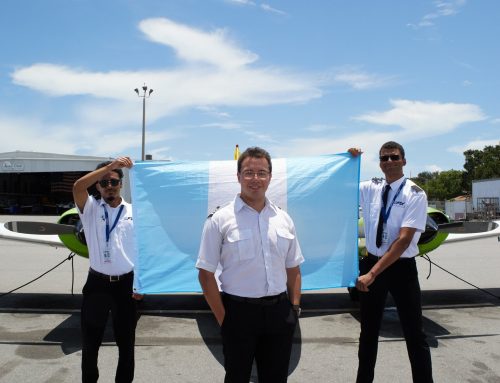
We address the specific needs of international candidates by providing robust visa sponsorship and administrative support. Many training providers ignore the logistical hurdles faced by global students, but our infrastructure is designed to facilitate a seamless transition to US-based training. Operating in a high-traffic aviation hub like Florida further enhances your development. You’ll encounter complex airspace and real-world traffic patterns daily, ensuring your technical mastery is tested in an environment that mirrors international airline hubs. This exposure prepares you for the realities of professional pilot mobility across different regions.
Comprehensive Career Support
Your journey doesn’t end with a certificate. It ends with a career. We leverage a global network of recruitment offices to connect our graduates with leading airlines. Our team provides specialized interview preparation and resume building, ensuring you present yourself as an industry-prepared professional. This career-centric approach transforms a zero to airline pilot program into a direct pipeline for employment. To see the full scope of our vocational support, Learn about the FAA Airline Pilot Program and how it serves as your gateway to the airlines.
Choosing Your Gateway to the Skies
Stability matters when choosing an elite institution. We have maintained a proven track record of excellence since 1994, providing a reliable foundation for your professional investment. This legacy of success ensures that your training meets the highest international regulatory standards. By combining US-based technical training with a focus on international career mobility, we prepare you for the highest levels of the profession. If you’re looking to combine your flight training with academic achievement, Explore our Degree Program with Airline Pilot Training to maximize your long-term rewards in the industry.
Secure Your Future in the Flight Deck
The journey from a novice to a commercial aviator requires more than just passion; it demands a structured environment that prioritizes technical mastery and vocational readiness. By choosing a comprehensive zero to airline pilot program, you align your training with the highest global standards while bypassing the inefficiencies of modular paths. You now understand how the combination of FAA and EASA standard training, paired with the stability of fixed-price tuition options, creates a reliable foundation for your international career.
Ready to take the first step toward your aviation career? Speak with a 2FLY Training Advisor today. Your professional future is waiting just beyond the horizon.
Frequently Asked Questions
How long does a zero to airline pilot program take?
A full-time zero to airline pilot program typically takes 10 to 12 months to complete all ratings through the Commercial Pilot Certificate. This timeline requires a disciplined, daily commitment to flight and ground school. Once you earn your instructor ratings, you’ll spend another 12 to 18 months building the 1,500 hours required for airline employment.
What are the medical requirements for becoming a commercial pilot?
You must secure an FAA First-Class Medical Certificate to qualify for an airline career. An Aviation Medical Examiner will evaluate your vision, hearing, and cardiovascular health to ensure you meet the physical demands of the profession. It’s best to obtain this certificate before starting your training to confirm you are medically eligible for the flight deck.
Do I need a college degree to join an airline pilot program?
A college degree is not a prerequisite for enrolling in flight training or working for regional airlines. While many major airlines previously required a four-year degree, many have now shifted to making it a preferred rather than mandatory qualification. You can complete your professional flight training first and pursue a degree later to maximize your career mobility.
What is the difference between Part 61 and Part 141 flight training?
Part 141 training follows a rigid, FAA-approved syllabus with frequent stage checks to ensure consistent progress. Part 61 offers a more flexible structure that can be tailored to an individual’s pace. Professional academies favor Part 141 because it provides the disciplined environment airlines expect and can reduce the flight hour requirements for certain certificates.
Can international students apply for pilot training in the USA?
International students are welcome to train in the USA provided they obtain the appropriate student visa, such as an M-1 or F-1. The academy provides the necessary I-20 documentation and administrative guidance to help you navigate the TSA and visa application process. This pathway allows you to earn FAA certifications that are highly valued by international carriers.
How do I build the 1500 hours required for an airline job?
Becoming a Certified Flight Instructor (CFI) is the most common and effective way to build the 1,500 hours required for an ATP certificate. This role allows you to gain valuable experience and earn an income while teaching others to fly. Other pathways include banner towing, aerial photography, or flying for small charter operations.
Are there financing options available for professional pilot training?
Financing options are available through various third-party lenders who specialize in aviation education loans. These programs often cover the entire cost of training and may offer deferred payment options while you are building hours. You should consult with an admissions advisor to review the specific lending partners and criteria currently available to students.
What happens if I fail a checkride during my training?
Failing a checkride is a temporary hurdle that requires additional training in the specific areas where you didn’t meet the standards. After your instructor verifies that you’ve reached proficiency, you’ll schedule a re-check with an examiner. While you should aim for a clean record, a single failure doesn’t end your career prospects if you demonstrate subsequent mastery.
Article by
2FLY Airborne
2Fly Airborne is a professional flight training organization dedicated to developing the next generation of skilled, confident, and safety-focused pilots. With decades of combined aviation experience, our team of certified instructors provides structured, real-world training designed to prepare students for both checkrides and long-term success in the aviation industry.
Content Disclaimer
Some blog content is generated with the assistance of automated tools and may not always be fully accurate or up to date. Please verify all aviation-related information with official sources or a certified instructor. For additional guidance or clarification, we encourage you to contact one of our training advisors at 2Fly Airborne.