
Choosing the cheapest flight training option today could be the most expensive mistake of your professional life. While saving money upfront is tempting, delaying your entry into the airline industry by even a few months can cost you hundreds of thousands in lifetime seniority and earnings. The path you select now dictates how quickly you will transition from the classroom to the cockpit of a commercial jet.
Most aspiring aviators feel torn between the flexibility of a neighborhood hangar and the rigorous intensity of a dedicated campus. It is natural to worry about whether you are overpaying for a brand name or risking your future on an unstructured schedule that lacks a clear pipeline to employment. Understanding the nuances of a flight academy vs local fbo is essential for anyone who views piloting as a high-stakes career rather than a weekend hobby.
This guide clarifies the debate by examining how each training environment impacts your timeline to the flight deck. You will discover which path prioritizes your professional mobility and which is better suited for recreational flying. We provide a clear framework to compare total investment against time saved, ensuring you have the confidence to launch your career on the right trajectory.
Key Takeaways
- Evaluate your long-term goals to decide if a flight academy vs local fbo provides the necessary structure for a professional career.
- Gain clarity on how Part 141 regulatory oversight ensures a more consistent and efficient training experience than flexible Part 61 routes.
- Analyze the true cost of training by weighing hourly rental rates against the financial protection of fixed-price tuition.
- Explore how immersive environments and global recruitment networks facilitate a seamless transition into your first commercial pilot role.
- Access a strategic checklist designed to align your training choice with the specific demands of the international aviation industry.
The Great Aviation Debate: Flight Academy vs. Local FBO
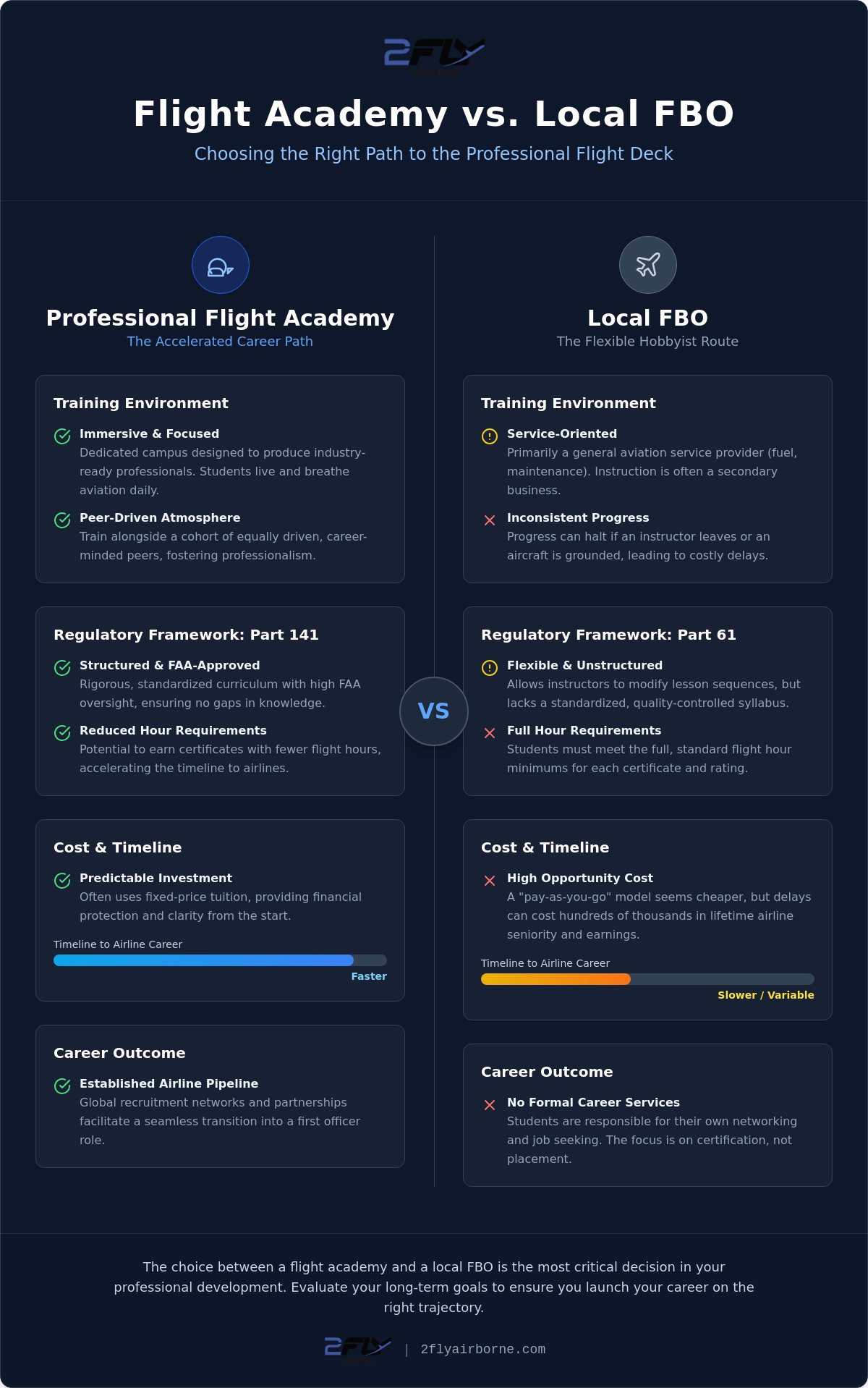
Many aspiring pilots begin their journey at the nearest airfield without considering the long-term implications of their training environment. You must decide early if you are training for a weekend hobby or a lifelong career in the airlines. This choice is the most critical decision in your professional development.
A Fixed Base Operator (FBO) is primarily a service provider for general aviation, offering fuel, hangar space, and occasional flight instruction. These facilities also serve as the operational base for private jet fleets; for example, you can check out Tavaero to see how executive charter services utilize these hubs. In contrast, a flight academy is a specialized educational institution designed to produce industry-ready professionals. Choosing between a flight academy vs local fbo dictates your professional trajectory from the very first hour in the logbook.
To better understand this concept, watch this helpful video:
The Local FBO: A Flexible, Individualized Approach
FBOs often appeal to students who need a pay-as-you-go model. This flexibility allows you to fly when your schedule and budget permit, which is excellent for obtaining a Private Pilot Certificate. To ensure you are training on modern equipment even in a flexible setting, you can explore Flight Training and Aircraft Rentals to find aircraft equipped with advanced Garmin Glass avionics. However, the airport’s primary revenue often comes from fuel sales and maintenance rather than student success.
Consistency is the greatest challenge at an FBO. If an instructor leaves for the airlines or an aircraft is grounded for maintenance, your progress stops. This environment is perfect for recreational flyers but often leads to frustrating delays for those seeking a commercial career path.
The Flight Academy: An Immersive Professional Pipeline
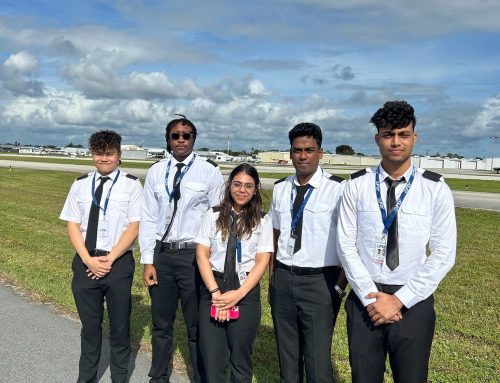
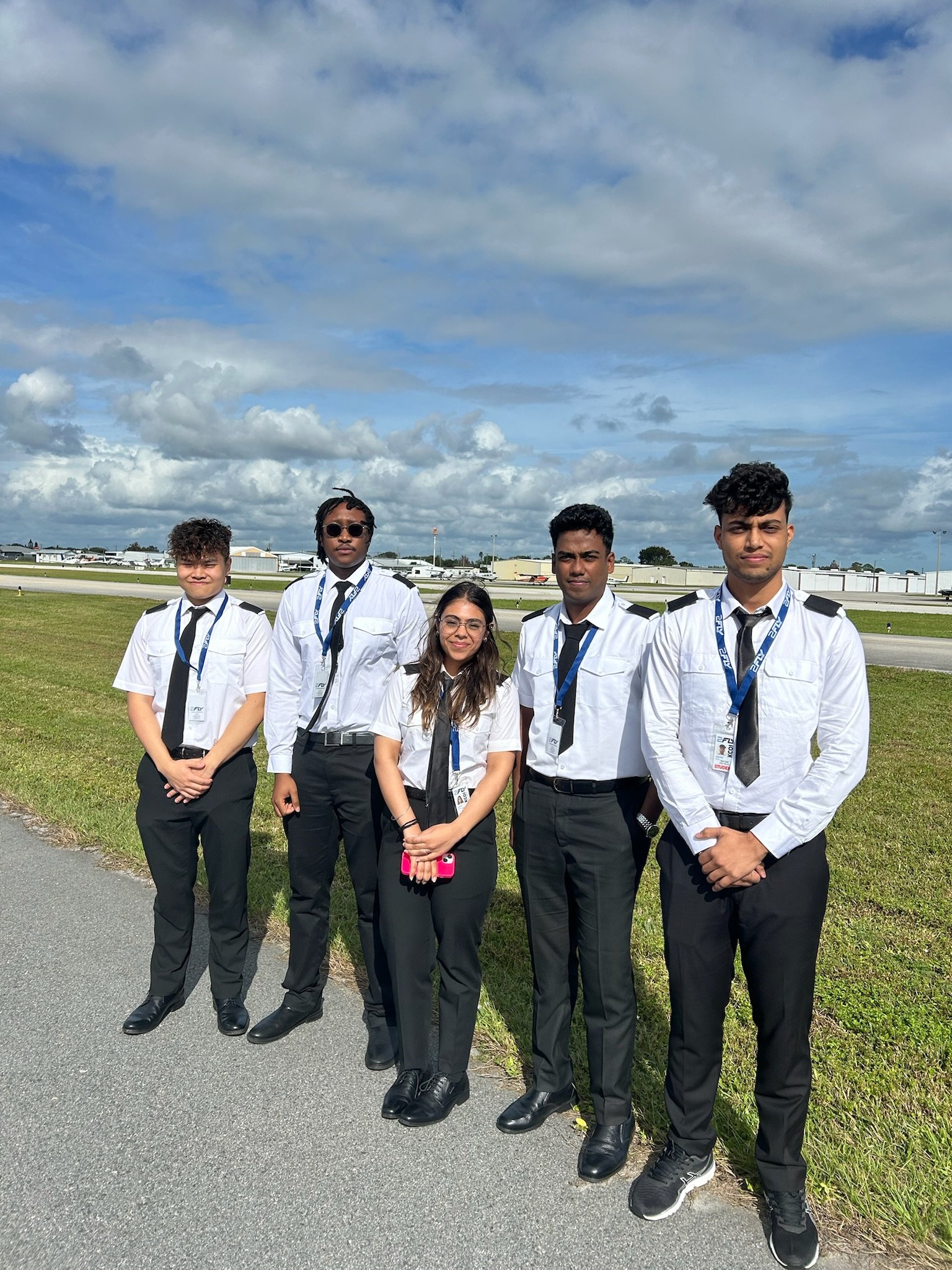
A professional academy offers a dedicated campus where every resource is focused on student outcomes. This immersive environment significantly reduces the re-learning time that occurs between sporadic lessons. When you live and breathe aviation daily, your technical mastery develops at an accelerated pace.
These institutions typically operate under a more rigid regulatory framework. Understanding the differences in Part 61 vs. Part 141 training is vital for career-minded students. Academies provide the psychological advantage of training alongside peers who share your drive for excellence and international mobility.
By surrounding yourself with professional instructors and state-of-the-art simulators, you prepare for the rigors of airline operations from day one. This structured approach ensures that you aren’t just learning to fly; you’re learning to work as a commercial pilot.
Part 61 vs. Part 141: Understanding the Regulatory Framework
Regulatory compliance is the backbone of aviation safety; it also defines how you will learn to fly. Every pilot school in the United States operates under either Part 61 or Part 141 of the Federal Aviation Regulations. While both paths lead to the same certificates, the training experience and speed of progression differ significantly. Part 141 training is an FAA-approved, structured curriculum with higher oversight designed to maintain rigorous educational quality.
The flexibility of Part 61 is its primary draw. It allows instructors to modify the lesson sequence based on a student’s individual needs. This sounds ideal for some, but it often leads to inconsistent progress for those on a professional pilot career path. Without a rigid schedule, training can easily stall due to weather, aircraft availability, or personal distractions. This lack of momentum is a common reason why students at local airfields take longer to finish than planned.
Airlines place immense value on standardized training protocols. They operate in a highly regulated environment where every procedure is scripted for safety. By training in a Part 141 environment, you demonstrate that you can thrive within a disciplined system. This structured syllabus ensures there are no gaps in your aeronautical knowledge, preparing you for the standardized world of commercial flight decks.
Part 141: The Gold Standard for Professional Training
One major advantage of Part 141 is the potential for reduced flight hour requirements. For instance, you can obtain a Commercial Pilot Certificate in as few as 190 hours, compared to the 250 hours required under Part 61. This efficiency is possible because the FAA trusts the academy’s oversight and curriculum. Stage checks serve as internal audits, ensuring you meet specific standards before moving to the next phase of training.
Academies like 2FLY Airborne utilize these stringent standards to produce airline-ready first officers. Prospective pilots often find that a structured FAA Professional Pilot Program provides the necessary oversight to stay on track. This environment mirrors the training you will eventually receive at a major carrier.
Part 61: The Freedom of the FBO
The freedom of an FBO can be a double-edged sword for career-seekers. While you can fly at your own pace, you are also responsible for your own momentum. Instructor turnover is a significant risk at smaller operations. If your instructor leaves for a regional airline, you might wait weeks to find a replacement, causing your skills to erode.
A Part 61 environment makes sense for recreational flyers or those who can only fly once a week. However, when comparing a flight academy vs local fbo for a professional career, the lack of a clear timeline often results in higher total costs over time. Speed and structure are the currencies of the modern aviation industry.
Comparing the Real Costs: Upfront Investment vs. Opportunity Cost
Many students focus exclusively on the hourly rental rate of a Cessna 172 at a local hangar. This is a common financial trap. When analyzing the choice between a flight academy vs local fbo, the sticker price rarely reflects the final investment required to reach the flight deck of a commercial airliner.
The real expense isn’t just the tuition; it’s the opportunity cost of lost time. Airline seniority determines your quality of life, your aircraft assignments, and your ultimate salary potential. Every month spent waiting for a replacement part or an available instructor at an FBO is a month of top-tier captain’s pay lost at the end of your career. The 2025 Boeing Pilot and Technician Outlook projects a demand for 660,000 new pilots globally through 2044. Entering this market as quickly as possible is a strategic financial move that far outweighs small savings on hourly rental rates.
Hidden Expenses at the Local Level
FBOs often present a “pay-as-you-go” model that seems manageable on a monthly basis. However, this flexibility comes with hidden costs that accumulate quickly. Consider these common factors that inflate the final bill at a local school:
- Variable Rates: Instructor fees and fuel surcharges often fluctuate, making it impossible to budget for the total program.
- Maintenance Downtime: Small operations with limited fleets can’t easily swap aircraft when mechanical issues arise, stalling your progress for weeks.
- The Re-learning Tax: Flying only once or twice a week forces you to spend the first 20 minutes of every lesson reviewing forgotten maneuvers.
This inefficiency often means FBO training takes 2-3 times longer than an accelerated academy program. What looked like a bargain initially becomes a prolonged and expensive hurdle.
The Academy Advantage: Predictability and Financing
Professional academies provide a level of operational predictability that local schools simply cannot match. By utilizing a fleet of standardized aircraft and multiple on-site simulators, academies minimize the impact of individual mechanical issues. You stay on a rigorous schedule that mirrors the training environment of a major carrier.
Fixed-price programs provide peace of mind in a volatile economy by protecting you from unexpected price hikes. High-achievers also benefit from structured financing options that make these intensive programs accessible. Investing in a professional pipeline allows you to treat your training like the high-stakes career move it is, rather than a part-time hobby.
Career Readiness and the Path to the Airlines
Earning your ratings is only half the battle. The final objective is a seat in a commercial flight deck, and the environment where you train often determines how quickly you get there. When comparing a flight academy vs local fbo, the most significant difference lies in the professional infrastructure surrounding the student. Academies are designed as employment pipelines, whereas FBOs are primarily service centers for existing pilots.
Airline recruiters prioritize efficiency. They frequently visit large academies because they can interview a high volume of candidates who have all been trained to a standardized, professional level. Local FBOs rarely see this level of direct industry engagement. By training at a high-profile institution, you gain access to an “invisible” network of mentors, alumni, and recruiters that simply doesn’t exist at a neighborhood hangar.
Transitioning from a student to a Certified Flight Instructor (CFI) is the standard way to build the 1,500 hours required for an Airline Transport Pilot certificate. Academies often provide a clear internal path for their top graduates to become instructors immediately. At an FBO, you are often left to find your own employment, competing with pilots from various backgrounds without a dedicated support system.
Building a Professional Network
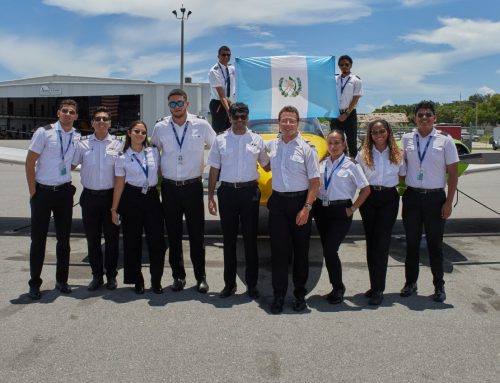
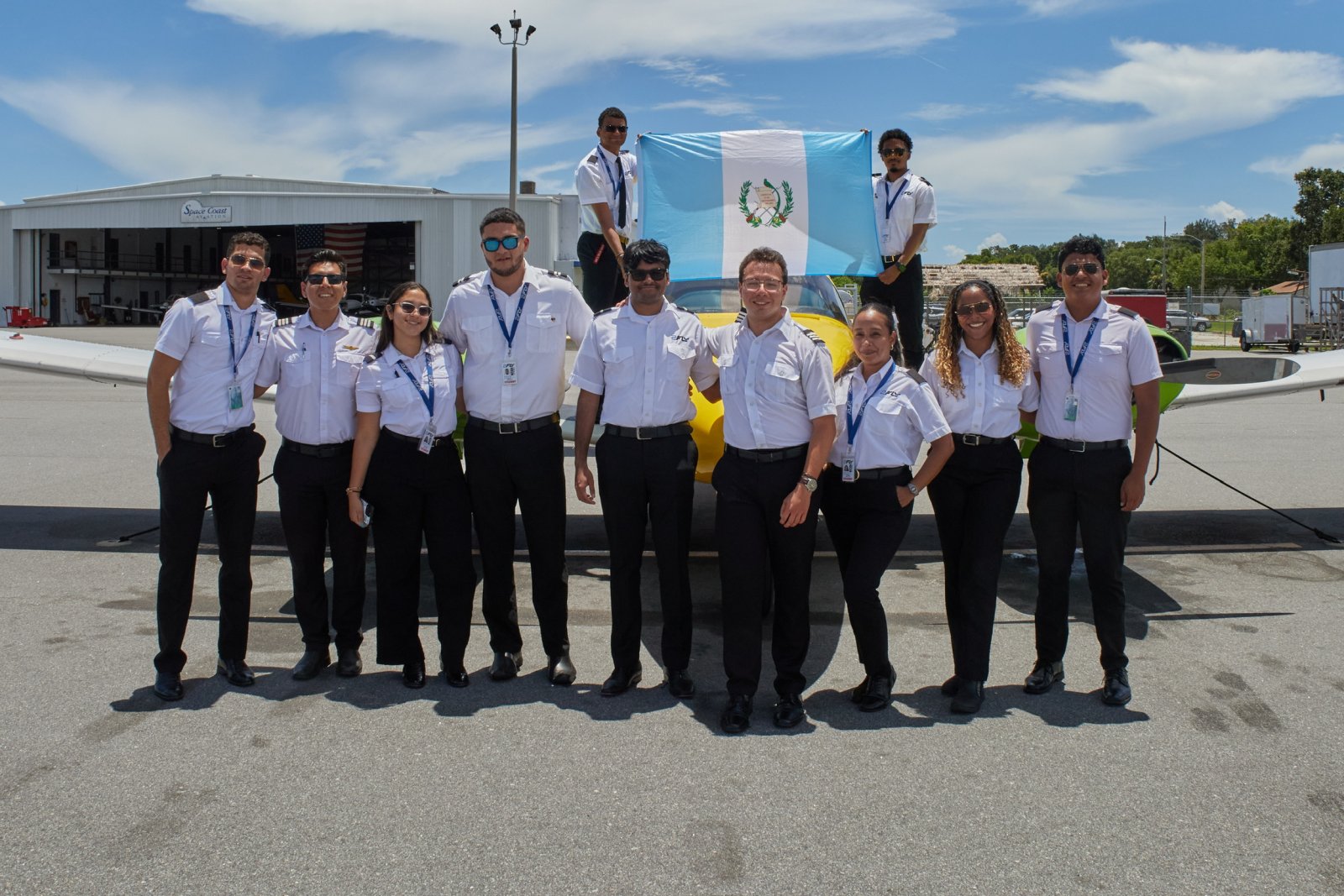
Your professional network begins on day one of your training. In a dedicated academy environment, you are surrounded by peers and instructors who are all focused on the same goal: an international aviation career. This shared ambition creates a culture of excellence and accountability that is hard to replicate in a more casual setting.
Career counseling is often integrated directly into the training syllabus. You don’t just learn how to land an aircraft; you learn how to pass an airline interview and manage a professional logbook. High-achievers looking for a clear route to the cockpit should explore the FAA Professional Pilot Program for specific career-track details.
International Mobility and Global Standards
Modern aviation is a global industry. Training in an environment that understands both FAA and EASA standards provides a massive advantage for those seeking international professional mobility. This global perspective ensures that your skills are recognized and valued by carriers across different regions, not just within your local area.
Global recruitment offices play a vital role in supporting students from diverse backgrounds. They understand the nuances of international certifications and help bridge the gap between training and employment. You can read more about how to become a pilot in today’s competitive global market to better understand these requirements.
If you are ready to move beyond basic flight training and start your journey toward a major carrier, apply for the FAA Professional Pilot Program today to secure your place in our next intake.
Making the Decision: Is an Academy Right for You?
Choosing between a flight academy vs local fbo isn’t just about where you learn to fly. It’s about how you want to enter the profession. If your goal is to sit in a commercial cockpit as soon as possible, you need an environment that mirrors that high-stakes reality. Your decision today dictates the pace of your career for the next decade.
Safe, structured training remains the most critical factor in long-term career success. While a local hangar might teach you the mechanics of flight, a professional academy instills the discipline required for international airline operations. This foundation is essential because the 2025 Boeing Pilot and Technician Outlook projects a demand for 660,000 new pilots globally through 2044. You must be prepared to meet that demand with technical mastery and professional readiness.
The transition from trainee to industry-prepared professional requires more than just logged hours. It requires a stable, world-class setting where you can focus entirely on your development. This focus protects your investment and ensures you don’t waste time on unstructured or inconsistent training schedules.
The Final Checklist for Aspiring Pilots
Before committing to a training path, evaluate your own goals and timeline using these criteria. High-achievers typically find that their ambitions align with the academy model. Consider these questions carefully:
- Timeline: Do you need to complete your training and certifications in under 12 months to maximize your seniority?
- Career Path: Are you seeking a direct, high-speed pipeline to a commercial airline career rather than recreational flying?
- Environment: Is an immersive, residential environment conducive to your learning style and professional focus?
If you answered yes to these, a structured academy is the correct route. The intensity of an on-campus program ensures you live and breathe aviation, which is essential for rapid skill acquisition and vocational preparedness.
Next Steps Toward the Flight Deck
Once you have chosen your path, the first step is to see the environment for yourself. Schedule a visit to a professional training facility to evaluate the fleet, meet the instructors, and speak with current students. This firsthand experience confirms whether the culture matches your drive.
Begin preparing your documentation early to avoid administrative hurdles. This includes your medical certificates, educational transcripts, and visa sponsorship paperwork if you are an international student. Having these ready prevents delays when you are eager to start your first module.
In summary, while local FBOs offer flexibility for hobbyists, professional academies provide the speed, networking, and regulatory structure necessary for a global career. Safe, immersive training is the definitive gateway to the airlines. Reach out to a 2FLY Training Advisor with any remaining questions about your professional journey.
Secure Your Future in the Flight Deck
Your professional trajectory depends on the foundation you build today. The debate of flight academy vs local fbo comes down to your ultimate goals. While local hangars offer casual flexibility, a dedicated academy provides the rigorous structure and speed required to reach the airlines efficiently. You’re choosing between a part-time hobby and a comprehensive career pipeline.
Leveraging Red Dot-level training facilities and a global recruitment network gives you a distinct advantage in a competitive market. Fixed-price tuition options ensure your focus remains on technical mastery rather than fluctuating costs. This immersive environment is the definitive gateway to an international career, transforming trainees into industry-prepared professionals.
Success in aviation requires discipline, passion, and the right mentorship. Speak with a 2FLY Training Advisor today to plan your career and begin your journey toward the cockpit. Please reach out to a 2FLY Training Advisor with any remaining questions you have about our professional programs.
Frequently Asked Questions
Is a flight academy better than a local FBO for airline careers?
A flight academy is generally superior for airline careers because it provides a structured, immersive environment that mirrors professional aviation standards. While FBOs are excellent for recreational flyers, academies offer specialized recruitment networks and a direct pipeline to employment. This career-focused approach ensures you develop the technical mastery and discipline required by major international carriers from your very first hour.
Can I work while training at a local FBO?
You can work while training at a local FBO, as these programs typically operate under flexible Part 61 regulations. This allows you to schedule lessons around your job or personal commitments at your own pace. However, training sporadically often leads to skill erosion and higher total costs because you must spend more time reviewing maneuvers during each session to maintain proficiency.
What is the cost difference between a flight academy and an FBO?
The cost difference often lies in the pricing structure rather than just the hourly rate. Local FBOs typically use a pay-as-you-go model with total costs ranging from $65,000 to $85,000, while large academies may charge approximately $96,995 for a complete career program. Academies often provide fixed-price tuition, which protects you from inflation and the hidden costs of maintenance delays common at smaller operations.
Do airlines prefer academy graduates over FBO-trained pilots?
Airlines do not have an official preference for one over the other; they prioritize your total flight hours, ratings, and interview performance. That said, recruiters frequently value academy graduates because they have thrived in a standardized, high-oversight environment. When comparing a flight academy vs local fbo, the academy background demonstrates that you are already accustomed to the rigorous training protocols used by major airlines.
How long does it take to become a pilot at an academy vs an FBO?
Full-time academy programs are designed to take you from zero experience to a commercial pilot in approximately 7 to 12 months. In contrast, training at an FBO often takes two to four years depending on your personal schedule and the airport’s aircraft availability. The choice of a flight academy vs local fbo significantly impacts your seniority, as finishing faster allows you to enter the airline job market sooner.
Are FBOs safer than flight academies?
Both environments must adhere to strict FAA safety regulations and maintenance standards to stay operational. However, flight academies operating under Part 141 often have higher levels of internal oversight and more standardized safety management systems. These institutions typically maintain a fleet of modern, standardized aircraft and utilize advanced simulators to enhance student safety during complex instrument and commercial maneuvers.
Can I get financial aid for flight training at an FBO?
It is generally more difficult to secure traditional financial aid or specialized student loans for training at a local FBO. Most lenders prefer to work with established flight academies that offer structured, career-track programs with proven graduation rates. Academies often have dedicated advisors who can help you navigate aviation-specific financing options that cover the entire cost of a professional pilot program.
Article by
2FLY Airborne
2Fly Airborne is a professional flight training organization dedicated to developing the next generation of skilled, confident, and safety-focused pilots. With decades of combined aviation experience, our team of certified instructors provides structured, real-world training designed to prepare students for both checkrides and long-term success in the aviation industry.
Content Disclaimer
Some blog content is generated with the assistance of automated tools and may not always be fully accurate or up to date. Please verify all aviation-related information with official sources or a certified instructor. For additional guidance or clarification, we encourage you to contact one of our training advisors at 2Fly Airborne.