Your training environment determines your professional success just as much as the aircraft you fly. Many aspiring pilots struggle with the logistical headache of securing short-term rentals from thousands of miles away. When you factor in the rising cost of student housing at florida flight schools, the search for a home often feels like a full-time job. You shouldn’t have to navigate complex leases and utility setups when you’re trying to master a multi-engine rating or study for your commercial pilot license.
This guide reveals how choosing a flight school with integrated housing creates a high-performance immersion zone that directly accelerates your training timeline. If your goal is to become a pilot, you’ll discover how living alongside fellow aviators eliminates isolation and maximizes your available study and simulator hours. We’ll explore the strategic benefits of company-managed residences and how they simplify the transition for students at an M1 visa approved flight school. Prepare to turn your living space into a professional launchpad for your global aviation career.
Key Takeaways
- Understand how an immersive residential environment accelerates your progress from a trainee to a professional pilot by fostering a 24/7 aviation mindset.
- Learn to evaluate the true cost of student housing at florida flight schools by comparing all-inclusive academy rates against the hidden expenses of independent rentals.
- Discover how company-managed housing simplifies the M-1 visa application process by providing a verified U.S. address and proof of stable living arrangements.
- Utilize our 5-step research checklist to verify essential amenities like high-speed internet and proximity to the flight line before committing to a program.
- Identify the strategic advantages of shared living spaces in building the teamwork and networking skills required for a successful international airline career.
Why Integrated Housing is a Strategic Tool for Professional Pilot Training
Living where you train isn’t just about convenience; it’s a strategic choice to live and breathe aviation. Total immersion means your education doesn’t stop when you leave the cockpit. By residing with fellow trainees, you’re constantly engaged in technical discussions that reinforce your ground school knowledge. This environment builds the mental discipline required to meet rigorous FAA pilot certification standards.
Eliminating “life friction” is essential for students enrolled in the FAA Professional Pilot Program. Searching for apartments from abroad or managing local utilities creates unnecessary stress during critical training phases. When you evaluate the cost of student housing at florida flight schools, consider the hidden price of lost study time. Integrated housing allows you to dedicate every ounce of energy to your flight training.
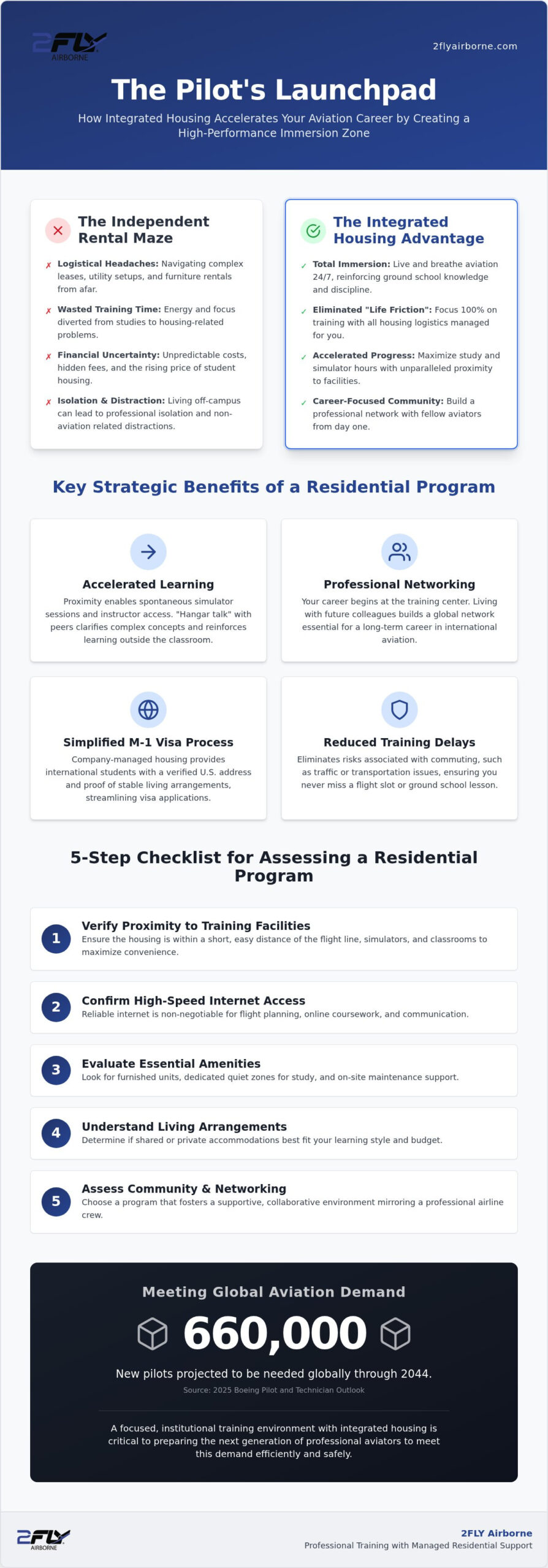
The industry is moving at a rapid pace, and trainees must be prepared to enter the workforce efficiently. The 2025 Boeing Pilot and Technician Outlook projects a demand for 660,000 new pilots globally through 2044. Meeting this demand requires a focused, institutional approach that only a dedicated training perimeter can provide. Living on-campus ensures you stay ahead of the curve.
The Impact of Environment on FAA Certification Success
Proximity to the flight line and training facilities facilitates spontaneous learning that isn’t possible when commuting. You can jump into a simulator for an extra hour or catch a flight instructor for a quick briefing without planning around traffic. “Hangar talk” with peers helps clarify complex maneuvers before you even step into the aircraft. This residential setup reduces the risk of training delays caused by transportation issues or off-campus distractions.
Building a Professional Network from Day One
Your career starts the moment you enter the training center, not when you receive your commercial pilot license. Living in a shared environment helps you establish lifelong connections with future airline colleagues across the globe. Airlines value graduates who have demonstrated the discipline of a structured, residential routine. This shared experience transitions you from a student to an industry-prepared professional ready for the demands of international aviation.
Evaluating Student Accommodation Types: Shared vs. Private Living
Choosing the right living arrangement is a tactical decision that influences your daily performance and training rhythm. Flight school housing typically ranges from shared apartment-style suites to private residential units. While the cost of student housing at florida flight schools is a primary consideration, your choice should align with your specific learning style and professional needs. Each configuration offers distinct advantages for candidates pursuing an airline career.
Shared housing stands as the most common choice for those looking to foster teamwork and reduce individual expenses. It mirrors the collaborative nature of a professional flight deck, where communication is paramount. For mature students or those requiring a secluded study environment, private accommodations offer the necessary quietude for intense focus. Regardless of the layout, every unit must provide high-speed internet for flight planning and dedicated quiet zones for rest.
Before making your selection, you should consult with a training advisor to explore current availability and residential layouts that fit your goals.
Shared Apartment Suites and Collaborative Learning
Living with roommates who share your career goals creates a built-in network of support and accountability. These shared spaces facilitate group study sessions that are invaluable when preparing for difficult certifications like the Instrument Rating (IR). Beyond the academic benefits, sharing a suite provides significant cost-sharing advantages for utilities and maintenance. This allows you to allocate more of your budget toward flight training and certification fees.
Furnished Housing for International Aviators
International students benefit most from a “Suitcase Ready” approach that minimizes logistical delays upon arrival. Arriving with only personal belongings ensures you can start your training immediately without the distraction of setting up a new household. Standard furnished units include linens, kitchenware, and essential furniture to facilitate a seamless transition into the flight school environment. This turnkey solution is vital for students on a fixed-duration M-1 visa who need to maximize their time in the United States.
Comparing On-Campus Housing and Independent Rentals: A Financial Analysis
Analyzing the true cost of student housing at florida flight schools involves a side-by-side look at academy fees versus the open market. Integrated housing typically provides a fixed, all-inclusive rate that simplifies your monthly budgeting. Independent rentals, by contrast, expose you to the volatility of the Florida real estate market where average rents in 2026 can fluctuate significantly. Choosing an academy-managed unit eliminates the financial surprises that often derail a student’s training budget.
Time is your most valuable asset during flight training. Living on-campus can save you over 40 hours a month in commuting time alone. This recovered time allows for deeper immersion in ground school and more frequent access to flight instructors. It’s a direct investment in your speed of progression through the FAA Professional Pilot Program.
Flight training schedules shift constantly due to weather patterns and aircraft availability. Academy housing offers the flexibility to adapt to these changes without the stress of a long commute. Being steps away from the briefing room ensures you never miss a training opportunity. This agility is essential for completing your certifications within your planned timeline.
Administrative support is another major differentiator. A dedicated housing coordinator manages your living arrangements, allowing you to focus exclusively on your flight ratings. Managing a private landlord involves legal complexities, such as Florida’s 30-day termination notice requirements. On-campus residents avoid these hurdles, benefiting from a system designed specifically for the pilot’s lifestyle.
Beyond the Monthly Rent: Hidden Costs of Off-Campus Living
Security deposits and connection fees for water and electricity are rarely mentioned in basic rent advertisements. Off-campus students often pay short-term lease premiums that can increase monthly costs by 20 percent or more. For a comprehensive breakdown of these variables, review our flight school cost guide. You must also account for the financial burden of owning a car, including insurance and maintenance, which integrated housing often makes optional.
Safety and Administrative Support for Student Pilots
Safety and security are non-negotiable for students training in a new country. Standardized living conditions ensure your environment meets international training partner requirements. Company-managed residences feature professional maintenance teams and secure access points. This level of oversight provides peace of mind for both the student and their family. It allows you to maintain the high level of discipline required for a career in global aviation.
How to Assess Residential Programs: A 5-Step Research Checklist
Selecting the right academy requires more than just reviewing flight hours; it demands an evaluation of the infrastructure supporting your journey. When you analyze the cost of student housing at florida flight schools, you must look beyond the monthly rate to see the operational value provided. Use this methodical 5-step checklist to ensure your training environment is a professional launchpad rather than a logistical hurdle.
- Step 1: Verify proximity to training facilities. Your residence should be within the training perimeter to eliminate commute times and maximize access to flight lines.
- Step 2: Review the inclusion of utilities and high-speed internet. Reliable connectivity is a critical tool for flight planning and ground school modules; it shouldn’t be an extra expense.
- Step 3: Confirm the availability of furniture and essentials. Ensure the unit is “suitcase ready” with kitchenware and linens so you can begin training on day one.
- Step 4: Inquire about roommate matching processes. Professional academies match students based on their training stage to foster a goal-oriented living environment.
- Step 5: Evaluate support for visa-related residential documentation. For international students, having a pre-arranged U.S. address is vital for a smooth M-1 visa interview.
If you’re ready to see how an immersive environment can transform your training, review our FAA Professional Pilot Program details to explore our residential options.
Verifying Proximity and Essential Amenities
Reading a program quote requires a sharp eye for detail. You must distinguish between a housing “stipend” and “guaranteed placement.” A stipend is a cash allowance that leaves you vulnerable to the competitive Florida rental market; guaranteed placement ensures you have a dedicated bed in academy-managed housing. Don’t forget to ask about onsite laundry facilities and recreational areas, as these amenities support the mental health and stamina required for full-time training.
Understanding Roommate Matching and Community Culture
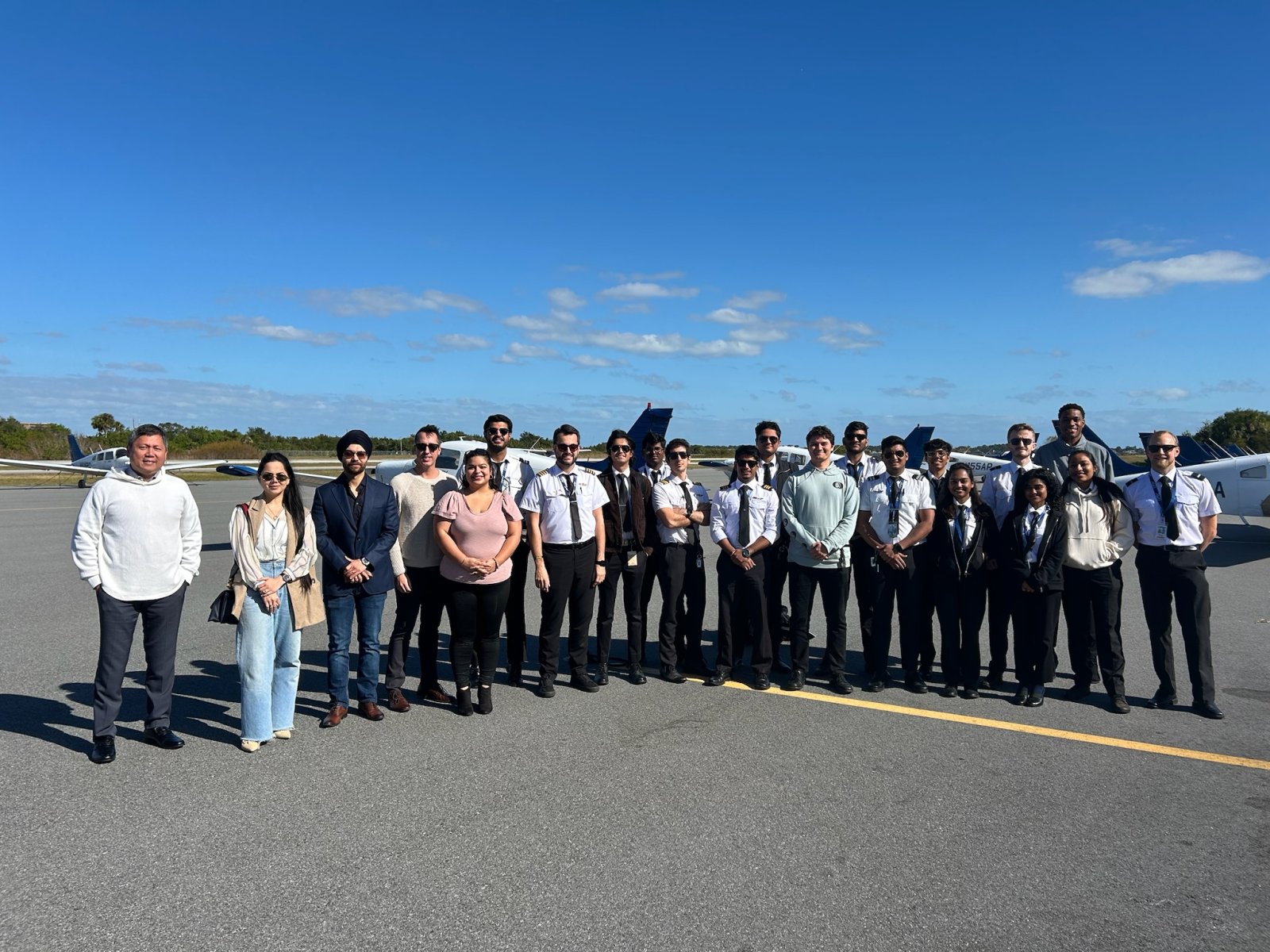
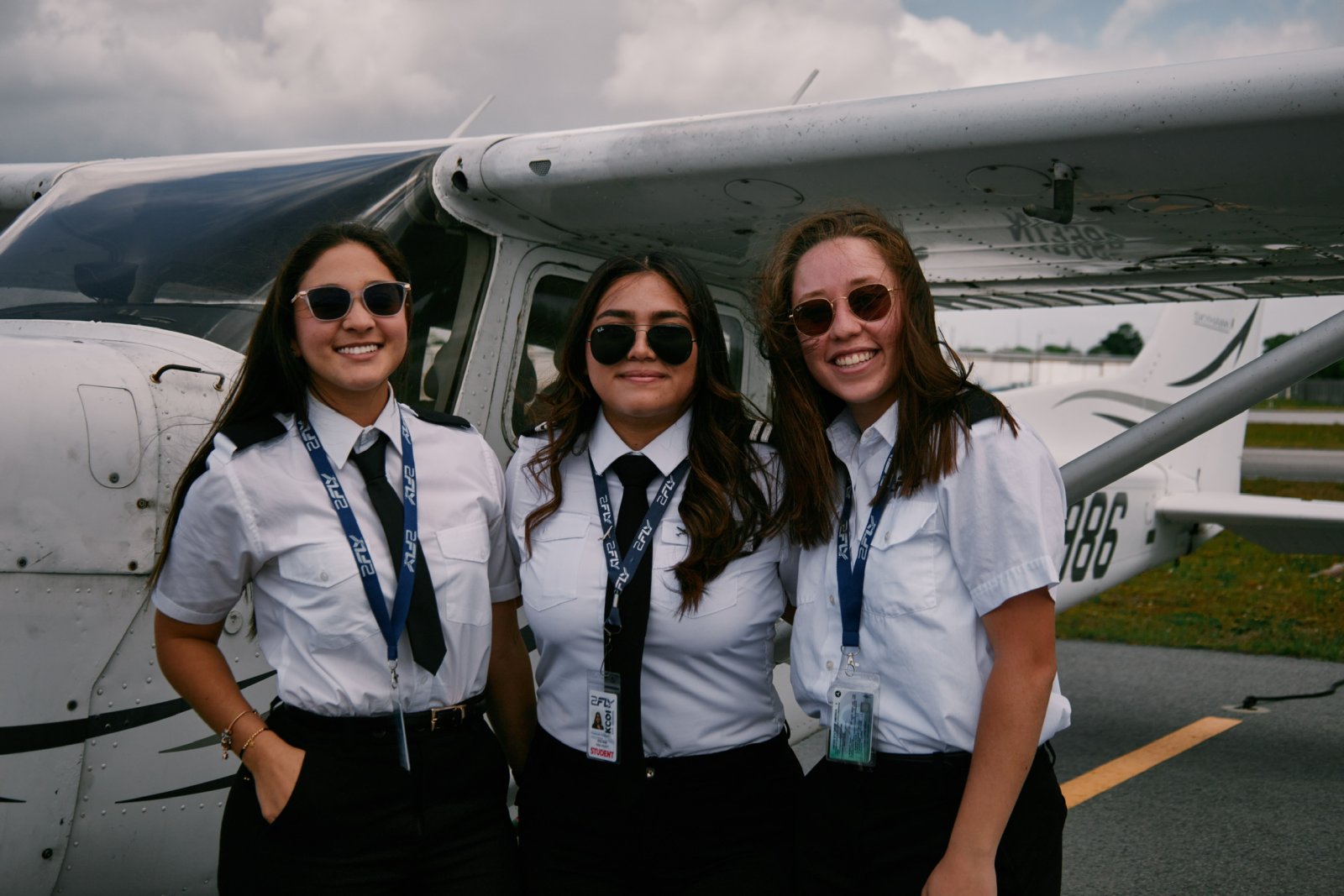
Your success in the FAA Professional Pilot Program is often influenced by your social circle. Living with peers who share the same rigorous schedule creates a “cockpit culture” of shared accountability and technical exchange. Elite training centers maintain a professional atmosphere within residential areas to mirror the discipline required by major airlines. This balance of community and focus ensures that your social life supports, rather than distracts from, your ground school and flight hours.
2FLY Airborne: Professional Training with Managed Residential Support
At 2FLY Airborne, we’ve designed our residential experience specifically for the career-focused aviator. We understand that your focus must remain on the flight deck, not on managing household logistics. By providing company-managed housing, we ensure that the cost of student housing at florida flight schools is a transparent part of your professional development plan. This integrated approach allows you to transition seamlessly from a trainee to an industry-prepared professional.
Our administrative team provides comprehensive support for M-1 and F-1 visa holders. We handle the complexities of SEVIS registration and provide the necessary residential proof required for your visa interview. This level of oversight ensures that international students remain in full compliance with all U.S. regulations throughout their stay. You can focus on mastering your commercial pilot license while we manage the administrative details of your residency.
Positioning yourself within a dedicated training perimeter is the definitive gateway to an international aviation career. Our facilities are designed to foster the discipline and technical mastery required by the world’s leading airlines. We don’t just provide a place to sleep; we provide an environment where your professional identity begins to take shape.
Streamlining Logistics for International Students
Arriving in a new country to start flight training can be a daunting experience. 2FLY Airborne simplifies this transition by offering ready-to-move-in apartments that are fully equipped for your arrival. Our global network of recruitment offices works closely with you to prepare for life at the academy long before you board your flight. This proactive preparation ensures that you hit the ground running the moment you arrive on campus.
Compliance with visa-related housing regulations is a top priority for our administrative staff. We ensure your stay is worry-free by managing all residential documentation and reporting requirements. This structured support system allows you to maintain the high level of focus needed for advanced pilot certifications. You’ll find that our managed housing model eliminates the common stressors associated with international relocation.
Accelerating Your Journey to the Commercial Cockpit
High-achievers aiming for major airlines prefer our residential model because it fosters a culture of excellence. Living among peers creates a mentor-student environment that is difficult to replicate in an off-campus setting. When you evaluate the total cost of student housing at florida flight schools, the value of this immersive networking cannot be overstated. Our fixed-price tuition options can include residential fees, which significantly simplifies the process of financing your training.
Choosing an academy that manages your living environment is a strategic investment in your future. It eliminates the variables of the local rental market and provides a stable, world-class setting for your development. Reach out to a 2FLY Airborne Training Advisor today to discuss current housing availability and our upcoming program start dates.
Secure Your Future in the Professional Cockpit
Your success in professional aviation depends on a training environment that mirrors the discipline of the airline industry. Choosing integrated housing removes the logistical friction of short-term leases and long commutes. This approach allows you to dedicate every hour to your ground school and flight training alongside a community of driven peers. It’s a strategic move that transforms your living space into a 24/7 learning center.
When you calculate the total cost of student housing at florida flight schools, the value of a “suitcase ready” apartment and constant aviation immersion provides unmatched financial and academic certainty. Our academy offers a stable foundation with FAA and EASA compliant training standards and state-of-the-art flight simulators on-site. This comprehensive support system allows you to focus exclusively on your technical mastery and safe, structured training.
Take the first step toward a global aviation career today. We encourage you to speak with a 2FLY Training Advisor about our residential programs. If you are ready to begin or have any specific concerns, please reach out to a 2FLY Training Advisor with questions.
Frequently Asked Questions
Is student housing included in the flight school tuition fees?
Student housing is typically billed as a separate residential fee, though it can be integrated into certain fixed-price tuition packages. At 2FLY Airborne, we offer options that bundle these costs to simplify your financial planning. This ensures you have a guaranteed bed without the hassle of navigating the local rental market. Always review your training quote to confirm if housing is included or listed as an optional add-on for your specific program.
What kind of furniture and amenities are provided in the housing?
Our residential units are provided fully furnished to ensure you can begin your training immediately upon arrival. Standard amenities include essential furniture, linens, and kitchenware, creating a “suitcase ready” environment for domestic and international students. We prioritize quiet study zones and high-speed internet to support the rigorous demands of ground school. These facilities are designed to foster the professional discipline required for a successful career in the global aviation industry.
Can international students stay in flight school housing on an M-1 visa?
Yes, international students are encouraged to utilize academy housing while training on an M-1 visa. Pre-arranged housing simplifies the visa interview process by providing a verified U.S. address and proof of stable living arrangements. We assist with SEVIS registration and provide the necessary residential documentation to ensure full compliance with immigration regulations. Staying on-campus at an M1 visa approved flight school allows you to focus entirely on your pilot certifications.
Do I need a car if I live in on-campus student housing?
You don’t necessarily need a car if you choose on-campus housing located within the training perimeter. These residences are situated within walking distance of flight lines, simulators, and briefing rooms. This proximity eliminates the need for a daily commute and reduces the overall cost of student housing at florida flight schools. Many students find that living on-site allows them to maximize their study hours while avoiding the expenses of vehicle insurance and maintenance. For those planning group excursions or when families visit, Phoenix Bus Orlando offers a seamless solution for professional group transportation across the state.
We recommend booking your residential placement at least three to four months before your intended start date. High demand for professional training programs means that on-campus housing often fills up quickly. For international students, securing housing early is a critical step in the visa application timeline. Early coordination with a training advisor ensures that your transition into full-time training is seamless and that your preferred accommodation type is available upon arrival.
Are utilities like internet and electricity included in the housing cost?
Utilities such as high-speed internet, electricity, and water are almost always included in the flat monthly rate for academy-managed housing. This transparency helps you manage the cost of student housing at florida flight schools without worrying about fluctuating monthly bills. Having reliable internet is essential for accessing digital training modules and conducting flight planning. By bundling these services, we remove the administrative burden of setting up accounts with local utility providers.
Can I choose my roommates in shared flight school housing?
Roommate assignments are managed by our housing coordinator to ensure a professional and supportive living environment. We match students who are at similar stages of their flight training to foster a “cockpit culture” of shared learning and accountability. While you can’t always choose specific roommates, you’ll be living with fellow aviators who share your career goals and rigorous schedule. This collaborative atmosphere is a key component of our immersive professional training model.
What happens to my housing if my flight training takes longer than expected?
If your training timeline shifts due to weather or aircraft availability, our administrative team works with you to extend your housing stay. We understand that flight training doesn’t always follow a linear path, and our managed housing model offers the flexibility needed for such adjustments. This is a significant advantage over private rentals, which often involve rigid lease terms and termination penalties. We ensure you have a stable environment until you complete your certifications.

Article by
2FLY Airborne
2Fly Airborne is a professional flight training organization dedicated to developing the next generation of skilled, confident, and safety-focused pilots. With decades of combined aviation experience, our team of certified instructors provides structured, real-world training designed to prepare students for both checkrides and long-term success in the aviation industry.
Content Disclaimer
Some blog content is generated with the assistance of automated tools and may not always be fully accurate or up to date. Please verify all aviation-related information with official sources or a certified instructor. For additional guidance or clarification, we encourage you to contact one of our training advisors at 2Fly Airborne.