
A pilot comparing rental offers may find that the lower hourly figure doesn’t tell the whole story. With a dry rental, fuel is charged separately from the aircraft, so the total depends on more than the listed rate.
Aircraft type, block commitment, billing method, and fuel costs all affect the total. Compare these terms, understand any eligibility requirements, and consider how each rental option fits your flight-hour goals and certification plan.
Key Takeaways
- Compare solo and shared-time options alongside block sizes; a lower hourly rate can require a larger minimum commitment.
- Budget separately for fuel on dry rentals, and include local fuel costs when estimating the full cost of building hours.
- Check whether flight time is billed by Hobbs or tach time, since the meter used can affect the hours charged.
- Read the rental terms for block deadlines, cancellation policies, insurance coverage, and how delays are handled.
- Connect your hour-building plan to your next certification step, then explore structured training options that fit your goals.
Discounts and eligibility for flight-hour building
Block-hour discounts reduce the listed aircraft rate in exchange for a minimum flight-time commitment. You pay for the minimum hours in the selected block even if you fly fewer. Before choosing a package, compare its commitment with your schedule, budget, and remaining training hours.
For airline-pilot planning, the FAA states that commercial pilots must accumulate a minimum of 1,500 flight hours before obtaining an Airline Transport Pilot certificate. This is a total-hour milestone, not a blanket rule that every rented hour counts toward every certificate or qualification. Keep the flight’s purpose and your intended license or rating in view as you plan.
Listed Cessna 150 solo rates illustrate how block size changes the hourly charge. These rates were effective December 2024.
Block terms also determine how long you have to use the hours. Rates apply to six hours per day, and the block must be flown within the period stated in the rental agreement. An extension may be approved for mechanical or weather delays. If you have limited weekly availability, compare the deadline with the pace at which you can realistically fly before selecting a large block.
To estimate the cost per productive flight hour, divide the block payment by the hours you expect to fly, then add fuel separately. A low hourly rate may not be worthwhile if scheduling constraints keep you from using the committed time. Shared-time arrangements also require coordinating with another pilot, so compare your per-pilot cost with the solo option and the hours you can realistically complete.
Plan toward a stated target, such as a 250-hour time-building goal, by estimating available flying days and the block’s daily limit. A larger discount only helps when you can use the hours within the contract period. Compare aircraft, block size, shared-time conditions, and deadline together before committing.
Aircraft rental rates and fuel inclusion
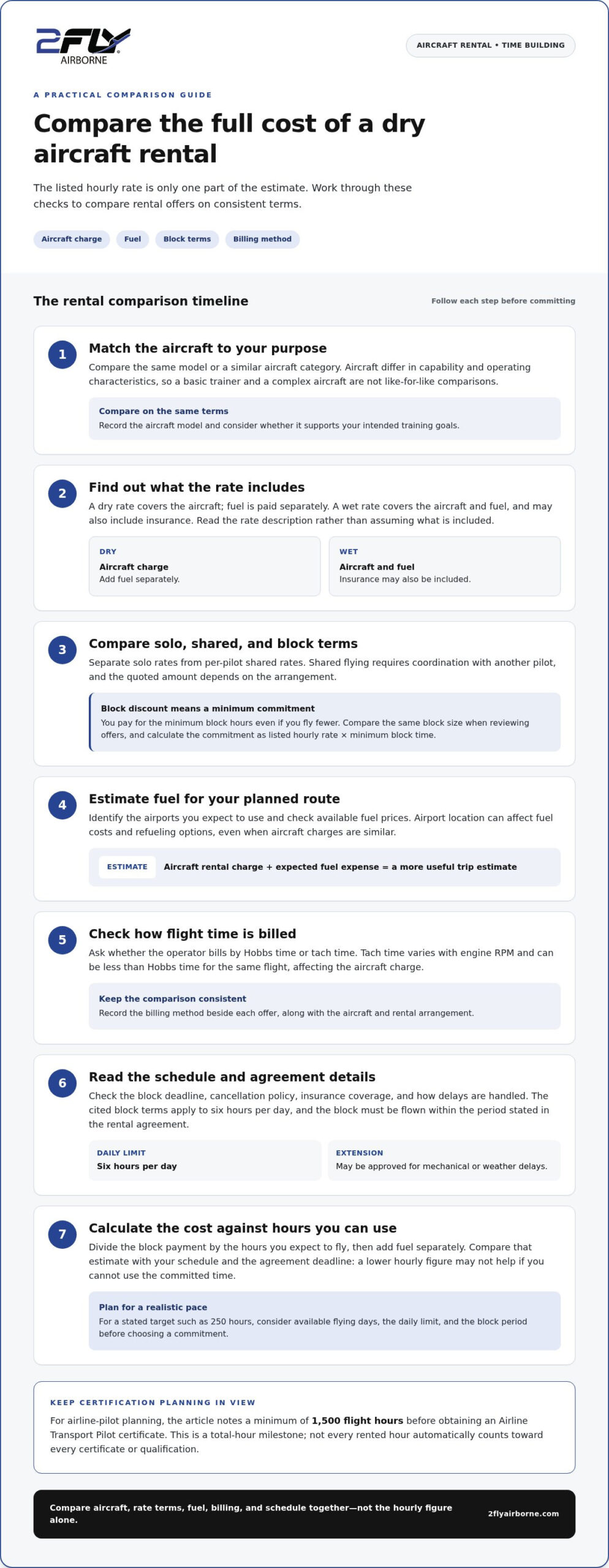
Dry rental rates cover the aircraft, while fuel is paid separately. When comparing dry aircraft rates for time building, include both the rental charge and the fuel bill.
Typical U.S. Dry Rental Rates
Treat listed rental rates as examples, not as a national average. Compare aircraft type, block size, and solo or shared arrangements on the same terms. The published hourly figure covers only the aircraft charge under its stated conditions, not the full cost of a flight.
To estimate fuel costs, identify the airports on your planned route and the fuel prices available there. Add the expected fuel expense to the rental charge for a more useful estimate of your own flying than the advertised hourly rate alone.
Rate Differences by Aircraft and Location
Aircraft model affects the rate because aircraft differ in capability and operating characteristics. Compare similar aircraft for your intended purpose, then consider whether each model supports your training goals. A complex aircraft and a basic trainer are not like-for-like comparisons.
Airport location affects fuel costs and refueling options. Compare the airports you expect to use, including fuel access and prices. Rentals with similar aircraft charges can have different totals once fuel is added.
The difference between dry and wet rates is essential to a fair comparison. A dry rate covers the aircraft, with fuel paid separately. A wet rate covers the aircraft and fuel, and may also include insurance. Read each rate description to see what it includes before comparing figures.
Build a simple estimate for each rental option:
- Record the aircraft model and listed rental charge.
- Note whether the rate is dry or wet, and what it includes.
- Estimate fuel spending using the airports on your planned route.
- Add the aircraft and fuel amounts to compare the expected total.
The time-measurement method can also affect the aircraft charge. Some operators bill by tach time, which varies with engine RPM and can be less than Hobbs time for the same flight. Include the billing method in your estimate so you compare each option on a consistent basis.
A side-by-side comparison of dry aircraft time-building rates should include the aircraft, fuel arrangements, airport, and billing method. Check the rental agreement for other included items or charges. Reviewing these details helps you estimate the likely total before committing to a rental.
Competitor time-building rates
Comparing airplane rental rates means looking beyond the first hourly figure. Published market examples effective December 2024 show different prices by aircraft, block size, and whether pilots fly solo or share time. Use those listings as comparison points, not as a single standard rate for every rental.
These figures describe different arrangements. Compare like with like before deciding which aircraft rental fits your plan.
A shared rate is not directly comparable to a solo rental rate. The number of pilots sharing the flight and the minimum block commitment both affect what the quoted hourly amount means for your spending.
Use a consistent checklist when reviewing competitor offers:
- Match the aircraft. Compare the same model or a similar aircraft category, rather than placing a Cessna 152 beside a complex airplane.
- Match the arrangement. Separate solo rates from per-pilot shared rates.
- Match the block. Compare the same commitment, such as a 50-hour block with another 50-hour block.
- Record the effective date. The examples above were effective December 2024, so retain that date when assessing them.
- Calculate your actual commitment. Multiply the listed hourly rate by the minimum block time, even if your expected flying is lower.
A lower rate may not mean a lower total if its block requires more hours than you can use. If you can fly only occasionally, weigh the minimum purchase and agreement period alongside the hourly figure. A shared option may lower each pilot’s listed charge, but it requires coordinating the flight with another pilot.
Create a side-by-side table showing aircraft, solo or shared status, block hours, hourly rate, fuel arrangement, billing method, and contract period. Estimate the cost using the hours you can realistically fly, rather than assuming you’ll use the block’s full allowance. This helps distinguish a genuine rate advantage from a low headline figure tied to a larger minimum.
Keep rental prices separate from other flight-training expenses. A time-building rental quote describes aircraft use under its stated terms; it does not automatically include instruction or other services. Compare included items and exclusions so your budget reflects the aircraft, required commitment, and planned flying.
Questions to ask when comparing rates
Review the rental agreement as carefully as the aircraft’s hourly charge. Comparing terms side by side helps clarify what you’ll pay and what the operator expects.
Finding and Comparing Local Rentals
Look for dry rental options at airports you can reasonably use. Record each aircraft model, hourly rate, billing method, fuel arrangement, minimum block, and agreement period. Comparing dry aircraft time-building rates on these terms shows whether the offers are genuinely comparable.
Estimate the total by adding expected fuel costs and accounting for minimum billable time. A lower hourly rate may require a larger commitment than your schedule allows. Base your comparison on hours you can realistically fly, not on the assumption that you’ll use every hour in a block.
Rental Hour Measurement
Ask whether the operator bills by Hobbs time, tach time, or another defined measure. A Hobbs meter typically runs while the engine operates, including during taxiing, run-up, and idling. Tach time varies with engine RPM and can be lower than Hobbs time for the same flight.
Block time describes the aircraft’s movement under its own power, from its initial movement through taxiing to parking at the destination. It is not automatically the measure used for rental billing. Ask which time determines the invoice and how it relates to the time recorded in your pilot logbook.
Risks and Contract Restrictions
Review the agreement for cancellation terms, insurance coverage, minimum charges, and restrictions on using block hours. You pay for the selected minimum even if you fly fewer hours. The agreement may also specify a use period and extension terms for mechanical or weather delays. While operators depend on ongoing maintenance and non-destructive testing protocols—such as inspection services outlined at internationaltestingservices.com—to keep equipment airworthy, renters should verify how scheduled downtime is handled under their block contract.
Ask what insurance the rental includes and what coverage or checkout you must provide. Pilot qualifications and checkout requirements depend on the aircraft and the operator’s rental terms. Clarify these points before scheduling so you understand eligibility and insurance responsibilities before flying.
Use this checklist to compare each rental:
- Record the aircraft model, rate, fuel terms, and minimum block.
- Identify the billing method and which time it counts.
- Review the agreement period, cancellation policy, and delay provisions.
- Note insurance coverage, pilot qualifications, and checkout requirements.
Compare the complete terms, not just the headline rate. If long taxiing or ground idling is likely, tach-time billing may cost less than Hobbs-time billing. A useful comparison reflects the actual agreement, your planned flights, and the schedule you can maintain.
What are typical dry aircraft rental rates in the United States?
U.S. dry rental examples vary by aircraft, block size, and whether time is shared. The listed figures below were effective December 2024; they are specific market examples, not a single national rate.
Compare the same aircraft and block size where possible, since these examples differ on both points.
Aircraft capability also affects the listed solo rate. These examples show why you need to consider the model and block together.
Use the rates as benchmarks, then calculate the commitment behind each one:
- Multiply the listed hourly charge by the block’s minimum hours.
- Separate solo rates from per-pilot shared-time rates.
- Add fuel separately when the rental is dry.
- Record the rate’s effective date alongside the aircraft model.
Multiply the listed hourly rate by the block minimum to find the aircraft commitment before fuel. This makes the headline rate easier to compare with one tied to a different block.
Location affects the total through fuel prices and available refueling airports. A dry rate covers the aircraft, while you pay for fuel separately. Compare the aircraft charge and local fuel costs together, rather than treating the listed hourly rate as the full cost of flying.
Billing method matters, too. A rental billed by tach time may have fewer billable hours than one billed by Hobbs time for the same flight. Include the operator’s time-measurement method in your comparison. Otherwise, similar hourly rates may produce different totals.
Check how the block agreement handles its minimum and use period. A lower rate may be a poor fit if your schedule prevents you from flying the committed hours. Compare the aircraft, block, fuel arrangement, billing basis, and contract terms before choosing a rental. These examples provide a dated reference point for comparison, not a guarantee of rates at every U.S. airport.
2FLY Airborne: FAA Professional Pilot Program
2FLY Airborne’s FAA Professional Pilot Program provides a structured path through key pilot certifications. It may suit aspiring pilots who want to plan flight training beyond aircraft rental and connect each stage to a professional goal.
The program includes training toward the Private Pilot Certificate (PPL), Instrument Rating (IR), and Commercial Pilot Certificate (CPL). These milestones develop skills progressively, from foundational flight operations to instrument procedures and commercial-level preparation. Consider this pathway if building hours is part of a broader certification plan, rather than a stand-alone rental decision.
Review the training stages alongside your experience, certification objectives, and expected approach to hour building. For questions about the FAA Professional Pilot Program or its training pathway, contact 2FLY Airborne or visit 2flyairborne.com.
Turn Your Hour-Building Plan Into a Career Path
Make rental decisions part of a broader flight-training plan. The hours you build should support the pilot certifications you’re pursuing, while keeping your schedule and budget realistic. A clear plan for time-building dry aircraft rental rates can connect aircraft use with your next training milestone.
2FLY Airborne’s FAA Professional Pilot Program connects structured training with the Private Pilot Certificate (PPL) and Instrument Rating (IR). Consider how these stages fit your goals and what skills you want to develop next. Safe, consistent progress comes from pairing sound planning with disciplined preparation in the cockpit.
Take the next step by discussing your training direction with 2FLY Airborne. Contact 2FLY Airborne about time building and move forward with purpose toward your aviation goals.
Frequently Asked Questions
How much does time-building cost?
The total depends on the aircraft rental rate, billable hours, fuel, and any charges assigned to the renter. To estimate your budget, multiply the applicable hourly rate by expected billable hours, then add fuel and contract charges. Use the billing method in your plan, not just the time you expect to spend airborne. A block commitment may also affect the total if you fly fewer hours than the required minimum.
How quickly can I get 50/100/200 hours?
At a pace of six flown hours per day, 50 hours takes at least 9 flying days, 100 takes 17, and 200 takes 34. These are arithmetic minimums, not calendar schedules. Aircraft access, weather, maintenance, and the rental agreement’s use period affect how quickly you complete the hours. Build your schedule around realistic flying opportunities and leave room for days when a planned flight can’t proceed.
Which aircraft are available for time-building?
Market rate examples include Cessna 150 and 152 aircraft, Piper PA-38s, Warrior PA-28-151/161s, and Cessna 172 L/M/P models. The examples also include a technically advanced Cessna 172P and a complex PA28R-200. Choose based on the experience you’re building and the aircraft category relevant to your next training goal. Compare the same model or category when reviewing rental terms.
What is dry aircraft rental and what is included?
A dry rental rate covers use of the aircraft, with fuel handled separately. For budgeting, distinguish the rental charge from other items rather than assuming every flight-related expense is included. Read the agreement’s description of the rental and billing basis, then apply those terms to your planned flight. This helps separate the aircraft charge from expenses handled outside the rate.
What additional costs apply to dry aircraft rentals, such as fuel, oil, and fees?
Fuel is paid separately under a dry rental, so include the fuel for your planned route in your estimate. Oil and fees depend on the charges and responsibilities stated in the rental agreement. Don’t assume they’re included or excluded based only on the word “dry.” Review each line item, then separate recurring flight expenses from charges tied to a specific contract or service.
How do dry rental costs compare with wet rental rates?
A dry rental separates the aircraft charge from fuel, while a wet rate includes fuel and may include insurance. Compare the expected total for your planned flying, not just the advertised hourly rates. For a dry rental, add fuel to the aircraft charge; for a wet rental, identify what else the rate covers. The lower headline rate does not automatically mean a lower overall cost.
What does “time-building” mean for pilots?
Time-building means accumulating flight hours toward a stated goal or a later certification step. Pilots may compare rental options while working toward a 250-hour goal or the 1,500-hour milestone for an Airline Transport Pilot certificate.
Article by
2FLY Airborne
2Fly Airborne is a professional flight training organization dedicated to developing the next generation of skilled, confident, and safety-focused pilots. With decades of combined aviation experience, our team of certified instructors provides structured, real-world training designed to prepare students for both checkrides and long-term success in the aviation industry.
Content Disclaimer
Some blog content is generated with the assistance of automated tools and may not always be fully accurate or up to date. Please verify all aviation-related information with official sources or a certified instructor. For additional guidance or clarification, we encourage you to contact one of our training advisors at 2Fly Airborne.