
What should you know about tuition before committing to a path toward the airline cockpit? Understanding transparent flight academy tuition payment structures helps you see how costs vary by training program and how payment options may fit your plans. The total depends on the certifications you pursue and the training required, so a clear breakdown matters more than a headline figure.
It’s reasonable to want both a career goal and a practical way to fund the training behind it. This guide explains how tuition can be organized by rating, what prorated pricing means, and how savings, scholarships, and loans may fit into a funding plan. It also outlines the kinds of costs to understand when reviewing a training budget.
From a Private Pilot Certificate through advanced ratings, each stage builds skills for the next. The sections ahead explain how to understand tuition, compare payment approaches, and plan your route through professional flight training with greater clarity.
Key Takeaways
- Understand why total pilot training costs depend on the ratings you pursue and the training needed at each stage.
- See how tuition can be organized around individual certificates and ratings, from private pilot training toward professional goals.
- Learn how existing ratings can affect the remaining training plan and its prorated tuition.
- Explore ways to combine savings, scholarships, and loans when planning how to fund flight training.
- Know what to look for in a clear tuition breakdown, including how training expenses are presented.
How Much Does It Cost to Become an Airline Pilot?
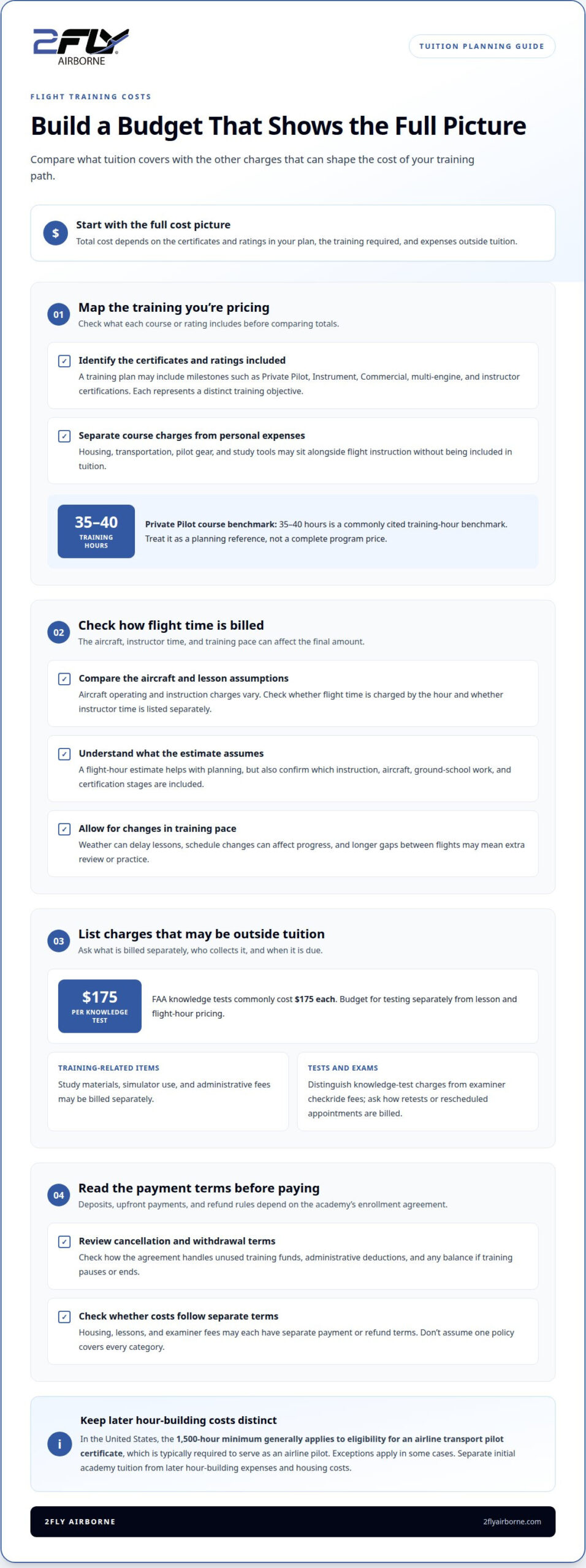
The full cost depends on the certificates and ratings in your training path, along with expenses outside tuition. A useful estimate separates training charges from testing, examiner, aircraft, and living costs.
Mandatory Fees Beyond Tuition
Tuition may not include every expense involved in completing flight training. Review the program’s cost breakdown for knowledge tests, study materials, simulator use, examiner charges, and administrative fees. These items affect your budget even when they are billed separately from lessons.
In the United States, the 1,500-hour minimum generally applies to eligibility for an airline transport pilot certificate, which is typically required to serve as an airline pilot. Exceptions to the minimum apply in some cases, so it is not a universal requirement for every commercial pilot before flying for an airline. This distinction makes it useful to separate initial academy tuition from later hour-building expenses and housing costs. Some ground-school programs may be eligible for Post-9/11 GI Bill coverage options, according to the U.S. Department of Veterans Affairs.
Aircraft-Related Flight Fees
The aircraft used for a lesson affects its cost because operating and instruction charges vary. Look at the billing basis: for example, whether flight time is charged by the hour and whether instructor time is listed separately. Compare the aircraft and lesson assumptions behind each estimate, not just the total.
Training pace can also affect the final cost. Weather may delay a lesson, and changes to the schedule can affect how training progresses. Longer gaps between flights may mean you need extra review or practice. The lessons completed and the instruction required to meet each skill standard determine the training ultimately used.
Examiner and Testing Charges
Budget separately for knowledge tests and practical exams. FAA knowledge tests commonly cost $175 each.
Charges outside tuition may be paid separately, so identify who collects each fee and when it is due. A clear estimate distinguishes knowledge-test charges from examiner checkride fees. It should also explain how retests or rescheduled appointments are billed, rather than blending exam expenses into flight-hour pricing.
Deposits and Upfront Payments
Deposit amounts, upfront payment requirements, and refund rules depend on the academy’s enrollment agreement; there is no single rule that applies to every flight school. Before paying, read the terms for cancellation, withdrawal, unused training funds, and any administrative deductions. For example, a deposit may be treated differently from tuition already applied to completed lessons.
Review the written payment schedule and note which expenses are refundable under the agreement. The terms should explain how a balance is handled if training pauses or ends. Housing, lessons, and examiner fees may be covered by separate terms, so include each category in your budget rather than assuming one refund policy applies to everything.
What is the cost for private pilot and other ratings?
Tuition depends on the certificates and ratings in your training plan, as well as the instruction and equipment required at each stage. A useful breakdown separates course charges from personal expenses and potential future earnings, so you can see what each part of the program covers.
Program Tuition and Total Cost
A professional pilot program brings multiple training stages into one planned pathway. Its total cost reflects the certificates included, the aircraft used, instruction, and any separately billed expenses. Review which stages the tuition covers, then identify what falls outside the program total. This makes it easier to budget for a full progression instead of treating one course price as the cost of becoming a commercial pilot.
Personal expenses also shape your overall budget. Housing, transportation, pilot gear, and study tools may sit alongside flight instruction without being included in tuition. Separate these categories in your planning so course charges remain distinct from the day-to-day costs of aviation training.
Certificate and Rating Prices
Each certificate or rating represents a separate training milestone. A Private Pilot Certificate builds foundational flying skills; an Instrument Rating develops the ability to fly using instrument references; and a Commercial Pilot Certificate prepares a pilot for commercial flying. Multi-engine and instructor certifications add further training objectives. A commonly cited training-hour benchmark for a Private Pilot course is 35-40 hours.
Map the program by certificate and rating rather than relying on one combined figure. For each stage, identify the course, aircraft, and instruction included, then account for expenses billed separately. This shows how training builds toward commercial pilot certification without treating each rating as an interchangeable price item.
Course and Flight-Hour Breakdown
Flight academies can organize tuition by course, estimated flight hours, or certification stage. A useful breakdown explains how instructional time is charged, which aircraft are used, and what ground-school work belongs to each course. A flight-hour estimate helps with planning, but it does not replace knowing which certifications the program includes.
Track three categories: course instruction, aircraft time, and certification-related expenses. Then separate required milestones from optional equipment and personal costs. A structured airline pilot training program can help you see how certificates connect across a professional pathway.
Pilot gear and apps can support study and flight preparation, but they are separate from tuition. List the tools needed for your training plan and keep optional purchases separate. Republic Airways pilot earnings belong in career planning, not tuition calculations; compensation depends on the role and its terms. Keep projected income separate from the funds needed to begin and complete training.
Prorated tuition for students with existing ratings
Existing pilot certifications can affect which training stages remain in a student’s plan. Prorated tuition should reflect the training still required, rather than charging again for completed coursework or ratings.
How Existing Ratings Affect Tuition
Start by comparing each existing certificate or rating with the planned program. A student with a Private Pilot Certificate, for example, may have different remaining coursework from someone beginning without prior training. Then identify which ground lessons, flight hours, and evaluations still apply.
Previous experience matters, but it does not automatically remove every training requirement. An instructor can assess current skills and records, then identify areas that need further practice. Costs may therefore reflect both completed milestones and the instruction required to meet the next stage’s standards.
A clear prorated breakdown separates credit for prior training from the remaining course charges. It should show the next rating, the instruction involved, and how aircraft time is billed. This makes the balance easier to understand than a single revised total.
Instructor Pay and Student-Loan Planning
Some pilots pursue flight instructor certification and later work as instructors while building experience. Instructor pay is employment income, not automatically a tuition reduction or loan payment. Treat it as a separate part of your budget unless a written arrangement specifically connects earnings with training charges.
If you’re considering borrowing, plan around the lender’s application process and the academy’s payment schedule. A private student loan’s processing time depends on steps such as submitting a complete application, lender review, and supplying requested school information. Factor those steps into your funding timeline before setting a training start date.
Review available flight-training financing information alongside personal savings and other funding sources. Keep any expected loan amount separate from confirmed funds until the application process is complete.
International Student Visa Processing
International students should include fees associated with M-1 and F-1 student visa processing in their planning. These processing expenses are separate from flight hours and rating tuition, so list them as their own budget category.
For example, create a cost worksheet with separate lines for remaining flight training, instructor charges, visa processing, and living expenses. This helps you see which funds support instruction and which cover other parts of studying in the United States.
Refunds, Cancellations, and Delays
Refund and cancellation terms depend on the enrollment agreement and when a student leaves the program. The agreement governs how unused payments, completed instruction, and any stated deductions are handled if training ends or pauses.
A delay alone does not determine what happens to paid tuition; the agreement’s terms control the balance and any refund. Before paying, review the written provisions for withdrawal, interruptions, and unused funds, and keep a copy with your training records.
Combining savings, scholarships, and loans
A funding plan can combine personal savings, aviation scholarships, and a student loan to cover training expenses from different sources. Start with the training stages you intend to complete, then match each funding source to a specific part of your budget. This helps show how financing supports your career plan without relying on one source alone.
Build a Timeline Around Your Start Date
If you plan to begin flight training in three to nine months, use that window to grow savings, apply for scholarships, and arrange borrowing or payment plans. Students with nine to 12 months or longer can focus on increasing savings, reducing existing debt, and exploring benefits such as GI Bill support. The timeline helps determine which funding steps to begin first.
For example, one suggested plan sets aside $5,000 upfront and saves $300 per month for six months. Treat this as an illustration, not a tuition quote or a universal budget. Compare the savings target with the course stages you plan to take, including ground instruction and the flight hours needed for each rating.
Apply for Scholarships Early
Scholarship applications take time to prepare, so build them into your flight-training calendar. A suggested action plan places applications for five to 10 aviation scholarships during weeks three to six. Use that period to assemble requested materials, track submission dates, and record each award’s terms. An award can reduce the amount you need to cover from savings or borrowing.
Keep scholarship funds separate in your budget until you understand their conditions and timing. For example, note whether an award applies to ground school, flight instruction, or a particular training stage. That detail helps prevent counting the same award toward multiple expenses.
Use Loans to Fill a Defined Gap
A student loan may cover the funding gap after you account for savings and scholarships. First calculate the expenses attached to your planned rating sequence, then subtract funds already allocated. Compare loan terms, repayment conditions, and disbursement timing before including borrowed funds in your plan.
Tie borrowing to your training schedule rather than treating the full program as one undifferentiated expense. For instance, organize your budget around the private pilot stage, then update it before moving into later ratings. This keeps each funding decision linked to a specific training milestone.
Some students may be able to complete flight training in three to six months by combining savings, scholarships, and loans. This timeframe is not a financing promise; it illustrates how funding sources can work together. A practical plan tracks application dates, available cash, loan timing, and each course stage in one schedule.
Transparent flight-school tuition
Transparent tuition explains how a school calculates charges and when payments are due. Compare the payment model, included training, and written terms before choosing how to fund your aviation education.
Tuition Payment Models
Pay-as-you-go pricing charges students as training takes place, linking payments to completed lessons or aircraft use. Package pricing groups defined training components, while fixed tuition sets an amount for a defined scope. These models affect when costs are paid, so compare what each includes and how additional training is billed.
For example, a package may specify ground lessons and flight instruction, while a pay-as-you-go plan itemizes charges as they occur. Fixed tuition also needs a clear description of included courses and exclusions. Assess each model as an agreement about scope and payment, not simply as a total.
Verifying Tuition and Payment Terms
Before enrolling, review the written tuition breakdown alongside the enrollment agreement. Check that course charges, aircraft use, testing expenses, payment dates, and cancellation terms are consistent across both documents. The application materials should also explain how payments are made and how unused funds are treated.
Keep a copy of the final terms and note anything that changes the amount due. If you plan to use financing, distinguish the lender’s conditions from the flight school’s payment schedule. Sallie Mae is a lender name students may encounter; compare any student loan terms directly with the school’s charges and your budget.
A practical review follows three steps: match the tuition scope to your intended training, identify charges billed separately, and map payment dates against available funds. For example, if a package covers a private pilot course but not later ratings, record those as separate stages instead of assuming one payment covers the full career path.
Distinguish a quoted training amount from the broader cost of attending school. Housing, transportation, and personal education expenses may fall outside tuition. A worksheet with separate lines for flight instruction, ground study, living expenses, and financing makes budget gaps visible before enrollment.
Borrowing may help cover a defined shortfall, but loan approval, disbursement, and repayment follow the lender’s terms. Compare the application timeline with the school’s payment due dates, then plan for funds to arrive before charges are due. A submitted application is not money already available.
Transparent flight academy tuition payment structures make it easier to connect each charge with a course, payment date, or funding source. To discuss how training stages fit into your education plan, explore flight training options.
2FLY Airborne
2FLY Airborne helps aspiring pilots connect tuition planning with a structured route through professional flight training. Its FAA Professional Pilot Program brings training stages into a broader career pathway, while individual certificates and ratings support students with different starting points.
Whether you’re beginning with a Private Pilot Certificate (PPL) or progressing toward an Instrument Rating (IR) and Commercial Pilot Certificate (CPL), understanding the sequence can clarify which training steps fit your goals. Discuss your prior experience, intended ratings, and payment questions with a training advisor to make your next decision with a clearer view of the path ahead.
Contact 2FLY Airborne to discuss your flight-training plans and tuition questions.
Take the Next Step Toward Your Pilot Career
Your training plan should support more than enrollment. It should connect each learning milestone with your career direction, available resources, and next decision. Use what you’ve learned about transparent flight academy tuition payment structures to plan with focus and purpose.
Before moving forward, consider where you’re starting, which pilot certifications align with your goals, and how you want to pace your training. A thoughtful conversation can help turn those priorities into a practical path, with safe, structured instruction at the center of your progress.
For guidance on tuition and training options, contact a 2FLY Training Advisor at 2FLY Airborne with your questions. Bring your goals and training plans to the conversation, then take your next step with confidence.
Frequently Asked Questions
What is Included in Fixed-Cost Flight Training Tuition?
Fixed-cost tuition covers the items defined in the selected program’s written scope and terms. For 2FLY Airborne’s FAA or EASA programs, the scope may include flight hours, ground school, and simulator sessions; confirm which items and hours are covered and whether additional training is billed separately. To understand what “fixed” means for your plan, compare the program’s named training stages with your intended certification endpoint. The written program scope is the best guide to what the tuition covers.
How much are flight lessons?
There isn’t one lesson price that applies to every training plan. The amount depends on the aircraft and instruction used, as well as the lesson’s duration. For a meaningful estimate, identify your training stage and the billing basis for aircraft and instructor time. This lets you estimate a course from its planned lessons instead of relying on a figure for a different aircraft or training need.
How much does flight school cost in 2026 in the U.S.?
The total in 2026 depends on the certification endpoint and the training included in the program. A student pursuing one certificate has a different scope from someone planning a complete professional pathway. Compare written program outlines for the same endpoint, and distinguish training tuition from personal expenses. This gives you a useful like-for-like comparison without assuming that every flight school includes the same curriculum.
What Additional Expenses are Not Included?
There is no universal list of excluded expenses; each program defines its tuition scope. Personal travel or living arrangements, for example, may be separate from instruction, while other items depend on the program terms. Make a separate budget line for anything outside the stated curriculum, then compare it with the enrollment documents. This helps distinguish personal spending from required training charges.
When is the first payment due?
The enrollment agreement sets the first payment’s due date. For 2FLY Airborne career programs, monthly payment options are available, and full tuition is not required upfront. The schedule extends over the program’s first several months. Use the agreement to identify the initial due date and any later installment dates, so you can align your personal budget with the program’s payment calendar.
What is the total cost of flight academy training in the United States, including tuition and fees?
A reliable total requires a defined training endpoint and a clear list of included charges. Start with the selected program’s tuition scope, then add expenses outside it. A student entering with prior certificates may have a different remaining training plan from someone starting at the beginning. Keep separate totals for instruction and personal costs rather than combining them without explanation.
What extra costs are excluded from advertised flight academy tuition, such as exams, equipment, and retakes?
Advertised tuition may treat exams, equipment, or additional instruction differently, so the program terms determine what is excluded. Retake costs depend on the applicable billing terms and whether more instruction is needed before another attempt. Look for these items in the written scope and payment agreement. Distinguishing included training from separately billed items helps you understand how an unexpected training need affects your budget.
What financing, student loans, scholarships, or GI Bill benefits can be used for flight academy tuition?
Possible funding sources include savings, scholarships, student loans, and eligible benefits. Some ground-school programs may qualify for Post-9/11 GI Bill coverage options, according to the U.S. Department of Veterans Affairs. Compare each source’s timing and conditions with the program’s payment schedule before counting it toward tuition. For 2FLY Airborne career programs, monthly payment options are also available, allowing students to plan payments across the program’s first several months.
Article by
2FLY Airborne
2Fly Airborne is a professional flight training organization dedicated to developing the next generation of skilled, confident, and safety-focused pilots. With decades of combined aviation experience, our team of certified instructors provides structured, real-world training designed to prepare students for both checkrides and long-term success in the aviation industry.
Content Disclaimer
Some blog content is generated with the assistance of automated tools and may not always be fully accurate or up to date. Please verify all aviation-related information with official sources or a certified instructor. For additional guidance or clarification, we encourage you to contact one of our training advisors at 2Fly Airborne.