What if the biggest obstacle to your airline career isn’t the complexity of a multi-engine checkride, but the paperwork you haven’t even started yet? For many international students, the dream of training in the United States is often clouded by the stress of navigating the embassy interview and the fear of a sudden visa denial. You’ve likely found yourself lost in a sea of conflicting advice, wondering if you should be applying for an F1 or an M1, and what the hidden costs might be. It’s understandable to feel overwhelmed when your future depends on getting every detail right the first time.
We understand that you need more than just flight hours; you need a clear, professional roadmap to reach your goals. This guide demystifies the m1 visa requirements for flight school and provides a step-by-step strategy for 2026. You’ll learn how to secure your I-20, manage the SEVIS process, and choose a training partner that provides the administrative support you deserve. We’ll also explore how your visa status integrates with a professional pilot program to launch your international career with confidence. By the end of this article, you’ll have the technical knowledge and the certainty required to begin your journey in an American cockpit.
Key Takeaways
- Understand why the M1 visa is the definitive vocational key for international students pursuing accelerated flight training in the United States.
- Navigate the m1 visa requirements for flight school by mastering the I-20 certificate process and preparing the precise financial evidence required for embassy approval.
- Discover why the M1 designation is the industry standard for professional pilot programs, offering a more direct path to certification than traditional academic visas.
- Simplify the logistics of TSA security threat assessments and SEVIS registration to ensure your training begins without regulatory delays.
- Leverage expert mentorship and dedicated visa sponsorship to transition seamlessly from a prospective student to an industry-prepared professional.
Understanding M1 Visa Flight Training: Your Gateway to a US Aviation Career
The M1 visa serves as the primary legal gateway for international students seeking vocational flight training in the United States. Unlike academic visas, this specific non-immigrant status is designed for technical, hands-on programs that lead directly to professional certifications. Understanding the M-1 visa overview is the first step in ensuring you comply with federal regulations while pursuing your ratings. When you research the m1 visa requirements for flight school, you’ll find that this path is tailored for those who want to focus exclusively on their aviation skills without the additional requirements of a four-year degree.
Choosing an M1 visa approved flight school means you’re selecting a partner that understands the nuances of international student support. These institutions are authorized by the Student and Exchange Visitor Program (SEVP) to issue the documentation you need for your embassy interview. This partnership is vital because it bridges the gap between your ambition and the practical realities of training in a foreign country. It ensures your transition from a student to a professional pilot is handled with expertise.
To better understand how this visa category fits your specific career goals, watch this helpful comparison:
Why Choose the US for Your Pilot Certifications?
The United States offers an unparalleled environment for developing technical mastery in the cockpit. With a high density of airports and diverse weather conditions ranging from coastal winds to high-altitude challenges, students gain experience that is difficult to replicate elsewhere. This variety ensures that when you earn your FAA certificates, you’re prepared for the complexities of global flight operations. You’ll build confidence in a system that manages more air traffic than any other nation.
FAA certifications are highly respected by civil aviation authorities worldwide due to the rigorous standards of the training syllabus. This international recognition provides you with significant professional mobility, allowing you to take your skills back to your home country or seek opportunities in emerging markets. If you’re aiming for a career as a commercial pilot, starting in a world-class environment is the best way to ensure long-term success. You can explore our FAA Professional Pilot Program to see how these certifications fit together.
The Global Demand for Professional Aviators
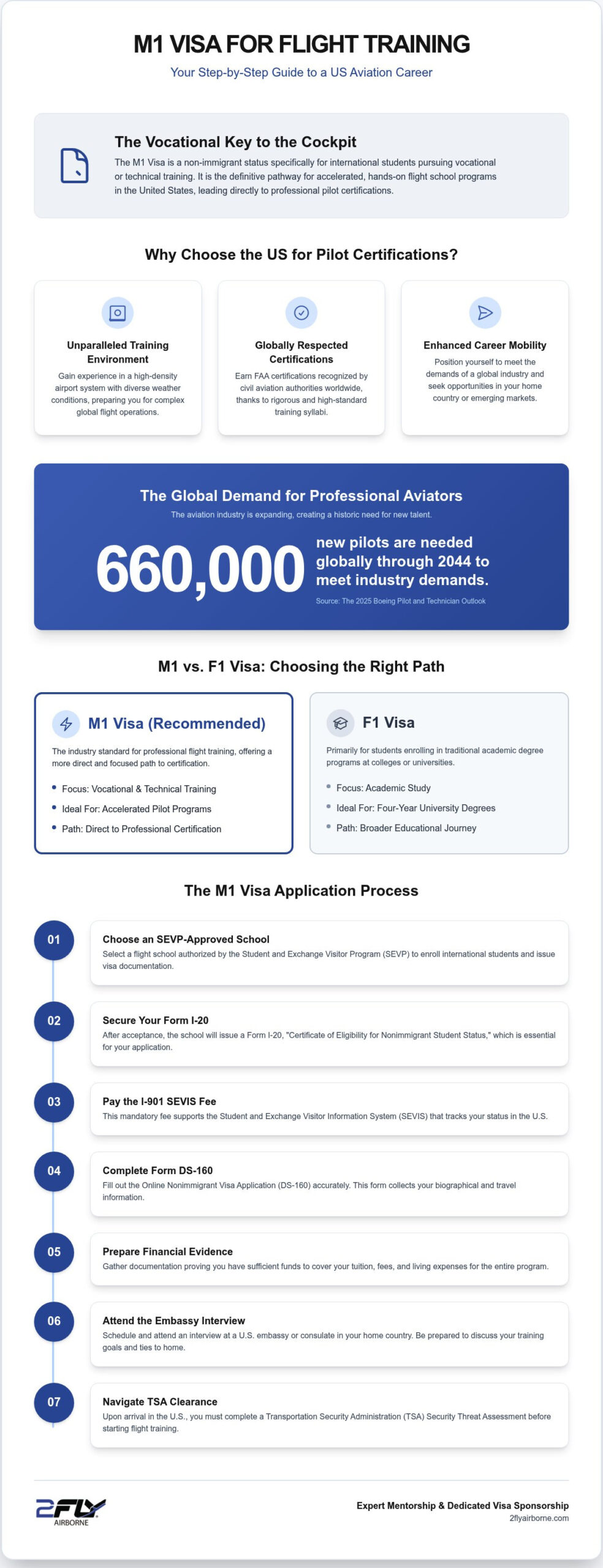
The aviation industry is currently facing a historic need for new talent as global travel continues to expand. The 2025 Boeing Pilot and Technician Outlook projects a demand for 660,000 new pilots globally through 2044. This massive requirement means that international students aren’t just trainees; they’re essential contributors to the future of global commerce. Airlines are constantly searching for well-trained individuals who meet high international standards.
By meeting the m1 visa requirements for flight school, you position yourself to fill this critical gap in the workforce. The transition from a trainee to an industry-prepared professional is a structured journey that requires discipline and a commitment to excellence. As an expert mentor in this field, we focus on ensuring that your training isn’t just about passing a checkride. It’s about preparing you for the technical and professional demands of a world-class aviation career.
The Step-by-Step Requirements for an M1 Vocational Student Visa
Securing your place in an American cockpit requires meticulous attention to the m1 visa requirements for flight school. This process is highly structured, ensuring that every candidate has the financial stability and technical aptitude to succeed. You’ll start by registering with the Student and Exchange Visitor Information System (SEVIS). This database tracks your status throughout your training, and you’ll need to pay the mandatory $350 I-901 fee to activate your record.
Safety in the skies depends on clear communication. Because aviation is a global industry, you must demonstrate a high level of English proficiency before training begins. This isn’t just a regulatory hurdle; it’s a critical safety standard for interacting with Air Traffic Control. You can find detailed official M-1 visa requirements on the ICE website to ensure you’re meeting all federal expectations before you apply.
Securing Your I-20 Form
The I-20 Certificate of Eligibility is the most important document you’ll receive from your chosen school. It proves you’ve been accepted into a vocational program and have the means to support yourself. To get this form, you’ll need to provide a clear passport copy, proof of your education history, and current bank statements. These statements must show you have the liquid funds available to cover both your training and living expenses.
Once you submit your documents, the school’s administrative team typically processes the I-20 within 14 to 21 days. We recommend starting this process at least three months before your desired start date. This buffer allows for shipping times and any unexpected delays in your home country’s postal system. If you’re ready to begin, our team can help you start your application today.
Acing the US Embassy Interview
The final step is the in-person interview at a US embassy or consulate. You’ll need to pay the $185 DS-160 application fee before scheduling your appointment. During the interview, the consular officer will look for two main things: your ability to pay and your intent to return home. Meeting the m1 visa requirements for flight school includes demonstrating that you have a clear plan for your future as a commercial pilot in your home region.
Preparation is the key to confidence. Be ready to discuss the flight school cost and how you’ve secured the necessary funding. Use our fixed-price training models to provide the officer with a transparent, predictable financial plan. This clarity often makes the difference in securing your visa approval on the first attempt.
M1 vs. F1 Visas: Choosing the Right Path for Professional Pilot Training
Choosing between an M1 and F1 visa is one of the most critical decisions you’ll make before arriving in the US. While both allow you to train at an M1 visa approved flight school, they serve very different career strategies. High-achievers often find themselves weighing the speed of vocational training against the broader scope of an academic degree. If your primary goal is to reach the flight deck of a major airline as quickly as possible, the M1 is almost always the superior choice.
The M1 visa is designed specifically for vocational students who want to immerse themselves in a technical syllabus. Unlike the F1 visa, which is typically tied to a multi-year university degree, the M1 allows you to focus 100% of your energy on aviation. You don’t spend time on unrelated academic electives or general education requirements. This focus is what makes the m1 visa requirements for flight school so appealing to those on an accelerated timeline.
The Vocational Advantage of the M1 Visa
The primary benefit of the M1 path is the ability to complete an intensive Part 141 program without distraction. These programs are structured to take you from zero experience to a commercial multi-engine pilot in a fraction of the time required by a degree program. By following a dedicated FAA Airline Pilot Program, you can earn your ratings with technical precision and move directly toward your career goals.
This vocational focus ensures that every hour spent in the classroom or the cockpit contributes directly to your proficiency. For students who already hold a degree or simply want to maximize their training efficiency, the M1 pathway offers a streamlined experience. It mirrors the progression of a professional airline training syllabus, moving methodically from foundational skills to advanced maneuvers. It’s the definitive gateway for those who value technical mastery over academic breadth.
Understanding Practical Training Limits
One area where the visas differ significantly is Optional Practical Training (OPT). For M1 students, the rule is one month of practical training for every four months of full-time study. This means a typical year-long program might grant you three months of authorized training after you finish your ratings. While this is shorter than the 12 months often granted to F1 students, the trade-off is the total time spent in school. You’ll reach your professional goals much faster on the M1 track.
Many international career pilots prioritize speed of certification over long-term work authorization in the US. They recognize that getting home and starting their seniority at an international carrier is the most valuable move. If you want to enter the workforce quickly, the M1’s accelerated nature far outweighs the longer stay offered by an academic visa. It’s a goal-oriented choice that puts you in the captain’s seat sooner, ensuring you’re ready to meet the m1 visa requirements for flight school and beyond.
Navigating TSA Clearance and SEVIS: Essential Logistics for International Students
Securing your visa is a major milestone, but it’s only the first half of the regulatory journey. Before you can touch the controls of an aircraft, you must clear the Transportation Security Administration (TSA) background check. Understanding the m1 visa requirements for flight school also means preparing for the TSA’s Flight Training Security Program (FTSP). This program is a mandatory security threat assessment for all non-US citizens seeking flight training in the United States.
While your visa grants you entry to the country, the FTSP grants you entry to the cockpit. These two processes run on parallel tracks and require careful coordination to avoid training delays. You’ll need to provide fingerprints and background information to ensure you meet the rigorous safety standards of the US aviation system. It’s a methodical process that reinforces the integrity of your professional training environment.
The TSA Background Check Process
The FTSP application is categorized based on the type of training you’re receiving. For most students, this falls under Category 3, which covers aircraft with a maximum takeoff weight of 12,500 pounds or less. You must submit a separate training request for your Private Pilot Certificate, Instrument Rating, and Multi-Engine Rating. Each request requires a $140 processing fee paid directly to the TSA.
Timing is critical for this step. We recommend starting your TSA application as soon as you have your M1 visa in hand. You can complete the online portion of the application from your home country, but you must visit a TSA-accepted fingerprint collector once you arrive in the US. Flight training cannot legally commence until the TSA issues a “Determination of Eligibility” based on these records. If you have questions about this timeline, speak with a 2FLY training advisor to ensure your transition is seamless.
Maintaining Your Legal Status in the US
Once you begin your program, your primary responsibility is maintaining your legal status through consistent progress. The M1 visa requires you to be enrolled in a “Full Course of Study.” In the context of flight training, this generally means participating in at least 22 hours of ground and flight instruction per week. Your school’s Designated School Official (DSO) will monitor this through the SEVIS system to ensure you remain in compliance with federal regulations.
Life can be unpredictable, and sometimes training takes longer than the date listed on your I-20. If you need more time to complete your certifications, you must apply for a program extension before your current document expires. Always keep your I-94 arrival record and passport valid. These documents, combined with your active SEVIS record, are the legal foundation of your stay. Staying organized with these logistics allows you to focus entirely on reaching the high standards of an industry-prepared professional.
Launching Your Global Career with 2FLY Airborne’s M1 Visa Support
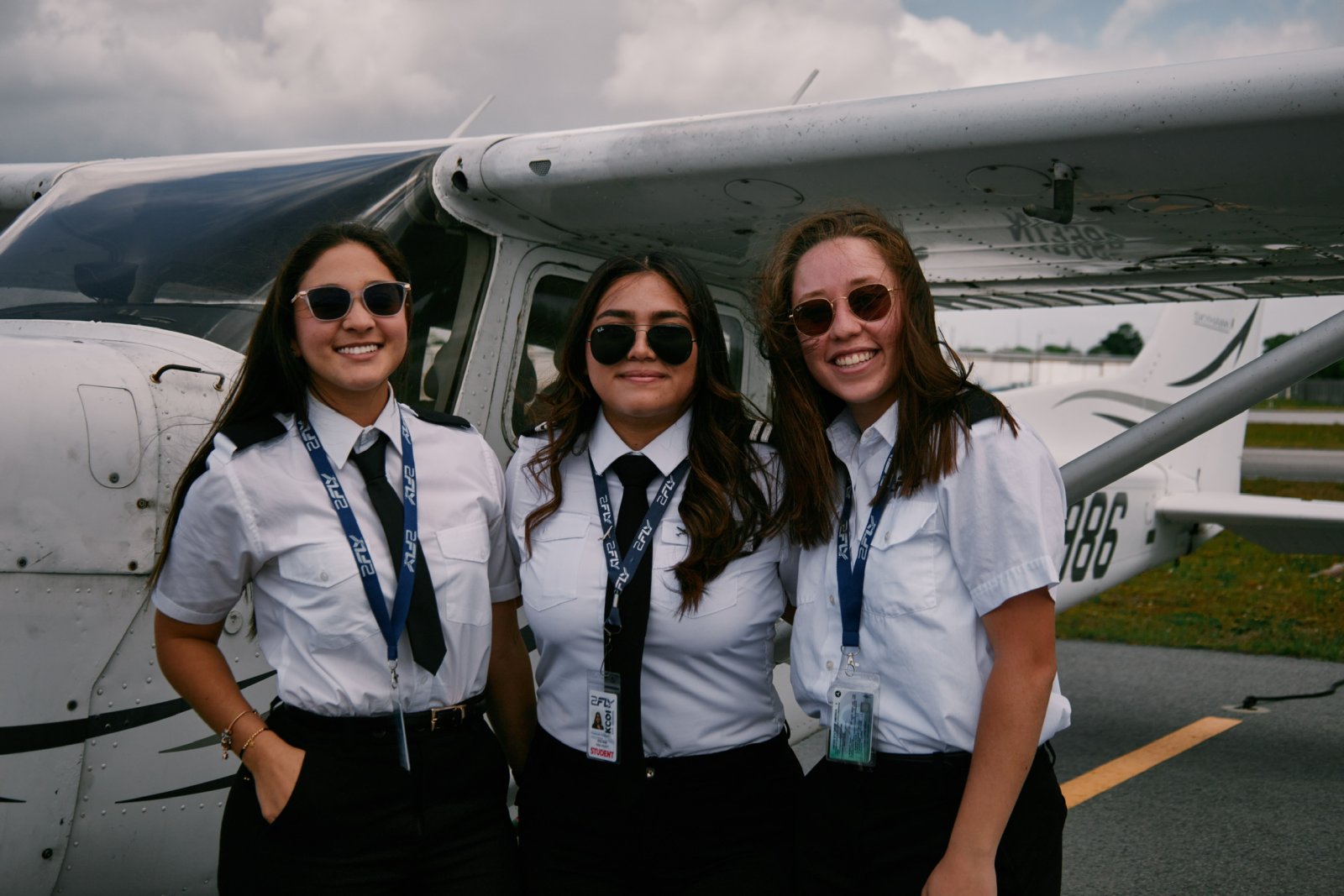
At 2FLY Airborne, we recognize that the journey to an American cockpit involves more than just mastering flight maneuvers. We don’t view the visa process as a separate hurdle; instead, we’ve integrated it into our comprehensive training syllabus. Our team handles the administrative complexity so you can focus entirely on your professional development. We position ourselves as your expert mentor, guiding you through every regulatory requirement from day one.
Meeting the m1 visa requirements for flight school often hinges on providing clear, predictable financial evidence. Our Fixed-Price Professional Pilot Program is a vital tool for this stage of your planning. By providing a transparent tuition model, you can present embassy officers with a precise financial roadmap. This certainty fuels your ambition and builds the trust necessary for a successful visa application.
Integrated Support from Enrollment to Graduation
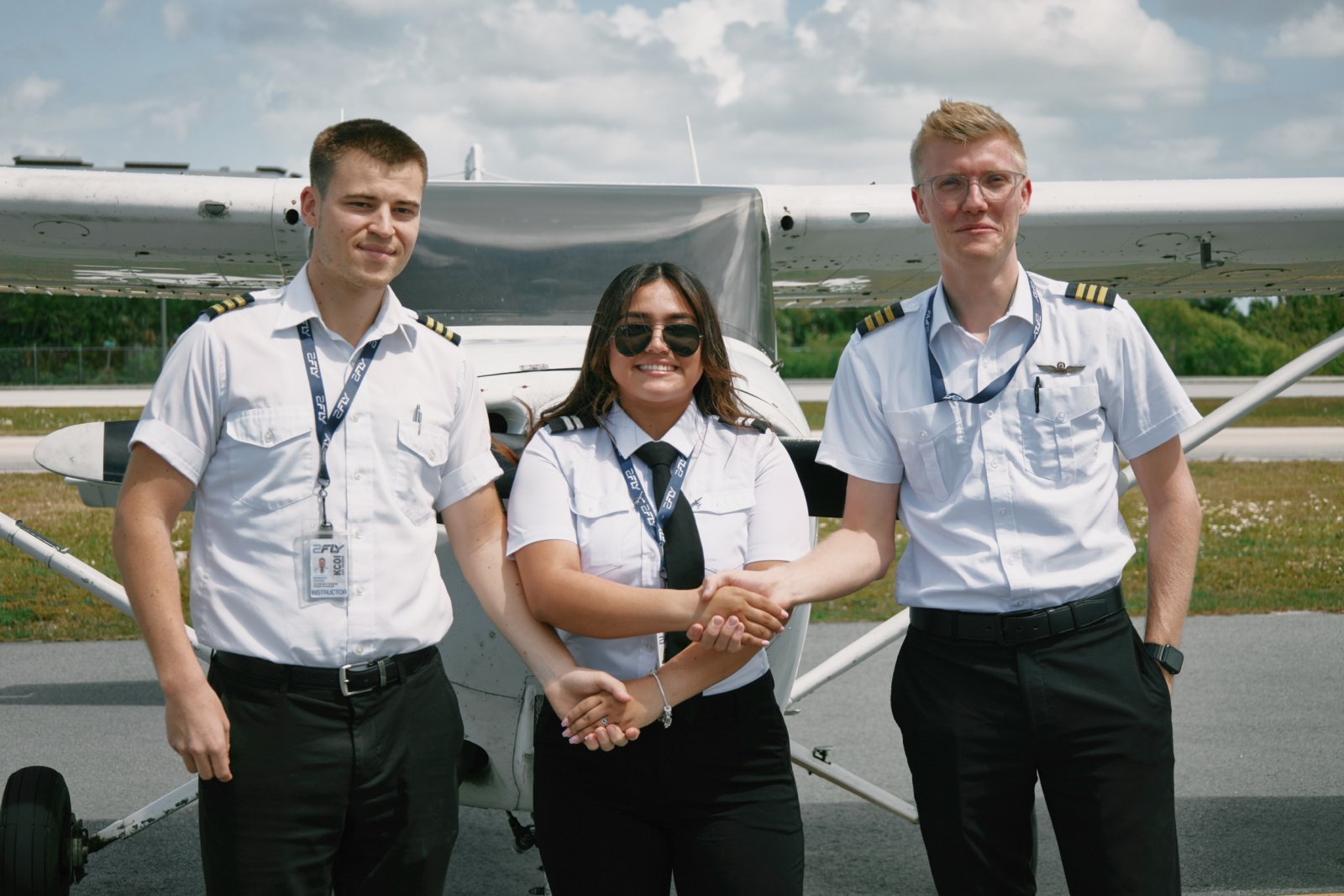
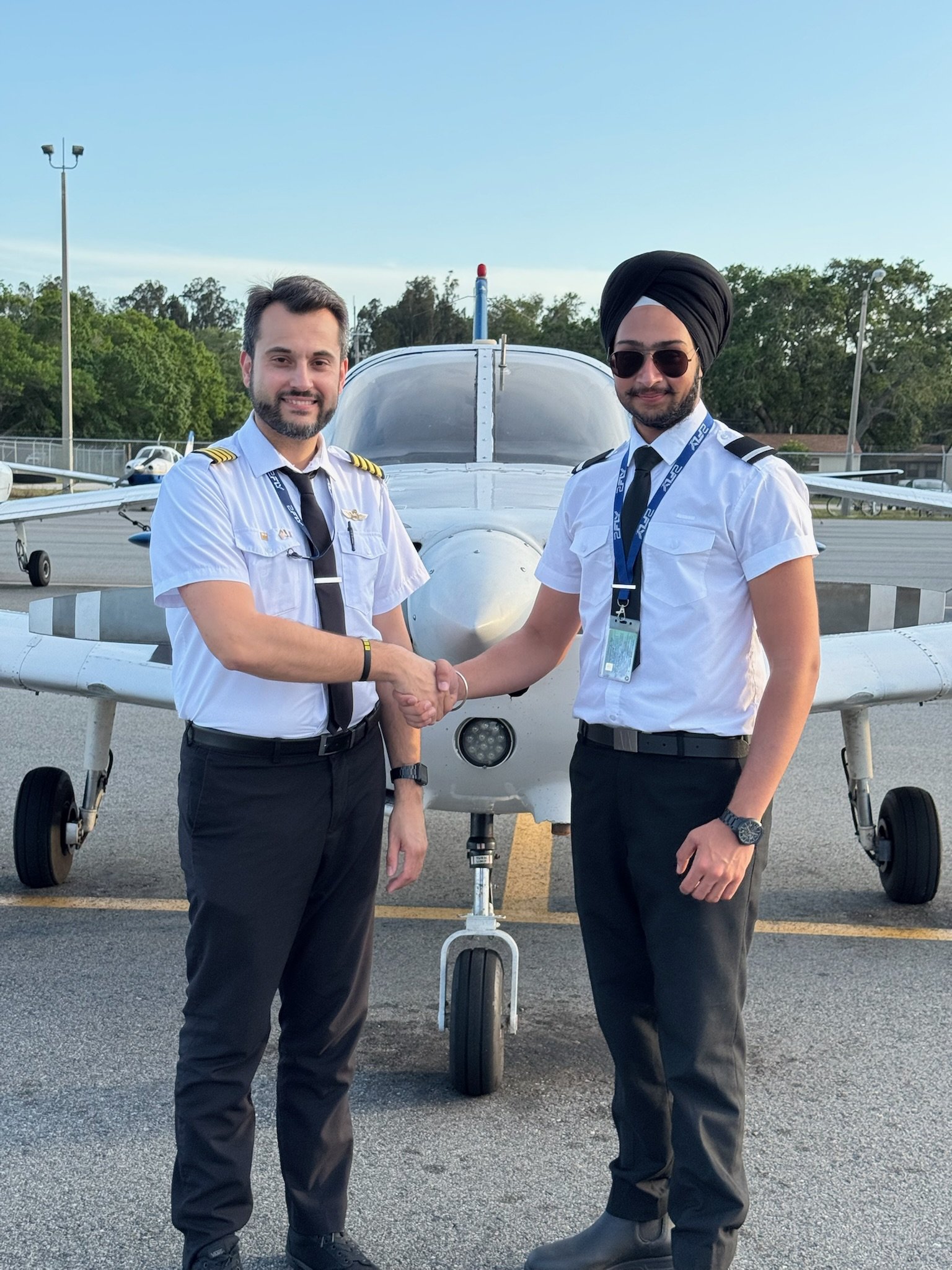
Our dedicated training advisors assist you with every aspect of your I-20 and visa preparation. We maintain an on-site SEVIS Designated School Official (DSO) who understands the nuances of international student regulations. This direct access ensures your status remains secure while you progress through your ratings. You’ll never have to manage these technical details alone.
- Personalized guidance for your embassy interview preparation.
- Direct administrative support for I-20 issuance and shipping.
- Expert monitoring of your SEVIS record to maintain full-time compliance.
If you’re exploring how to fund your journey, we encourage you to review our financing options for international students. We’re committed to helping high-achievers find the resources they need to succeed. Our goal is to ensure you transition from a trainee to an industry-prepared professional without administrative delays.
Living the Dream: On-Campus Housing and Community
The transition to life in the US is seamless when you choose a training environment designed for international professionals. Our on-campus residential accommodation removes the stress of searching for housing in a foreign country. You’ll live in a stable, world-class setting that allows you to remain focused on your vocational goals. It’s an environment built for technical mastery and personal safety.
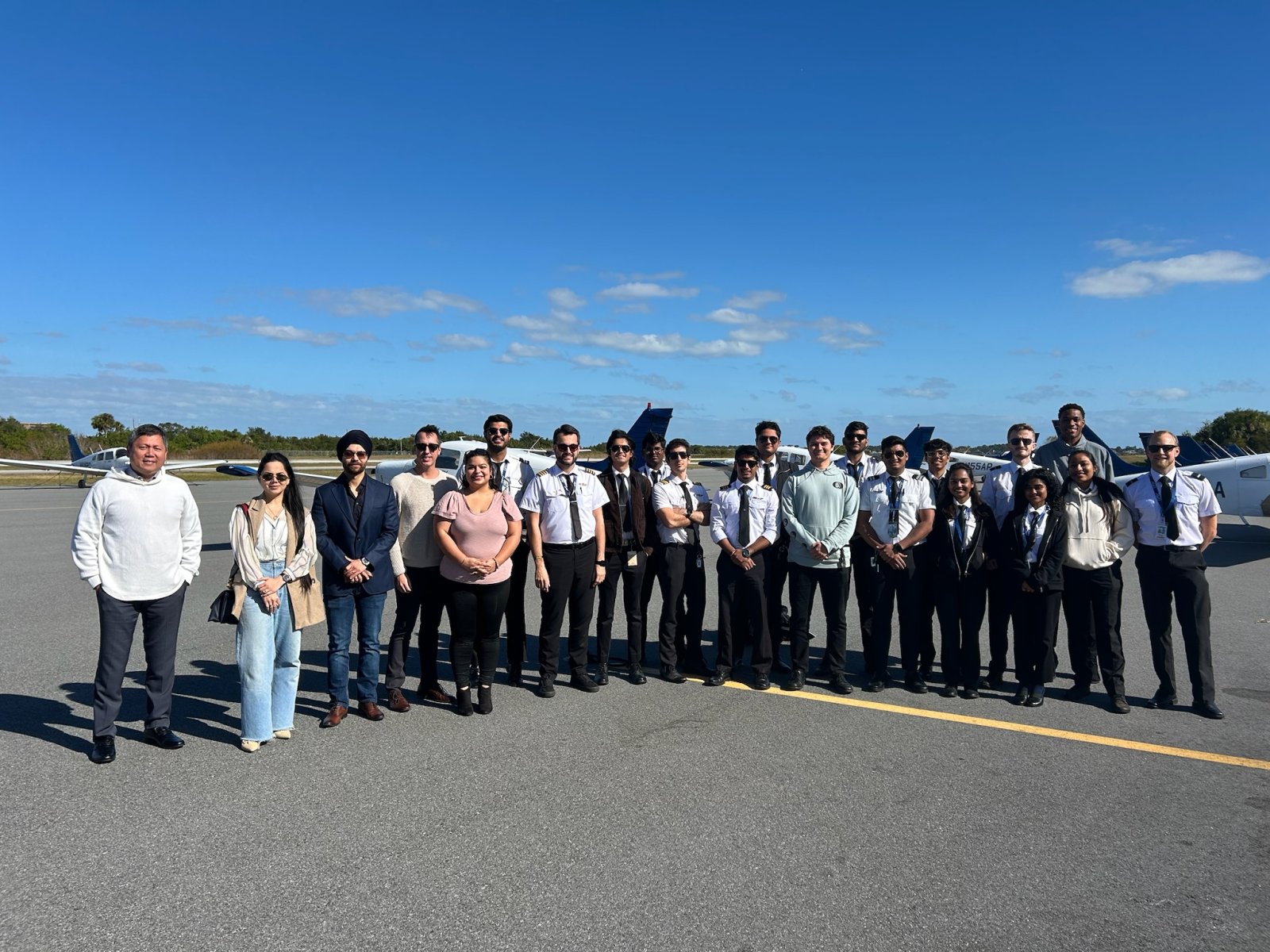
Living with fellow student pilots creates an immersive learning experience that extends beyond the classroom. You’ll build a global network of peers who share your drive and passion for the profession. This community is a direct pipeline to a lifelong international career. To see our facilities and meet our instructors, we invite you to join one of our upcoming events and take the first step toward meeting the m1 visa requirements for flight school.
Secure Your Seat in the Global Cockpit
Mastering the m1 visa requirements for flight school is the first definitive step toward an international aviation career. You’ve learned that while the process requires meticulous documentation and clear financial planning, it’s a manageable journey when you have the right mentorship. By choosing a vocational path over a traditional academic degree, you prioritize efficiency and technical proficiency. This focus ensures you’re ready to meet the demands of the global airline industry sooner.
With 25 years of international training excellence, we’ve refined our programs to support your transition every step of the way. Our fixed-price tuition guarantee and included on-campus housing provide the stability you need to remain focused on your ratings. Safe, structured training is the foundation of your future success. If you’re ready to move from the classroom to the flight deck, our team is here to help you navigate the logistics with confidence.
Take the next step in your professional journey today. Speak with a 2FLY Training Advisor about your M1 Visa path to get answers to your specific questions. We look forward to seeing you in the skies.
Frequently Asked Questions
How long does it take to get an M1 visa for flight school?
The entire process typically takes between 2 to 4 months from initial enrollment to visa approval. This timeline includes approximately 3 weeks for the school to process your I-20 form and additional time for embassy wait periods. Wait times vary significantly by country; you should check the U.S. State Department website for current appointment availability in your specific region. Starting early ensures you meet all m1 visa requirements for flight school without unnecessary stress.
Can I work in the US while on an M1 visa?
No, M1 visa holders are strictly prohibited from working in the United States during their course of study. This visa is dedicated to vocational training, and you must demonstrate you have sufficient funds to support yourself without employment. The only exception is Optional Practical Training (OPT), which is available after you complete your program. This period allows for limited, supervised experience directly related to your aviation certifications and professional development.
What is the minimum bank balance required for an M1 visa?
You must demonstrate liquid funds sufficient to cover the total cost of your professional pilot program plus one year of living expenses. While the exact amount depends on your specific training syllabus and housing choices, the embassy requires clear evidence that you won’t become a public charge. Using a fixed-price training model simplifies this requirement by providing a definitive tuition figure. Consular officers prefer seeing stable, accessible funds in your primary bank accounts.
Do I need to take an English test for M1 visa flight training?
Yes, you must demonstrate English proficiency because all FAA flight training and radio communications are conducted in English. While some schools accept internal assessments, many require standardized scores from tests like TOEFL or IELTS. Safe flight operations depend on your ability to understand technical instructions and communicate clearly with air traffic control. Meeting these m1 visa requirements for flight school ensures you’re prepared for the rigorous demands of an international aviation career.
Can I transfer my M1 visa to another flight school?
You can only transfer your M1 status within the first six months of your arrival in the United States. To do so, you must remain in good standing at your current school and receive approval from the Department of Homeland Security. Transfers are complex and require a new I-20 from an SEVP-certified institution. Most high-achieving students find it more efficient to choose an elite institution that meets their needs from the very beginning.
What happens if my M1 visa application is denied?
If your application is denied, you’ll receive a letter stating the specific legal reason, often cited under Section 214(b) for failure to prove strong ties to your home country. You can reapply if your circumstances change or if you can provide additional evidence to address the officer’s concerns. Common reasons for denial include insufficient financial proof or unclear career goals. Reviewing your documentation with a training advisor before your next interview can help build your confidence.
How much does the SEVIS I-901 fee cost in 2026?
The mandatory SEVIS I-901 fee for M1 students is $350 as of August 2026. This fee is paid directly to the Department of Homeland Security and is separate from your embassy application fee. You must pay this before your visa interview and keep the receipt as proof of payment for the consular officer. It funds the system that tracks your legal status and ensures you remain in compliance throughout your stay in the United States.
Does the M1 visa cover my family (dependents)?
Your spouse and unmarried children under the age of 21 can apply for M-2 visas to accompany you during your training. While your dependents can live with you in the United States, they are not authorized to work under any circumstances. Children on M-2 status are permitted to attend primary and secondary schools. You must provide additional financial evidence for each dependent to prove you can support the entire family during your professional training.
Article by
2FLY Airborne
2Fly Airborne is a professional flight training organization dedicated to developing the next generation of skilled, confident, and safety-focused pilots. With decades of combined aviation experience, our team of certified instructors provides structured, real-world training designed to prepare students for both checkrides and long-term success in the aviation industry.
Content Disclaimer
Some blog content is generated with the assistance of automated tools and may not always be fully accurate or up to date. Please verify all aviation-related information with official sources or a certified instructor. For additional guidance or clarification, we encourage you to contact one of our training advisors at 2Fly Airborne.