What if the most challenging part of reaching the flight deck isn’t the flying itself, but deciphering the complex maze of regulations and requirements? If you’re researching how to become an airline pilot, you’ve likely felt the weight of conflicting advice regarding FAA versus EASA standards. It’s natural to feel anxious about the financial commitment when the path forward seems obscured by technical jargon and shifting industry norms.
In 2026, you need a strategy that prioritizes professional certification over mere flight hours. This guide provides the definitive roadmap for your journey, detailing the exact sequence of certifications and professional milestones required to transition from a student pilot to a commercial airline professional. We’ll strip away the confusion to give you a clear, step-by-step path toward your first officer seat.
We’ll examine the critical differences in training environments and explain how to fund your education effectively. You’ll gain the confidence to choose a flight school that doesn’t just teach you to fly, but prepares you for the rigors of an international aviation career. From your first solo to your final checkride, this is your blueprint for success in the modern sky.
Key Takeaways
- Identify the modern pilot’s role as a systems manager and why a military background is no longer a prerequisite for the flight deck.
- Secure your future by prioritizing a First Class Medical Certificate as the absolute first step in your professional journey.
- Map out the essential certification ladder, starting with the foundational Private Pilot Certificate and the critical Instrument Rating.
- Gain a comprehensive understanding of how to become an airline pilot by navigating the 1,500-hour rule and the path to an ATP certificate.
- Learn how a structured FAA Professional Pilot Program in high-flyable weather locations can accelerate your timeline to employment.
Understanding the Journey to the Commercial Flight Deck
Becoming a pilot in 2026 is about technical mastery and professional management. You aren’t just learning to fly an airplane; you’re training to manage sophisticated flight systems and prioritize passenger safety in a dynamic environment. Modern pilots act as the final authority on safety, requiring a blend of technical skill and decisive leadership.
Many prospective students worry that they missed their chance because they didn’t join the military. This is a common misconception. Civilian flight schools are now the primary pipeline for major carriers, providing a direct and reliable way to learn how to become an airline pilot without a background in the armed forces.
To better understand this concept, watch this helpful video:
The Federal Aviation Administration (FAA) regulates the entire certification process to ensure every pilot meets strict safety and knowledge requirements. This journey leads to the Airline Transport Pilot License (ATPL), which is the highest level of aircraft pilot certification. The FAA’s involvement ensures that your training remains consistent with global safety standards and professional expectations.
You’ll encounter two main training philosophies: Ab Initio and modular. Ab Initio programs provide a seamless transition from your first flight to a professional seat, focusing on airline-oriented standards from day one. Modular training allows you to complete individual certifications at your own pace, which can be helpful if you’re balancing other commitments.
The Reality of a Career in the Sky
The pilot lifestyle is unique, offering global travel and significant schedule flexibility once you gain seniority. However, the responsibility is immense. Industry readiness goes beyond basic flying skills; it involves developing the leadership and communication abilities necessary for a multi-crew flight deck. Airlines seek candidates who demonstrate professional discipline and a commitment to continuous learning.
Setting Realistic Expectations for 2026
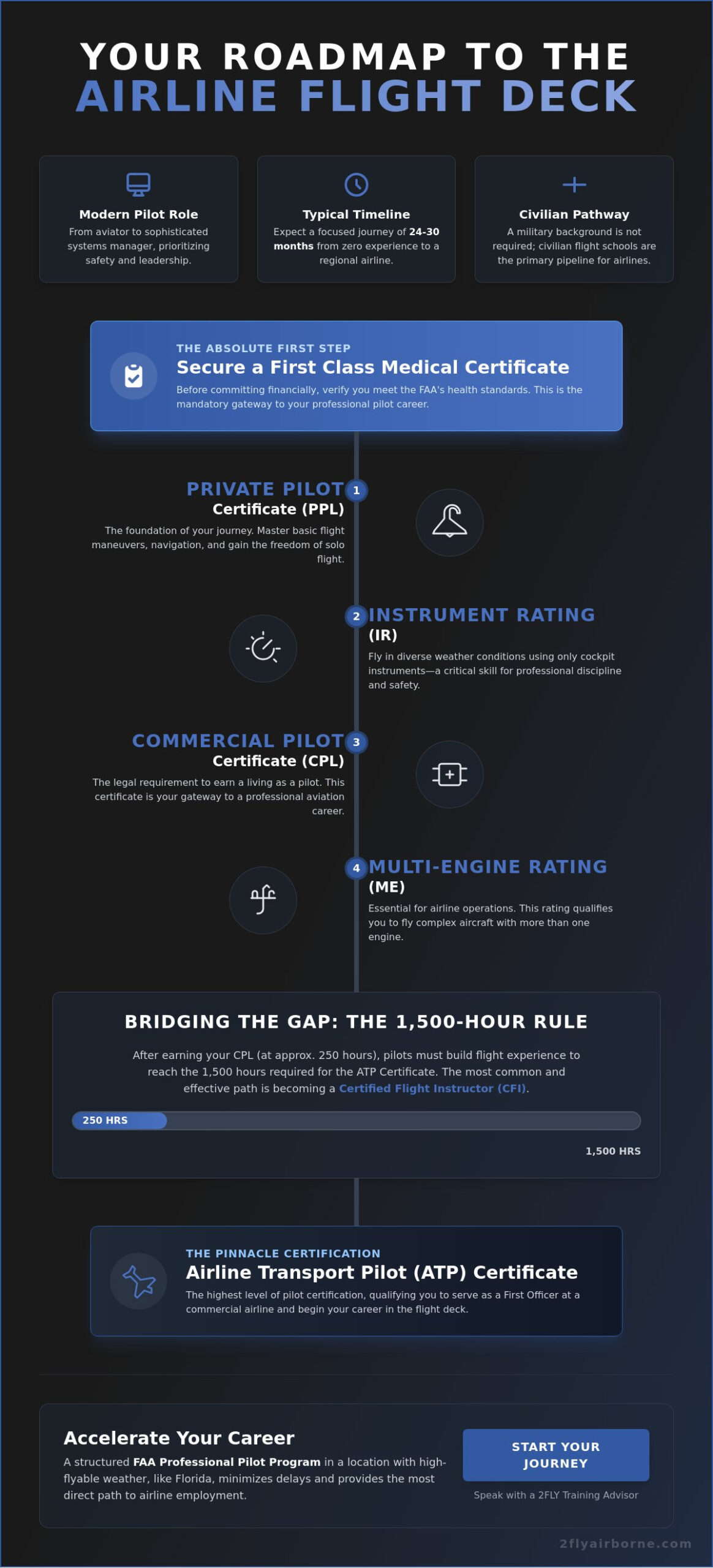
You should plan for a timeline of approximately 24 to 30 months to move from zero hours to a regional airline position. This period includes intensive study for FAA written exams and hundreds of hours of flight time to build experience. To understand the broader aviation landscape, check out this resource on how to become a pilot: the comprehensive 2026 guide. Success requires a high level of personal discipline and a clear focus on the end goal.
The Essential Certification Ladder: A Step-by-Step Roadmap
The path to the flight deck is a structured progression of skill and responsibility. Each certification represents a specific milestone in your professional development. When you start researching how to become an airline pilot, it’s helpful to view these steps as building blocks rather than a single hurdle. You’ll move from basic maneuvers to complex system management across four primary stages.
- Private Pilot Certificate (PPL): Your foundational license for solo flight and basic navigation.
- Instrument Rating (IR): The ability to fly in diverse weather conditions using only cockpit instruments.
- Commercial Pilot Certificate (CPL): The legal requirement to earn a living as a pilot.
- Multi-Engine Rating (ME): A qualification for aircraft with more than one engine, essential for airline operations.
Mastering the Fundamentals: PPL and Instrument Ratings
The PPL is often the most challenging phase because everything is new. You’re learning the physics of flight while building the muscle memory needed for safe landings. After mastering the basics, the Instrument Rating adds a layer of professional discipline. It requires you to trust your instruments over your physical sensations, which is a vital skill for safety. The FAA mandates specific cross-country flight hours during this time to prepare you for long-distance navigation. Data from the Occupational Outlook Handbook highlights that these foundational skills are the basis for a career with high median pay and strong job stability.
Going Professional: Commercial and Multi-Engine Ratings
Transitioning to the Commercial Pilot Certificate requires a shift in mindset. You’ll be expected to fly with much higher precision than a private pilot. This phase focuses on technical knowledge and the ability to perform complex maneuvers within tight tolerances. Airlines specifically look for the Multi-Engine Rating because it proves you can handle the workload of a modern jet. Managing asymmetrical thrust and complex emergency procedures in a multi-engine aircraft is the standard for the industry. Moving from single-engine trainers to these advanced platforms marks your entry into the world of professional aviation. If you’re looking for a structured way to complete these steps, our FAA Airline Pilot Program provides the necessary framework for your success.
Bridging the Gap: Time Building and the 1,500-Hour Rule
After obtaining your Commercial Pilot Certificate, you’ll face the most significant time commitment of your career. To hold an Airline Transport Pilot (ATP) certificate and fly for a major carrier, the Federal Aviation Administration (FAA) requires a minimum of 1,500 hours of total flight time. This regulation ensures that every pilot entering a commercial flight deck has the practical experience needed to manage complex operational challenges safely. Developing a clear strategy for how to become an airline pilot requires understanding how to bridge this gap efficiently.
The 2025 Boeing Pilot and Technician Outlook projects a demand for 660,000 new pilots globally through 2044. This massive long-term demand underscores the value of your investment during the time-building phase. While the 1,500-hour requirement may seem daunting, it’s a period designed to transition you from a trainee into a seasoned professional.
Choosing the right training environment is critical for your professional trajectory. Part 61 schools offer a flexible, self-paced approach that suits those with variable schedules or existing jobs. In contrast, Part 141 programs follow a highly structured, FAA-approved syllabus designed to mirror airline training environments. For many pursuing how to become an airline pilot, the structure of a Part 141 academy provides a more direct pipeline to employment because it emphasizes industry-standard procedures from your very first flight.
The Certified Flight Instructor (CFI) Pathway
Teaching others is widely considered the most effective way to master aviation concepts. When you explain aerodynamics or navigation to a student, you solidify your own understanding of the material. Serving as a Certified Flight Instructor (CFI) allows you to earn a steady income while accumulating the hours needed for your ATP. Pursuing advanced ratings like the CFII (Instrument) and MEI (Multi-Engine Instructor) can further accelerate your career by making you a more versatile and attractive candidate for regional airlines.
Alternative Methods for Accumulating Flight Hours
While instruction is the most common path, other professional opportunities exist for building time. You might consider roles in aerial photography, pipeline patrol, or regional cargo operations. However, it’s essential to focus on quality hours rather than just “boring holes in the sky” to reach a number. A structured environment, such as our FAA Airline Pilot Program, ensures that every hour spent in the air contributes to your technical proficiency and industry readiness.
Navigating Financial Planning and Regulatory Prerequisites
Before you log your first hour of flight training, you must address the most critical regulatory filter: the FAA First Class Medical Certificate. This examination ensures you meet the rigorous health standards required for professional airline operations. It’s the absolute first step for anyone serious about learning how to become an airline pilot because it confirms your physical eligibility for the career before you commit significant resources.
The total investment for a comprehensive career-track program typically ranges from $70,000 to $110,000. While some students prefer the “pay-as-you-go” model for its perceived flexibility, this often leads to higher total costs due to training gaps. Fixed-price programs offer a more structured financial path, allowing you to budget with certainty while maintaining the momentum necessary for professional proficiency.
International candidates face additional administrative layers, including obtaining an M-1 or F-1 visa. These requirements involve proving financial support and undergoing specific background screenings before arriving at a pilot school. Understanding these legal steps is a vital part of learning how to become an airline pilot as an international student.
Funding Your Future: Financing Options for 2026
Most professional candidates utilize specialized aviation loans to cover the cost of their certifications. These financial products often include deferred payment structures, allowing you to focus on your training before repayment begins. You must also account for residential housing and daily living expenses, as full-time training is a demanding commitment that limits outside employment. You can explore various financing options to see which professional loan structures align with your career goals.
The Medical and Legal Gateway
The Class 1 Medical exam focuses on vision, hearing, and cardiovascular health. For a first-class certificate, you can expect to pay approximately $225, with an additional $75 if an EKG is required. Maintaining this certificate is a lifelong commitment; you’ll need regular re-examinations to keep your flying privileges throughout your career.
Security is equally paramount in modern aviation. The Transportation Security Administration (TSA) requires a thorough background check for all flight students to ensure the integrity of the industry. These legal and medical prerequisites act as the foundation of your professional legitimacy. If you’re ready to begin your journey, we invite you to learn more about our FAA Professional Pilot Program and take the first step toward the flight deck.
Accelerating Your Career with the FAA Professional Pilot Program
Choosing where to train is the final, most consequential decision in your journey. While many paths exist for learning how to become an airline pilot, a structured environment that mirrors airline operations provides the most efficient route to the flight deck. Our FAA Airline Pilot Program is designed to integrate every necessary rating into a single, cohesive syllabus. This approach eliminates the downtime often found in modular training, ensuring you maintain the momentum required for professional mastery.
Many ranking pages focus exclusively on specific domestic airline partnerships, which can limit your future mobility. A global training network offers a distinct advantage for those seeking international career opportunities. By training under a system that values international standards, you prepare yourself for a career that isn’t bound by a single region or carrier. This flexibility is essential in a global industry where opportunities can arise across different continents.
The Florida Training Advantage
Florida is widely recognized as one of the world’s premier locations for flight training. This is why many high-achievers seek out flight schools in Florida to maximize their time in the cockpit. With approximately 360 days of flyable weather each year, students avoid the long delays caused by seasonal changes in other climates. This consistency is vital for building muscle memory and retaining complex technical knowledge during the early stages of your training.
Your First Steps Toward the Flight Deck
The transition from a trainee to an industry-prepared professional requires more than just logging hours. You need a program with a proven recruitment track record and a focus on airline-standard procedures. Understanding how to become an airline pilot is the first step; taking action in a professional environment is the second. A structured program transforms your mindset, teaching you to think like a captain long before you reach the regional level.
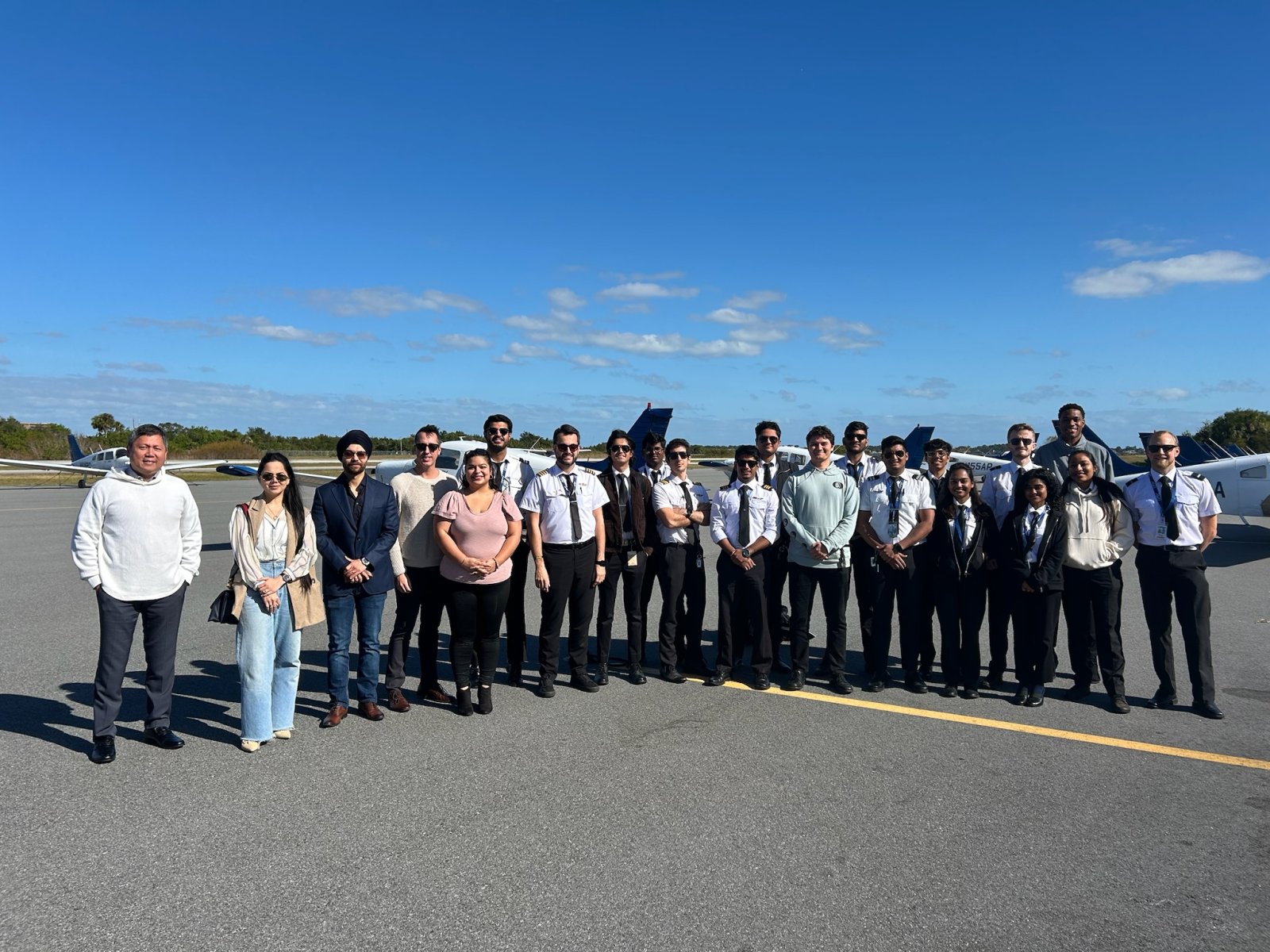
If you’re ready to see the environment firsthand, we encourage you to attend an Aviation Discovery Event. These sessions provide an inside look at the facilities and a chance to speak with those who have already made the transition. The path to becoming a pilot is rigorous, but with the right mentorship and a disciplined program, your goal is well within reach.
Taking Command of Your Aviation Future
The transition from a student to a professional pilot is a rewarding progression of technical skill and personal growth. You’ve seen that understanding how to become an airline pilot involves more than just logging hours; it requires a disciplined approach to certification, medical health, and financial planning. By committing to a structured roadmap, you ensure you’re prepared for the rigorous demands of the modern flight deck.
Since 1994, 2FLY Airborne has provided over 30 years of training excellence to high-achievers worldwide. Our global network of recruitment partners and fixed-price tuition options provide the stability and reach necessary for an international career. Ready to start your journey? Speak with a 2FLY Airborne Training Advisor today to map out your professional pilot career. If you have any remaining questions, reach out to a 2FLY Airborne Training Advisor to discuss your next steps. The sky is open to those with the passion and discipline to lead.
Frequently Asked Questions
How long does it realistically take to become an airline pilot?
It typically takes between 2 to 2.5 years to move from zero experience to a regional airline seat. This timeline includes completing all primary certifications and accumulating the required 1,500 flight hours. While you can finish core flight training in under a year, building the necessary professional experience as an instructor or in other roles requires a steady and disciplined commitment.
Do I need a four-year college degree to fly for a major airline?
A four-year college degree is not a legal FAA requirement, but it remains a highly competitive asset for major airline recruitment. Most regional airlines will hire candidates with a high school diploma and the necessary flight hours. However, many pilots choose to pursue a degree concurrently with their training to maximize their long-term career mobility and promotion potential at the highest levels of the industry.
What is the maximum age to start flight training for a commercial career?
There is no official maximum age to begin flight training, though you must consider the mandatory commercial retirement age of 65. Many professionals successfully transition to aviation in their 30s or 40s and still enjoy a two-decade career. If you are starting later, focusing on a high-intensity, structured program can help you reach the flight deck as quickly as possible.
How much does it cost to go from zero experience to a commercial license?
The total investment to go from zero experience to a commercial pilot typically ranges between $70,000 and $110,000 across the industry. This cost covers multiple certifications, including your Private, Instrument, and Multi-Engine ratings. Choosing a structured environment like a professional pilot school can help you manage these costs by providing a clear and predictable syllabus from your very first day.
Can international students train in the US and fly for European airlines?
Yes, international students can certainly train in the United States and return to fly for European carriers. This process requires a license conversion to meet the specific standards of the European Union Aviation Safety Agency (EASA). Many students prefer this path because flight training in the US offers better weather consistency and more competitive training rates compared to many European locations.
What is the difference between FAA and EASA pilot certifications?
FAA certifications are issued by the United States, while EASA licenses are the standard for European countries. EASA training involves a more extensive series of theoretical exams, whereas the FAA system is often recognized for its practical, hands-on approach to pilot proficiency. Understanding these differences is a key part of learning how to become an airline pilot with true international mobility.
Is it better to train under Part 61 or Part 141 for an airline career?
Part 141 programs are generally preferred for those pursuing an airline career because they follow a strict, FAA-approved syllabus. This structure mirrors the training environments you will eventually encounter at major carriers. Additionally, graduates of certain Part 141 programs may be eligible for a Restricted ATP, which allows them to reach the airlines with fewer than the standard 1,500 hours.
What happens if I fail my FAA First Class Medical examination?
If you fail your FAA First Class Medical exam, you will be unable to exercise commercial pilot privileges until the underlying medical issue is resolved. In many cases, you can apply for a Special Issuance or a Statement of Demonstrated Ability (SODA) after further medical evaluation and testing. It is vital to secure this medical certificate as your absolute first step in the journey of how to become an airline pilot.
Article by
2FLY Airborne
2Fly Airborne is a professional flight training organization dedicated to developing the next generation of skilled, confident, and safety-focused pilots. With decades of combined aviation experience, our team of certified instructors provides structured, real-world training designed to prepare students for both checkrides and long-term success in the aviation industry.
Content Disclaimer
Some blog content is generated with the assistance of automated tools and may not always be fully accurate or up to date. Please verify all aviation-related information with official sources or a certified instructor. For additional guidance or clarification, we encourage you to contact one of our training advisors at 2Fly Airborne.