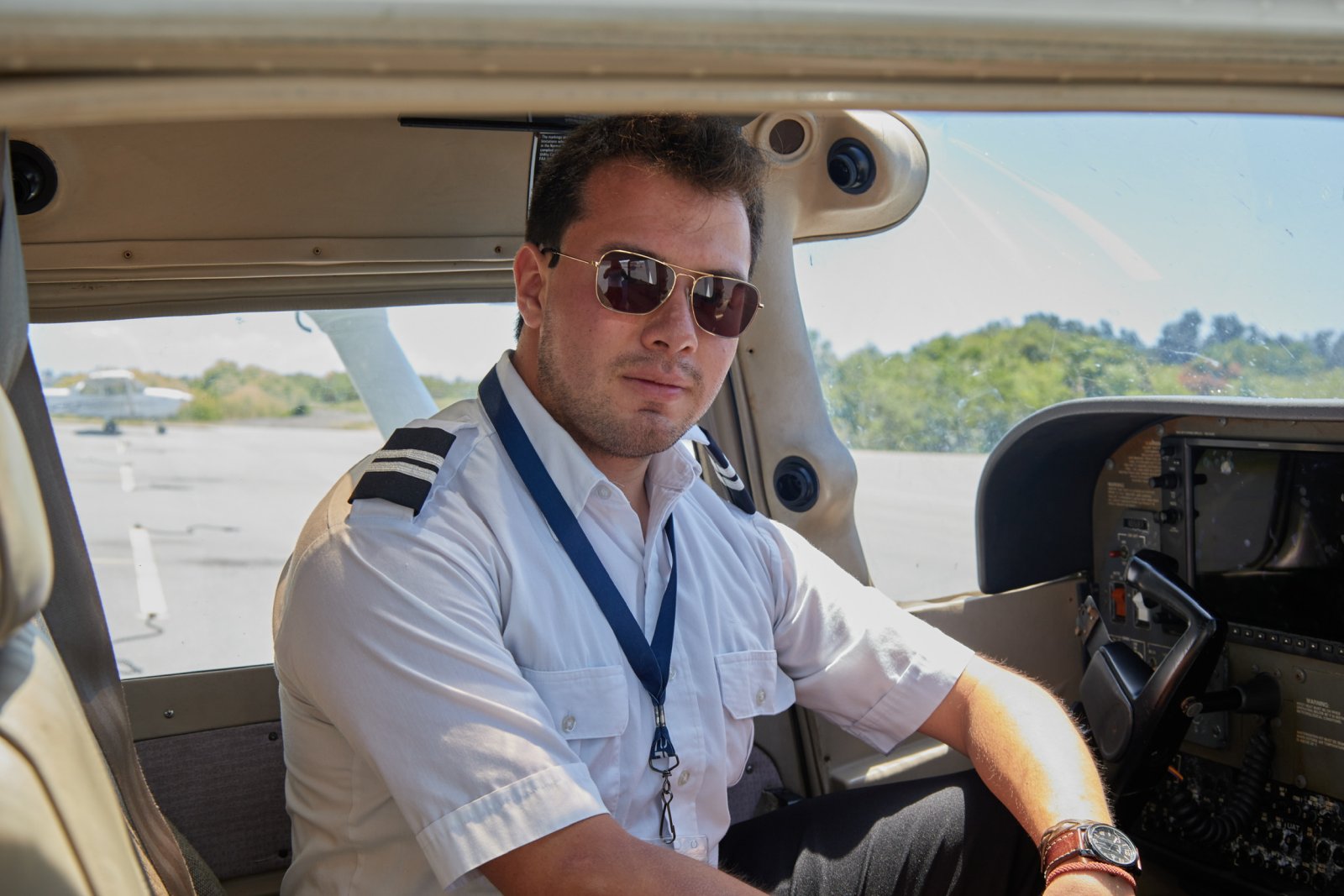
The cockpit of a commercial jet isn’t just an office; it’s the culmination of a high-stakes, elite professional journey. For many aspiring aviators, the path feels obscured by complex faa atp requirements and the daunting climb toward 1,500 flight hours. You might feel overwhelmed by the choice between Part 61 and Part 141 programs or the significant financial commitment required to reach the flight deck.
It’s natural to feel a mix of excitement and anxiety when facing such a rigorous career roadmap. The 2025 Boeing Pilot and Technician Outlook projects a demand for 660,000 new pilots globally through 2044. This massive industry growth creates an unprecedented opportunity for those who can navigate the training pipeline with precision and discipline.
This guide provides the clarity you need to transform your ambition into a professional reality. We’ll break down the chronological milestones from your first solo flight to the final ATP checkride. You’ll gain a transparent understanding of the investment involved and a clear checklist to help you choose the right training environment for your future career.
Key Takeaways
- Transition from recreational flying to a structured career-track program focused on airline-level professionalism.
- Follow a clear, chronological roadmap of certifications, from your Private Pilot Certificate to advanced Multi-Engine ratings.
- Learn how you’ll protect your training budget by choosing fixed-price tuition over unpredictable pay-as-you-go models.
- Master the specific faa atp requirements and discover the most efficient strategies for accumulating the 1,500 flight hours needed for the flight deck.
- Understand why weather’s the most critical factor in maintaining your training momentum and finishing on schedule.
Navigating the Airline Pilot Career Path in the USA
Professional aviation requires a fundamental shift in perspective. While recreational flying focuses on the freedom of the skies, a career-track approach prioritizes procedural discipline and regulatory compliance. Understanding the complex landscape of Pilot certification in the United States is your first step toward the flight deck. You aren’t just learning to fly an airplane; you’re training to operate a multi-million dollar asset within a global transportation network.
This transition requires a commitment to technical mastery and an early focus on meeting future faa atp requirements. Major airlines increasingly favor candidates who’ve completed an integrated training path. This “zero-to-hero” model, delivered through an FAA Professional Pilot Program, ensures you develop professional habits from your very first hour. It provides a direct pipeline to employment by immersing you in an environment that mirrors commercial airline operations.
The Difference Between Part 61 and Part 141 Training
Choosing the right regulatory framework is a critical decision. Part 61 training offers maximum flexibility, allowing you to set your own schedule and move at your own pace. This is often ideal for modular learners who need to balance training with other commitments. However, for those pursuing an airline career, Part 141 academies provide a highly structured, FAA-approved syllabus.
This rigid environment mirrors the training you’ll eventually face at a major carrier. Because Part 141 programs follow a strict timeline, they’re typically the fastest route to reaching commercial milestones. Choosing this path demonstrates to future employers that you can thrive in a disciplined, high-pressure atmosphere. It’s the preferred method for high-achievers who value technical precision.
Setting Realistic Expectations for 2026
Success in a flight academy demands more than just technical skill. It requires profound mental discipline and the ability to perform under pressure. You’ll need to balance academic study with intensive physical flight training, often in a fast-paced residential setting. The emotional style of this journey is challenging, but the rewards of the profession remain unparalleled.
The industry outlook remains incredibly strong. The 2025 Boeing Pilot and Technician Outlook projects a demand for 660,000 new pilots globally through 2044. To capitalize on this demand, you must adopt an airline-oriented mindset from day one. This ensures you’re prepared to meet the strict faa atp requirements long before you reach the 1,500-hour mark. Treating every briefing as a professional evaluation is the key to vocational preparedness.
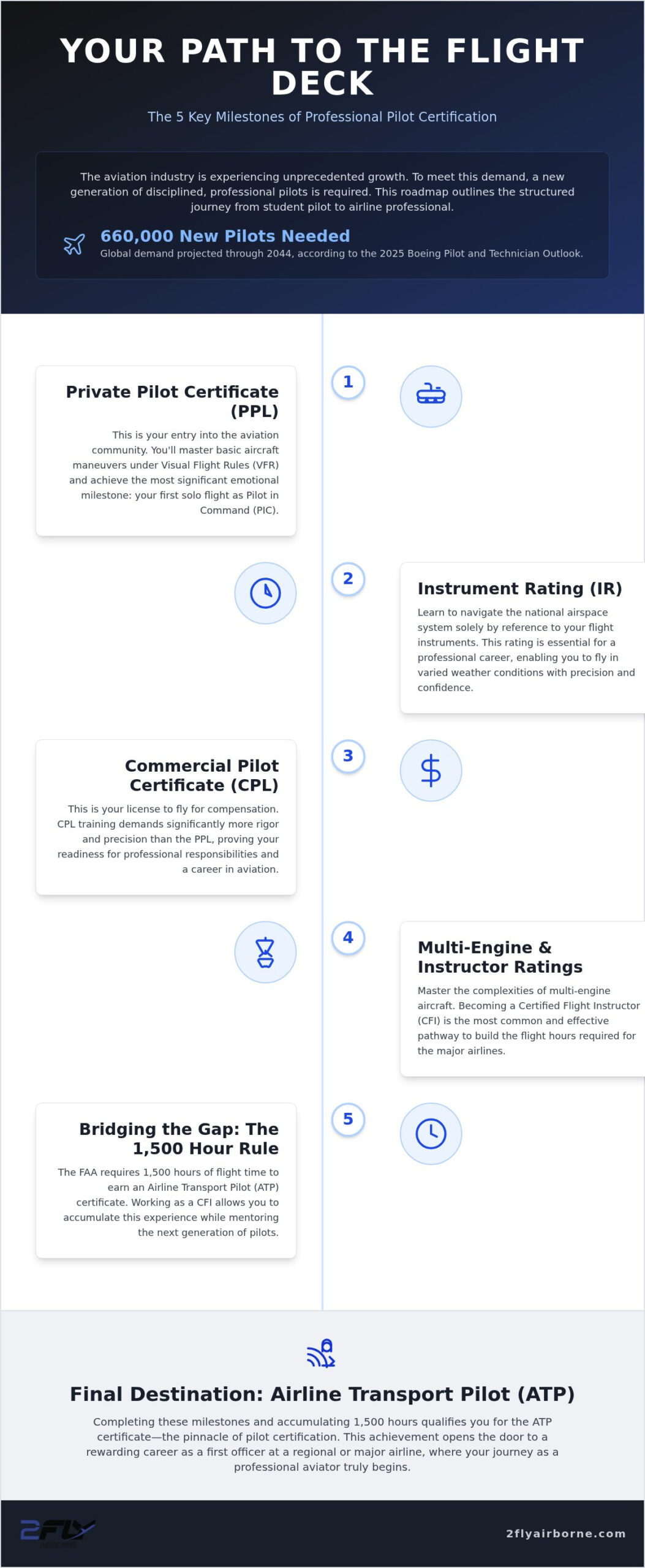
The 5 Key Milestones of Professional Pilot Certification
The path to the flight deck is a structured ladder of technical proficiency. Each certificate you earn builds on the last, transforming you from a student into a highly disciplined professional. While your ultimate goal involves meeting the FAA Airline Transport Pilot requirements, you must first master the fundamentals through a series of progressive milestones. This journey requires a blend of academic knowledge and physical coordination that only an immersive training environment can provide.
The Foundation: Private and Instrument Ratings
The Private Pilot Certificate (PPL) represents your entry into the aviation community. It’s often the most significant emotional hurdle for students because that first solo flight marks a permanent shift in your identity. You’re no longer just a passenger; you’re the PIC (Pilot in Command). After mastering basic maneuvers under Visual Flight Rules (VFR), you’ll transition to the Instrument Rating (IR).
This phase is where you learn to navigate the national airspace system without relying on outside visual cues. IFR is the ability to fly solely by reference to instruments. This rating is essential for career pilots who must operate in varied weather conditions with absolute certainty. It demands a high level of mental discipline and the ability to trust your flight deck technology over your own physical sensations.
The Professional Pivot: Commercial and Multi-Engine
Once you’ve mastered the basics, the focus shifts to vocational preparedness. The Commercial Pilot Certificate (CPL) is your license to fly for compensation. CPL standards are significantly more rigorous than private pilot requirements, demanding much tighter tolerances during maneuvers. You’ll perform advanced procedures with a level of precision that demonstrates you’re ready for the responsibilities of a professional cockpit. Most successful candidates pursue this through an integrated FAA Professional Pilot Program to ensure their skills align with modern airline standards.
You’ll also need a Multi-Engine Rating (ME) to operate larger, more complex aircraft. Training in a Piper Seminole or similar twin-engine aircraft is vital for learning how to manage engine failures and high-performance systems. This specific experience is a prerequisite for almost any airline position in the United States. Finally, most graduates move into the Certified Flight Instructor (CFI) phase. This role is the primary vehicle for building the flight time necessary to satisfy faa atp requirements while mentoring the next generation of aviators. If you’re ready to witness this progression in person, you can explore our upcoming aviation events to see the training environment firsthand.
Evaluating Costs and Training Timelines in 2026
Investing in your future as an aviator requires a clear-eyed look at the financial commitment. You aren’t just paying for flight hours; you’re securing a pathway to a high-earning profession. Time is your most valuable asset in this industry. Every month spent in training is a month of lost seniority at a major carrier. This makes an accelerated Flight School Cost Guide essential for planning your budget.
Understanding Fixed-Price Professional Pilot Programs
The debate between fixed-price tuition and pay-as-you-go models is central to your financial strategy. Traditional modular training often suffers from price creep as fuel costs and instructor fees fluctuate. A fixed-price program provides a shield against inflation by locking in your costs for ground school, simulator sessions, and the flight hours required for your initial ratings.
Comprehensive programs should include everything from Private Pilot through Multi-Engine Instructor ratings. It’s vital to verify what lies outside the tuition, such as FAA examiner fees for checkrides or residential housing. Understanding these nuances helps you prepare for the total journey toward meeting faa atp requirements. For a deeper dive into the specific milestones, consult AOPA’s guide to the ATP certificate.
Financing Your Aviation Career
Most candidates utilize specialized aviation loans to fund their professional development. These financial products are designed with a pilot’s career arc in mind, often featuring deferred payment options while you build hours. You should also investigate merit-based scholarships which remain a viable source of funding in 2026 for high-achievers.
Securing your funding early allows you to focus entirely on the rigorous demands of the syllabus. This total immersion is what separates industry-prepared professionals from casual learners. If you have questions about specific lending partners or payment structures, you can speak with a 2FLY Training Advisor to explore your options. This proactive step ensures your training remains on schedule so you can satisfy faa atp requirements and enter the workforce as quickly as possible.
Bridging the Gap: Mastering the 1,500-Hour Rule
Reaching your Commercial Pilot Certificate at approximately 250 hours is a landmark achievement, yet it represents only the first phase of your professional ascent. To sit in the cockpit of a Part 121 airliner, you must satisfy the 1,500-hour rule. This federal mandate requires pilots to accumulate significant flight time before they can act as a captain or first officer for a major carrier. Navigating this “CFI gap” requires a strategic approach to ensure your time building is both efficient and high-quality.
While the standard faa atp requirements demand 1,500 hours, there are specific exceptions for those who follow structured academic paths. Graduates of approved associate degree programs may qualify for a Restricted ATP (R-ATP) at 1,250 hours, while those from four-year university programs can reach the flight deck at 1,000 hours. Regardless of your specific threshold, the goal is to transform from a trainee into an industry-prepared professional through consistent, daily flight operations.
The CFI, CFII, and MEI Career Ladder
Becoming a Certified Flight Instructor (CFI) is the most respected and reliable method for building professional flight time. Airlines value instruction experience because it forces you to master technical knowledge and develop leadership skills. When you teach a student to recover from a stall or navigate a complex approach, you’re reinforcing your own proficiency. This role builds the “soft skills” of crew resource management that are essential for airline safety.
Progressing through your CFII (Instrument) and MEI (Multi-Engine) ratings allows you to fly more complex aircraft and varied missions. In a high-volume training environment, a dedicated instructor can expect to move from 250 to 1,500 hours within 12 to 24 months. This timeline depends heavily on weather conditions and the academy’s student population. It’s a period of intense professional growth where you transition from learning the rules to enforcing them.
Alternative Paths to the Flight Deck
Some pilots choose alternative routes such as Part 135 charter operations, aerial survey, or pipeline patrol. These roles offer valuable experience in different sectors of the industry but often lack the structured progression of a dedicated academy. Charter flying can provide exposure to corporate environments, while survey work offers long hours of solo flight time. However, these positions can be seasonal or subject to unpredictable scheduling.
A structured academy provides a more reliable pipeline to regional airlines through established hiring partnerships. This ensures that once you meet the faa atp requirements, you have a clear path to your first officer seat. If you’re ready to start building the hours that lead to a global career, you can explore the FAA First Officer Program to see how we bridge the gap to the airlines.
Selecting an Academy: Why Training Environment Matters
Selecting the right academy is the final strategic decision in your professional roadmap. While some candidates prioritize training close to home, this often results in seasonal delays that stall career momentum. A world-class environment provides the infrastructure and climate necessary to maintain a rigorous training syllabus without interruption. You need an institution that functions as a direct pipeline to the airlines, not just a local flight school.
The Strategic Advantage of Florida Flight Training
Florida is the global epicenter for flight training due to its optimal atmospheric conditions. With over 300 days of flyable weather annually, students can log hours consistently. This reliability is the primary factor in finishing your program on schedule and meeting faa atp requirements within your projected timeline. Training in a region with such high density of aviation infrastructure allows you to master complex communications and traffic patterns from day one.
International students prioritize M-1 approved schools in this climate because it ensures their training progress aligns with their visa duration. Frequent flying builds muscle memory and reinforces technical knowledge more effectively than sporadic sessions. For a deeper look at the regional benefits, explore our comprehensive guide to Flight Schools in Florida. Choosing a location with superior weather is a tactical move that protects your financial investment.
From Trainee to Industry-Prepared Professional
Success requires total immersion. An on-campus residential experience removes daily distractions and places you in a community of high-achievers. This 24/7 aviation mindset transforms a trainee into an industry-prepared professional. It mirrors the lifestyle of an airline pilot, requiring discipline, punctuality, and technical focus. You aren’t just learning to fly; you’re adopting the professional standards of the global aviation industry.
Elite academies bridge the gap between FAA and EASA standards, offering true global mobility for your future career. By utilizing state-of-the-art simulators, you prepare for the specific demands of a modern jet cockpit long before your first airline interview. This level of vocational preparedness is essential for meeting the most stringent faa atp requirements. It ensures you arrive at your first regional airline job with the confidence and skill set of a seasoned aviator.
Your journey to the flight deck deserves the support of an expert mentor who understands the global landscape. To begin your professional assessment and map out your path, reach out to a 2FLY Training Advisor today. We’ll help you navigate the logistics of your training and set a clear, methodical timeline for your entry into the profession.
Launch Your Professional Future in the Skies
Mastering the flight deck requires more than passion; it demands a methodical approach to training and a deep understanding of the regulatory landscape. You’ve explored how a structured path from your first solo to complex multi-engine operations prepares you for the highest levels of the profession. By prioritizing consistent flight conditions and a disciplined academy setting, you ensure that every hour logged brings you closer to satisfying the faa atp requirements.
Success in 2026 depends on choosing a partner that offers technical excellence and financial transparency. With our comprehensive FAA Professional Pilot Program, you benefit from fixed-price tuition models and the strategic advantage of training in Florida with over 300 flyable days each year. This reliability is the foundation of your future seniority at a major airline. It’s the difference between a stalled start and a seamless transition to a commercial cockpit.
It’s time to transform your ambition into a professional reality. Speak with a 2FLY Training Advisor to map your career path and take the first step toward an international career. The sky isn’t the limit; it’s your new workplace. We’re ready to help you reach it.
Frequently Asked Questions
How long does the airline pilot career path take from zero experience?
A full-time, accelerated program takes 10 to 12 months to reach a multi-engine commercial pilot level. However, reaching the flight deck requires meeting all faa atp requirements, including the 1,500-hour flight time threshold. Most graduates spend an additional 12 to 18 months working as a flight instructor to bridge this gap. Total time from your first lesson to a regional airline seat is generally two to three years.
Do I need a college degree to become an airline pilot in 2026?
No federal law requires a college degree to hold an ATP certificate. However, most major legacy carriers still prefer candidates with a four-year bachelor’s degree during the competitive hiring process. Regional airlines are more flexible and often hire pilots based strictly on their flight experience and technical proficiency. If you choose a non-degree path, focusing on elite training standards and leadership roles like a lead flight instructor helps distinguish your professional profile.
What is the difference between an FAA and EASA pilot license?
The primary difference lies in the regulatory jurisdiction and the specific theory requirements. An FAA license is issued by the United States and is the gold standard for North American operations. EASA licenses are required for pilots flying aircraft registered in European Union member states. While the flight maneuvers are similar, EASA requires 14 intensive ground school exams. 2FLY Airborne provides a bridge between these standards to ensure global mobility for international students.
How much does it realistically cost to become a commercial pilot?
The total investment for professional pilot training depends on the school’s structure and the student’s personal pace. While industry costs for a complete career path vary, choosing a fixed-price program protects your budget from the rising expenses of fuel and aircraft maintenance. This financial certainty allows you to focus on mastering the syllabus rather than worrying about fluctuating hourly rates. You should always review a detailed breakdown of what your tuition covers.
What are the medical requirements for an FAA First Class Medical Certificate?
An FAA First Class Medical Certificate is the most stringent health standard in aviation. It requires 20/20 distant vision and normal color vision. Examiners also test hearing and cardiovascular health. You must pass this examination by an FAA-authorized Aviation Medical Examiner (AME), which typically costs around $150. Securing this certificate before beginning training ensures you meet the long-term physical standards required for a professional career.
Can international students train in the USA and work for US airlines?
International students can certainly complete their flight training in the United States using M-1 or F-1 vocational student visas. These visas often include provisions for Optional Practical Training, allowing graduates to work as flight instructors to build hours. However, permanent employment with a U.S. airline typically requires a green card or legal right to work. Many international aviators use their U.S. training as a gateway to high-paying careers in their home countries.
What is the 1,500-hour rule and are there any exceptions?
The 1,500-hour rule is a cornerstone of faa atp requirements, mandating total flight time before a pilot can serve as an airline captain. There are significant exceptions for those who follow specific paths. Military pilots can qualify at 750 hours. Graduates from FAA-approved four-year university aviation programs can qualify at 1,000 hours, while those with an associate degree may qualify at 1,250 hours. These restricted pathways allow high-achievers to enter the industry sooner.
What happens if I fail a checkride during my flight training?
Failing a checkride is a common challenge that many professional pilots face at least once. If you don’t meet the standards during an exam, the examiner issues a notice of disapproval. You’ll then receive additional training on the specific maneuvers or knowledge areas that were deficient. Once your instructor signs off on your proficiency, you’ll retake the failed portion of the test. A single failure rarely ends a career, but it underscores the need for disciplined preparation.
Article by
2FLY Airborne
2Fly Airborne is a professional flight training organization dedicated to developing the next generation of skilled, confident, and safety-focused pilots. With decades of combined aviation experience, our team of certified instructors provides structured, real-world training designed to prepare students for both checkrides and long-term success in the aviation industry.
Content Disclaimer
Some blog content is generated with the assistance of automated tools and may not always be fully accurate or up to date. Please verify all aviation-related information with official sources or a certified instructor. For additional guidance or clarification, we encourage you to contact one of our training advisors at 2Fly Airborne.