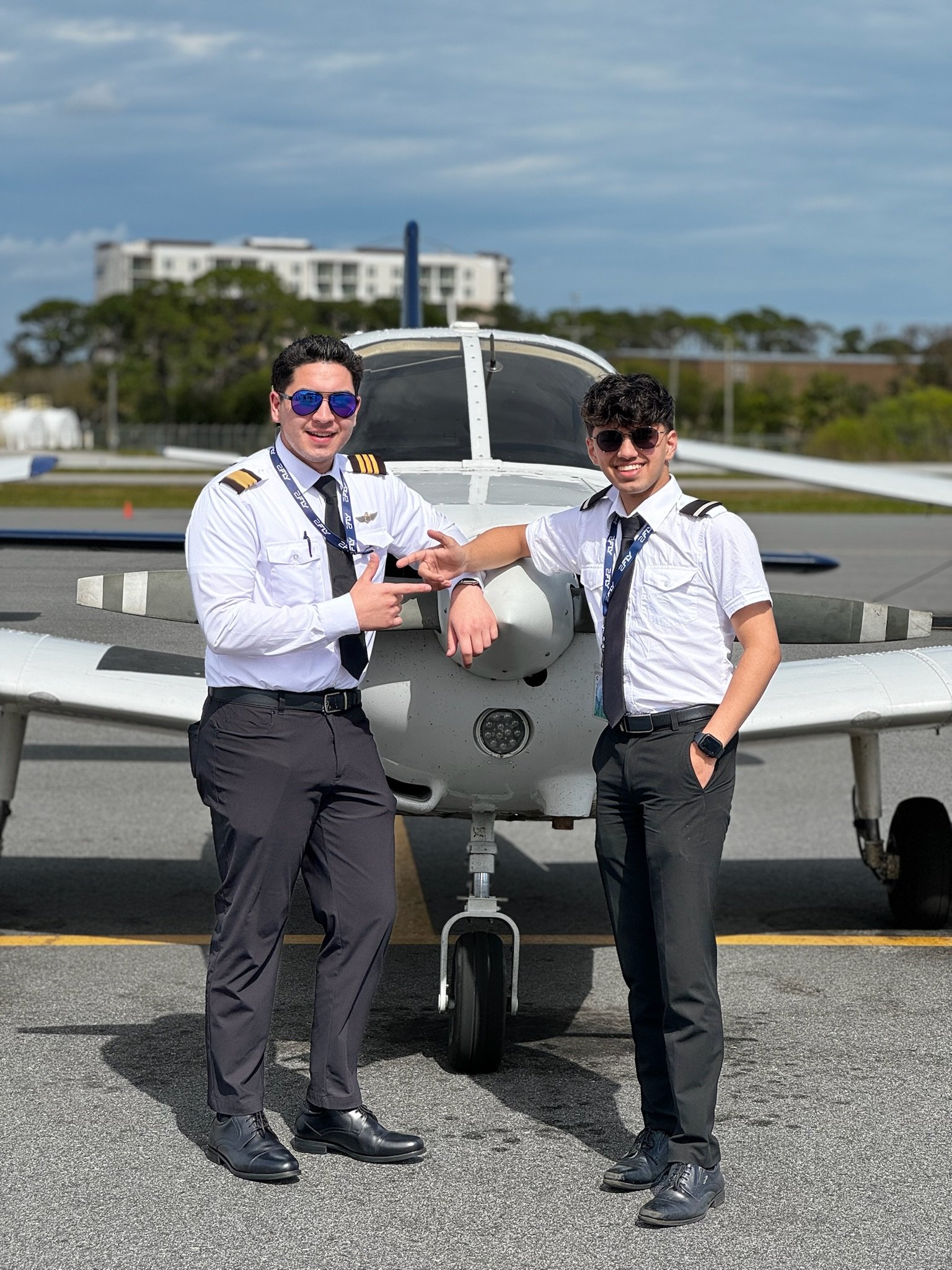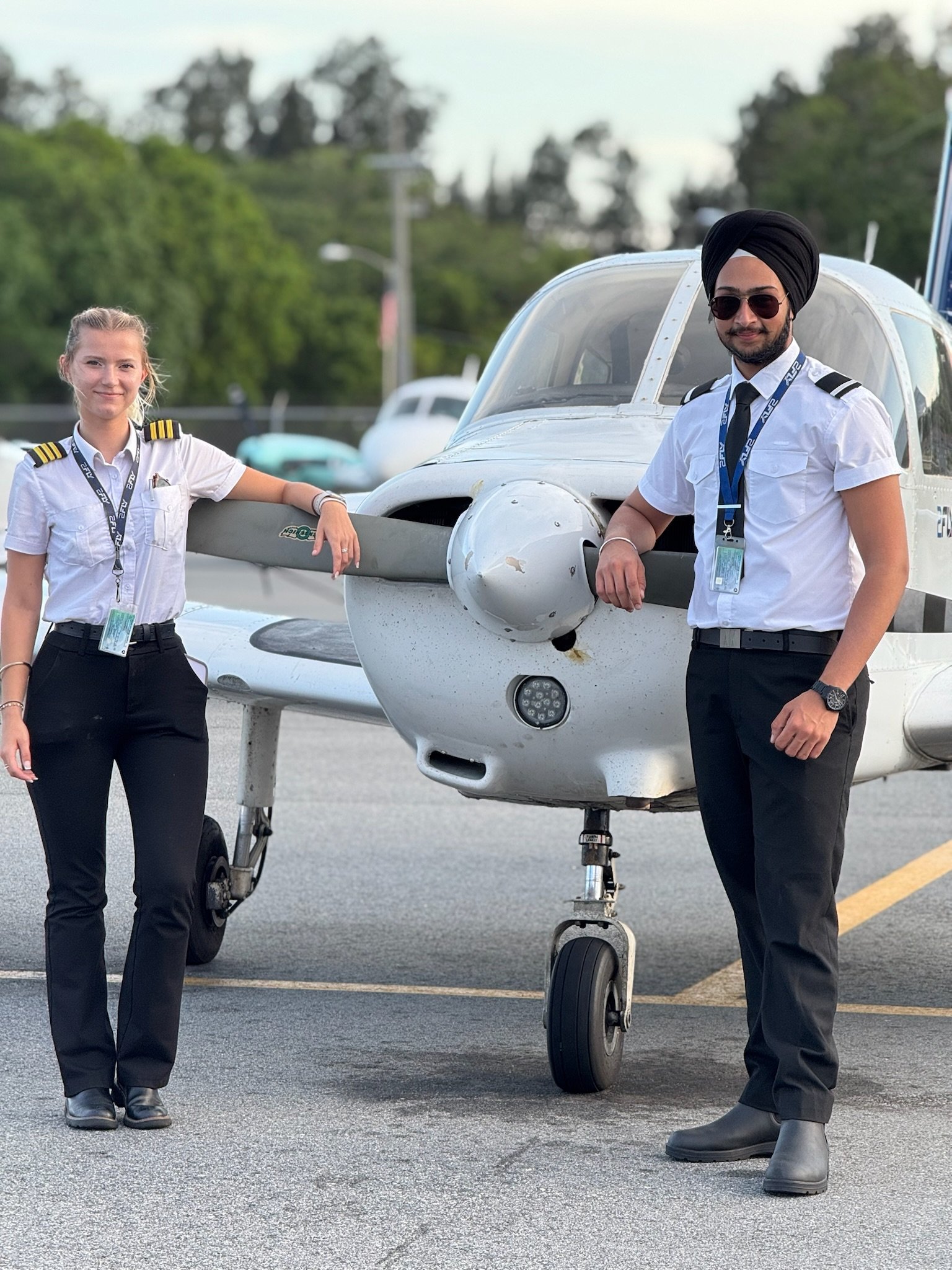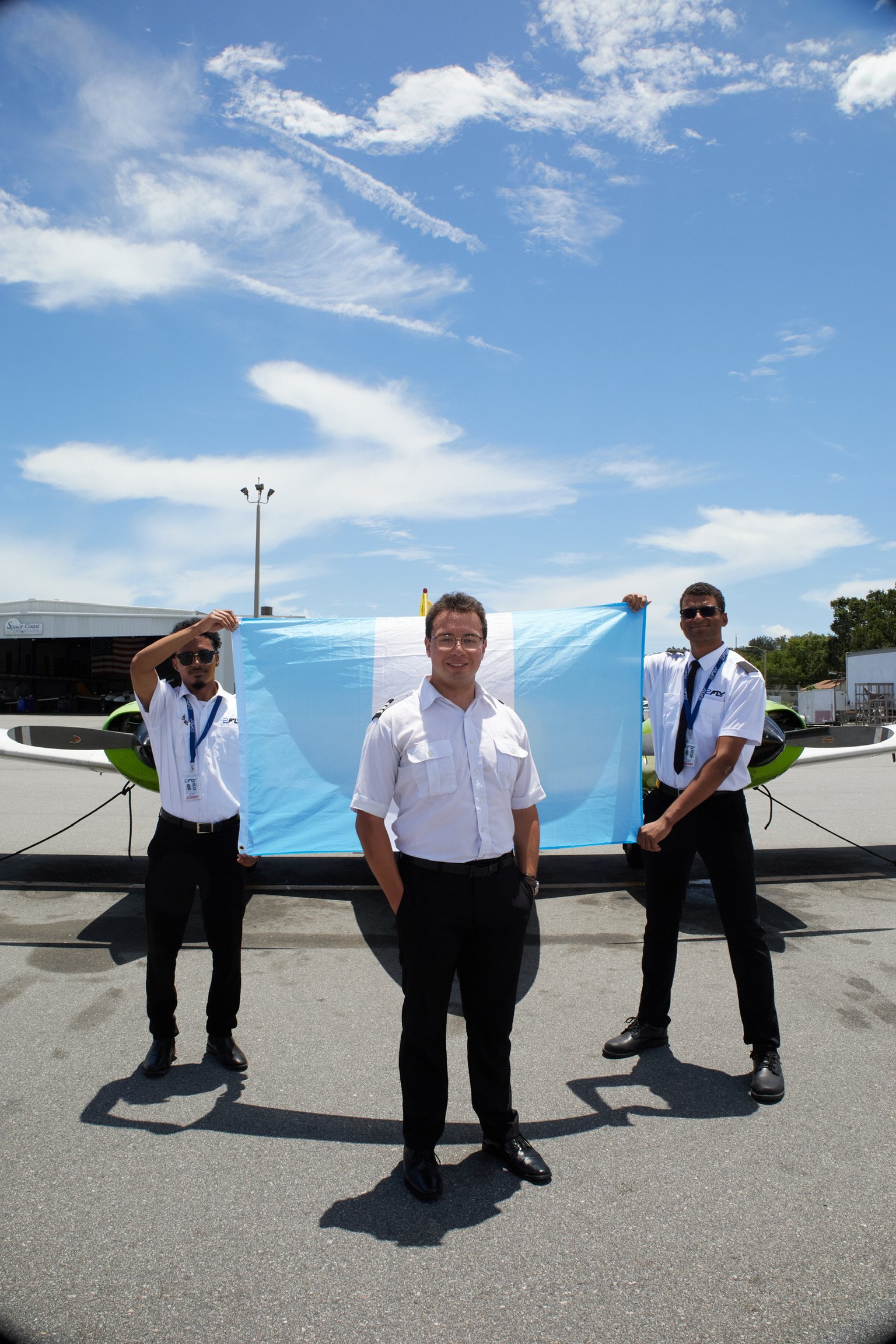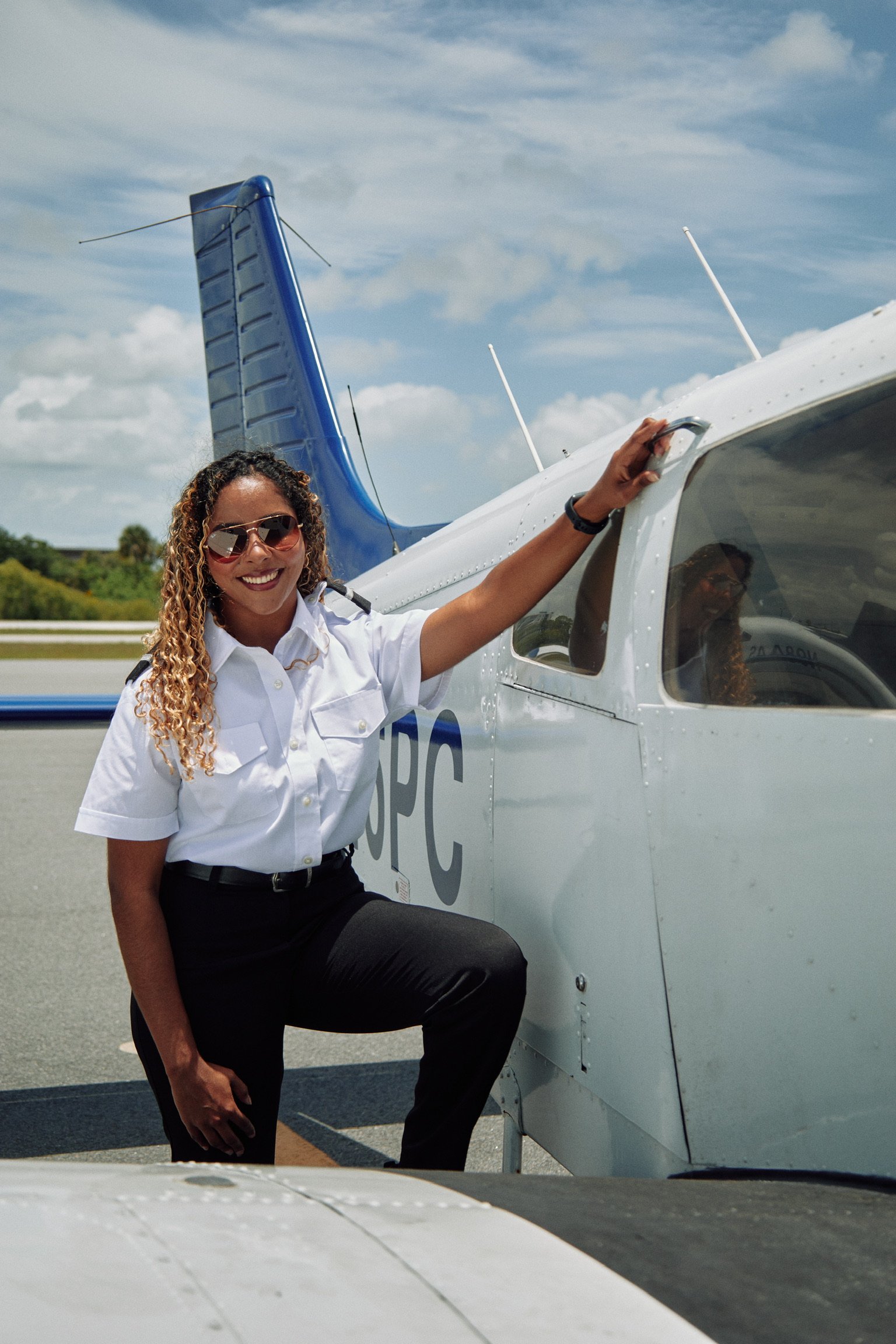
Is the traditional pay-as-you-go approach actually costing you more in the long run than a structured, intensive program? You likely feel the pressure of balancing a strict budget with the urgent desire to secure a seat in a commercial flight deck. Choosing between integrated vs modular flight training is the most significant financial and professional decision you’ll make before you ever leave the ground.
We understand the confusion surrounding FAA and EASA terminology, especially as global standards evolve toward competency-based training. It’s natural to worry about whether a flexible schedule will hinder your chances at a major carrier or if the high upfront cost of a full-time program is truly worth the investment. You deserve a clear, authoritative breakdown of how these paths translate into real-world airline readiness.
This article provides a realistic look at the timeline and budget for both routes to help you choose the best fit for your 2026 goals. We’ll explore the fastest way to reach your flight hours, the impact of new flight simulation regulations, and how a structured environment prepares you for the rigors of a professional cockpit.
Key Takeaways
- Understand the fundamental structural differences between integrated vs modular flight training to select the path that best matches your 2026 professional timeline.
- Discover how the integrated route provides a high-intensity, professional environment designed to move you into a First Officer seat in as little as 12 to 18 months.
- Learn how the modular approach offers the flexibility to manage your training costs and schedule by completing certifications in standalone blocks at your own pace.
- Compare the long-term financial implications of both methods to ensure your flight training remains a strategic investment in your future airline career.
- Explore how a hybrid professional pilot program bridges the gap by offering the structure of an integrated course with the flexibility and immersion of FAA-based training.
What is Integrated vs. Modular Flight Training?
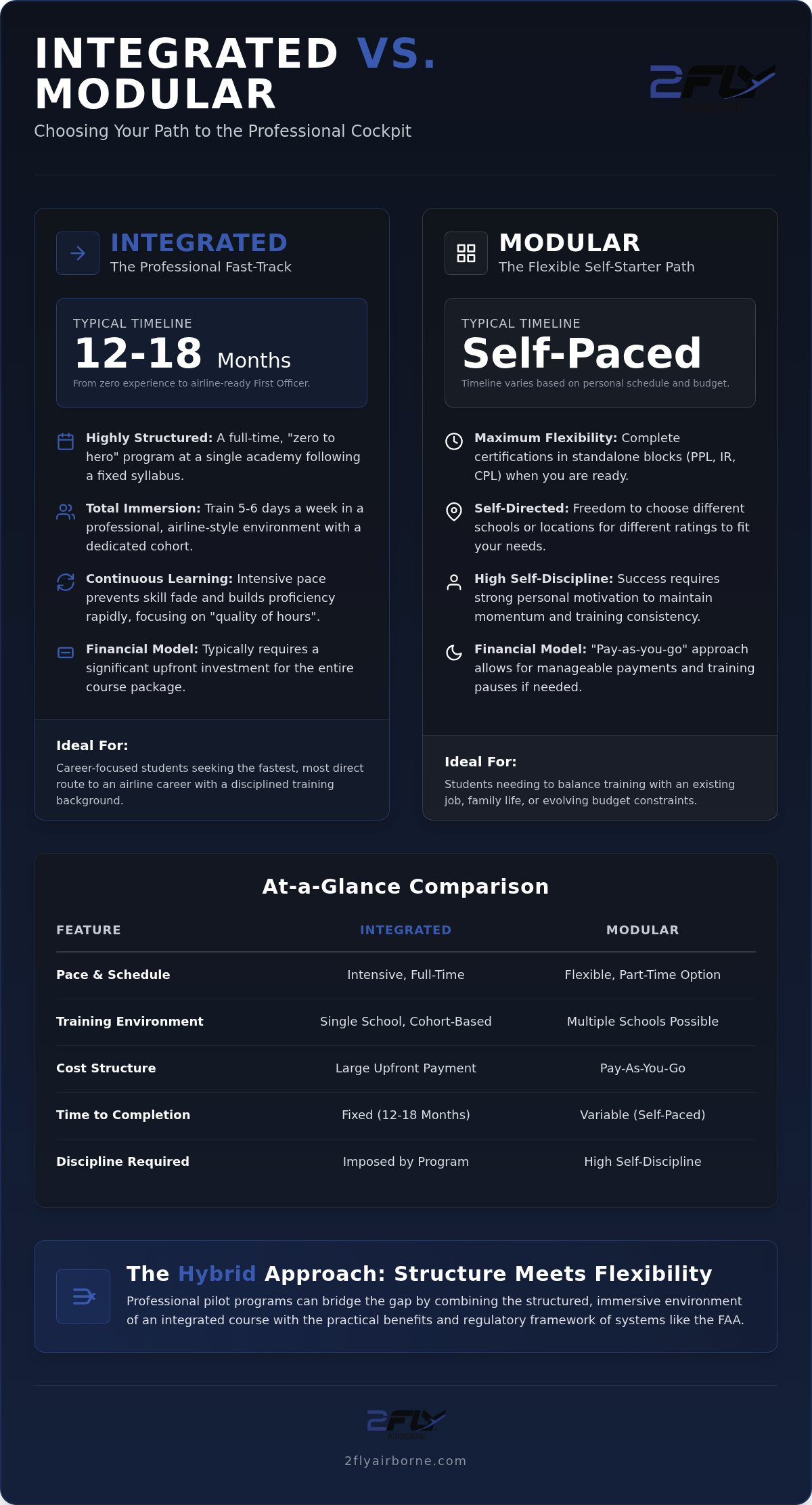
The distinction between these two paths is more than just a scheduling choice; it’s a decision about your professional identity. When researching integrated vs modular flight training, you’re essentially choosing between a total immersion experience and a self-paced certification journey. This choice will dictate your daily routine, your peer group, and the speed at which you reach the flight deck.
Integrated pilot training is a condensed, full-time course designed to take you from a beginner to a job-ready professional at a single academy. In contrast, modular training allows you to complete your licenses in separate stages, often at different schools. This fundamental difference between professional immersion and individual flexibility is the primary factor in your 2026 airline application timeline.
To better understand how these training structures impact your career progression, watch this helpful comparison:
The Core Philosophy of Integrated Programs
Integrated programs are built on the “zero to hero” model. They provide a seamless transition from basic maneuvers to complex airline operations within a fixed window. You’ll follow a highly structured syllabus that mimics airline standard operating procedures (SOPs) from day one. This creates a professional atmosphere where you train five to six days a week alongside a dedicated group of instructors.
These programs focus heavily on the “quality of hours” rather than just the “quantity of hours.” Because the training is continuous, there’s very little skill fade between lessons. You aren’t just learning to fly; you’re being molded into a First Officer who is ready to step into a multi-crew environment. This structured approach is often highly respected by major carriers looking for candidates with disciplined, predictable training backgrounds.
The Modular Approach: Building Your Own Path
Modular training functions as a buffet-style approach to certifications, allowing you to pick and choose when and where you complete each specific rating. This path is ideal for students who need to keep their current job or manage their personal life while training. You have the freedom to complete a Private Pilot Certificate (PPL) at a local club and then move to a larger academy for an Instrument Rating (IR) or Multi-Engine Rating (ME).
This “pay-as-you-go” model significantly reduces the need for large, upfront financial commitments. You can speed up or slow down based on your budget and availability. While this offers unparalleled flexibility, it requires a high degree of self-discipline to maintain momentum. For those looking for the best of both worlds, the FAA Professional Pilot Program at 2FLY provides the structure of an integrated course with the practical benefits of the FAA system.
The Integrated Path: A Fast-Track to the First Officer Seat
Imagine walking into a training center where every person you meet is focused on the same goal: a seat on a commercial flight deck. This total immersion defines the integrated route. When weighing integrated vs modular flight training, the speed of progression is often the most compelling factor for career-minded students. You aren’t just taking lessons; you’re entering a professional pipeline designed to mirror the operations of a major airline.
The intensity of this path is significant. You’ll typically train five to six days a week in a highly disciplined environment. This constant exposure prevents the skill fade often seen in part-time training. A university comparison of training routes highlights that this structure helps students develop the professional mindset required for an international aviation career from day one.
Consistency is another hallmark of the integrated experience. You’ll learn on a standardized fleet with a dedicated group of instructors who follow a uniform syllabus. This ensures that every hour in the logbook contributes directly to your professional development without the confusion of varying teaching styles. Furthermore, academies often manage the administrative burden of visa sponsorship and on-campus housing, allowing you to focus entirely on your technical mastery.
Networking also begins much earlier in this environment. You’ll build relationships with airline recruiters and industry leaders who frequently visit these campuses to scout for new talent. If you’re ready to commit to this level of professional preparation, you might consider how our FAA Professional Pilot Program can accelerate your journey.
Why Airlines Value Integrated Graduates
Airlines prioritize predictability and safety in their recruitment process. Standardized training reduces the risk of “training failures” when you eventually move into complex airline type ratings. By following a structured syllabus, you demonstrate an early ability to handle the high-pressure environment of a professional cockpit. You’ll also gain early exposure to multi-crew cooperation and advanced flight simulators, which are critical components of modern airline operations.
The Fixed-Price Advantage
Budgeting for a career requires financial precision. Opting for fixed-price professional pilot programs protects you against the volatility of fuel prices and maintenance costs. While modular paths may appear cheaper at first glance, the “pay-as-you-go” model often leads to rising costs over a longer timeline. You can find a detailed breakdown of these financial variables in our flight school cost guide to help you plan your investment with confidence.
Modular Training: Flexibility for the Self-Starter
This path allows you to dictate the pacing of your career. You can speed up your training when you have the time or pause it to save funds for the next phase. According to an in-depth industry analysis, this flexibility is a primary driver for many self-funded students. This decision between integrated vs modular flight training often comes down to how much control you want over your day-to-day schedule.
The lower initial financial barrier is a major advantage. Unlike integrated programs that often require a significant upfront payment, modular training lets you pay as you go. This reduces the immediate need for large loans and allows you to maintain a job while you progress through your certifications. You also gain the freedom to conduct hour building in diverse geographic regions or different aircraft types, broadening your practical experience.
Managing the “Modular Gap”
While flexibility is a strength, it introduces the risk of “skill fade” if you take long breaks between training modules. Self-discipline is the most critical requirement for success in this path. You must stay engaged with the material even when you aren’t flying regularly to ensure you meet professional standards.
Successful modular students often set strict personal deadlines and maintain a regular study schedule. They treat their part-time training with the same seriousness as a full-time job. Without this focus, the transition between ratings can become inefficient and more expensive than originally planned.
Is Modular Really Cheaper?
Many candidates choose this route to save money, but you must consider the “opportunity cost” of a slower timeline. Entering the airline industry 12 to 24 months later means missing out on a year or two of a First Officer’s salary. Additionally, hourly aircraft rental fees can fluctuate over time, potentially eroding your initial savings.
The 2025 Boeing Pilot and Technician Outlook projects a demand for 660,000 new pilots globally through 2044. This massive requirement highlights the importance of reaching the flight deck as efficiently as possible. While modular training provides flexibility, you should weigh it against the long-term benefits of starting your professional career sooner.
Integrated vs. Modular: The Critical Comparison
Deciding between these two paths requires a clear-eyed look at your long-term return on investment. While the upfront price tag of an integrated course can feel daunting, the hidden costs of a prolonged modular journey often bridge that gap. Choosing integrated vs modular flight training is ultimately a trade-off between the speed of your career entry and the flexibility of your current lifestyle.
- Timeline: Integrated students typically reach commercial readiness in 12 to 18 months, whereas modular students often take 2 to 4 years.
- Cost Structure: Integrated paths offer fixed-price protection, while modular costs can rise due to inflation and extended rental periods.
- Career Access: Integrated academies often provide direct pipelines to airlines, while modular pilots usually hunt for jobs independently.
- Training Depth: Immersive programs focus on airline-ready behaviors from day one, while modular training offers a broader general aviation perspective.
Modular students must also account for rising examiner fees. In 2026, FAA practical tests with a Designated Pilot Examiner (DPE) range from $700 to $1,200 for single-engine aircraft, while multi-engine checkrides can exceed $1,500. Integrated programs often include these administrative costs in their fixed-price models, shielding you from these individual price hikes.
The 1,500-Hour Rule and Career Progression
Regardless of your chosen path, every aspiring airline pilot in the United States must eventually meet the FAA requirement of 1,500 flight hours for an Airline Transport Pilot (ATP) certificate. Integrated programs are designed to get you to the commercial checkride as fast as possible so you can begin working as a flight instructor to bridge the gap. Modular students frequently utilize hour building packages to gain the necessary experience at their own pace.
Location plays a vital role in this progression. Florida weather acts as a force multiplier for both training paths, offering over 300 flyable days per year. This consistency ensures that whether you are in a structured academy or a self-paced module, you won’t be grounded by seasonal delays found in other regions.
Financial Planning and Financing
Securing the capital for your education is a major hurdle. Specialized financing options are often more accessible for students enrolled in professional, structured programs. Lenders typically view “zero to hero” programs as a lower risk because they have a proven track record of producing employable graduates in a predictable timeframe.
Structured schools often maintain strong relationships with aviation lenders, which can simplify the application process for student loans. This financial support allows you to treat your training as a full-time profession rather than a part-time hobby. If you are ready to secure your future on the flight deck, explore our professional pilot program today.
The 2FLY Hybrid: FAA Professional Pilot Program
Instead of getting lost in the debate of integrated vs modular flight training, consider a path that combines the strengths of both. The FAA Airline Pilot Program at 2FLY is specifically designed to provide the rigorous, full-time structure of an integrated course while utilizing the practical, globally recognized FAA framework. This hybrid approach ensures you gain the professional discipline airlines demand without sacrificing the efficiency of the FAA certification process.
Immersion is the key to technical mastery. By providing on-campus residential accommodation, we ensure you are fully surrounded by the “aviation lifestyle” from day one. You’ll live and train alongside fellow cadets, fostering a high-performance environment where every conversation moves you closer to your goals. This residential model is a significant advantage for those who want to transition from a student to an industry-prepared professional as quickly as possible.
Mentorship is at the heart of our philosophy. Our instructors bring real-world airline experience to the flight deck, offering insights that go beyond basic maneuvers and regulatory requirements. Once you complete your initial certifications, we provide a clear pathway to reach the 1,500-hour requirement through the CFI (Certified Flight Instructor) role. This allows you to gain professional experience and build the necessary flight time while earning a living in the industry.
Global Reach, National Excellence
Our program emphasizes international professional mobility. We support international students with dedicated visa processing and administrative assistance, making the transition to training in the United States seamless. This global perspective is vital because the 2025 Boeing Pilot and Technician Outlook projects a demand for 660,000 new pilots globally through 2044. For a complete roadmap of this journey, consult our How to Become a Pilot guide.
Your Next Steps with 2FLY
A professional assessment is the first step toward your career. It allows us to evaluate your aptitude and help you determine which training timeline aligns with your long-term ambitions. We encourage you to visit our academy or attend one of our upcoming events to see our fleet and facilities firsthand. We invite you to reach out to a 2FLY Training Advisor today to create your personalized roadmap to the flight deck.
Secure Your Future on the Flight Deck
Navigating the choice between integrated vs modular flight training is a pivotal step in your aviation career. You’ve seen that while integrated paths offer rapid, immersive entry into the profession, modular training provides the flexibility to manage your own timeline. Your decision ultimately rests on your personal budget, your desired speed of entry, and your commitment to professional discipline.
Since 1994, we’ve guided career-minded pilots through comprehensive FAA and EASA training programs. Our large aircraft fleet and state-of-the-art simulators provide the world-class environment necessary for technical mastery. Choosing a safe, structured training environment is the most important investment you’ll make in your professional development.
If you’re ready to define your roadmap, you should speak with a 2FLY Training Advisor to find your ideal path. Please reach out to a 2FLY Training Advisor with any remaining questions to ensure you’re making the most informed choice for your 2026 career launch. The flight deck is waiting for those with the drive to reach it.
Frequently Asked Questions
Is integrated flight training better than modular?
Neither path is objectively better; the right choice depends on your career goals, learning style, and financial situation. Integrated training offers a faster, more structured route with a high level of professional immersion from day one. Modular training provides the flexibility to train at your own pace while maintaining a job. Most students find the choice of integrated vs modular flight training comes down to how quickly they want to reach a commercial flight deck.
How much does integrated pilot training cost in 2026?
The cost of integrated pilot training varies significantly based on the academy and what the package includes, such as housing or examiner fees. Many professional programs utilize fixed-price models to help students budget effectively against rising fuel costs and inflation. These all-inclusive options often cover tuition, accommodation, and administrative support in one single investment. It is essential to speak with a training advisor to understand the current financial requirements for your specific career path.
Can I work a full-time job while doing modular flight training?
Yes, the modular route is specifically designed to allow for this level of personal and financial flexibility. You can schedule your flight lessons around your existing work hours and complete your certifications as your budget allows. This approach is ideal for self-starters who wish to avoid large upfront loans. However, you must maintain a high degree of self-discipline to ensure your technical skills remain sharp between training sessions and avoid the risk of skill fade.
Do airlines prefer integrated or modular graduates?
Airlines primarily prioritize the quality, safety, and consistency of your training rather than the specific route you chose. While some carriers value the standardized, airline-style environment of an integrated program, many hire modular graduates who demonstrate high technical proficiency. The current global demand for pilots means that well-prepared graduates from both paths are finding success. Your performance during the airline simulator assessment and technical interview is typically the deciding factor in the hiring process.
How long does modular flight training take compared to integrated?
Modular training typically takes between two and four years, whereas an integrated program can often be completed in as little as 12 to 18 months. The difference in timeline is due to the intensive, full-time nature of integrated courses. Modular students often face longer durations because they balance their flight training with other life commitments or financial saving periods. If you want to reach the flight deck as quickly as possible, the structured integrated approach is the faster option.
What is the “Zero to Hero” pilot program?
A “Zero to Hero” program is a professional training course that takes a student from no flying experience to a Commercial Pilot Certificate. These programs are typically structured as integrated courses to maximize training efficiency and professional preparation. They provide a clear, step-by-step roadmap through all required ratings, including Private, Instrument, and Commercial certifications. This model is highly popular for those committed to a full-time career transition into the aviation industry.
Can I switch from modular to integrated training halfway through?
Switching mid-way is technically possible but can be administratively complex and potentially more expensive than staying on one path. Integrated syllabi are designed as a single, continuous course, so academies may require you to repeat certain training blocks to meet their specific standards. It is usually more efficient to decide on your preferred path before starting your Instrument Rating. You should consult with a training advisor to see how your previous experience might transfer into a structured program.
Is financing available for both integrated and modular routes?
Financing is available for both paths, but lenders often prefer the predictable timelines and high completion rates of structured, professional programs. Integrated “zero to hero” courses often have established relationships with specialized aviation lenders, which can make the loan application process more straightforward. Modular students may find it more challenging to secure a single loan for the entire journey and often rely on personal savings. Always research your financial eligibility before committing to a specific flight school.
Article by
2FLY Airborne
2Fly Airborne is a professional flight training organization dedicated to developing the next generation of skilled, confident, and safety-focused pilots. With decades of combined aviation experience, our team of certified instructors provides structured, real-world training designed to prepare students for both checkrides and long-term success in the aviation industry.
Content Disclaimer
Some blog content is generated with the assistance of automated tools and may not always be fully accurate or up to date. Please verify all aviation-related information with official sources or a certified instructor. For additional guidance or clarification, we encourage you to contact one of our training advisors at 2Fly Airborne.