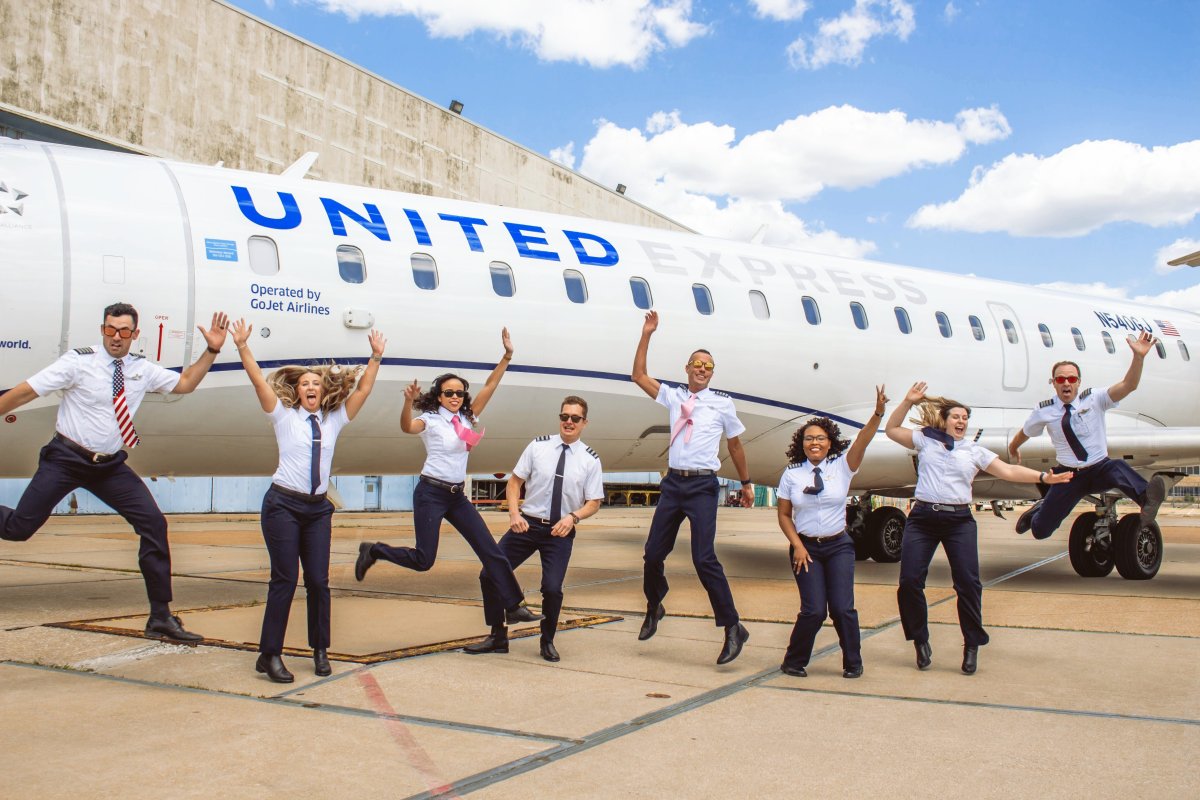
The 2025 Boeing Pilot and Technician Outlook projects a global demand for 660,000 new qualified pilots through 2044, placing you at the threshold of the most significant hiring surge in aviation history. You likely recognize the scale of this opportunity, yet the path to becoming a united airlines pilot often feels obscured by a maze of technical certifications and conflicting training routes. It’s natural to feel overwhelmed when choosing between programs like United Aviate or independent flight schools while trying to decode complex FAA requirements and total flight hour mandates.
This guide clarifies your journey by providing the exact roadmap you need to reach the flight deck. You’ll discover the precise flight hour thresholds, the specific certifications required for 2026, and the strategic advantages of different training pathways. We’ll break down the industry outlook and regulatory standards to ensure you’re airline-ready and positioned for a career with the world’s largest widebody fleet operator. We provide the expert perspective you need to move from a student to a professional pilot with a clear, methodical plan for global success.
Key Takeaways
- Analyze the 2026 recruitment outlook and the global demand for 660,000 new pilots projected in the 2025 Boeing Pilot and Technician Outlook.
- Identify the specific FAA certifications and the 1,500-hour ATP requirements necessary to become a united airlines pilot.
- Evaluate the United Aviate ecosystem versus high-quality independent Part 141 academies to determine the most efficient path for your career goals.
- Learn how to integrate United’s ‘Core4’ service behaviors—Safe, Caring, Dependable, and Efficient—to excel as a candidate during the interview process.
- Understand why elite foundational training is the critical first step in transitioning from an aspiring student to an airline-ready professional.
The 2026 Outlook for United Airlines Pilots
Entering 2026, the aviation industry faces a transformative period of growth. Major carriers have shifted from recovery to aggressive expansion, making it a prime era for those seeking a career as a united airlines pilot. United’s strategic investments in fleet modernization and network reach have set a new standard for the industry. This momentum is driven by a need to replace retiring professionals and staff a rapidly growing fleet of advanced aircraft.
To better understand the career path ahead, watch this helpful video:
The scale of United’s ambition is visible in their order books. The airline currently has over 800 narrow and widebody jets on order, representing one of the largest fleet expansions in history. This influx of aircraft creates a direct pipeline for rapid career progression. New hires aren’t just filling seats; they’re entering a system where seniority moves quickly and upgrade opportunities to Captain occur at an accelerated pace. Aspiring aviators can find detailed background on the carrier’s operations and history via United Airlines on Wikipedia.
Projected Demand Through 2044
Global aviation requirements remain at record highs. According to the 2025 Boeing Pilot and Technician Outlook, the industry requires 660,000 new qualified pilots through 2044 to sustain global flight operations. North American carriers lead this hiring surge as they replace retiring staff and expand international routes. The current pilot shortage is defined by a global requirement for 660,000 new aviators by 2044 according to Boeing data. This sustained demand ensures that those who complete an FAA airline pilot program are entering a robust job market.
Why United is a Premier Career Destination
United stands out as the largest widebody fleet operator in North America. This distinction offers a united airlines pilot unparalleled access to long-haul international flying and a truly global network. As a founding member of the Star Alliance, United provides its crew members with reach into every corner of the globe. Pilots enjoy the flexibility of multiple US crew bases, including major hubs in Chicago, Denver, Houston, and Newark. This geographical diversity allows for a better balance between professional demands and personal lifestyle. You’ll join an elite group of professionals dedicated to maintaining the highest safety standards in the sky. If you’re ready to begin your journey, contact a training advisor at 2FLY Airborne to discuss your path to the flight deck.
Core Requirements and Qualifications for the United Flight Deck
Earning a seat as a united airlines pilot involves meeting a rigorous set of federal and airline-specific benchmarks. These standards ensure that every individual in the cockpit possesses the technical mastery and professional maturity required for global operations. While the path is demanding, it’s entirely achievable through a structured training environment that prioritizes safety and proficiency. Success requires a commitment to excellence from your very first flight hour.
The baseline for any mainline career is the Airline Transport Pilot (ATP) certificate. Under the FAA 1,500-hour rule, pilots must document significant flight time before they can serve as a first officer for a Part 121 carrier. You’ll also need to maintain an FAA First Class Medical certificate. This medical standard is the most stringent in aviation; it requires regular examinations to ensure you’re physically fit for the high-altitude environment. According to the 2025 Boeing Pilot and Technician Outlook, the industry will require 660,000 new qualified pilots through 2044, which underscores the long-term stability of this career path for those who meet these qualifications.
The FAA Certification Ladder
Your journey begins with the Private Pilot License (PPL), which establishes your foundational skills. From there, you’ll progress to an Instrument Rating and a Commercial Multi-Engine certificate. Most candidates then transition into the Certified Flight Instructor (CFI) phase. This is a critical period for hour building. Teaching others allows you to refine your own knowledge while reaching the 1,500-hour threshold required for the ATP. You can explore the full progression through a professional FAA Airline Pilot Program, which aligns your training with airline standards from day one.
Educational and Background Standards
United Airlines currently views a four-year college degree as a preferred qualification rather than a strict requirement for 2026. However, having a degree often makes a candidate more competitive during the selection process. Beyond education, a clean background and an unblemished FAA safety record are non-negotiable. The airline looks for leaders who demonstrate sound judgment both in and out of the cockpit. You can find detailed descriptions of the various entry tracks on the official United Pilot Careers website. If you’re ready to begin your journey, you should speak with a training advisor to map out your personalized path to the flight deck.
Comparing Pilot Pathways: Aviate vs. Independent Flight Training
The journey to becoming a united airlines pilot begins with a strategic choice between a proprietary airline ecosystem and an elite independent training environment. According to the 2025 Boeing Pilot and Technician Outlook, the global industry requires 660,000 new qualified pilots through 2044. This massive demand has created a competitive landscape where your choice of training pathway dictates how quickly you reach the flight deck of a major carrier.
The Aviate Program Pros and Cons
United Aviate is designed as an internal recruitment pipeline that flows talent from partner universities and Part 135 operators directly to United Airlines. The most significant advantage is the security of a defined path. Cadets receive a conditional job offer early in their training, providing a clear target for their career. However, this security requires absolute compliance with rigid eligibility requirements. You must maintain a spotless training record and remain within the Aviate ecosystem for the duration of your build-up hours. This “flow-through” reality can sometimes lead to stagnation. If a partner regional airline or cargo carrier has a surplus of pilots, your transition to United might be delayed by internal seniority lists and fleet requirements that are outside of your control.
The Independent Academy Advantage
Elite Part 141 professional academies offer a high-performance alternative focused on speed and technical mastery. These programs are designed to produce airline-ready professionals who possess the versatility to work for any global carrier. Unlike proprietary programs that lock you into a single corporate structure, independent training allows you to choose your training locations and aircraft types based on where you will gain the most valuable experience. This flexibility is essential for mastering FAA pilot certification requirements while building a diverse and robust logbook.
Independent academies like 2FLY focus on the “Global Pilot” concept, ensuring you develop the discipline and leadership skills required by major airlines. Because you aren’t tied to a flow-through agreement, you can enter the market as a direct-hire candidate. Direct hiring often provides a faster timeline to the major flight deck because you can apply to whichever airline is hiring most aggressively at the moment you reach your hour requirements. To better understand these timeframes, you can explore our guide on how long is flight school to see how accelerated professional programs compare to traditional university tracks.
Choosing the right path depends on whether you value the safety net of a specific airline partner or the speed and autonomy of an elite professional academy. If you’re ready to pursue your career as a united airlines pilot with a focus on excellence and efficiency, contact 2FLY Airborne today to speak with a training advisor for personalized guidance.
Professionalism and the ‘Core4’: What United Looks For
Becoming a united airlines pilot requires more than mastering a Boeing 737 or Airbus A320. United Airlines evaluates every candidate through the lens of their ‘Core4’ service behaviors: Safe, Caring, Dependable, and Efficient. These four pillars dictate every decision made on the flight deck. Technical proficiency is the baseline expectation. Your ability to lead a crew and care for passengers defines your long-term career success. United prioritizes character modeling and leadership as much as flight hours. Much of this professional development culminates at the Denver Flight Training Center. This 700,000 square foot facility is the pinnacle of aviation excellence, where pilots undergo rigorous training to maintain the highest safety standards in the industry.
The Airline Interview Process
The path to the flight deck involves a multi-stage evaluation. Candidates face technical exams and behavioral interviews designed to reveal how they handle high-pressure scenarios. A simulator assessment tests airmanship and Crew Resource Management (CRM) skills. You should mirror these professional standards from your first day of flight school. According to the 2025 Boeing Pilot and Technician Outlook, the industry requires 660,000 new qualified pilots through 2044. Airlines are looking for individuals who exhibit professional maturity and “airline-ready” habits long before they reach the interview room.
Life as a United First Officer
New hires begin with intensive initial training to earn a specific type rating. This phase lasts several weeks and focuses on complex aircraft systems and company-specific procedures. As a First Officer, you’ll manage a dynamic schedule while progressing toward a Captain’s seat. The “Safe and Caring” culture isn’t just a marketing slogan. It’s the daily reality of the flight deck. Pilots support one another to ensure every mission is completed with precision and empathy. This environment rewards those who remain disciplined and dedicated to continuous improvement throughout their career.
Ready to begin your journey toward the major airlines? Speak with an expert mentor today. Learn more about our FAA Airline Pilot Program.
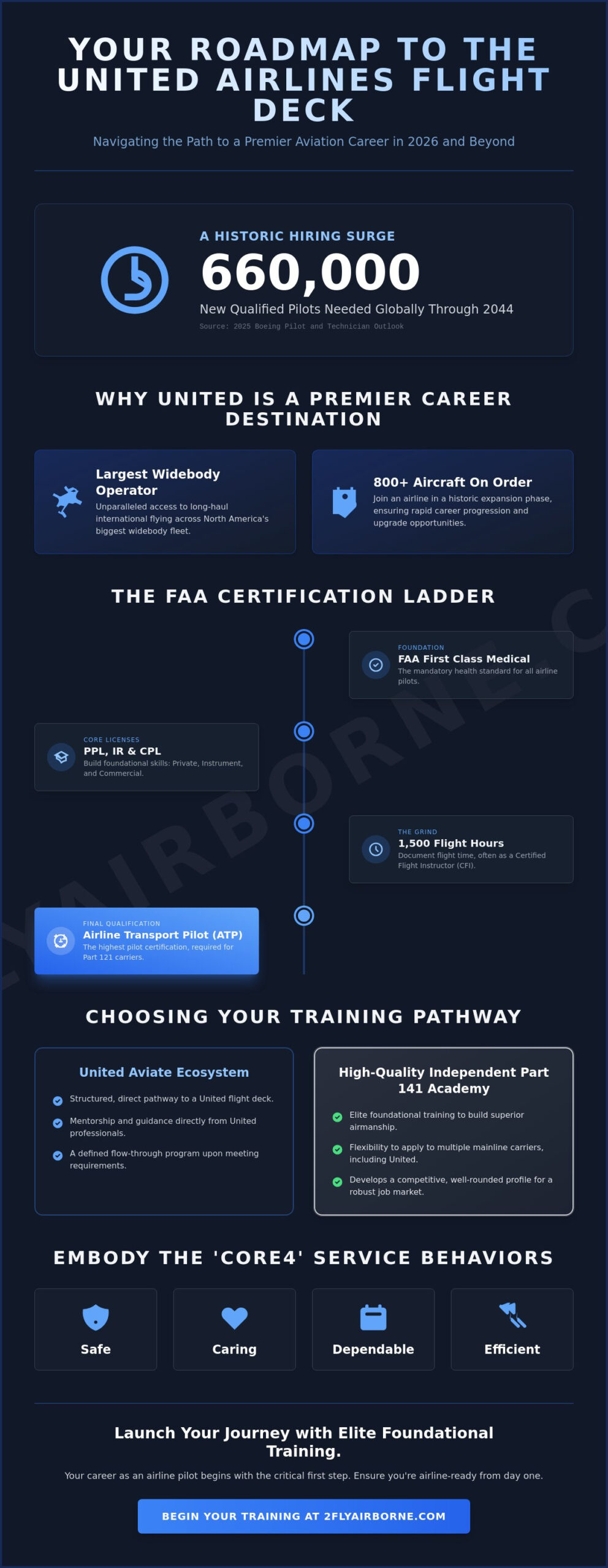
Launching Your Journey: Why Elite Foundational Training Matters
Transitioning from a dreamer to a qualified united airlines pilot candidate requires more than just passion. It demands a structured progression through rigorous FAA certifications and the accumulation of 1,500 critical flight hours. The journey begins with mastering foundational skills and culminates in the high-altitude environment of a commercial jet. By choosing an elite training environment, you ensure that every hour logged contributes to the professional standards expected by major carriers.
The year 2026 represents a strategic window for entry into the aviation industry. According to the 2025 Boeing Pilot and Technician Outlook, the global aviation sector will require 660,000 new qualified pilots through 2044. This sustained demand means that students starting their training today are entering a market with long-term stability. 2FLY Airborne’s FAA Professional Pilot Program is specifically designed to meet these industry needs, focusing on producing airline-ready professionals who can seamlessly transition into a major airline flight deck.
Starting Your FAA Training
Your first milestones involve obtaining an FAA First-Class Medical Certificate and your Student Pilot Certificate. These documents serve as the legal baseline for your career. We recommend a structured, fixed-price program to provide clarity and predictability for your financial planning. This model removes the uncertainty often found in modular training environments. If you need assistance with funding your education, explore our available Financing Options to find a solution that fits your career goals.
Your Future with 2FLY Airborne
At 2FLY Airborne, we utilize a mentor-led approach that mirrors the crew resource management used at major airlines. You aren’t just a student; you’re a professional in training from day one. Our instructors provide the discipline and technical expertise required to help you become a highly competitive united airlines pilot applicant. This mentorship ensures you develop the soft skills and decision-making capabilities that airline recruiters prioritize during the interview process. For a complete overview of the entire process, consult our Pillar Guide, which serves as the ultimate roadmap for your career. If you’re looking for a detailed breakdown of every regulatory and educational step involved, our step-by-step guide on how to become a commercial pilot walks you through the complete chronological checklist from beginner to airline-ready professional.
Ready to take the first step toward the flight deck? Speak with a dedicated training advisor today to map out your specific path to United. We’ll help you evaluate your goals and ensure you’re on the fastest, most professional track to success. Your future in the sky starts with a single conversation.
Take Command of Your Future on the Flight Deck
The path to becoming a united airlines pilot requires a blend of technical mastery and the leadership traits defined by the Core4 values. With the 2025 Boeing Pilot and Technician Outlook projecting a global demand for 660,000 new qualified pilots through 2044, the industry’s need for elite professionals is at an all-time high. You’ve explored the differences between structured pathways and independent training routes. Now it’s time to apply that knowledge to your own career trajectory.
Success starts with a foundation built on elite FAA Part 141 professional training standards. 2FLY Airborne provides the disciplined environment necessary to transition from a student to an airline-ready professional. Our fixed-price tuition options provide the career transparency you need to plan your future with confidence. You’ll train under the guidance of expert mentors who understand exactly what major carriers expect from their flight crews.
Don’t wait for the future to arrive. Contact a 2FLY Training Advisor to start your journey to the United flight deck today. Your career in the skies is ready for takeoff.
Frequently Asked Questions
How much do United Airlines pilots make in 2026?
United Airlines pilots earn competitive salaries based on their rank and the aircraft they fly, with first-year first officers earning approximately $116 per flight hour in 2026. Senior captains on wide-body aircraft can see annual compensation exceeding $400,000 when including retirement contributions and profit sharing. These record-high pay scales reflect the urgent industry demand highlighted in the 2025 Boeing Pilot and Technician Outlook, which forecasts a need for 660,000 new pilots through 2044.
How many flight hours do I need to apply to United?
You need a minimum of 1,500 total flight hours to qualify for the unrestricted Airline Transport Pilot certificate required for a United Airlines pilot position. While the FAA sets this minimum, many successful applicants accumulate between 2,500 and 3,000 hours to remain competitive in the hiring pool. Candidates from military backgrounds or specific collegiate programs may qualify with 1,000 or 1,250 hours. Contact a 2FLY Airborne training advisor to discuss how to efficiently build these professional hours.
Do I need a college degree to fly for United Airlines?
United Airlines removed the formal requirement for a four-year bachelor’s degree in 2022, though it remains a highly preferred qualification for competitive applicants. Approximately 90% of new hires still possess a degree, as it demonstrates the academic discipline needed for advanced pilot certifications. You can secure a position without one if you have exceptional flight experience and a clean safety record. Focus on high-quality flight training to ensure your professional resume stands out during the selection process.
What is the United Aviate program and how do I join?
United Aviate is a career development program that provides a structured path from initial flight training to a United flight deck. You join by applying once you hold a Private Pilot License and have at least 200 flight hours, or by enrolling in an Aviate-partnered flight school. The program offers participants a conditional job offer and mentorship from current United pilots. It’s designed to transform motivated students into airline-ready professionals through a clear, merit-based pipeline.
How long does it take to go from zero experience to a United flight deck?
The journey from zero experience to a major airline cockpit typically takes five to seven years of dedicated effort. You’ll spend roughly 12 to 18 months earning your commercial ratings and the next few years working as a flight instructor or regional pilot to reach hour requirements. The 2025 Boeing Pilot and Technician Outlook confirms that this long-term commitment is supported by decades of projected hiring stability. Your specific timeline depends on your training frequency and the current needs of the aviation industry.
What aircraft does United use for pilot training?
United utilizes advanced Level D full-flight simulators for its pilot training, focusing on the Boeing 737, 777, 787, and Airbus A320 families. New hires undergo intensive ground school and simulator sessions to master these complex systems before flying the actual aircraft. Your foundational training at an academy starts on reliable single-engine trainers like the Cessna 172 and transitions to multi-engine aircraft. This progression ensures you develop the technical mastery required for a global aviation career.
Is there an age limit to become a United Airlines pilot?
You must be at least 23 years old to serve as a first officer at United, while the mandatory FAA retirement age is currently 65. This gives most pilots a 40-year window to enjoy a lucrative and professional career in the sky. Starting your journey in your 30s or even 40s still leaves plenty of time to reach the rank of captain. We recommend speaking with an advisor to plan a training schedule that maximizes your earning years at the airlines.
Can military pilots transition directly to United?
Military pilots can transition directly to United through the United Military Pilot Program, which streamlines the hiring process for veterans. These candidates often qualify for an interview with fewer than 1,500 hours because the FAA recognizes the high quality of military flight training. United values the leadership and technical precision that military service instills in its flight crews. If you’re currently serving, your transition to a civilian career-ready status is a top priority for airline recruiters.
Article by
2FLY Airborne
2Fly Airborne is a professional flight training organization dedicated to developing the next generation of skilled, confident, and safety-focused pilots. With decades of combined aviation experience, our team of certified instructors provides structured, real-world training designed to prepare students for both checkrides and long-term success in the aviation industry.
Content Disclaimer
Some blog content is generated with the assistance of automated tools and may not always be fully accurate or up to date. Please verify all aviation-related information with official sources or a certified instructor. For additional guidance or clarification, we encourage you to contact one of our training advisors at 2Fly Airborne.